Building Executive Function Early
How to Support Executive Functioning Skills in Young Children?

Content
Every parent has watched their toddler melt down at the grocery store or seen their preschooler struggle to wait their turn. These moments aren't just about discipline. They're windows into your child's developing executive function—the mental skills that help us plan, focus, remember instructions, and juggle multiple tasks. Here's the truth: these skills don't appear magically at age five. They're built gradually through thousands of small interactions, starting much earlier than most people realize. And you don't need special equipment or expensive programs to support them.
What Are Executive Function Skills and Why Do They Matter?
Executive function skills are the brain's management system. Think of them as the air traffic control center for your child's thoughts and actions.
There are three core components that work together:
Working memory lets your child hold information in mind while using it. When your four-year-old remembers to get their shoes and their backpack before leaving, that's working memory at work. It's why your toddler can follow a two-step direction like "Put your cup in the sink and then wash your hands."
Inhibitory control is the ability to pause before acting. It helps children resist impulses, ignore distractions, and think before they act. Inhibitory control in toddlers looks like waiting for a turn on the slide instead of pushing. In preschoolers, it's stopping themselves from blurting out answers or grabbing a toy from a friend.
Cognitive flexibility (or flexible thinking) helps children adapt when things change. It's what allows your child to switch activities, see problems from different angles, and adjust their approach when the first plan doesn't work.
These skills matter because they predict school readiness better than IQ tests. Research from the Center on the Developing Child at Harvard shows that strong executive function in young children correlates with better academic performance, social skills, and even physical health decades later. Children who can regulate their emotions and focus their attention have an easier time making friends, following classroom routines, and tackling new challenges.
But here's what often surprises parents: executive function skills are more teachable than innate ability. Your child's brain is remarkably plastic during early childhood, which means the experiences you provide now shape these neural pathways significantly.
Executive functions are more important for school readiness than IQ or entry-level reading or math. They can be improved at all ages, but the return on investment is greatest when children are young because their brains are so plastic and because these skills build upon themselves.
— Diamond Adele
Understanding Executive Function Development in Young Children
Executive function in young children develops on a predictable timeline, though every child moves at their own pace.
Ages 2-3: This is when you'll see the earliest signs. Toddlers start to engage in simple pretend play (using a block as a phone). They can follow two-step instructions about half the time. Inhibitory control in toddlers at this stage is minimal—they live in the moment. Waiting feels impossible because their prefrontal cortex is just beginning to wire up. You might see brief moments of self-control, like pausing before touching something they've been told not to touch, but don't expect consistency.
Ages 3-4: Working memory expands noticeably. Your child can now remember and follow three-step sequences. They start to play games with simple rules, though they'll often forget or change rules mid-game. Flexible thinking emerges in small ways—they might suggest an alternative when their first choice isn't available. Emotional regulation improves, but meltdowns are still common when they're tired or overwhelmed.
Ages 4-5: This is when executive skills really take off. Children can hold multiple pieces of information in mind, plan simple activities (like gathering materials for a craft), and adjust their behavior based on different contexts (using an "inside voice" versus an "outside voice"). They're better at waiting and can often talk themselves through frustration. Metacognition in early childhood starts appearing—they begin to think about their own thinking, saying things like "I need to remember that."
Ages 5-6: By kindergarten, most children can sustain attention for 10-15 minutes on a task they find engaging. They can switch between activities without major protests, handle minor disappointments, and use strategies to help themselves remember things. Planning skills development in children this age includes thinking ahead about what they'll need for an activity or how long something might take.
One pattern I see most often is parents expecting too much too soon, then worrying their child is behind. Remember: a five-year-old with strong executive function still can't sit through a two-hour event or consistently remember a five-step morning routine without support. Development is gradual.
Author: Marcus Hollow;
Source: raynet-merseyside.net
Daily Activities That Build Working Memory and Attention
The best working memory activities don't feel like lessons. They're woven into your regular routine.
Cooking together is a powerhouse for executive function. Even a simple task like making sandwiches requires your child to remember steps, follow a sequence, and hold the goal in mind. Start with two-step recipes for toddlers ("First we spread, then we add the filling") and gradually increase complexity. A four-year-old can handle making their own snack if you break it into clear steps.
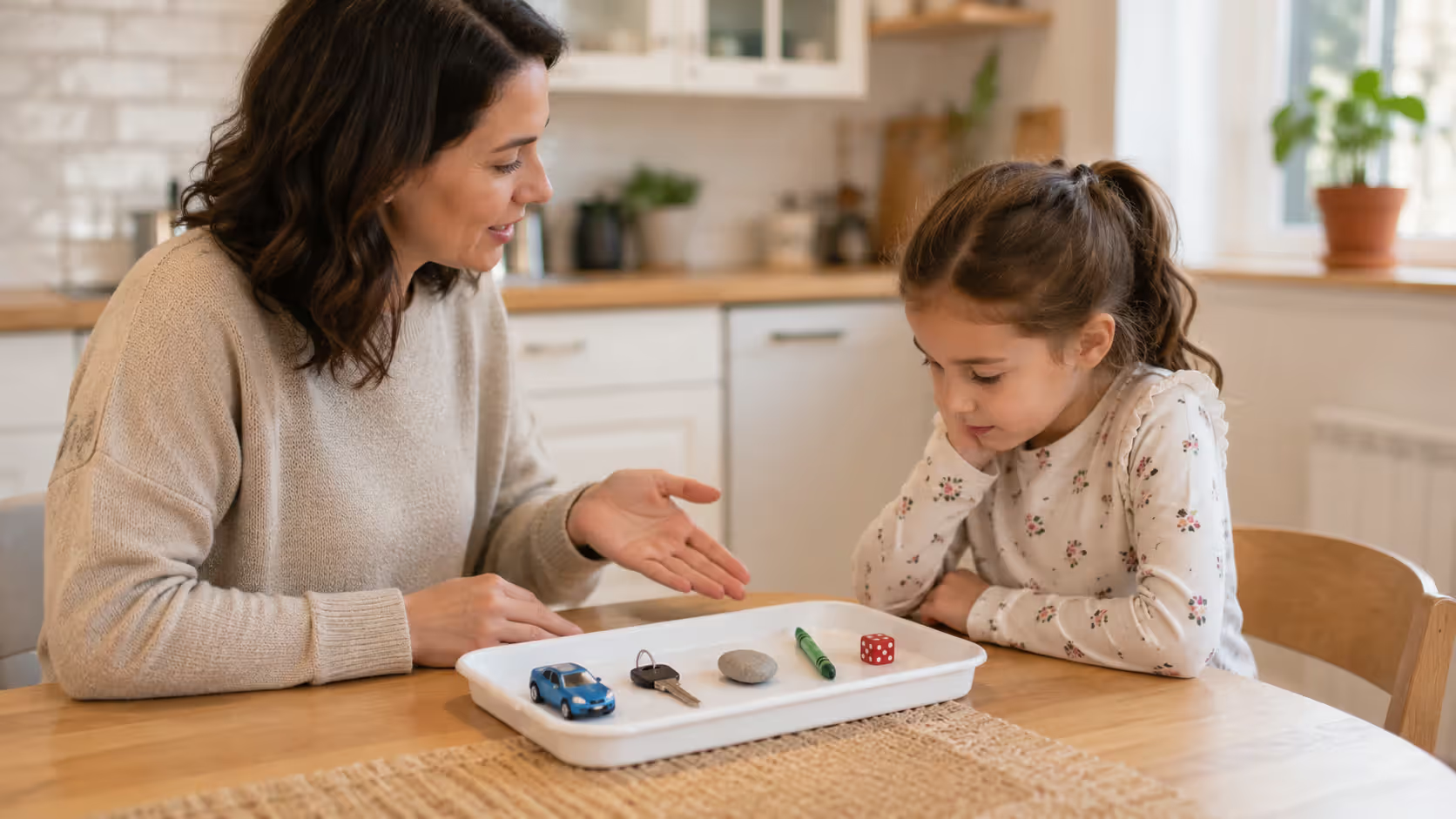
Memory games work, but skip the expensive versions. Play "What's Missing?" by placing three to five objects on a tray, letting your child study them, covering the tray, and removing one item. For toddlers, start with three very different objects. For older preschoolers, use five to seven similar items to increase the challenge.
Simon Says is an underrated executive function activity. It requires working memory (remembering the instruction), inhibitory control (only moving when you hear "Simon says"), and attention. Play it during transitions—"Simon says put on your shoes" makes getting out the door more engaging.
Storytelling back and forth builds working memory naturally. You start a story with one sentence, your child adds the next, and you continue building together. They have to remember what's already happened to keep the story coherent. This works especially well during car rides or waiting rooms.
Routine variations strengthen attention and flexibility. If your bedtime routine is always bath-books-bed, occasionally switch it to books-bath-bed. Talk about the change beforehand: "Tonight we're doing something different." This helps children practice adjusting expectations.
Here's a common mistake: assuming more screen time with "educational" apps helps. Most apps don't build executive function because they're designed to hold attention, not strengthen it. The child isn't working to focus—the app is doing that work with bright colors and immediate rewards. Real executive function activities at home require your child to direct their own attention, which feels harder but builds stronger skills.
Sorting and categorizing during cleanup teaches working memory and cognitive flexibility. Instead of "clean up your toys," try "Can you find all the blue toys first, then all the cars?" This requires holding the category in mind while scanning and sorting.
Author: Marcus Hollow;
Source: raynet-merseyside.net
Teaching Self-Regulation and Inhibitory Control at Home
Self-regulation and executive function overlap significantly. You can't have one without the other.
The foundation is co-regulation—you lending your calm to help your child find theirs. When your toddler is melting down because they can't have candy, your steady presence and calm voice provide the external regulation their brain can't generate yet. Over time, they internalize this. You're literally shaping their neural pathways for self-soothing.
Waiting practice should start small. Don't expect a two-year-old to wait patiently while you finish a phone call. But you can build "waiting muscles" gradually. Try setting a visual timer for 30 seconds and having them wait before opening a snack. Increase the duration slowly. The key is making the wait concrete—toddlers can't conceptualize "just a minute," but they can watch sand fall through a timer.
Stop-and-go games build inhibitory control through play. Red Light, Green Light is the classic version. Freeze Dance works beautifully for younger children. Musical statues, too. These games are fun, but they're also serious executive function training. Your child practices stopping an action that's already in motion, which is exactly what inhibitory control requires.
Emotion labeling strengthens self-regulation. When your child is frustrated, name it: "You're feeling really angry that we have to leave the playground." This simple act helps their brain categorize and process the emotion, which is the first step toward managing it. For older preschoolers, ask them to rate feelings on a scale: "How big is your mad? Show me with your hands."
Choice within limits gives children practice with decision-making while keeping things manageable. "Do you want to brush teeth first or put on pajamas first?" This isn't about giving them total control—it's about exercising their executive function within safe boundaries.
Here's what many parents get wrong: they remove all frustration from their child's life. A child who never has to wait, never hears "no," and never experiences disappointment doesn't develop inhibitory control. Small, manageable frustrations are the gym where these skills get stronger. The goal isn't to make life hard—it's to avoid making it so easy that they never build resilience.
Breathing exercises work even for young children when you make them concrete. "Smell the flower" (breathe in) and "blow out the candle" (breathe out) gives preschoolers a tool they can use. Practice when they're calm so it's available when they're not.

Author: Marcus Hollow;
Source: raynet-merseyside.net
Developing Planning Skills and Flexible Thinking in Children
Planning skills development in children starts with very simple sequences and builds toward complex multi-step thinking.
Backward chaining is your friend here. If you want your child to get dressed independently, start by having them do only the last step (pulling up pants that are already on their legs). Once they master that, they do the last two steps. Eventually, they're doing the whole sequence. This works because they experience the satisfaction of completion each time, which motivates continued effort.
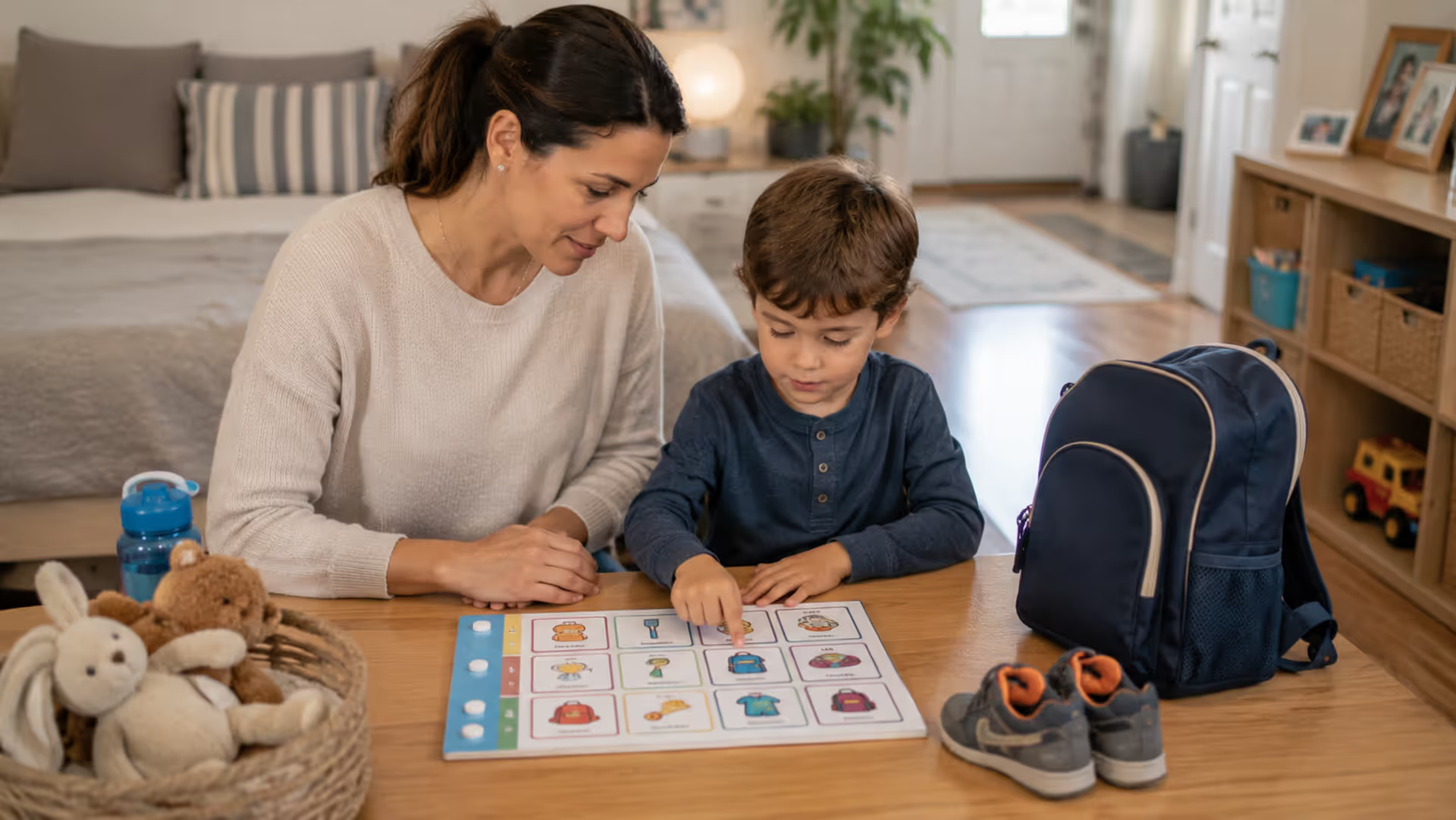
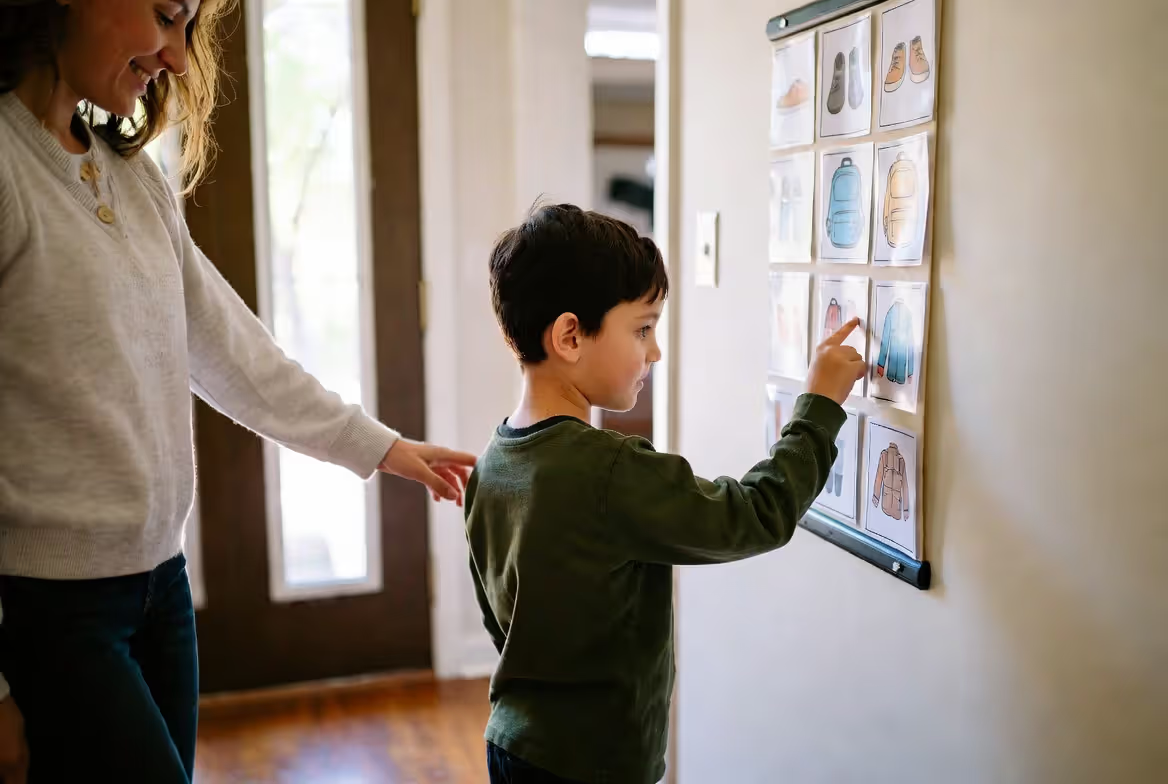
Visual schedules externalize planning. For a morning routine, use pictures showing each step: get dressed, eat breakfast, brush teeth, get backpack. Your child can check off or flip each card as they go. This supports working memory (they don't have to remember what's next) and gives them practice following a plan.
Project-based activities teach planning naturally. "Let's build a fort" requires thinking ahead about materials needed, deciding on design, and adjusting when things don't work. A three-year-old's version might be very simple—gathering pillows and blankets. A five-year-old might sketch a plan first.
Open-ended materials encourage flexible thinking better than single-purpose toys. Blocks can be a tower, a road, a house, or a spaceship. Play dough can be anything. When children have to imagine uses rather than follow prescribed play patterns, they're exercising cognitive flexibility.
Problem-solving conversations build metacognition in early childhood. When something goes wrong, resist the urge to fix it immediately. Instead, ask: "What could we try?" or "What's another way?" If the tower keeps falling, you might say, "Hmm, that's not working. I wonder why? What do you think we could change?" You're teaching them to step back, analyze, and generate alternatives.
Flexible thinking in children develops through exposure to change. Read familiar stories but change the ending. Take a different route to the park and talk about it. Cook a familiar meal but swap one ingredient. Each small variation teaches their brain that change isn't catastrophic—it's just different.
"What if" games are powerful for older preschoolers. "What if we didn't have a refrigerator—how would we keep food cold?" or "What if dogs could talk—what do you think they'd say?" These hypotheticals require mental flexibility and creative problem-solving.
Here's the counterintuitive part: too much structure can actually hinder planning skills. If every minute of your child's day is scheduled and managed by adults, they never practice planning for themselves. Build in unstructured time where they have to decide what to do, gather what they need, and figure out how to make it happen.

Author: Marcus Hollow;
Source: raynet-merseyside.net
Parent Strategies to Support Executive Skills Every Day
Parent support for executive skills is less about special activities and more about how you approach everyday moments.
Model your own executive function out loud. Narrate your thinking: "I need to remember to bring the library books. I'm going to put them by the door right now so I don't forget." Or "This isn't working. Let me try a different way." Your child is watching and learning how you plan, adjust, and regulate yourself.
Create predictable routines because they free up mental energy. When the sequence is always the same, your child doesn't have to use working memory to figure out what's next. That saved energy can go toward other executive function challenges. But within those routines, allow choices and variations.
Use countdowns and warnings before transitions. "In five minutes, we're leaving the park" gives your child time to mentally prepare and practice shifting gears. Surprise transitions are much harder on executive function.
Break tasks into smaller chunks. "Clean your room" is overwhelming. "Put all the books on the shelf" is manageable. Once that's done, give the next small instruction. You're scaffolding the planning process until they can do it independently.
Reduce decision fatigue by limiting choices. Three options are plenty. Twenty create overwhelm and don't build executive function—they just exhaust it.
Physical activity matters more than most parents realize. Executive function and physical movement are linked. Running, climbing, and active play strengthen the same brain regions that control impulses and attention. Aim for at least an hour of active play daily.
Protect sleep fiercely. A tired child's executive function is dramatically impaired. Most preschoolers need 10-13 hours of sleep in a 24-hour period. When sleep is insufficient, you'll see more impulsivity, less flexibility, and weaker working memory.
Limit multitasking demands. If your child is working on something that requires focus, don't talk to them about something else at the same time. Let them finish one thing before starting another.
The simpler option usually wins here. Parents sometimes create elaborate systems that require them to use massive executive function to maintain. A simple visual chart your child can actually use beats a complex reward system you'll abandon in a week.
When to seek professional support: If your child's executive function challenges are significantly impacting daily life—they can't follow any routines, have constant meltdowns, can't play with peers, or show extreme inflexibility—talk to your pediatrician. Some children need occupational therapy or other support. Early intervention makes a significant difference.
Author: Marcus Hollow;
Source: raynet-merseyside.net
Executive Function Skills by Age: What to Expect
Here's a realistic snapshot of typical development:
| Age Range | Working Memory | Inhibitory Control | Cognitive Flexibility |
| 2-3 years | Follows 2-step instructions; remembers where familiar objects belong; recalls recent events when prompted | Brief pauses before acting; can wait 30 seconds with support; stops action when reminded | Switches between two simple activities with help; accepts minor changes with warning; engages in simple pretend play |
| 3-4 years | Follows 3-step instructions; remembers rules of simple games; recalls details from earlier in the day | Waits 2-3 minutes for a turn; resists some impulses; can stop and start actions in games | Adjusts to routine changes with moderate protest; suggests simple alternatives; plays pretend with multiple scenarios |
| 4-5 years | Holds multiple pieces of information while working; remembers and follows classroom routines; recalls events from several days ago | Waits 5-10 minutes; thinks before acting in familiar situations; inhibits movement in games like freeze dance | Switches activities without major upset; adapts when plans change; considers other viewpoints in simple situations |
| 5-6 years | Follows multi-step instructions independently; uses strategies to remember (like rehearsing); sustains attention for 10-15 minutes | Demonstrates consistent self-control in structured settings; can delay gratification for meaningful rewards; stops inappropriate behavior when reminded | Handles unexpected changes reasonably well; generates multiple solutions to problems; adjusts behavior across different settings |
Remember, this table shows typical ranges. Your child might be ahead in one area and still developing in another. That's completely normal.
FAQ: Executive Function Questions Answered
Your child's executive function skills are forming right now, shaped by thousands of daily interactions. The good news? You don't need to be perfect. You don't need expensive programs or special expertise.
What matters is understanding that these skills are teachable, providing age-appropriate challenges, and maintaining patience with the developmental process. The toddler who melts down at every transition will, with support and time, become the kindergartener who can shift activities with just a warning. The preschooler who forgets two-step directions will eventually handle complex morning routines independently.
Focus on progress, not perfection. Celebrate small wins. And remember that the most powerful thing you can do is stay regulated yourself—your calm, flexible, organized presence is the scaffold your child's developing brain needs most.
The executive function skills you're supporting now will serve your child for decades. They'll help them navigate friendships, succeed in school, manage challenges, and eventually live independently. That's worth the effort of turning daily moments into opportunities for growth.