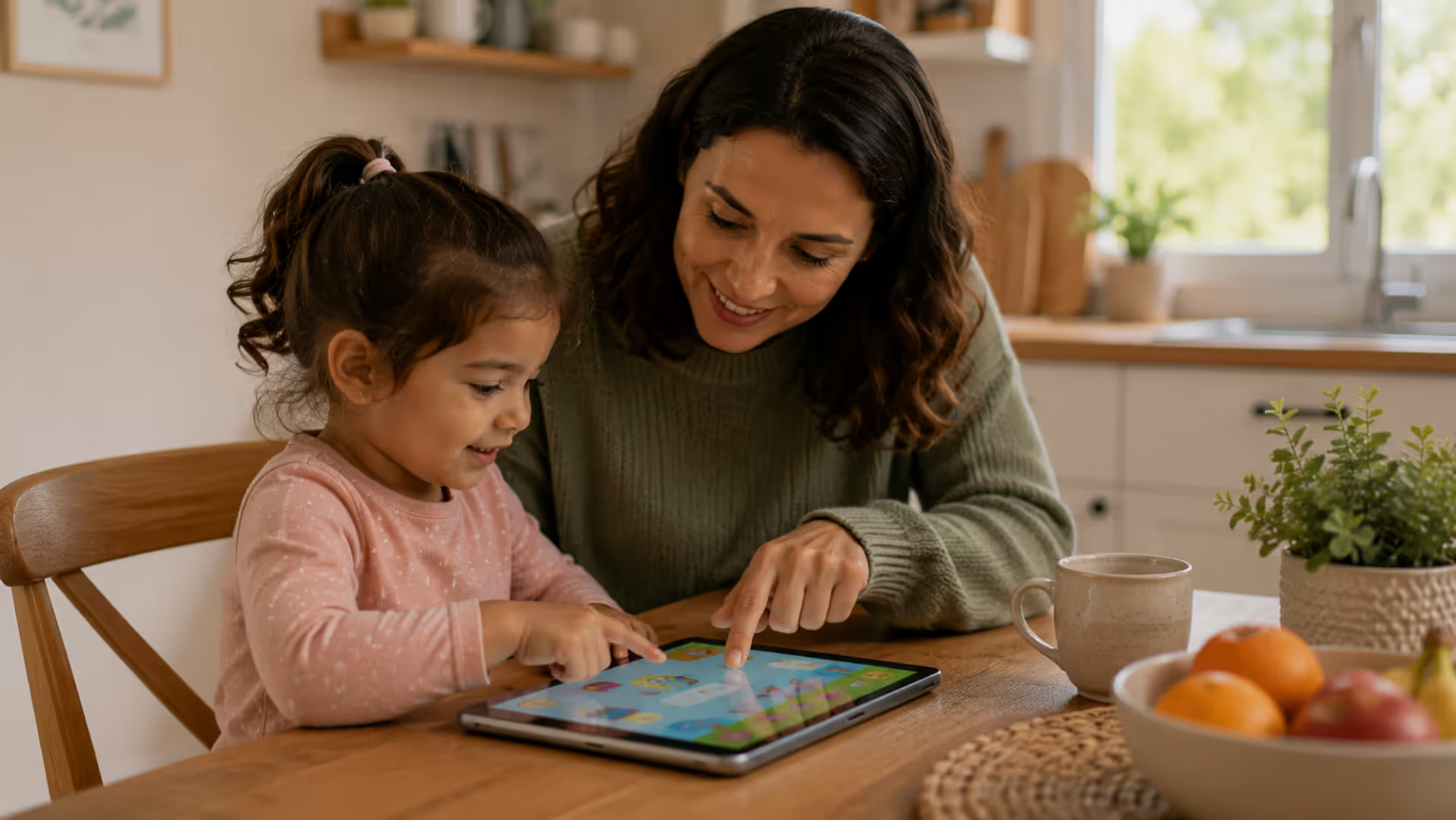
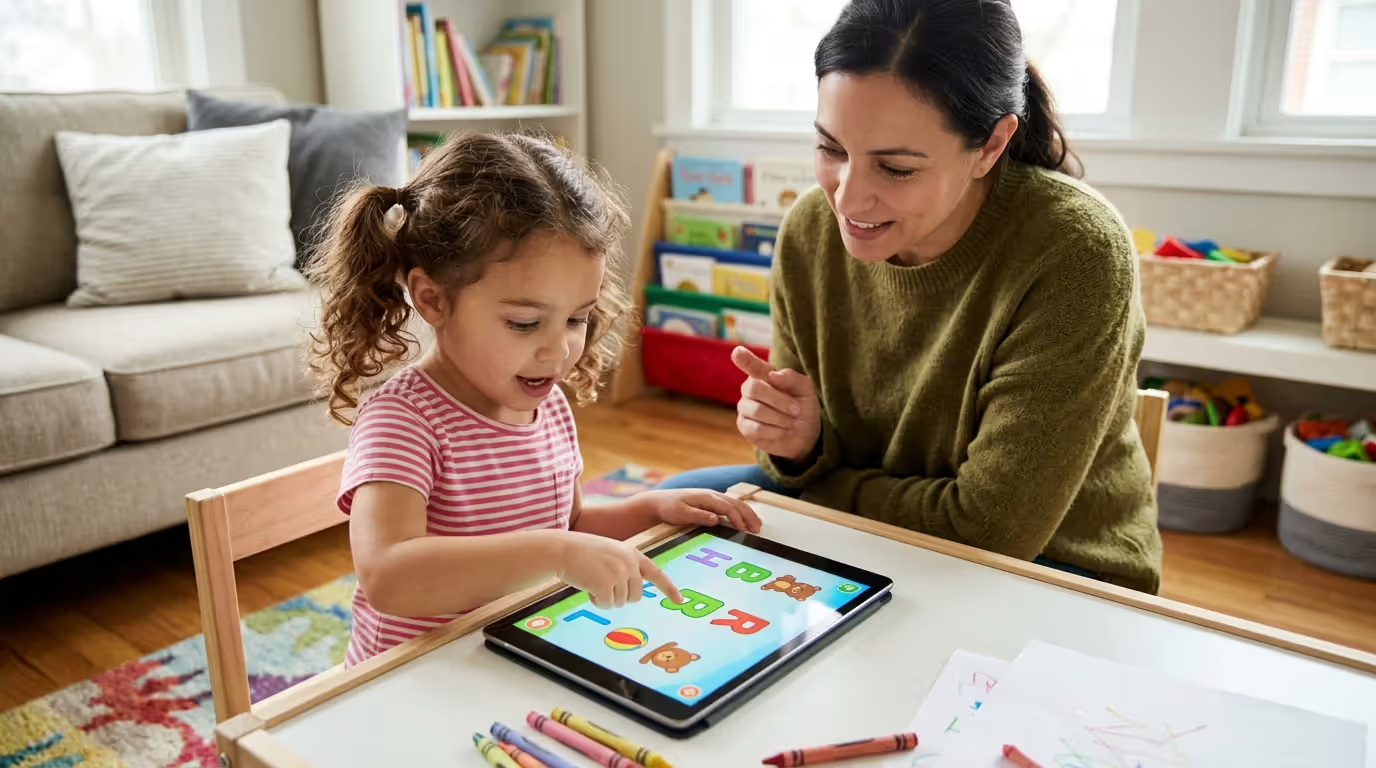
Parent and preschool child using educational screen content together at home
Educational Screen Time Guide for Parents

Content
Screen time conversations leave many parents confused and anxious. Guidelines seem contradictory, and advice changes constantly. The reality is simpler than you might think: screens themselves aren't inherently good or bad—what determines their impact is content quality, how your child engages with that content, and whether digital media crowds out essential developmental activities. A three-year-old tapping through a phonics app while you discuss letter sounds together has a completely different experience than that same child watching random cartoons alone for an hour. This guide provides research-backed strategies for making screen time work for your family's specific needs.
What Makes Screen Time Educational
Educational screen experiences require your child's brain to work. They should be thinking, problem-solving, or creating—not zoning out.
High-quality learning content has identifiable features. It prompts children to respond through questions or challenges. Concepts connect to things kids encounter in their daily lives. The pace gives young viewers time to think rather than overwhelming them with constant stimulation. You'll see characters demonstrating friendship skills, managing disappointment, and working through challenges constructively.
Passive viewing looks entirely different. Content designed purely to entertain rarely pauses for viewer participation. Examples include unboxing videos that just show someone opening toys, programs stuffed with commercials targeting young viewers, or shows that jump between scenes too quickly for processing.
Matching content to developmental stages makes enormous differences. Toddlers benefit from programming about basic words, simple shapes, primary colors, and straightforward if-then relationships. Preschoolers are ready for letter sounds, number concepts, pattern identification, and stories about handling emotions. Elementary-aged children can tackle multi-step problems, science exploration, and creative production using digital tools.
Parents frequently assume the "educational" label guarantees quality. It doesn't. Plenty of apps and programs marketed for learning deliver minimal actual benefit. Seek out content developed with child psychologists, aligned with teaching standards, or endorsed by organizations like Common Sense Media or PBS Kids.
Author: Hannah Whitaker;
Source: raynet-merseyside.net
Screen Time Guidelines by Age
The American Academy of Pediatrics revised their guidance to acknowledge today's digital landscape while protecting healthy development. These recommendations stem from studies examining how children's brains mature.
| Child's Age | Recommended Daily Maximum | Appropriate Content Types | Parent Participation Level |
| Birth to 18 months | None, except live video calls | Video chats with relatives only | Adult must be present and engaged |
| 18 months to 2 years | Very limited if any | Carefully selected learning programs | Must view together every time |
| Ages 2-5 | Up to 60 minutes | Age-matched educational material | Highly encouraged throughout |
| Ages 6 and up | Family decides consistent boundaries | Mix of content, excluding homework/creative work | Suggested when introducing new content |
How Much Screen Time for Toddlers
Children younger than 18 months develop best without screens in their lives. Their rapidly growing brains need tactile exploration, direct human contact, and physical movement. Research shows they struggle to apply what they see on flat screens to three-dimensional reality—scientists call this the "video deficit effect."
Live video conversations are different. Toddlers gain from seeing faraway grandparents through video technology, particularly when parents participate by pointing at the screen and talking about what they see together.
From 18 months to age two, you might introduce extremely limited quality programming if that fits your family. Think 15-20 minutes maximum, not extended periods. Your presence is mandatory. Research confirms your commentary about what's happening teaches more than the program itself.
Recommendations for Ages 3–5
Preschool-aged children can benefit from up to 60 minutes each day of thoughtfully chosen educational programming. This developmental stage responds well to shows that speak directly to viewers, wait for responses, and reinforce important ideas through repetition.
Match content to where your child is developmentally. Three-year-olds need straightforward stories with obvious conclusions. Five-year-olds can track more complicated plots and enjoy games requiring basic problem-solving.
Many parents overlook this detail: that 60-minute maximum doesn't mean independent viewing time. Your participation still multiplies learning outcomes dramatically.
Guidelines for School-Age Children
Screen time becomes more complex once formal schooling begins. Assignments often need computers. Creative work might involve tablets. Video conversations with classmates support friendships.
The AAP suggests families establish reliable limits ensuring screens don't interfere with adequate sleep, active play, and in-person family connection. Most specialists recommend 1-2 hours of entertainment-focused screen time for elementary students, separate from school-required technology use.
Children this age can begin developing self-control around screens, but they still need adult-set boundaries. The pattern I observe repeatedly is parents expecting older elementary students to manage their own limits independently—they typically can't, at least not consistently.
How Screen Time Affects Child Development
Screens influence development across cognitive, social, emotional, and physical domains. These effects aren't uniformly harmful, but understanding them helps you make informed choices.
From a cognitive perspective, heavy screen exposure during early childhood correlates with later attention challenges. Developing brains require diverse, unpredictable real-world input. Screens deliver repetitive, predictable stimulation that builds different neural connections. That said, thoughtfully designed educational programs can strengthen particular abilities like recognizing letters or understanding number sequences when implemented appropriately.
Language acquisition suffers when screens substitute for conversation. Infants and toddlers master language through responsive exchanges with caregivers—the conversational back-and-forth that expands vocabulary and grammatical understanding. Screens can't react to your child's specific sounds or modify language complexity based on their responses.
Social and emotional maturation depends on human connection. Preschoolers learn to interpret facial cues, understand vocal tone, and resolve disagreements through play with other children and family members. When screen time replaces these interactions, social competence develops more slowly.
From a physical standpoint, excessive screen use encourages sedentary patterns. Young children require multiple hours of movement daily for developing motor abilities, building muscle, and refining coordination. Extended screen time also impacts posture and eye comfort, though these issues become more significant for older children with higher usage.
Nobody disputes that screen media has teaching potential—it clearly does. What we must consider is whether it teaches young children as powerfully as alternative methods, and what trade-offs we accept in other developmental areas. Current evidence indicates that for our youngest children, direct interaction with responsive adults remains unmatched for learning.
— Christakis Dimitri
Screen Time Impact on Sleep
Screens interfere with sleep through two distinct mechanisms. Device screens emit blue wavelengths that interfere with melatonin release, the hormone signaling bedtime readiness. Content quality also matters—stimulating or frightening programs energize children emotionally, complicating the transition to rest.
Studies demonstrate that screen exposure during the 60 minutes before bed correlates with reduced total sleep time, extended time falling asleep, and increased nighttime awakenings in children. These problems accumulate, creating ongoing sleep deficits that compromise mood, learning capacity, and daytime behavior.
The solution is straightforward: create a 60-minute screen-free buffer before bedtime. This applies regardless of whether content is "educational"—the light exposure and mental activation affect sleep either way.
Co-Viewing and Active Screen Engagement
Watching alongside your child converts passive viewing into active learning. Your presence provides context, prompts thinking, and links screen content to real life.

Author: Hannah Whitaker;
Source: raynet-merseyside.net
This matters because young children struggle to separate fantasy from reality. They miss narrative nuances. They don't automatically connect screen events to their own experiences. Your narration and questioning create these bridges.
While viewing, pause periodically for predictive thinking: "What might happen next?" Highlight emotions: "Notice her expression—what's she feeling right now?" Link to personal experiences: "Remember when you felt that way too?"
Following viewing, bring learning into the physical world. After watching content about geometric shapes, search for those shapes throughout your home. If the program showed a character solving a challenge, discuss times your child overcame obstacles. Develop related art projects, dramatize scenes, or find books exploring similar topics.
Your own habits send powerful messages. Children notice if you're constantly checking your phone while enforcing their screen limits. Family screen guidelines should apply to everyone, adjusted appropriately for different ages.
The simplest approaches often work best. Rather than elaborate follow-up activities, just have conversations about what you watched together. Ask what they enjoyed. Discuss what characters might have done differently. These discussions develop critical thinking skills.
Alternatives and Balance Strategies
Creating balance between screens and other experiences protects development while permitting reasonable digital media use. The objective isn't eliminating screens entirely—it's purposeful use within a full, diverse day.
For toddlers and preschoolers, emphasize:
Active movement: Running, climbing, jumping, dancing. Target three hours of physical activity distributed throughout each day. This develops large muscle control and releases the energy young children naturally have.
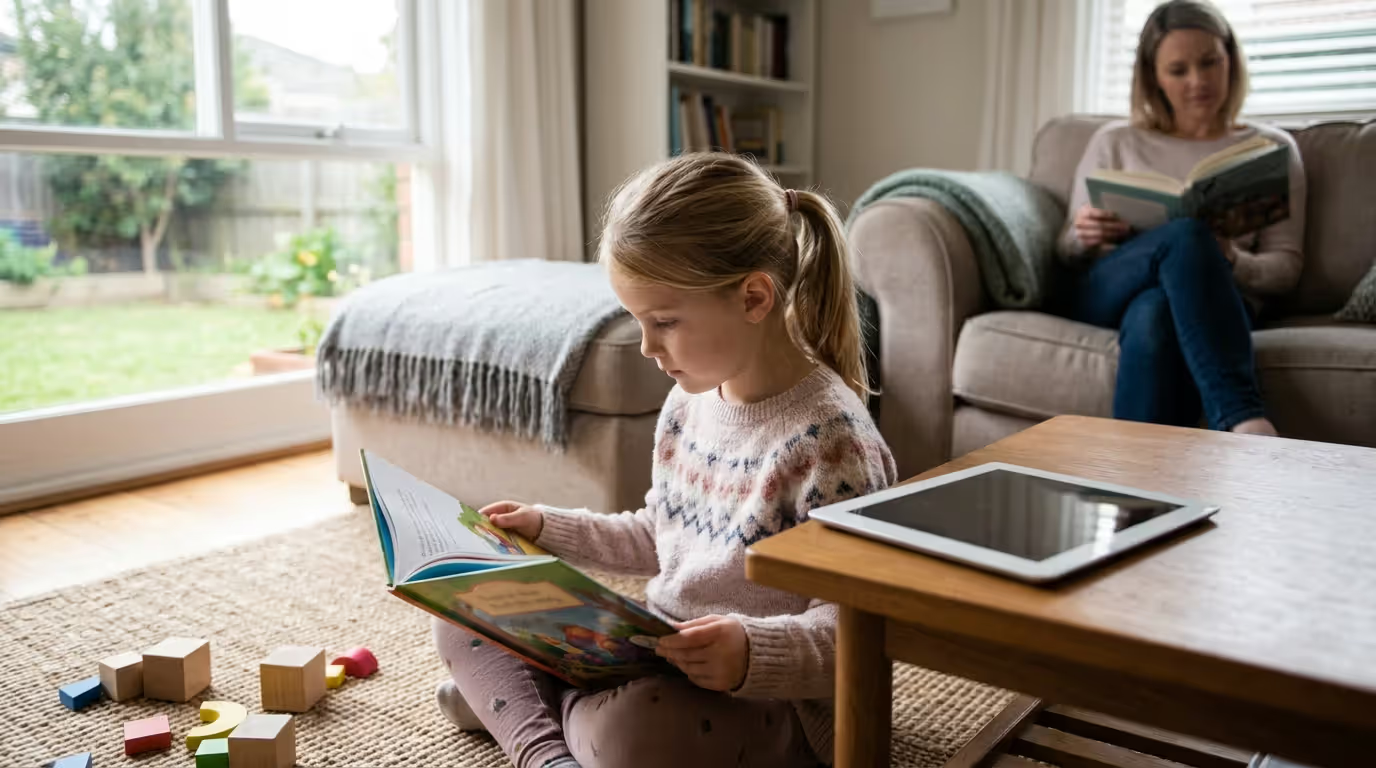
Imaginative play: Crayons, building blocks, costumes, modeling clay. Materials children can use in countless ways develop creativity and problem-solving. Batteries not needed.
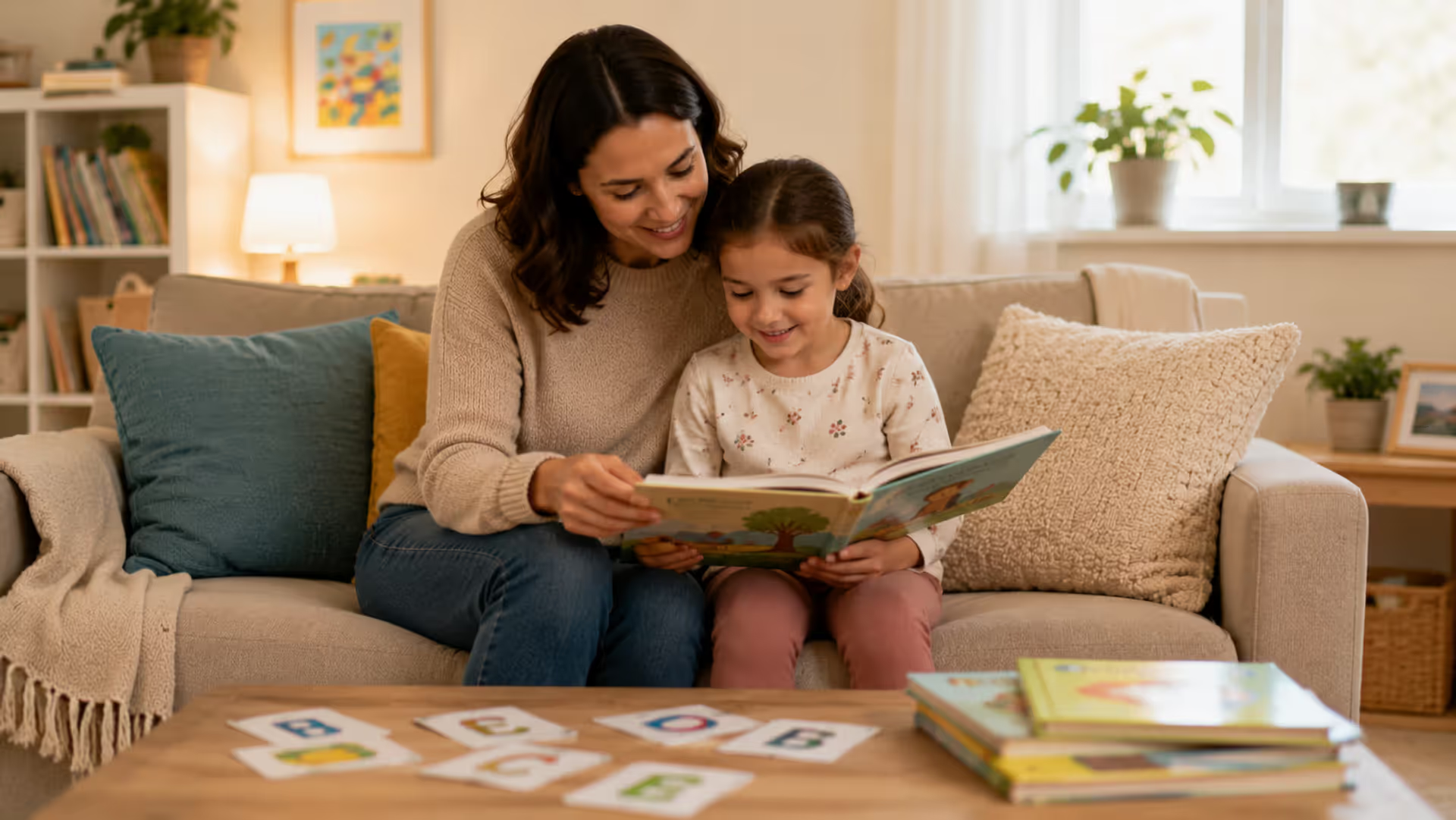
Shared reading: Picture books remain among the highest-impact activities for vocabulary growth, emotional connection, and literacy foundations. Just 15-20 minutes daily creates measurable benefits.
Outside experiences: Exposure to natural environments supports attention, emotional wellbeing, and physical health. Your yard, a nearby park, or neighborhood walks all count.
For school-aged children, include:
Skill development: Musical instruments, athletics, cooking, building projects. Growing competent in offline areas builds self-confidence and identity.
Peer interaction: Unstructured friend time, board games, team sports. These experiences teach negotiation, teamwork, and conflict resolution in ways screens cannot duplicate.
Family responsibilities: Age-suitable chores develop accountability and strengthen family bonds. They also occupy time that might otherwise default to screens.
Avoid positioning screens as rewards for completing other activities. This elevates screen time's perceived desirability and frames other activities as obstacles you must endure to earn the "real fun." Instead, treat screens as simply one choice among many throughout the day.
A typical weekday afternoon might previously have included two hours of television and tablet use. After establishing routines incorporating outdoor play, a hands-on project, and participation in meal preparation, screen time naturally decreases to 30-45 minutes without feeling punishing.
Managing and Monitoring Screen Use
Successful screen management combines clear boundaries with reasonable flexibility. Overly rigid rules frequently backfire, while complete absence of structure leads to overuse.
Begin with a family media agreement. Decide collaboratively on screen-free locations (typically bedrooms and eating areas) and screen-free periods (during meals, the 60 minutes before bed, weekday mornings). The AAP provides a free online planning tool for creating customized agreements.
Establish specific daily time limits and maintain them consistently. Implement countdown timers so children can track remaining time. Provide advance notice before screen time concludes: "You have five more minutes, then tablets go away."
Technology controls help but aren't complete solutions. Apply device settings to block age-inappropriate material, enforce time restrictions, and prevent unauthorized downloads. However, don't depend exclusively on technology—your active involvement outweighs any automated filter.
Stay informed about what your children access. Review apps before permitting installation. Watch several episodes of new programs. Read parent reviews. You can't oversee every moment, but you should understand what content they're consuming.
Make non-screen options readily available. When screens are the only convenient activity, children naturally gravitate toward them. Keep books, art materials, and playthings accessible. When you hear "I'm bored," suggest specific alternatives rather than allowing screens to become the automatic default.
Remain willing to adapt. Some days will exceed limits—illness, long drives, special family movie nights. That's acceptable. Overall patterns matter more than daily perfection.
When children resist boundaries (and they will), remain calm and consistent. Explain your reasoning in age-appropriate language. Recognize their frustration while holding the boundary firm. Eventually, the routine becomes accepted.
Author: Hannah Whitaker;
Source: raynet-merseyside.net
Frequently Asked Questions About Children's Screen Time
Successful screen management doesn't demand perfection. It requires thoughtfulness. You're weighing genuine educational advantages against developmental risks, convenience against long-term habit formation, and your child's preferences against their actual needs.
Research provides clarity on several fundamental points. Young children learn most powerfully through tactile exploration and human relationships. Watching together dramatically amplifies screen time's educational value. Content quality outweighs quantity. Sleep, active movement, and direct human interaction shouldn't be compromised for screens.
Yet you're navigating real-world constraints. Screens function as tools—sometimes beneficial, sometimes detrimental, depending on implementation. A carefully selected educational application used for 20 minutes while you prepare dinner isn't harming your child. A video conversation with distant grandparents strengthens family relationships. Age-suitable screen time within sensible limits, balanced with abundant other activities, belongs in healthy childhood.
Trust your judgment to modify approaches as circumstances change. Notice what succeeds for your family and what doesn't. Your child's unique temperament, your family's daily rhythms, and your particular situation all shape what reasonable screen use looks like in your home.
The objective isn't raising children who avoid screens entirely. It's developing children who engage with technology purposefully, manage their own use as they grow older, and pursue fulfilling, diverse activities both with and without screens. You're establishing that foundation right now, through each deliberate decision you make.