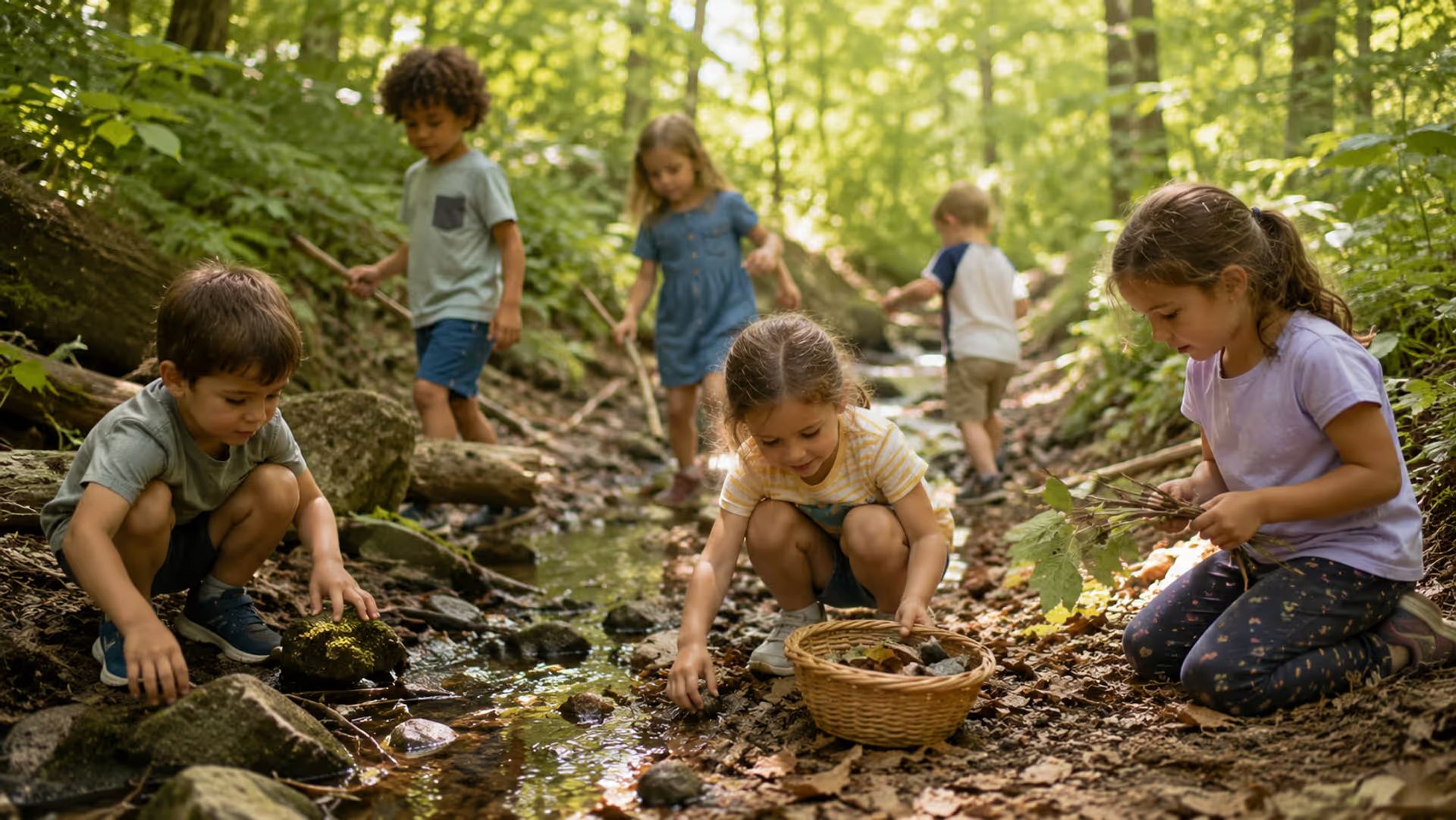
Children exploring nature and learning through outdoor play in park setting
Outdoor Learning Benefits for Child Development Guide

Content
Children today spend less time outdoors than any previous generation. Research from the National Recreation and Park Association shows that kids now average just 4–7 minutes of unstructured outdoor play daily, while screen time hovers around seven hours. That's a dramatic shift from the 1970s, when children spent several hours outside each day. This trend has sparked concern among pediatricians, educators, and developmental psychologists who recognize what's being lost. The good news? Growing evidence shows that even small increases in outdoor learning time produce measurable benefits across every area of child development.
Why Outdoor Learning Matters More Than Ever
The term "nature deficit disorder" entered our vocabulary two decades ago, but the problem has intensified. Urban planning shifted toward car-centric designs. Parental fears about safety increased. Schools cut recess to make room for test prep.
But here's what changed the conversation: neuroscience caught up. Brain imaging studies now show that time in natural environments literally changes how children's brains develop. The outdoor learning benefits extend beyond simple physical activity—though that matters too.
Kids who spend regular time outdoors show better executive function, improved spatial reasoning, and stronger working memory. Their cortisol levels drop. Their attention spans lengthen. And these aren't marginal improvements we're talking about.
The importance of outdoor play shows up in unexpected places. Children with ADHD demonstrate better focus after just 20 minutes in a park compared to the same time spent in urban settings. Anxiety rates drop. Social conflicts decrease.
Schools experimenting with outdoor learning report something interesting: behavior problems often disappear when the same kids who struggle indoors move their lessons outside. The environment itself becomes a teaching tool.
Physical and Motor Development Through Outdoor Play
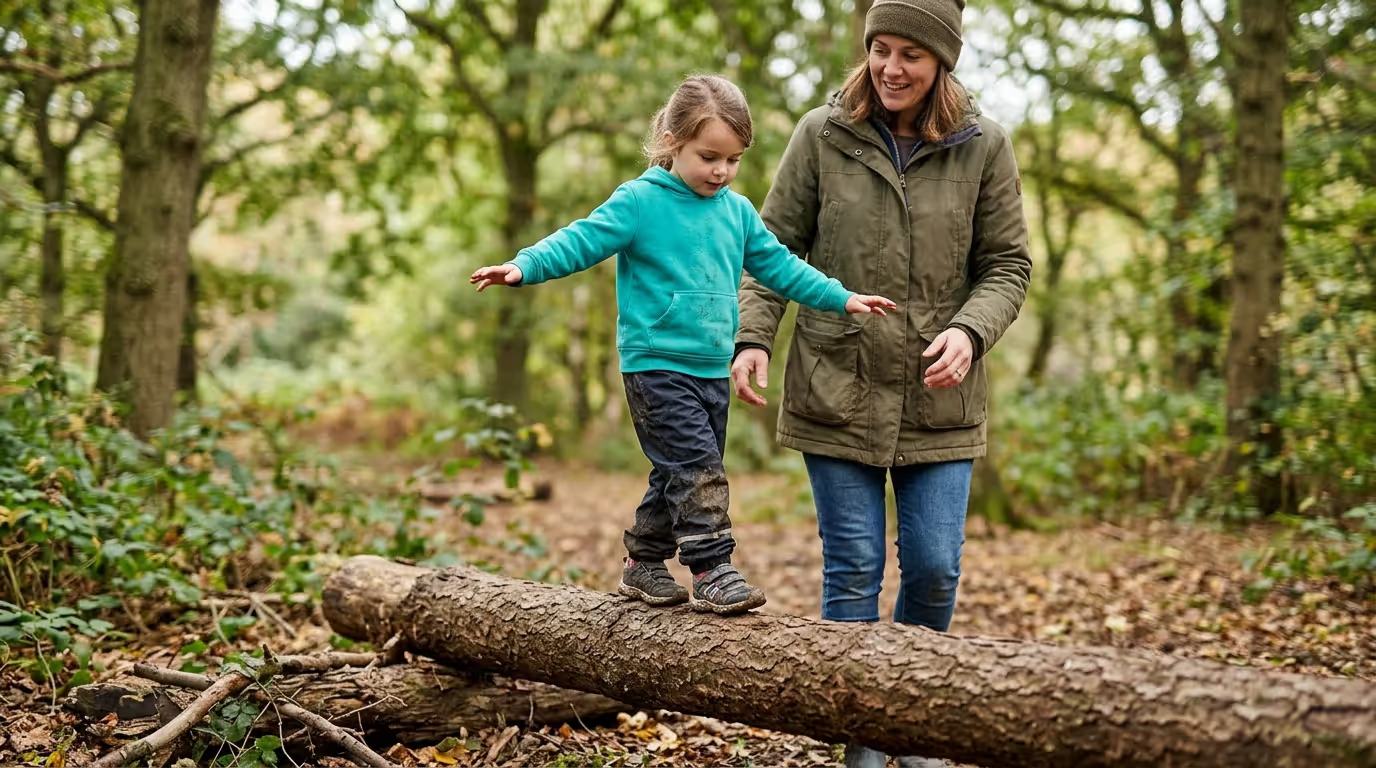
Natural spaces offer something playgrounds can't replicate: unpredictability. That uneven ground, that wobbly log, that slightly-too-high branch—these aren't design flaws. They're features.
Author: Olivia Bennet;
Source: raynet-merseyside.net
How Risky Play Builds Strength and Coordination
Risky play benefits go against every protective instinct parents have. Yet pediatric occupational therapists now prescribe it. Why? Because children need to test their limits to understand them.
When kids climb trees, they're calculating weight distribution and grip strength in real time. When they balance on rocks, they're integrating vestibular, visual, and proprioceptive input. These aren't just physical skills—they're building the neural pathways for risk assessment that they'll use throughout life.
Angela Hanscom, a pediatric occupational therapist, documents how free play outside children develop core strength that sitting at desks simply can't build. She's measured it. Kids who spend more time in active outdoor play have stronger postural control, better hand-eye coordination, and fewer sensory processing issues.
The common mistake? Thinking "risky" means dangerous. Real risky play happens within children's zone of proximal development—challenging but manageable. A four-year-old climbing a tree doesn't need to reach the top. They need to figure out how high feels right today.
Gross Motor Skills in Natural Environments
Outdoor play and physical development connect in ways that structured sports don't match. Running on pavement uses different muscles than running on sand, grass, or forest trails. Each surface demands different balance adjustments, different foot placements, different core engagement.
Natural environments provide what therapists call "sensory-rich experiences." Bare feet on various textures. Hands in mud, water, sand. Bodies moving through space without walls or boundaries.
Children who play regularly in natural settings show:
- 20–30% better balance and coordination scores
- Stronger grip strength and hand dexterity
- Better spatial awareness and depth perception
- Lower rates of childhood obesity
- Improved immune system function
That last point surprises people. But exposure to diverse microorganisms in soil and plants actually strengthens immune response. The "hygiene hypothesis" suggests our sanitized indoor environments may contribute to rising allergy and autoimmune rates.
Cognitive and Academic Benefits of Nature-Based Learning
Here's something most parents don't expect: outdoor learning often produces better academic outcomes than traditional classroom instruction. Not despite being outdoors, but because of it.
Nature play and child development research shows that natural environments reduce mental fatigue while increasing focus. The theory, called Attention Restoration Theory, explains why. Indoor environments demand "directed attention"—you must force yourself to focus despite distractions. Natural environments provide "effortless attention"—your brain engages without exhausting itself.
Author: Olivia Bennet;
Source: raynet-merseyside.net
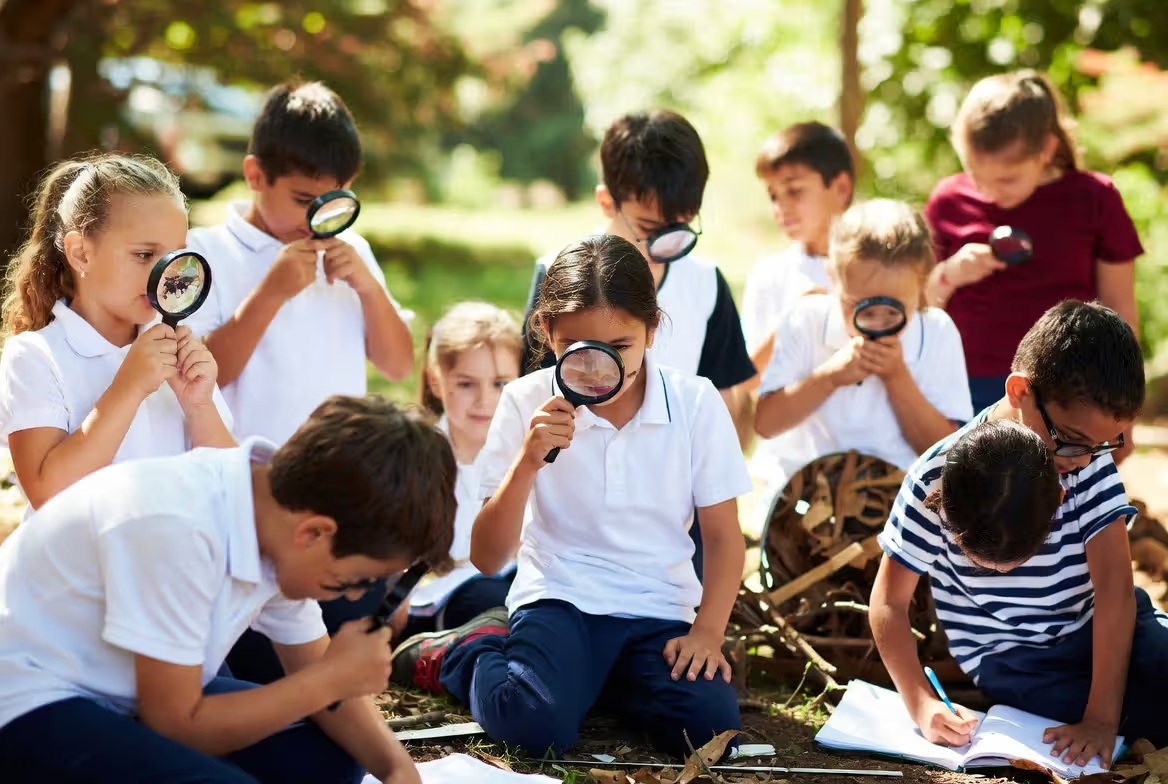
The forest school approach, which originated in Scandinavia and has spread across the US, demonstrates this in practice. Students spend 50–90% of their school day outdoors, regardless of weather. Teachers initially worried about lost instructional time.
The results proved them wrong. Forest school students match or exceed their indoor-only peers in literacy and math. But they also show:
- Stronger problem-solving skills
- Better creative thinking
- Improved collaboration abilities
- Greater persistence with difficult tasks
- Higher intrinsic motivation to learn
One Vermont elementary school tracked this for three years. Students who participated in weekly forest school sessions scored 15% higher on standardized tests than the control group. They also had fewer disciplinary incidents and better attendance.
The pattern I see most often is that outdoor learning naturally integrates STEM concepts. Measuring puddle depths becomes math. Observing insects becomes biology. Building with sticks becomes engineering. The learning happens because children are genuinely curious, not because a curriculum demands it.
Children need nature for the healthy development of their senses, and therefore, for learning and creativity. This is not a sentimental view. It is a hardheaded scientific assessment of what children require for their physical and mental health, and for their souls.
— Louv Richard
Natural materials also offer infinite variables. A worksheet has one solution. A pile of sticks has countless possibilities. This open-endedness builds flexible thinking—the kind that translates to innovation and adaptability later in life.
Social and Emotional Growth in Unstructured Outdoor Time
The benefits of unstructured outdoor time show up most clearly in social dynamics. Without adult-directed activities, children must negotiate their own rules, resolve their own conflicts, and create their own games.
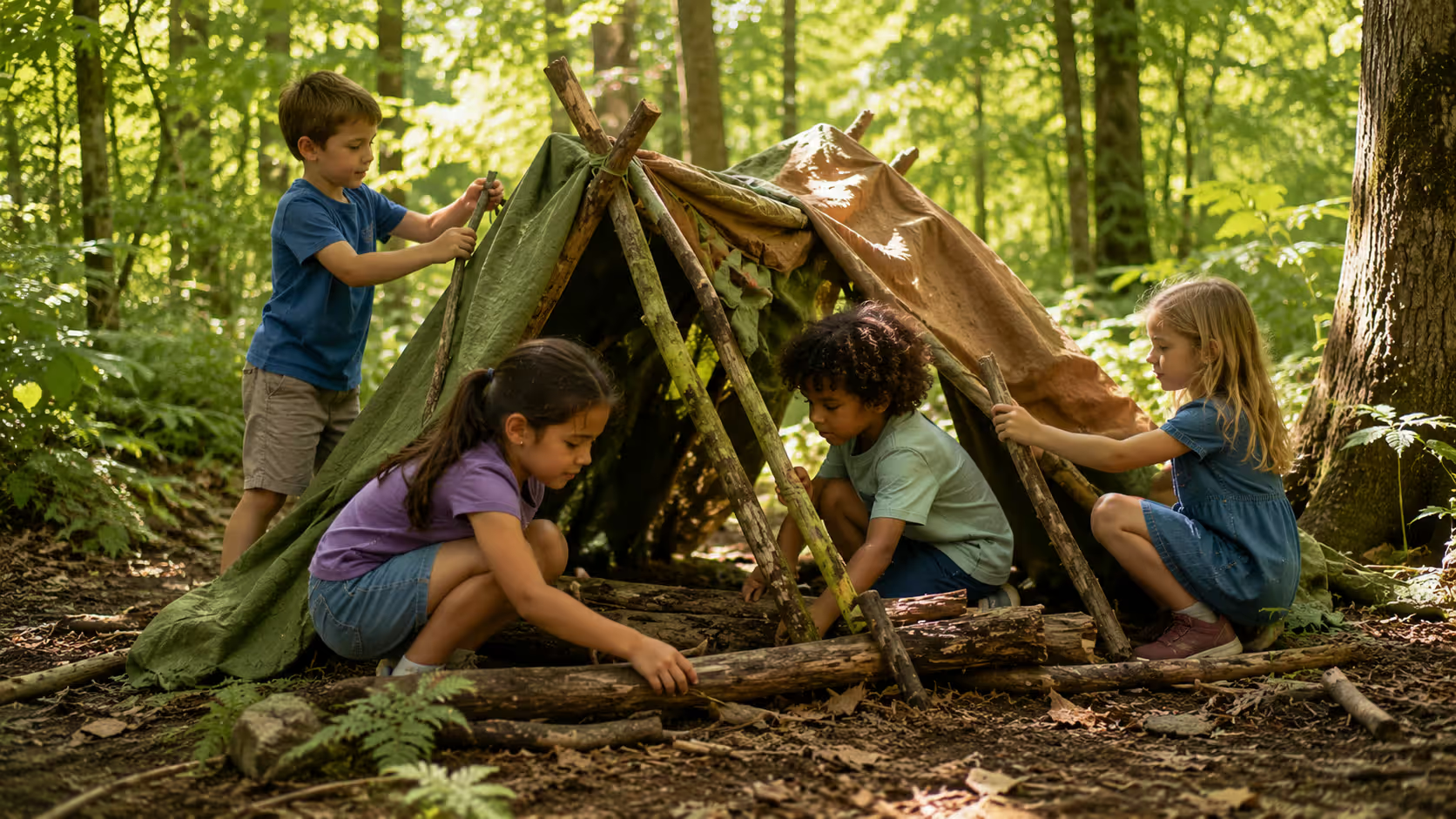
This isn't easy. It's often messy. Kids argue about who gets to be the dragon or whose fort design to follow. But that's precisely the point.
Free play outside children develop emotional regulation skills that structured activities can't teach. When a stick fort collapses, they experience frustration in a low-stakes environment. When someone takes the "best" climbing spot, they practice patience and negotiation. When they successfully balance on that log after 20 tries, they build genuine confidence—the kind that comes from overcoming actual challenges.
Research from Boston University shows that children who engage in more unstructured outdoor play demonstrate:
- Better emotional self-regulation
- Stronger conflict resolution skills
- Greater empathy and perspective-taking
- Higher self-confidence and self-efficacy
- Lower anxiety and depression rates
Author: Olivia Bennet;
Source: raynet-merseyside.net
The outdoor environment itself changes social dynamics. Without walls and defined spaces, children naturally spread out. This reduces territorial conflicts. The abundance of materials means less competition for resources. And the physical activity helps regulate mood and energy levels.
One counterintuitive finding: children actually cooperate more in outdoor settings. They're more likely to include others in play, more willing to compromise, and more creative in finding solutions that work for everyone. The space itself seems to reduce social friction.
Getting Started: Specific Outdoor Learning Activities by Age
You don't need a forest or even a backyard to begin. Small spaces work. So do urban parks, community gardens, or even a patch of grass between buildings.
Garden Play Ideas for Toddlers
Toddlers need sensory exploration more than structured activities. Garden play ideas for toddlers should focus on simple, open-ended experiences:
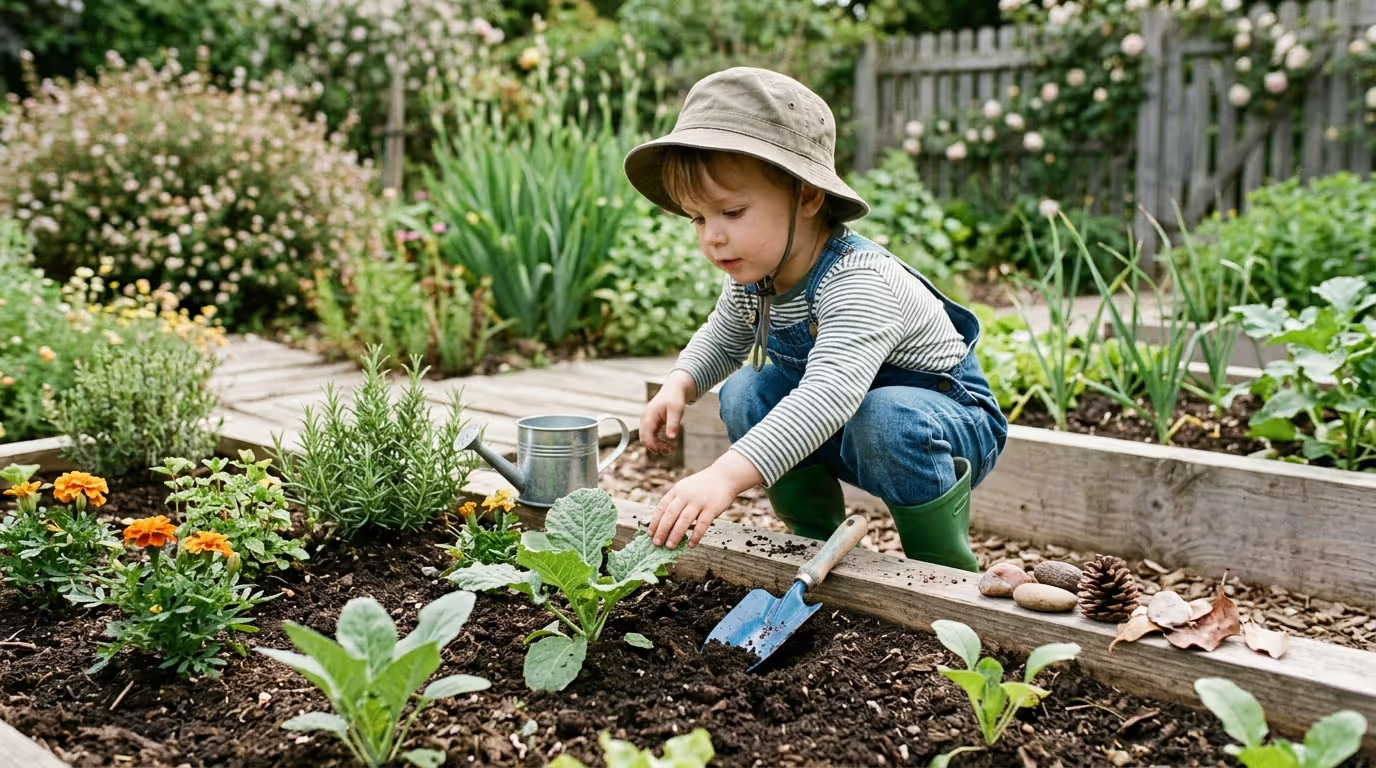
Dirt digging stations: Give them real tools—small trowels, buckets, sieves. Let them move dirt from one container to another. That's it. They'll stay engaged for 30 minutes.
Water play with natural materials: Floating leaves in buckets. Pouring water on different surfaces to see what happens. Washing rocks. Simple, but it builds early science concepts about properties and cause-and-effect.
Sensory gardens: Plant herbs they can touch and smell—mint, basil, lavender. Add flowers with different textures. Include edible plants like cherry tomatoes or snap peas they can harvest and eat.
Bug observation: Turn over logs (then put them back). Watch ants. Follow beetles. You're building observation skills and reducing fear of insects—both useful.
Loose Parts Play for Preschool and Elementary Ages
Loose parts play outdoor transforms how children interact with their environment. "Loose parts" means movable materials without predetermined use: sticks, rocks, pinecones, shells, logs, stumps, fabric pieces, rope, buckets.
The theory comes from architect Simon Nicholson, who recognized that the degree of creativity and inventiveness in play is directly proportional to the number and kind of variables in the environment.
Practical setup:
- Designate a play area where children can move, build, and rearrange materials
- Collect natural materials (or let kids collect them)
- Add some human-made items: rope, tarps, buckets, PVC pipes
- Step back and let children direct their own play
Preschoolers might create "soups" with mud and leaves. Elementary kids might build elaborate forts, create obstacle courses, or invent games with complex rules. The same materials serve different developmental stages.
Schools implementing loose parts play report fewer behavior problems during recess. Children stay more engaged. They argue less. And they develop engineering and physics concepts through hands-on experimentation.
Common Concerns Parents Have About Outdoor Learning
Let's address the fears that keep kids inside.
"But what about safety?" Risky play isn't the same as dangerous play. Supervision matters, but hovering doesn't. Children need space to test limits within safe boundaries. Most outdoor injuries are minor—scraped knees and bruised elbows that teach valuable lessons about physical limits. Serious injuries are statistically rare, and no more common outdoors than in indoor environments.
Start with your comfort zone, then gradually expand it. If tree climbing feels too scary, begin with low stumps. If tools worry you, start with child-sized versions and direct supervision.
"What if the weather's bad?" Scandinavian preschools operate on the principle that there's no such thing as bad weather, only bad clothing. Rain, snow, and cold are all learning opportunities with proper gear.
That said, extreme weather requires judgment. Lightning storms, dangerous heat, or severe cold call for indoor time. But light rain? Chilly temperatures? These shouldn't stop outdoor play. Children actually enjoy weather variations—jumping in puddles, catching snowflakes, feeling wind.
"We don't have access to nature." Urban environments still offer outdoor learning opportunities. Street trees, sidewalk cracks with weeds, pigeons, clouds—nature exists everywhere. Community gardens, small parks, or even planters on balconies provide enough natural elements for meaningful experiences.
The key isn't wilderness access. It's regular time outside with some natural elements and freedom to explore.
"How much supervision do they need?" This varies by age, environment, and individual child. Toddlers need close supervision. School-age children benefit from "loose supervision"—adults nearby but not directing every moment.
The goal is gradually increasing independence. Start with what feels comfortable, then slowly extend boundaries as children demonstrate capability and judgment.
Author: Olivia Bennet;
Source: raynet-merseyside.net
Outdoor Learning Benefits Across Developmental Domains
| Developmental Area | Key Benefits | Example Activities |
| Physical | Improved strength, balance, coordination; better motor planning; reduced obesity risk; stronger immune function | Climbing, balancing on logs, digging, running on varied terrain, building with heavy materials |
| Cognitive | Enhanced problem-solving; increased creativity; better focus and attention; improved executive function; stronger spatial reasoning | Nature scavenger hunts, building projects, observing patterns, measuring and comparing, experimenting with materials |
| Social | Better cooperation; improved conflict resolution; stronger communication skills; increased empathy; leadership development | Group building projects, creating games with rules, negotiating roles, collaborative problem-solving |
| Emotional | Greater confidence; improved self-regulation; reduced anxiety; increased resilience; better stress management | Overcoming physical challenges, managing frustration, experiencing success through persistence, finding calm in nature |
| Creative | Increased imagination; flexible thinking; innovative problem-solving; artistic expression; storytelling abilities | Loose parts construction, imaginative play scenarios, creating art with natural materials, inventing games |
FAQ: Outdoor Learning Questions Answered
The evidence is clear: outdoor learning isn't a luxury or a nice-to-have addition to childhood. It's a fundamental component of healthy development across physical, cognitive, social, and emotional domains.
You don't need perfect conditions to start. You don't need a forest, special equipment, or extensive training. What you need is commitment to regular outdoor time and willingness to let children direct some of their own play.
Start small. Fifteen minutes outside daily beats an occasional hour-long outing. A patch of grass with some sticks and rocks provides enough material for meaningful play. Your local park offers more learning opportunities than any worksheet.
The children who benefit most are often the ones who've spent the least time outdoors. That child who can't sit still in class? They might thrive outside. The anxious child who struggles socially? Natural environments often ease their stress and help them connect with peers differently.
Weather will happen. Dirt will happen. Minor scrapes will happen. These aren't problems to avoid—they're part of the learning process. Children who never experience discomfort never learn to manage it.
The goal isn't to recreate a 1970s childhood or reject modern life. It's to restore balance. To give children's bodies the movement they need, their brains the restoration natural environments provide, and their development the challenges that build genuine capability.
Your next step is simple: go outside. Today. Tomorrow. The day after that. Make it routine rather than special. Let children get dirty, take small risks, and direct their own exploration. The benefits will show up in ways you expect and plenty you don't.