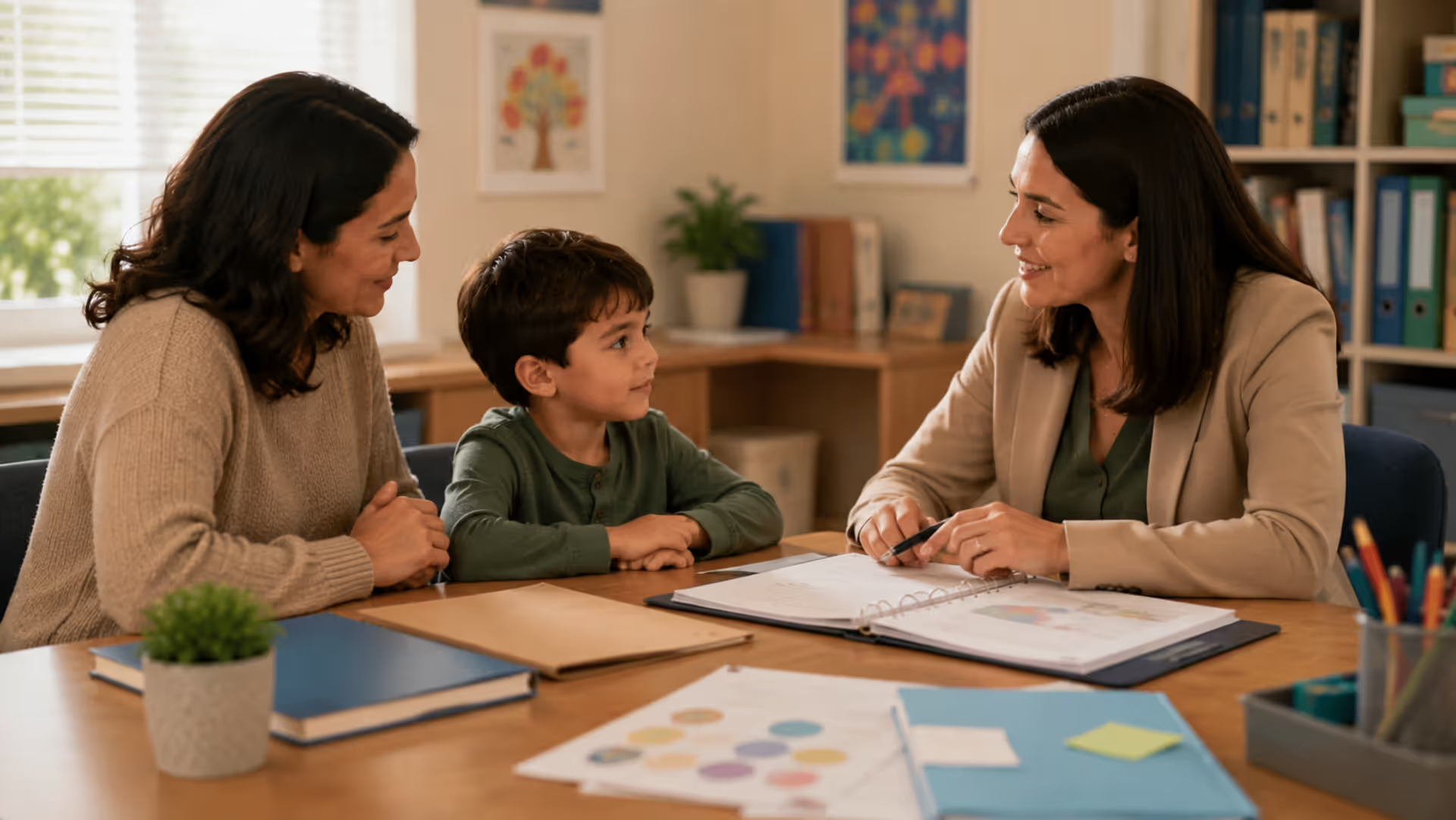

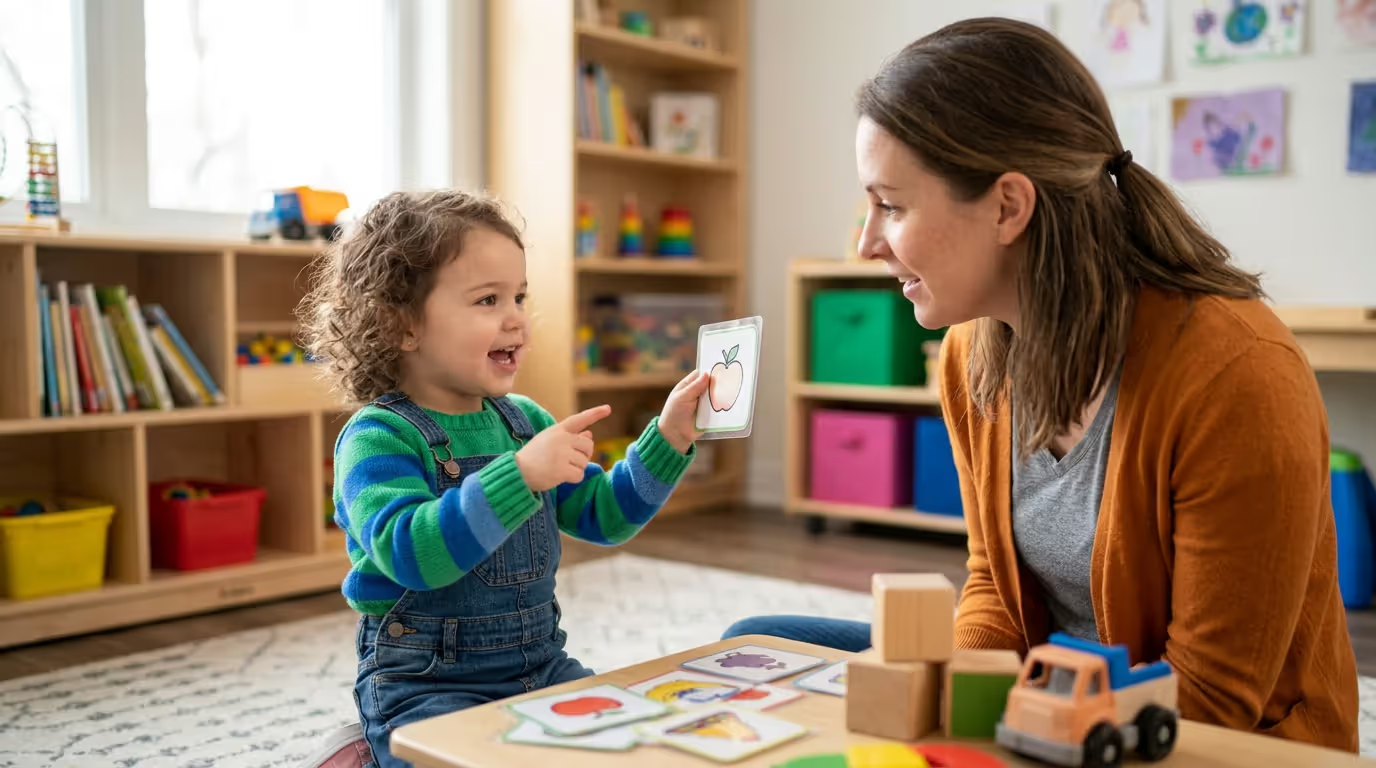
Parent supporting toddler with early speech and language development at home
Preschool for Speech Delay Guide

Content
When your toddler isn't talking as much as their peers, the worry sets in fast. You watch other kids chattering away at playgroup while your child points and grunts. You wonder if you should wait or act now.
The answer matters more than you might think. Early intervention can reshape a child's language trajectory, but not every quiet toddler needs professional help. Understanding the difference—and knowing your options—starts here.
Recognizing When Your Child Needs Help
Speech and language development follows a predictable pattern, but the timeline varies. Some kids talk early. Others take their time. The trick is knowing when "late" becomes “delayed.”
Typical Language Milestones by Age
Language skills split into two categories: what children understand (receptive language) and what they express (expressive language). Both matter, but delays show up differently in each area.
| Age | Typical Expressive Skills | Typical Receptive Skills |
| 12 months | Says 1-3 words; uses mama/dada specifically; imitates sounds | Responds to name; understands "no"; follows simple commands with gestures |
| 18 months | Uses 10-25 words; attempts two-word combinations; points to request | Points to familiar objects when named; follows one-step directions without gestures |
| 24 months | Uses 50+ words; combines 2-3 words regularly; asks simple questions | Understands 300+ words; follows two-step commands; identifies body parts |
| 36 months | Uses 200+ words; speaks in 3-4 word sentences; strangers understand 75% of speech | Understands most conversations; follows complex directions; grasps basic concepts (big/little) |
| 48 months | Uses complete sentences; tells simple stories; asks "why" questions; mostly intelligible speech | Understands approximately 1,500 words; grasps time concepts; follows three-step instructions |
These milestones represent averages. Your child might hit some early and others late. That's normal variation.
But consistent delays across multiple areas? That's different.
Red Flags That Warrant Immediate Attention
Some signs of speech delay in toddlers need quick action. Don't wait if your child shows these patterns:
By 12 months: Doesn't babble with consonant sounds (ba-ba, da-da), makes no attempt to communicate through gestures, doesn't respond to their name consistently.
By 18 months: Uses fewer than 10 words, doesn't point to show interest, loses previously acquired language skills.
By 24 months: Has fewer than 50 words, doesn't combine two words, can't follow simple directions even with gestures.
By 36 months: Speaks fewer than 200 words, doesn't use three-word phrases, family members can't understand most of what they say.
At any age: Stops using words or skills they once had, doesn't make eye contact, shows no interest in social interaction, doesn't respond to sounds.
The pattern I see most often is parents who knew something was off but waited because a relative said "Einstein didn't talk until he was four." That story isn't even accurate, and waiting rarely helps.
When to worry about speech delay isn't always obvious. Trust your instincts. If you're concerned enough to research it, you're concerned enough to get an evaluation.
Author: Daniel Merce;
Source: raynet-merseyside.net
Understanding the Root Causes
Speech delays don't happen in a vacuum. Multiple factors can slow language development, and identifying causes of language delay helps target the right interventions.
Hearing problems top the list. A child who can't hear clearly can't learn speech sounds properly. Chronic ear infections, fluid buildup, or undiagnosed hearing loss all interfere with language acquisition. Some kids pass newborn hearing screenings but develop issues later.
Oral-motor difficulties affect the physical production of speech. The tongue, lips, and jaw need coordinated movement. Conditions like childhood apraxia of speech make planning and executing those movements difficult, even when the child knows what they want to say.
Developmental conditions include autism spectrum disorder, intellectual disabilities, and genetic syndromes. These affect not just speech but overall development. Language delays often appear alongside other developmental differences.
Environmental factors play a bigger role than many parents realize. Limited language exposure, multiple caregivers speaking different languages inconsistently, or excessive screen time can all slow development. So can premature birth or low birth weight.
Tongue tie (ankyloglossia) restricts tongue movement. Not every tongue tie causes speech problems, but severe cases can limit sound production.
Neurological issues like cerebral palsy affect muscle control needed for speech. Brain injuries or abnormalities can also impact language centers.
Sometimes there's no clear cause. Doctors call this "idiopathic speech delay." The child is otherwise healthy, hearing is fine, and development looks normal in other areas. Language just lags behind.
Understanding the cause shapes the treatment approach. A child with hearing loss needs different support than one with autism or apraxia.
Late Talker or True Speech Delay
Here's where it gets tricky. Not every toddler who talks late has a speech delay. Some are "late bloomers" who catch up without intervention.
The distinction between late talker vs speech delay matters for planning and prognosis.
Late talkers are typically children between 18-30 months who have small vocabularies but normal development otherwise. They understand language well, use gestures effectively, and show age-appropriate play skills and social engagement. About 70-80% of late talkers catch up by age three without formal therapy.
True speech delays involve broader language difficulties. These children struggle with both understanding and expression. They may have limited gesture use, difficulty following directions, and challenges with social communication.
Red flags that suggest more than late talking include limited comprehension, no attempts to communicate through gestures or sounds, frustration that leads to aggressive behavior, and family history of language or learning disorders.
The speech delay vs autism question weighs heavily on parents. Here's the distinction: autism involves social communication differences beyond just words. Children with autism spectrum disorder often show reduced eye contact, limited joint attention (sharing interest in objects or events), repetitive behaviors, intense focus on specific topics, and difficulty with back-and-forth social interaction.
A child can have speech delay without autism. They can also have both. Speech delay alone doesn't indicate autism, but language delays often accompany autism diagnoses.
Key differentiator: A late talker or child with speech delay typically wants to communicate and finds ways to do it. They point, gesture, pull you toward things they want, and engage socially even without words. A child with autism may show less motivation to share experiences or connect with others.
Assessment by a qualified professional sorts this out. Don't try to diagnose at home based on internet checklists.
Preschool Programs That Support Speech Development
Finding the right preschool for speech delay can accelerate progress. But not all programs offer the same support.
Author: Daniel Merce;
Source: raynet-merseyside.net
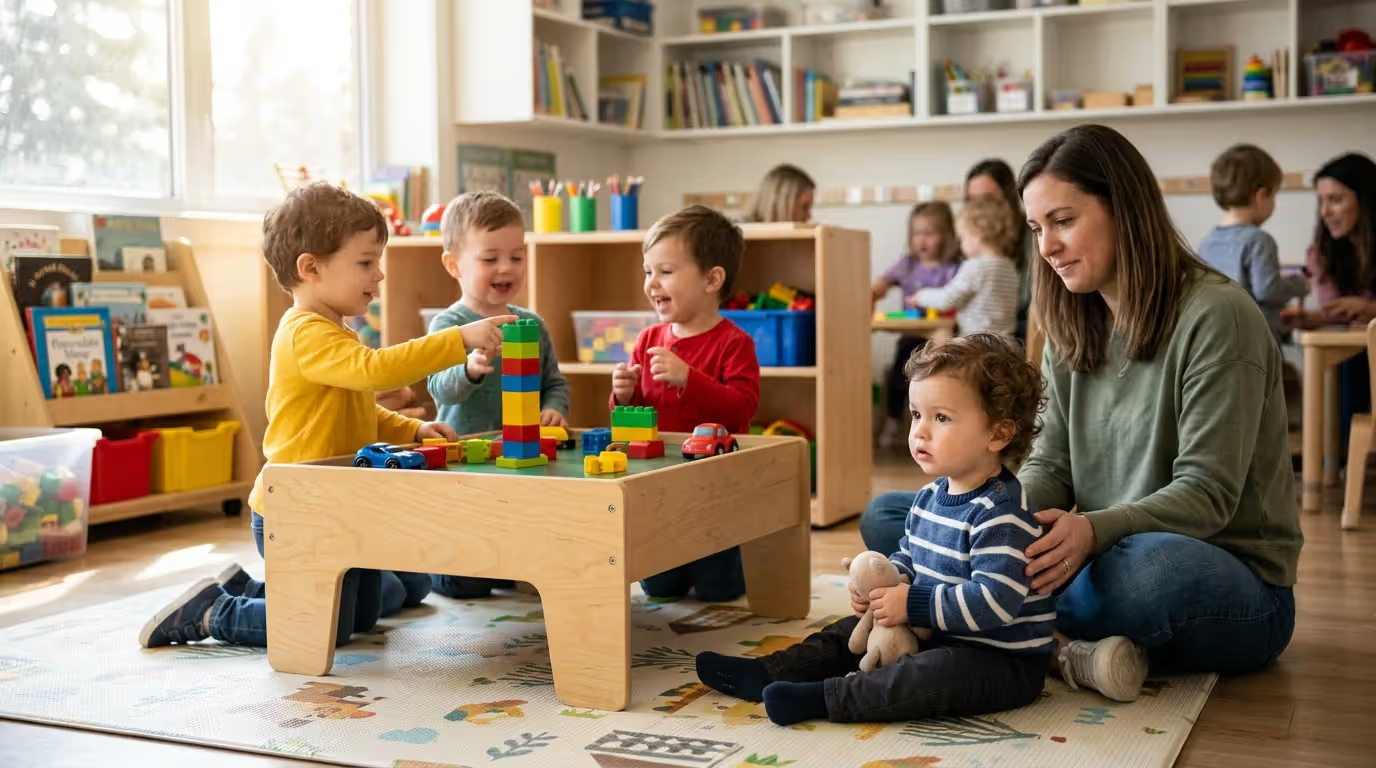
Specialized preschools focus specifically on children with developmental delays or disabilities. These programs typically have smaller class sizes (often 6-8 children), speech-language pathologists on staff, and curricula designed around language development. Every activity incorporates communication goals.
Many operate through public school districts as part of early childhood special education. Eligibility requires evaluation and qualification for services, usually meaning the child scores significantly below age level in one or more developmental areas.
Inclusive preschools serve children with and without delays in the same classroom. These programs provide typical peer models—other children whose language skills give your child examples to learn from. Speech therapy happens either in the classroom or through pull-out sessions.
The benefit? Your child learns from peers while getting targeted support. The challenge? Less intensive services than specialized programs.
Therapeutic preschools blend education with multiple therapies. Children might receive speech therapy, occupational therapy, and behavioral support all within the preschool day. These programs work well for children with multiple developmental needs.
What to look for when evaluating programs:
Staff credentials matter most. Ask whether a licensed speech-language pathologist works directly with children or just consults with teachers. How often? What's the ratio of therapist to students?
Language-rich environment should be obvious within minutes of entering. Do teachers narrate activities? Expand on children's utterances? Use visual supports?
Individualized goals mean the program doesn't use one-size-fits-all approaches. Each child should have specific language targets embedded into their day.
Parent involvement opportunities help you reinforce skills at home. Programs that keep parents in the loop see better outcomes.
Questions to ask during tours:
- How is speech therapy integrated into the daily schedule?
- What's your approach to children who are nonverbal or minimally verbal?
- How do you track and report progress to parents?
- What's the transition plan when my child is ready for regular kindergarten?
- Can you describe a typical day and where language learning happens?
Don't assume expensive private programs beat public options. Many school-based programs for three- and four-year-olds provide excellent services at no cost to families.
Professional Speech Therapy Options for Young Children
Beyond preschool, speech therapy for toddlers comes in several forms. Understanding your options helps you build the right support team.
School-based services through early intervention (birth to three) or special education (three and up) are free to eligible families. Therapists come to your home for younger children or provide services at preschool for older ones.
The downside? Waitlists can stretch for months in some areas. Frequency is often limited—maybe 30 minutes once or twice weekly. And school-based therapy focuses on skills needed for educational success, not necessarily every communication goal parents might have.
Clinic-based therapy happens at hospitals, rehabilitation centers, or private practices. Sessions typically run 30-60 minutes, once or twice weekly. Children work one-on-one with therapists in dedicated treatment rooms.
This setting allows for intensive, focused work without classroom distractions. Therapists can use specialized equipment and techniques. But it requires transportation, scheduling around nap times, and often significant cost.
Private therapy offers the most flexibility. Therapists may come to your home, work at their private practice, or even provide services at your child's daycare. You choose the therapist, schedule, and frequency based on need rather than program constraints.
When Private Speech Therapy Makes Sense
Private therapy fills gaps that public programs can't. Consider it when:
Your child needs more intensive services than school programs provide. Some kids need 2-3 sessions weekly to make meaningful progress. Public programs rarely offer that frequency.
Waitlists for public services stretch beyond reasonable timeframes. Brain development doesn't pause while you wait six months for an evaluation. Private therapy gets your child started immediately.
Your child has specific needs requiring specialized expertise. Maybe they need a therapist trained in childhood apraxia of speech or augmentative communication devices. Not every school therapist has that training.
You want a specific therapeutic approach. Some families prefer play-based therapy, others want more structured sessions. Private practice lets you choose.
Insurance coverage varies wildly. Some plans cover speech therapy with minimal copays. Others exclude it entirely or limit sessions to 20-30 per year. Call your insurance company and ask specifically about coverage for speech delay interventions in children under five. Get the answer in writing.
Many private therapists offer sliding scale fees or payment plans. Some accept Medicaid. Don't assume you can't afford it without asking.
Combining approaches works well. Your child might attend a specialized preschool and also see a private therapist for additional sessions. Or receive school-based services supplemented by home-based private therapy. There's no rule saying you must choose just one.
The most important factor in speech therapy outcomes isn't whether services are public or private—it's how quickly intervention begins and how consistently strategies are practiced. A child receiving school-based therapy twice weekly with parents who actively implement strategies at home will often progress faster than one in intensive private therapy whose family doesn't follow through between sessions.
— Chen Laura
Supporting Language Growth at Home
Professional therapy matters, but you're with your child far more than any therapist. Supporting speech development at home multiplies the impact of formal interventions.
Narrate your day. Talk through everything you do. "I'm pouring milk. The milk is cold. Now I'm putting the milk back in the refrigerator." It feels silly at first. Do it anyway.
Expand on your child's attempts. When they say "dog," you say "Yes, big brown dog!" When they point and grunt, put words to it: "You want the ball. Should I roll you the ball?"
This technique, called "expansion," gives children the next level of language without pressure to repeat it.
Create communication temptations. Put favorite toys where your child can see but not reach them. Wait. Let them attempt to request before helping. Offer choices: "Apple or banana?" Hold items near your face so they look at you while requesting.
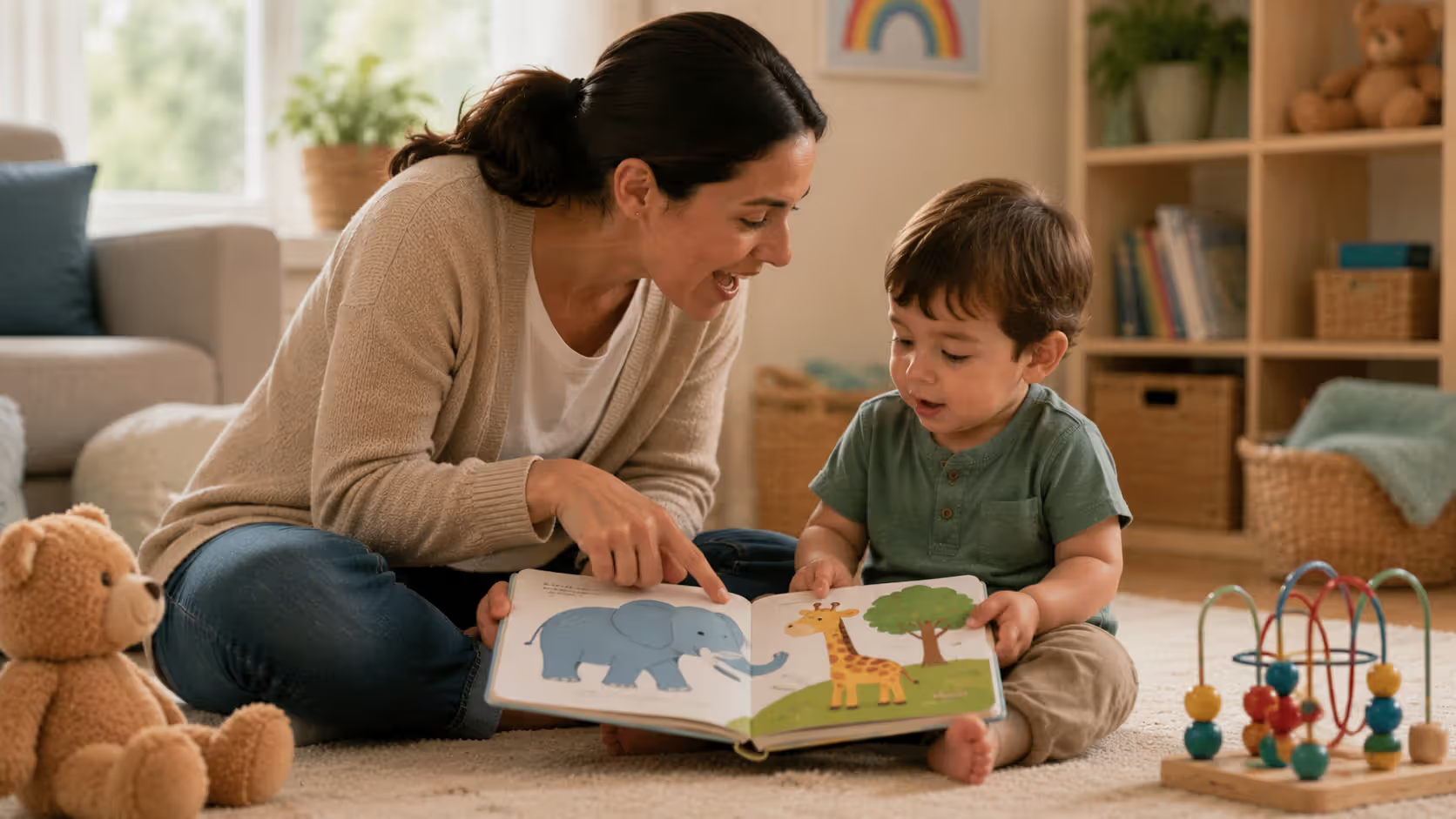
Read books differently. Don't just read the words. Point to pictures and label them. Ask simple questions: "Where's the dog?" Make animal sounds. Let your child turn pages and lead the interaction.
Author: Daniel Merce;
Source: raynet-merseyside.net
Board books with single pictures per page work better than busy, detailed illustrations for children with delays.
Sing songs with motions. Music activates language areas of the brain. Songs with repetitive phrases and hand motions (like "Wheels on the Bus" or "If You're Happy and You Know It") teach vocabulary, rhythm, and turn-taking.
Limit screen time. This isn't about being anti-technology. It's about brain development. Children under two should have minimal screen exposure. Two- to five-year-olds need high-quality programming, watched together with adults who discuss what's happening.
Passive screen time doesn't teach language. It just fills time.
Play interactive games. Peek-a-boo, hide-and-seek, and simple turn-taking games teach back-and-forth communication. Blow bubbles and make your child request more. Play with play-doh and name the shapes you make.
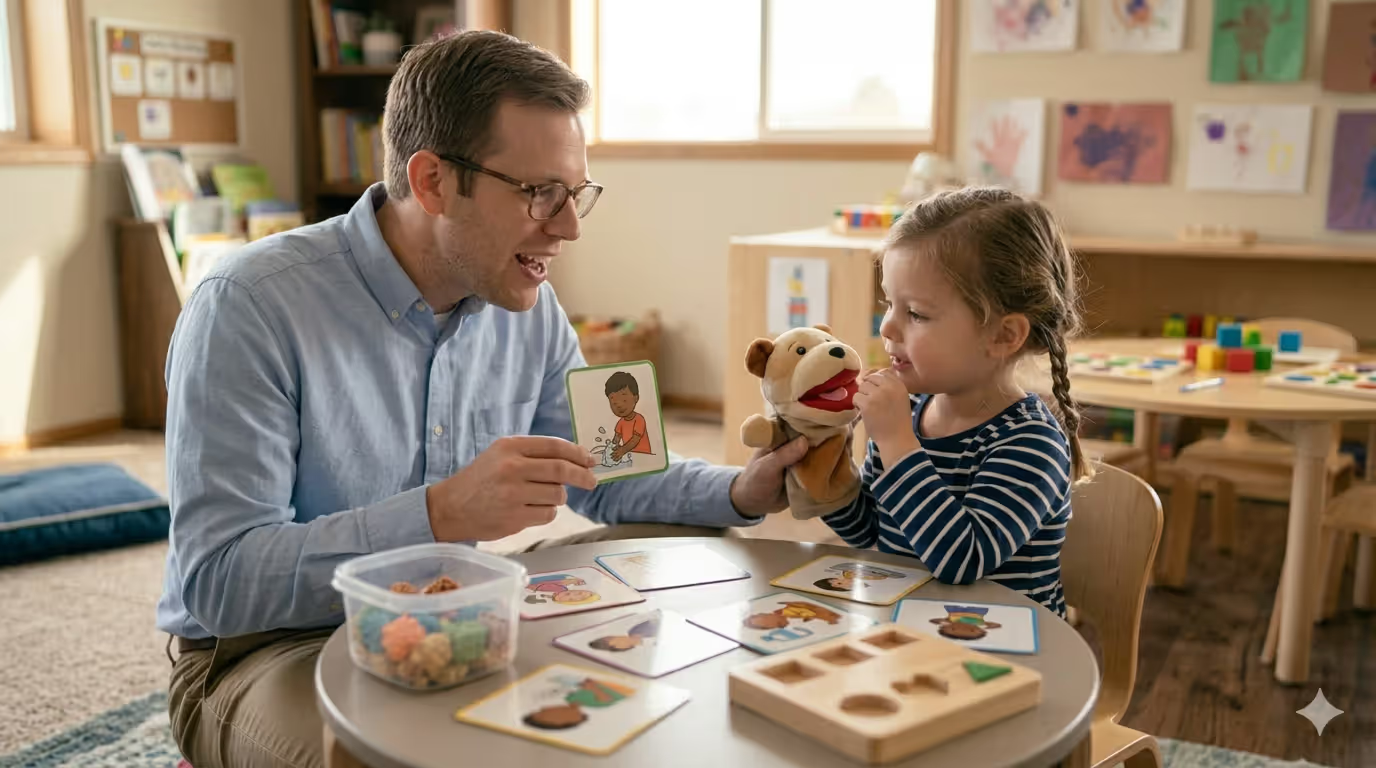
Use visual supports. Picture schedules, choice boards, and labeled objects help children connect words with meanings. Point to pictures while saying words.
Give wait time. Count to 10 in your head before jumping in to help or answer for your child. Processing language takes longer for some kids. Silence feels uncomfortable, but it's necessary.
Avoid these common mistakes:
Don't anticipate every need. If you hand your child their cup before they ask, you've eliminated their need to communicate.
Don't correct pronunciation harshly. Model the correct way without making them repeat it. "Yes, poon. It's a spoon" works better than "No, say spoon."
Don't ask questions you already know the answer to repeatedly. "What color is this? What color is this?" feels like a test. Comment instead: "I see you picked the red block."
Making the Decision and Taking Action
You've read this far, which means you're ready to move forward. Here's how to turn concern into action.
Get an evaluation first. You can't treat what you haven't assessed. For children under three, contact your state's early intervention program (often called "Child Find" or "Help Me Grow"). Services are free and evaluations happen quickly.
For children three and older, contact your local school district's special education department. Request an evaluation in writing. They must respond within specific timeframes (usually 30 days for initial response, 60 days for evaluation).
You can also pursue private evaluation through a pediatric speech-language pathologist. This costs money but often happens faster and provides more detailed information.
Create a plan. Based on evaluation results, you'll receive recommendations. Maybe your child qualifies for free public services. Maybe they need private therapy. Perhaps a specialized preschool makes sense.
Don't try to do everything at once. Start with one or two interventions and add more if needed.
Track progress. Keep a simple log of new words, phrase lengths, or communication attempts. Take short videos monthly to compare. Progress in speech therapy often happens gradually—so gradually you might miss it without documentation.
Most children show some improvement within 3-4 months of consistent therapy. If you see no change after six months, reassess the approach.
Combine approaches strategically. A child might attend a specialized preschool four mornings per week, receive private therapy once weekly, and have parents implementing strategies daily at home. That's not overkill—that's comprehensive intervention.
Or maybe your child does well with just school-based services and home practice. It depends on severity, age, and individual needs.
Adjust expectations realistically. Some children catch up completely by kindergarten. Others continue needing support through elementary school. A few will always have some degree of language difference.
Early intervention improves outcomes dramatically, but it doesn't guarantee "normal" development. What it does is help your child reach their full potential, whatever that looks like.
Connect with other parents. Facebook groups, local support groups, and online communities provide practical advice and emotional support. Other parents who've navigated this path have insights your therapist might not think to mention.
Review and revise regularly. What works at age two might not work at four. Your child's needs change. Services should change with them. Request updated evaluations yearly or whenever you notice your child isn't progressing as expected.
Author: Daniel Merce;
Source: raynet-merseyside.net
FAQ: Speech Delay Questions Answered
Your child's language journey won't look exactly like any other child's. That's okay. What matters is that you're taking action now, during the years when intervention makes the biggest difference.
Speech delays feel overwhelming at first. You'll learn a new vocabulary of acronyms and terms. You'll attend meetings and make decisions about services. You'll wonder if you're doing enough or choosing the right path.
Here's what you need to remember: Perfect decisions matter less than forward movement. Starting with one intervention and adjusting beats waiting for the ideal plan that never comes. Your child doesn't need you to be a speech therapist—they need you to be their advocate and their consistent practice partner.
The preschool years pass quickly. Using them wisely sets your child up not just for kindergarten but for a lifetime of communication. Whether that means a specialized preschool program, private therapy, home strategies, or all of the above, you're giving your child something that lasts.
Most parents I talk to say their biggest regret is not starting sooner. You won't have that regret. You're already here, learning and planning. That puts you ahead of where many families start.
Get the evaluation. Build your team. Implement strategies at home. Track progress. Adjust as needed. Your child's voice is in there, waiting for the right support to emerge. You're about to provide exactly that.