
Highly Sensitive Child Signs

Content
Every parent knows the feeling. Your child bursts into tears when you trim the tag off their shirt—but they can still feel where it was. They cover their ears at birthday parties. They ask, voice trembling, if the grocery store will be "too loud today."
You're not imagining it. And no, you're not overprotective.
Some children simply experience the world at a higher volume. They process deeper, feel more intensely, and notice details others miss. Researchers call this high sensitivity, and it's far more common than most people realize. About 15-20% of children are born this way, according to studies on sensory processing sensitivity.
But here's the tricky part: spotting the signs early and knowing how to respond can completely change your child's experience—at home, at nursery, and beyond.
What Is a Highly Sensitive Child?
High sensitivity isn't a diagnosis. It's a temperament trait.
Dr. Elaine Aron pioneered research into what she termed Sensory Processing Sensitivity in the 1990s. Her work identified a distinct group of people—children and adults—whose nervous systems process information more thoroughly. They pick up on subtleties others don't register. They reflect longer before acting. They feel emotions deeply, both their own and others'.
This isn't about being "too sensitive" or fragile. It's neurobiology.
Brain imaging studies show that highly sensitive individuals have more active mirror neuron systems and heightened activity in areas linked to empathy, awareness, and sensory processing. Their brains genuinely work differently—not worse, not better, just differently.
The trait appears across cultures and even in over 100 animal species. It's an evolutionary advantage in many contexts: these children become excellent problem-solvers, deeply creative thinkers, and unusually empathetic friends. But modern environments—bright classrooms, noisy cafeterias, packed schedules—can overwhelm their finely tuned systems.
One pattern I see most often is parents feeling relieved just to have a name for what they've been observing. You've probably known something was different. Now you can understand why.

Author: Marcus Hollow;
Source: raynet-merseyside.net
How to Recognize Highly Sensitive Child Signs
Sensitivity shows up differently in every child, but certain patterns emerge consistently. Let's break them down by category.
Emotional Intensity and Reactivity
Highly sensitive children feel everything at full volume.
They might cry during movies—even the happy parts. They worry about things that wouldn't cross another child's mind: whether the mail carrier is cold outside, if their stuffed animals feel lonely, what happens to leaves after they fall.
Their emotional reactions often seem disproportionate to the trigger. A small criticism can lead to hours of upset. A change in plans might result in a complete meltdown. But here's what's actually happening: they're not overreacting. They're processing a genuinely stronger emotional signal than other children receive from the same situation.
Common signs include:
- Asking deep questions about life, death, fairness, and feelings from an early age
- Becoming very upset by violence, conflict, or tension—even in cartoons
- Needing extended time to recover after emotional events
- Showing intense empathy, sometimes taking on others' emotions as their own
- Having strong reactions to disappointment or perceived failure
These children often become the emotional barometers of their families. They'll sense tension between parents before anyone speaks. They'll know a teacher is having a bad day within minutes of arrival.
Sensory Sensitivity Indicators
This is where parents usually first notice something's different.
Clothing becomes a battle. Certain textures are unbearable. Socks have to be "just right"—seams positioned exactly, no wrinkles. Some children will only wear soft, broken-in clothes and reject anything new or stiff.
Food sensitivities run deep. It's not pickiness. The texture of yogurt might trigger gagging. Mixed foods touching on a plate can ruin a meal. Strong smells—perfume, cleaning products, certain foods cooking—can cause genuine distress or nausea.
Environmental sensitivities show up everywhere:
- Covering ears in moderately loud places (restaurants, gyms, assemblies)
- Complaining about bright lights, especially fluorescents
- Refusing to walk barefoot on grass, sand, or textured surfaces
- Becoming distressed by scratchy fabrics, tight waistbands, or turtlenecks
- Noticing smells others don't detect
Here's the key difference: typical children might prefer certain things but can adapt. Highly sensitive children experience physical discomfort or pain from sensory input others find merely annoying.
Social and Environmental Awareness
These children are observers first, participants second.
They hang back in new situations, watching carefully before joining. This isn't shyness exactly—it's thorough processing. They're taking in every detail: who's there, what the mood is, what the expectations are, what could go wrong.
They pick up on social nuances early. A three-year-old might notice when someone's smile doesn't reach their eyes. A five-year-old can detect sarcasm or detect when adults are pretending everything's fine.
Signs in this category include:
- Preferring to play with one or two close friends rather than large groups
- Becoming overwhelmed at parties, playgrounds, or busy events
- Asking many questions before trying new activities
- Noticing small changes in their environment (furniture moved, new picture on the wall)
- Being deeply affected by others' moods—happy when everyone's happy, anxious when there's conflict
They're often described as "old souls." Teachers might say they seem more mature than their peers. But in stimulating environments, they can seem younger, more easily overwhelmed than same-age children.
Table: Highly Sensitive Child vs. Typical Sensory Responses
| Situation | Typical Response | Highly Sensitive Child Response |
| Loud noise (fire alarm, blender) | Startled, brief discomfort, quick recovery | Covers ears, may cry, needs time to calm, anticipatory anxiety before next exposure |
| Clothing tags or seams | Mild annoyance, easily ignored | Physical discomfort or pain, can't focus until removed, may refuse to wear item again |
| Bright fluorescent lights | Generally unnoticed | Complains of headache, squints, asks to leave, difficulty concentrating |
| Schedule changes | Brief disappointment, adapts within minutes | Strong emotional reaction, needs time to process, may affect behavior for hours |
| Crowded social situations | Energized or neutral | Drained, overstimulated, needs quiet recovery time afterward |
Understanding Overwhelm in Sensitive Children
Overwhelm isn't a tantrum. It's a nervous system reaching capacity.
Think of it like a cup filling with water. Every sensation, emotion, and stimulus adds drops. For highly sensitive children, the cup is smaller and fills faster. When it overflows, you see a meltdown—but the meltdown isn't the problem. It's the signal that too much has accumulated.
Common overwhelm triggers include:
- Too much sensory input (noise, crowds, visual chaos)
- Emotional intensity (their own feelings or absorbing others')
- Schedule changes or transitions
- Hunger, tiredness, or physical discomfort (these lower the threshold for everything else)
- Pressure to perform or make decisions quickly
What overwhelm looks like varies by age and child. Some shut down: they go quiet, withdraw, stop responding. Others explode: crying, yelling, physical outbursts. Many alternate between both patterns.
Here's what most parents don't realize: the behavior you see isn't the beginning. It's the end result of accumulated stress that's been building, sometimes for hours. Your child couldn't communicate it earlier—they might not have had words for what they were feeling, or they were using all their energy to hold it together.
Physical symptoms often appear first: complaints of stomachaches, headaches, or feeling "weird." Some children become clingy. Others get hyperactive or silly—that's often a last-ditch attempt to discharge building tension.
The key difference between a tantrum and sensory overload: tantrums have a goal (I want that toy, I don't want to leave). Overload is involuntary. The child has lost access to their coping skills. They can't "just calm down" any more than you can will away a migraine.

Author: Marcus Hollow;
Source: raynet-merseyside.net
Supporting Sensitive Children at School and Nursery
Early learning environments can make or break a sensitive child's experience. The good news? Small accommodations create massive differences.
Strategies for Nursery Transition and Settling
Starting nursery is huge for any child. For highly sensitive children, it's seismic.
Everything is new simultaneously: people, space, sounds, smells, routines, expectations. That's a lot of cups filling very fast.
Start preparation weeks before the first day. Visit the nursery multiple times. Let your child explore when it's quiet. Take photos of key areas: the cubby area, the bathroom, where circle time happens. Review these at home.
Create a predictable goodbye routine. Same words, same actions, every time. Highly sensitive children need that anchor. Don't sneak away—it destroys trust and increases anxiety.
Expect regression. Your child might have accidents, become clingy at home, or have more meltdowns in the evenings. This is normal. They're using enormous energy to cope during the day. Home is where they finally feel safe enough to fall apart.
Common mistakes to avoid:
- Pushing too fast ("Other kids adjusted in a week")
- Comparing to siblings who transitioned easily
- Dismissing their concerns ("There's nothing to worry about")
- Scheduling too many activities during the adjustment period
The settling period for a highly sensitive child typically takes longer—often 4-8 weeks instead of 1-3. That's not a problem. It's their process.
Pack comfort items if allowed: a small photo, a soft toy, a familiar blanket. These aren't crutches. They're nervous system regulators.

Author: Marcus Hollow;
Source: raynet-merseyside.net
Working with Teachers and Caregivers
Communication makes everything easier.
Schedule a meeting before your child starts. Explain high sensitivity without apologizing for it. Frame it as information that helps teachers support your child effectively, not as a list of problems.
Share specific details:
- What overwhelm looks like for your child
- Early warning signs that they're reaching capacity
- What helps them calm down
- Sensory sensitivities (sounds, textures, lights)
- How they process transitions
Ask about the environment. Can your child access a quiet corner when needed? How noisy is lunch? Are there fluorescent lights? What's the typical routine for transitions?
Request simple accommodations:
- A heads-up before transitions ("In five minutes, we'll clean up")
- Permission to use noise-reducing headphones during loud activities
- A designated quiet space for breaks
- Seating away from high-traffic or noisy areas
- Advance notice about schedule changes when possible
Most teachers are willing to help—they just need to understand what's needed. The pattern I see most often is that once teachers recognize high sensitivity and make small adjustments, these children thrive.
Check in regularly, especially in the first months. Ask specific questions: How does my child handle transitions? Do they play with others or observe? When do meltdowns happen? This helps you spot patterns and adjust support.

Author: Marcus Hollow;
Source: raynet-merseyside.net
Parenting Strategies for Highly Sensitive Children
Daily life with a highly sensitive child requires intentionality. But you don't need to walk on eggshells.
Create predictable routines. Sensitive children need to know what's coming. Morning routines, bedtime routines, meal routines—consistency reduces the cognitive load of constantly adapting to newness.
Build in downtime. This isn't optional. After nursery, after playdates, after busy weekends—your child needs quiet time to decompress. Think of it as preventive maintenance. An hour of quiet play or rest can prevent an evening meltdown.
Validate without fixing. When your child is upset, resist the urge to minimize or solve immediately. "You're really frustrated that we have to leave" works better than "It's not a big deal." They need to know their feelings make sense before they can regulate them.
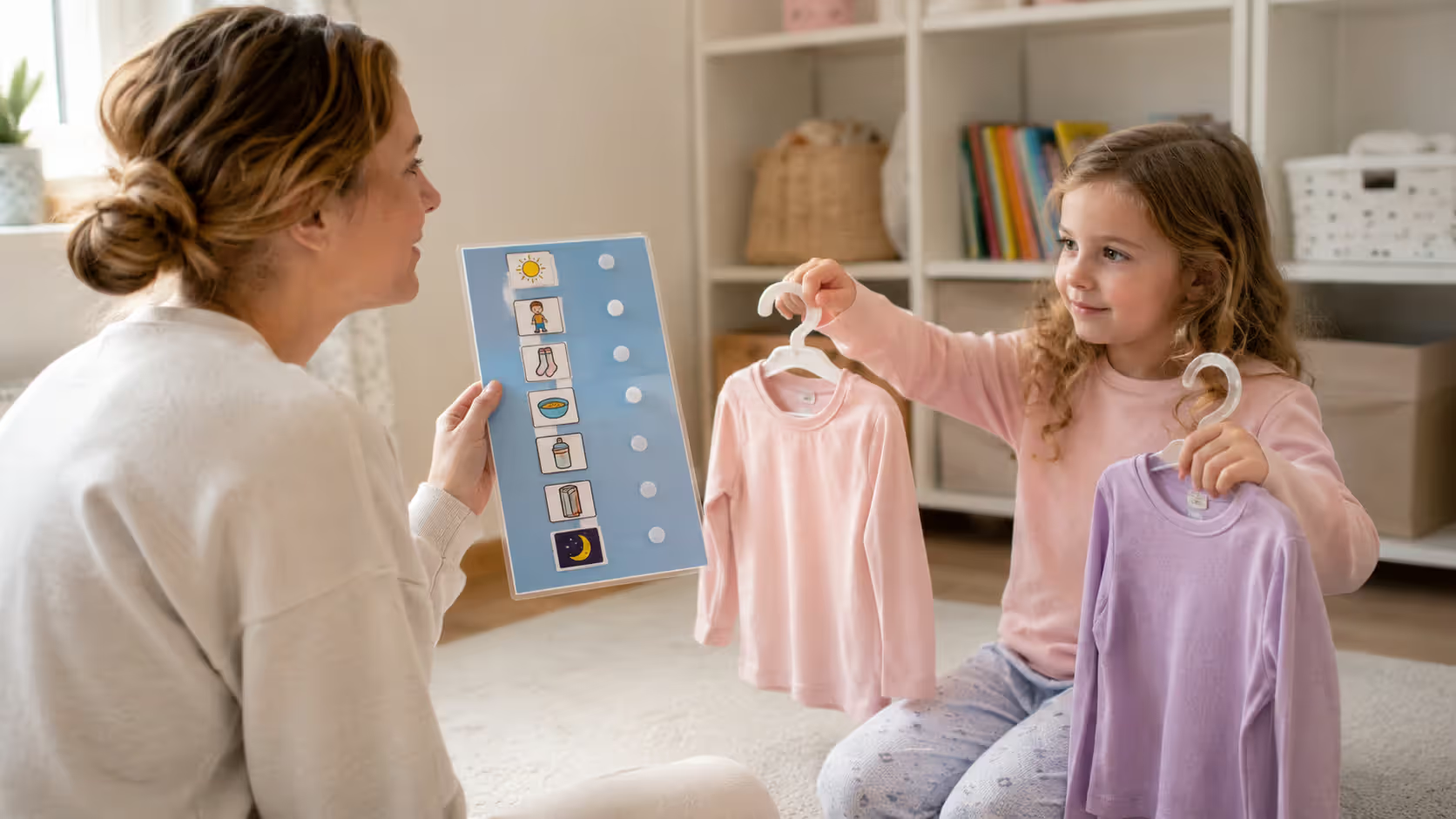
Prepare for transitions and changes. Talk through what's coming: who will be there, what will happen, when you'll leave. Use visuals for younger children. The more they can mentally rehearse, the less overwhelming the actual experience becomes.
Offer choices within boundaries. "Do you want to wear the blue soft shirt or the gray soft shirt?" gives control without overwhelm. Too many options flood their system. Two or three works well.
Create a calm-down space. Designate a quiet corner with soft lighting, comfortable seating, maybe a weighted blanket or soft toys. This isn't punishment—it's a tool. Teach your child to recognize when they need it and give them permission to use it.
Watch your own regulation. Highly sensitive children absorb your emotional state. When you're stressed, they escalate. This doesn't mean fake happiness—they'll see through it. It means managing your own nervous system becomes part of parenting them effectively.
Common mistakes parents make:
- Trying to "toughen them up" by forcing exposure to overwhelming situations
- Overscheduling because other families manage it
- Comparing them to less sensitive siblings
- Treating sensitivity as something to fix rather than understand
The goal isn't to eliminate sensitivity. It's to help your child develop skills to navigate a world that isn't built for their nervous system.
Author: Marcus Hollow;
Source: raynet-merseyside.net
When to Seek Professional Support
High sensitivity isn't a disorder, but sometimes it coexists with conditions that benefit from professional help.
Red flags that suggest evaluation might be helpful:
- Sensitivity severely limits daily functioning (can't attend school, participate in family activities, make friends)
- Anxiety that doesn't improve with support and routine
- Sensory issues that go beyond preference to genuine impairment
- Developmental delays in other areas
- Extreme rigidity or need for sameness beyond typical sensitive child patterns
Highly sensitive children can also have anxiety disorders, sensory processing disorder, autism, or ADHD. These aren't the same as high sensitivity, but they can overlap.
Key differences: High sensitivity involves processing depth and emotional responsiveness across many contexts. Autism typically includes communication differences, restricted interests, and social interaction challenges beyond sensitivity. Sensory Processing Disorder involves difficulty integrating sensory information in ways that interfere with function. Anxiety disorders involve persistent, excessive worry that doesn't match the situation.
But these distinctions can be subtle. If you're unsure, an evaluation provides clarity.
Professionals who can help:
- Pediatric occupational therapists (for sensory strategies)
- Child psychologists (for emotional regulation and anxiety)
- Developmental pediatricians (for comprehensive evaluation)
- Early intervention specialists (for children under 3)
You don't need to wait for a crisis. If you're struggling to support your child effectively, that's reason enough to seek guidance.
The highly sensitive child is not damaged or deficient. They simply need us to honor their wiring and create environments where their deep processing becomes a strength rather than a source of constant overwhelm.
— Markham Laura
FAQ: Highly Sensitive Child Questions Answered
Raising a highly sensitive child isn't always easy. But it's never a flaw to correct.
These children bring gifts the world desperately needs: deep empathy, careful thought, creative problem-solving, and awareness of details others miss. Your job isn't to change who they are. It's to help them build skills to thrive as who they are.
Start where you are. You don't need to overhaul your entire life overnight. Pick one strategy from this article and try it this week. Maybe it's creating a calm-down corner. Maybe it's talking with your child's teacher. Maybe it's simply validating the next big feeling instead of minimizing it.
Small shifts compound. The parent who understands why their child melts down after nursery responds differently than the parent who thinks their child is "being difficult." That difference—understanding instead of frustration—changes everything for your child.
You're already doing the most important thing: seeking to understand. That's what your highly sensitive child needs most.
Trust their wiring. Advocate for their needs. Celebrate their depth. They're not too much. They're exactly enough.