Friendship Building Activities

Content
When your child comes home from school day after day without mentioning a single friend, it hits differently than other parenting challenges. You can't force friendships. You can't buy them. And watching your kid sit alone while other children cluster in easy groups? That's genuinely painful.
But here's what you can do: create opportunities, teach skills, and build your child's confidence through targeted friendship building activities. Some kids make friends as naturally as breathing. Others need coaching, practice, and strategic support. Neither pattern makes your child broken or strange.
The difference between kids who struggle socially and those who don't often comes down to exposure, skill development, and finding the right social contexts. Let's get specific about how to help.
Why Some Children Struggle to Make Friends
Friendship difficulties in children stem from dozens of factors, and most have nothing to do with your parenting.
Developmental timing plays a huge role. Some kids mature socially at different rates. A seven-year-old who's still deeply absorbed in parallel play while peers have moved to collaborative games will naturally struggle. They're not behind forever—just on a different timeline.
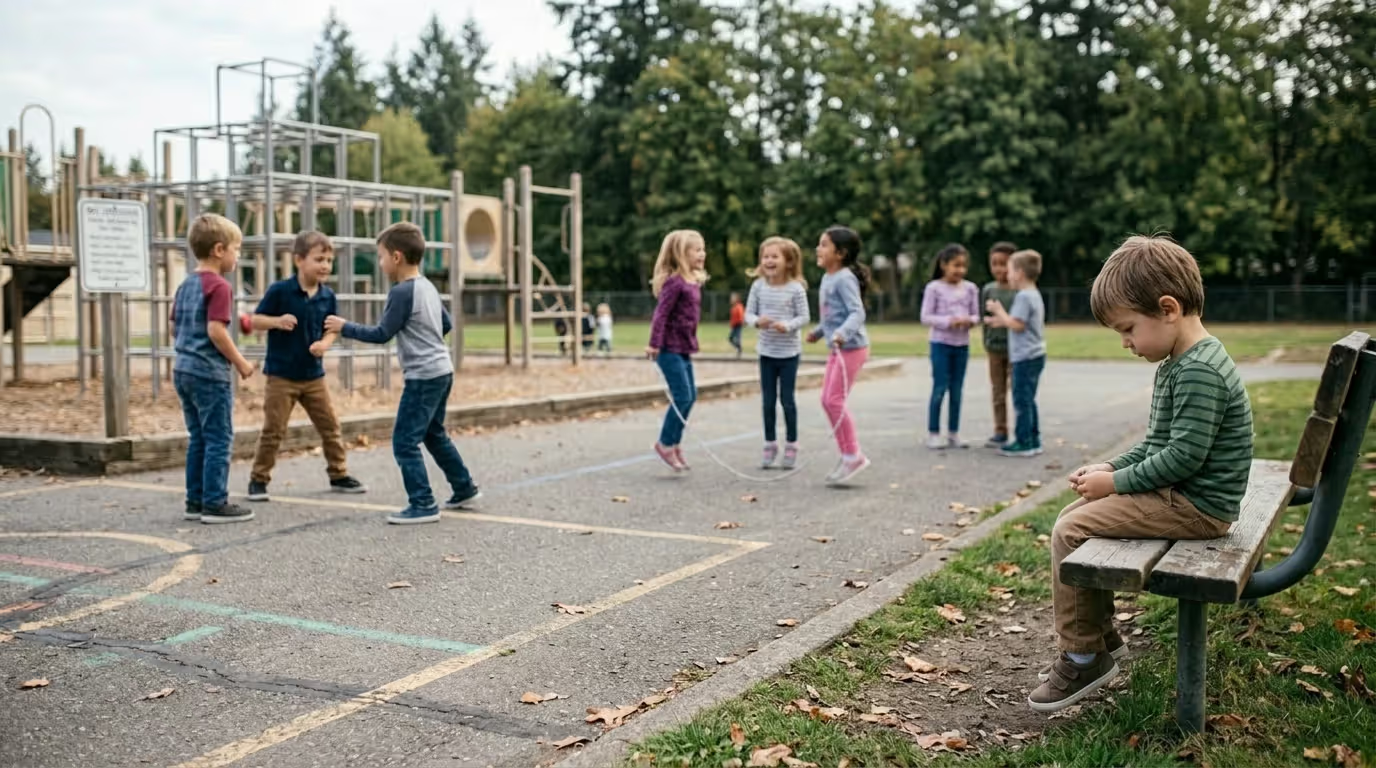
Personality differences matter more than most parents realize. Shy children making friends face a steeper climb in loud, chaotic environments like school cafeterias or playgrounds. Introverted kids might genuinely prefer one close friend over a large group, which isn't a problem unless they have zero friends. There's a difference.
Social skill gaps create real barriers. If your child hasn't learned to read facial expressions, take turns in conversation, or join a group without disrupting, they'll face rejection repeatedly. These skills aren't instinctive for everyone. Many children need explicit teaching.
Environmental changes disrupt even socially competent kids. Moving to a new school, family stress, or missing extended time due to illness can reset a child's social standing to zero. Starting over is harder than maintaining existing friendships.
Neurodivergence affects social interaction profoundly. Children with ADHD might miss social cues or interrupt constantly. Autistic children may struggle with unwritten social rules. Anxious kids might avoid social situations entirely, creating a cycle of isolation.
Loneliness in school-age children often shows up as physical complaints. Stomachaches before school. Headaches during recess. The body speaks when kids can't articulate emotional pain.
The pattern I see most often is parents waiting too long to intervene because they hope their child will "grow out of it." Sometimes that happens. Often it doesn't.
Signs Your Child Is Experiencing Social Isolation
Temporary friendship struggles look different from chronic social isolation. Every kid has a bad week or loses a friend. Watch for patterns that persist beyond a month or two.
Behavioral red flags include:
- Never mentioning specific children by name or talking about what happened at recess
- Avoiding birthday parties, school events, or group activities they used to enjoy
- Spending all free time with adults or much younger children
- Screen time becoming their primary "social" outlet
- Increased irritability, sadness, or withdrawal at home
- Declining academic performance despite adequate ability
- Physical symptoms that spike before school or social events
The duration test helps distinguish normal bumps from real problems. If your child has gone an entire school year without a single reciprocal friendship—where another child seeks them out, not just tolerates them—that's a signal.
Some kids genuinely prefer solitude and that's fine. But even introverted children need at least one solid friendship. Zero friends and visible distress means intervention time.
When to seek professional support:
Author: Olivia Bennet;
Source: raynet-merseyside.net
If your child expresses thoughts about self-harm, shows signs of depression, or their social isolation is worsening despite your efforts for more than six months, don't wait. A child psychologist or therapist specializing in social skills can assess whether underlying issues like anxiety, autism spectrum disorder, or learning disabilities are contributing factors.
School counselors can also provide perspective on how your child functions in different social contexts. Sometimes kids who seem isolated at home have school friendships you don't see. Other times, teachers confirm your concerns.
Age-Appropriate Friendship Building Activities
Generic advice about "putting your child out there" doesn't help much. Specific activities matched to developmental stages work better.
Activities for Younger Children (Ages 4–7)
Young kids need structured, short interactions with clear activities. Free play sounds ideal but often leads to chaos when children lack social skills.
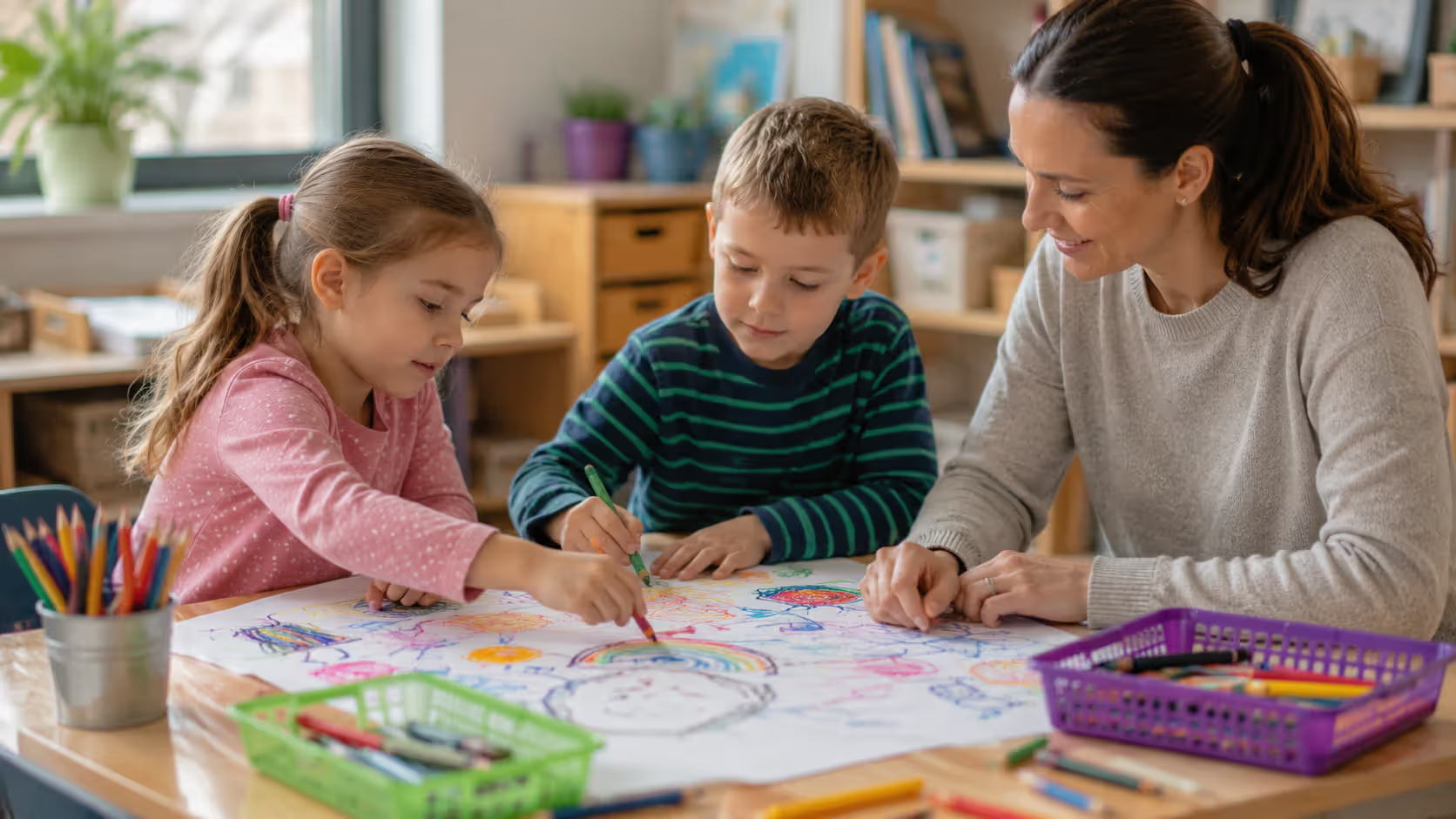
Cooperative art projects work beautifully. Two kids, one large piece of paper, shared crayons. They must negotiate colors and space. Keep sessions to 30-45 minutes max.
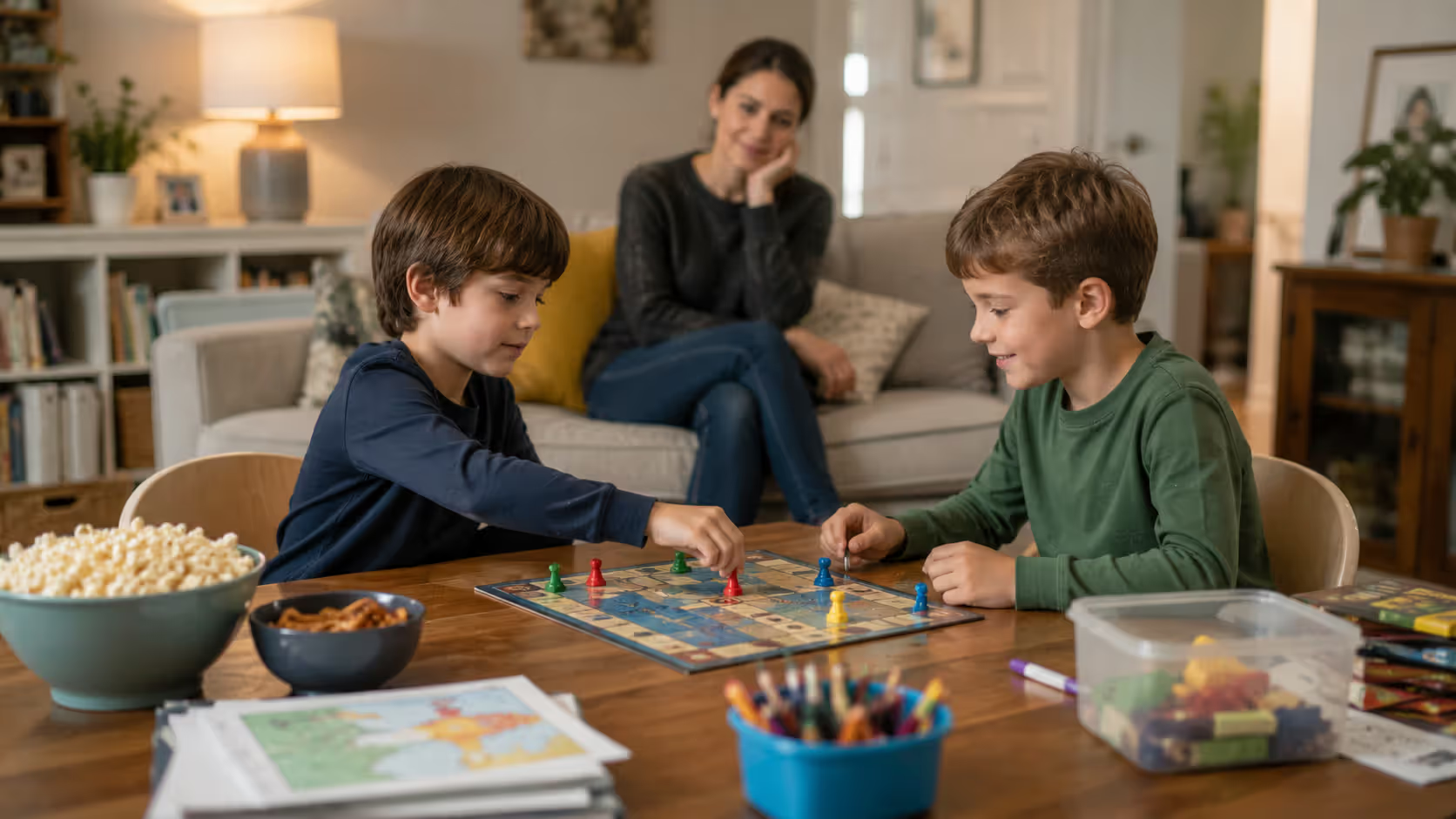
Simple board games teach turn-taking naturally. Candy Land, Chutes and Ladders, or matching games provide structure. The game creates the interaction framework so kids don't have to generate conversation from scratch.
Playground buddy systems help shy children. Ask a teacher to pair your child with a kind classmate for recess activities. Structured games like tag or hide-and-seek work better than open-ended "go play."
Story time exchanges build connection. Kids take turns choosing books and "reading" to each other (even if they're making up the story from pictures). This works especially well for quieter children who struggle with active play.
Baking or cooking together gives hands-on cooperation practice. Making pizza with individual toppings, decorating cookies, or assembling trail mix lets kids work side-by-side with a clear shared goal.
Author: Olivia Bennet;
Source: raynet-merseyside.net
Activities for Elementary-Age Children (Ages 8–11)
This age group can handle longer interactions and more complex social dynamics. Building social skills for children this age means moving from parallel play to genuine collaboration.
Interest-based clubs are gold. Lego clubs, coding groups, art classes, or nature explorer programs attract kids with shared interests. Common ground makes conversation easier.
Team sports with the right coaching can help, but pick carefully. Sports focused on skill development rather than competition work better for socially struggling kids. Martial arts, swimming, or climbing often feel safer than basketball or soccer.
Scavenger hunts create natural teamwork. Pair kids and give them a list of items to find in a park, library, or neighborhood. The activity drives interaction.
Collaborative building projects engage kids who think better with their hands than their words. Minecraft sessions, fort building, or model construction give something to focus on besides awkward conversation.
Service projects shift focus outward. Collecting food for a food bank, making cards for nursing home residents, or cleaning up a park helps kids bond while doing something meaningful.
Game nights with structure work better than chaotic sleepovers. Invite 2-3 kids for a specific activity: board game tournament, video game session with clear time limits, or outdoor games with rules everyone knows.
Activities for Tweens and Early Teens (Ages 12–14)
Older kids need activities that don't feel like "playdate" setups. They're developing stronger preferences and need more autonomy.
Hobby-based meetups replace structured playdates. Rock climbing, skateboarding, gaming groups, book clubs, or coding workshops let kids interact around genuine interests.
Volunteer opportunities appeal to this age group's growing awareness. Animal shelter volunteering, tutoring younger kids, or environmental projects create bonds through shared purpose.
Escape rooms or adventure activities provide structured fun without feeling childish. The challenge creates conversation and collaboration naturally.
Creative projects like starting a YouTube channel, podcast, or band give ongoing reasons to meet and work together. Shared creative goals build deeper friendships than one-off hangouts.
Sports or fitness classes still work if matched to interest. Rock climbing, dance, martial arts, or even group fitness classes create regular touchpoints with the same kids.
| Activity Type | Best Age Range | Social Skills Targeted | Setting | Parent Involvement Level |
| Cooperative art projects | 4-7 | Sharing, negotiation, parallel play | Home, library | High - direct facilitation |
| Simple board games | 4-8 | Turn-taking, patience, following rules | Home, classroom | Medium - setup and monitoring |
| Interest-based clubs | 6-14 | Conversation, shared interests, group dynamics | Community center, school | Low - transportation only |
| Team sports (developmental focus) | 6-14 | Cooperation, conflict resolution, sportsmanship | Recreation center, school | Low-Medium - sideline support |
| Scavenger hunts | 7-12 | Teamwork, communication, problem-solving | Parks, neighborhoods, museums | Medium - organization and safety |
| Service projects | 8-14 | Empathy, collaboration, purpose-driven interaction | Community venues | Medium - coordination |
| Hobby meetups | 10-14 | Sustained interaction, deeper conversation | Various community spaces | Low - initial connection help |
| Creative collaborations | 11-14 | Planning, compromise, shared goals | Home, studios | Low - resource provision |
How to Organize Effective Playdates for Friendship Development
Playdates and friendship development require more strategy than most parents realize. Throwing two kids together and hoping for the best rarely works when one child struggles socially.
Planning the basics:
Duration matters. Start with 90 minutes max for younger kids, two hours for older elementary. Shorter visits end on a high note before energy crashes or conflicts emerge.
Location should match the activity. Home works for crafts or games. Parks suit active kids. Libraries or museums provide structure for children who need it.
Number of children: start with one-on-one playdates. Groups of three often lead to two kids bonding while one gets excluded. Once your child has some success, gradually try groups.
Facilitation without hovering:
Set up the activity, then step back. Be available but not present. Kids need to navigate small conflicts themselves.
Have backup activities ready. If the planned activity flops, smoothly transition to something else without making it a big deal.
Provide snacks at predictable times. Hunger derails social interaction fast. A snack break also gives a natural pause if things get tense.
Follow-up strategies:
Within a day or two, help your child send a thank-you text or note to the other parent. This opens the door for reciprocation.
Suggest a specific next playdate rather than vague "we should do this again." Concrete plans actually happen.
Talk with your child afterward about what went well. Focus on positive moments, not critiques. "I noticed you and Jake both laughed at that joke" reinforces success.
When playdates don't go well:
Sometimes kids just don't click. That's okay. Try a different potential friend rather than forcing a match that isn't working.
If your child repeatedly struggles across multiple playdates with different kids, that's information. The issue might be skill-based rather than compatibility-based. Time to focus on skill building.
One bad playdate doesn't mean failure. Even socially skilled kids have off days. Try again with the same child if there seemed to be potential.
Author: Olivia Bennet;
Source: raynet-merseyside.net
Building Essential Social Skills at Home
Helping children make friends often requires teaching specific skills they haven't picked up naturally. You can practice these at home without making it feel like therapy.
Communication skills practice:
Have actual conversations at dinner. Not interrogations about school, but real back-and-forth exchanges. Model asking follow-up questions and showing interest in others' topics.
Play conversation games. "Question chain" where each person asks a question based on the previous answer teaches conversational flow. "Tell me more" practice where you respond to any statement with curiosity rather than judgment.
Practice introductions and greetings. Role-play walking up to a group, making eye contact, and saying hello. It sounds basic, but many struggling kids never learned this.
Turn-taking and sharing exercises:
Board games teach this naturally, but so do cooking together (taking turns stirring), building projects (alternating who places blocks), or even video games with a controller-passing rule.
Point out turn-taking in real life. "Notice how Dad waited until I finished my story before starting his? That's what good conversation looks like."
Conflict resolution techniques:
When siblings fight, guide them through resolution rather than imposing solutions. "What could you both do so you're each happy?" teaches negotiation.
Read books about friendship conflicts and discuss what characters could do differently. This creates emotional distance that makes learning easier.
Role-play common scenarios: someone cuts in line, a friend says something mean, two kids want the same toy. Practice responses that aren't aggressive or passive.
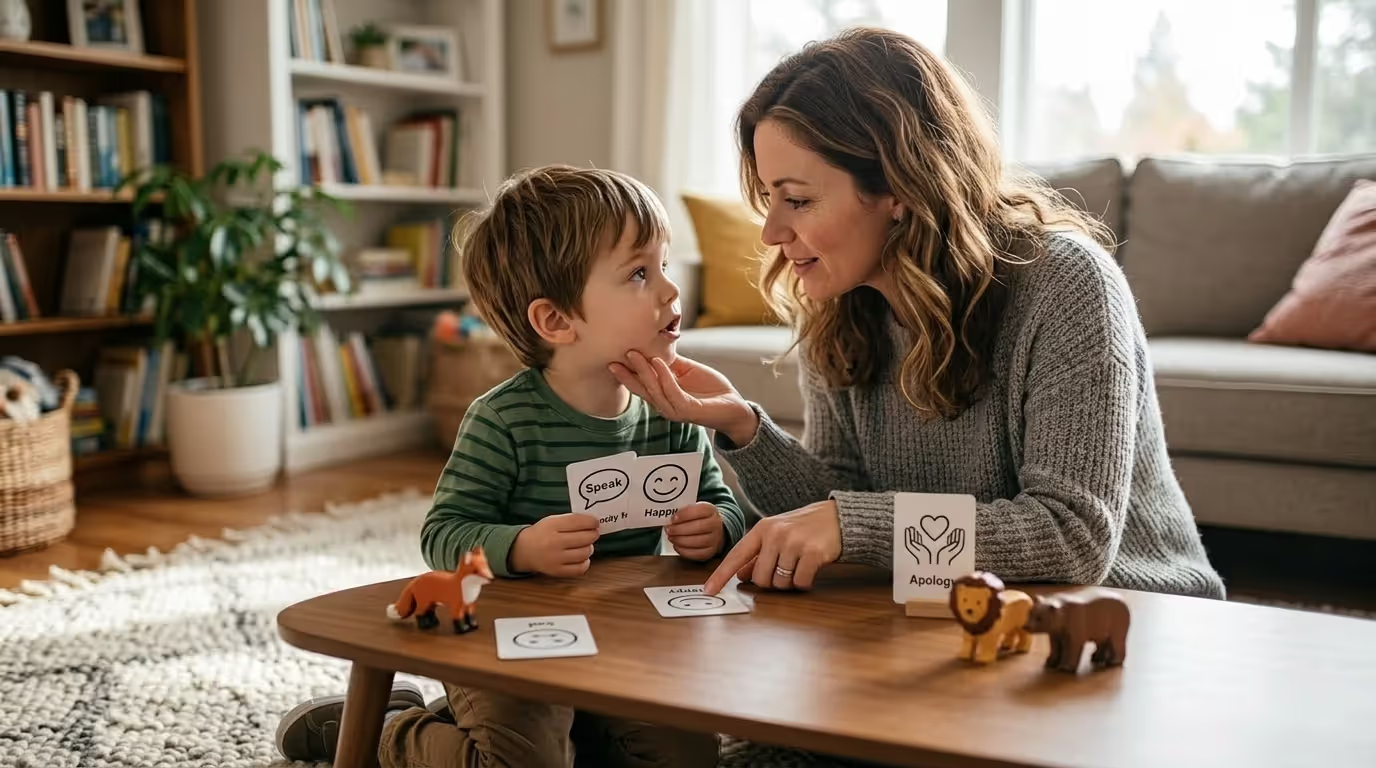
Reading social cues and body language:
Watch TV shows or movies with the sound off. Guess what characters are feeling based on facial expressions and body language. Then watch with sound to check.
Play "emotion charades" where family members act out feelings without words. This builds recognition skills.
Point out cues in public (subtly). "See how that person crossed their arms and looked away? That usually means they're done talking."
Author: Olivia Bennet;
Source: raynet-merseyside.net
Empathy development activities:
"How would you feel if..." questions during everyday moments build perspective-taking. Make it specific, not abstract.
Volunteer together. Helping others builds empathy more effectively than lectures about kindness.
Discuss characters' motivations in books and shows. "Why do you think he did that? What was he feeling?" develops theory of mind.
Children aren't born knowing how to make friends. Friendship skills are learned through practice, coaching, and sometimes explicit instruction. Parents who treat social skills as teachable—like reading or math—rather than fixed personality traits give their children a tremendous advantage.
— Kennedy-Moore Eileen
Supporting Your Child's Friendships at School
Supporting friendship at school requires working with the system, not around it. Teachers and counselors see social dynamics you don't.
Collaborating with teachers and school counselors:
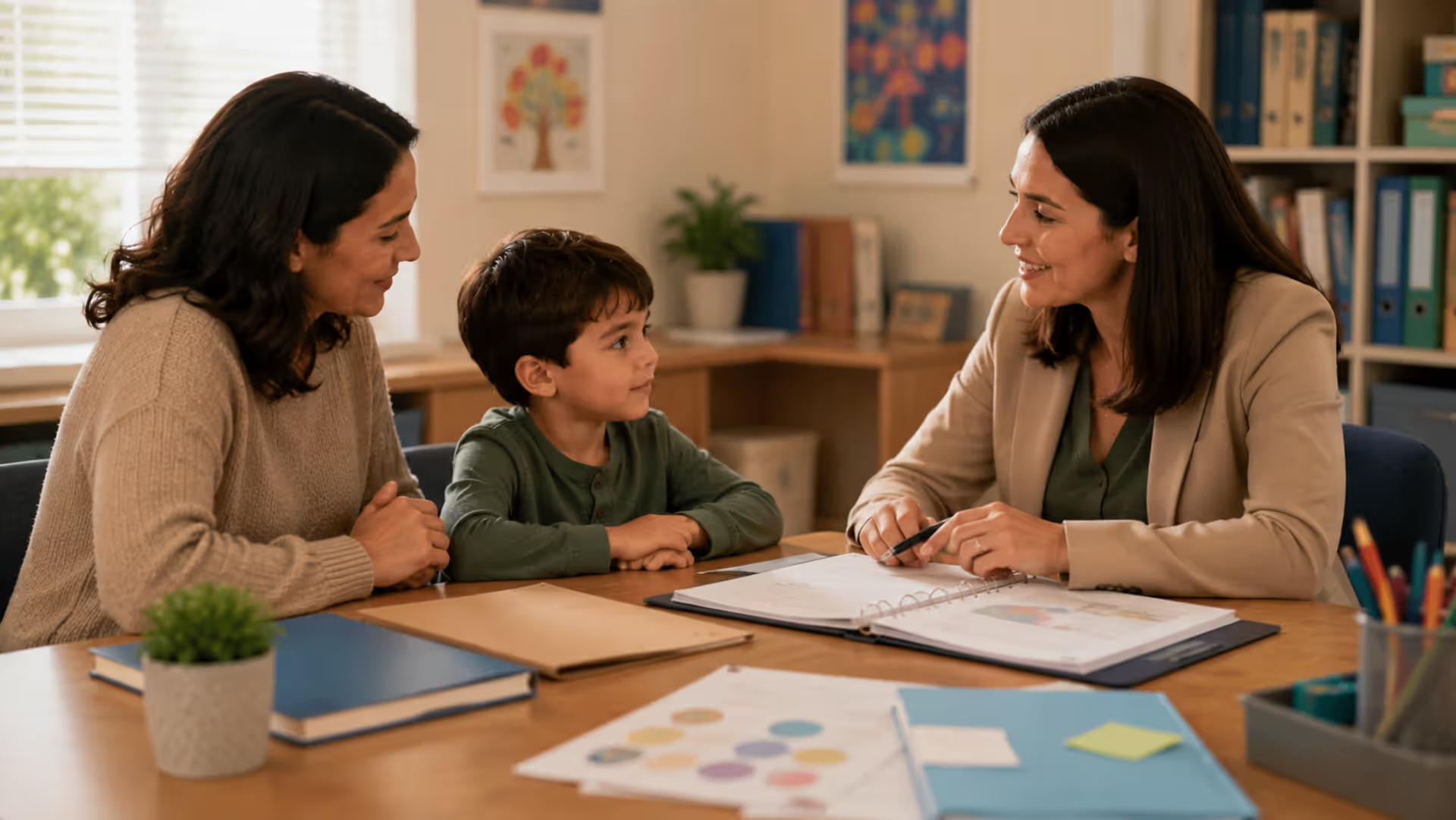
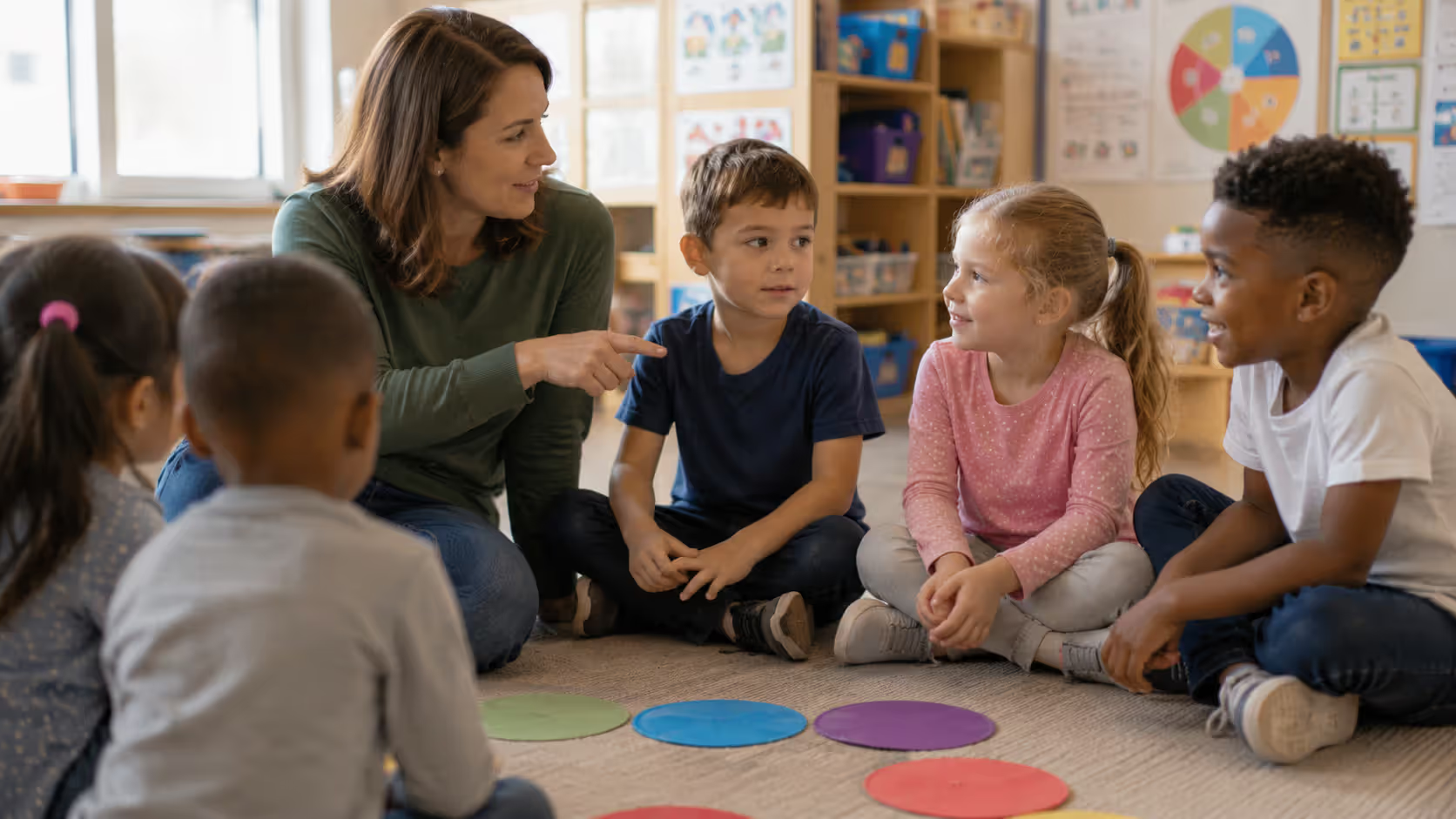
Request a brief meeting (email works) to discuss your child's social experience. Ask specific questions: Who do they sit with at lunch? Who do they play with at recess? Do they participate in group work?
Teachers can facilitate connections by strategically assigning partners for projects or seats at lunch. Don't be shy about asking for this support.
School counselors often run friendship groups or social skills programs. Ask if your child qualifies. These groups normalize skill-building and provide practice with peers.
Encouraging participation in extracurricular activities:
School clubs remove the pressure of approaching strangers. Everyone's there for the same interest, which provides instant common ground.
Help your child choose one activity to commit to for a full semester. Friendships develop through repeated exposure, not one-off events.
If your school offers lunch clubs (chess, art, book clubs), these provide structured social time during the hardest part of the day for many isolated kids.
Helping children navigate lunch and recess dynamics:
These unstructured times are brutal for socially struggling kids. Problem-solve specific strategies.
Lunch: identify one or two kind classmates and practice asking "Can I sit here?" Have a backup plan like eating in the library or a teacher's classroom if that's allowed.
Recess: suggest your child bring a ball or jump rope. Equipment attracts other kids. Or identify a playground game they can join (four square, wall ball) that has clear rules for entry.
Managing friendship conflicts and drama:
Don't rush to solve every friendship problem. Kids need to work through minor conflicts themselves.
Do intervene if there's bullying, exclusion that's systematic, or your child is genuinely distressed for more than a few days.
Teach your child the difference between tattling and reporting. Reporting is about safety or serious harm. Everything else, they should try to handle first.
Help them develop scripts for common situations: "I don't like when you say that. Please stop." or "Can we take turns choosing the game?"
Author: Olivia Bennet;
Source: raynet-merseyside.net
When to Seek Professional Help for Friendship Difficulties
Some friendship difficulties need more than parental support. Knowing when to escalate makes a real difference.
Red flags that indicate deeper issues:
Your child has had zero reciprocal friendships for over a year despite regular exposure to peers and your intervention attempts.
Social anxiety is interfering with daily functioning—they're refusing to go to school, having panic attacks before social events, or becoming physically ill.
You're seeing signs of depression: persistent sadness, loss of interest in all activities, sleep or appetite changes, or talk about self-harm.
Your child's social struggles stem from behaviors they can't seem to control—aggressive outbursts, inability to read any social cues, or extreme rigidity about rules and routines.
Teachers or other adults are expressing concern about your child's social development.
Types of professionals who can help:
Child psychologists assess underlying issues like anxiety, ADHD, or autism spectrum disorder that affect social functioning. They provide therapy and coping strategies.
Social skills groups led by therapists or trained facilitators give kids structured practice with peers who have similar challenges. This normalizes the learning process and provides a safe space to make mistakes.
Play therapists work with younger children using play-based techniques to build social-emotional skills.
School counselors and school psychologists can provide support within the school environment and help coordinate with teachers.
Occupational therapists sometimes work on social skills, especially for children with sensory processing issues or developmental delays.
What to expect from social skills interventions:
Progress is gradual. You won't see dramatic changes after a few sessions. Expect months of consistent work.
Therapists will teach specific skills: how to start conversations, join groups, read facial expressions, manage conflict. They'll use role-play, games, and real-world practice.
You'll likely get homework—strategies to practice at home or social experiments to try at school.
The goal isn't to change your child's personality. It's to give them tools to connect with others in ways that feel authentic to them.
Introverted kids won't become extroverts. Shy kids might always need warm-up time. But they can learn skills that make social interaction less painful and more successful.
Common Mistakes Parents Make
Forcing friendships with kids who clearly aren't compatible because they're convenient (neighbor's kid, coworker's child). Chemistry matters. Keep trying different potential friends.
Over-scheduling activities without leaving downtime. Exhausted kids can't socialize effectively. Balance is key.
Doing all the social work for your child. Texting other parents to arrange everything, hovering during playdates, solving every conflict. Kids need to develop their own social agency.
Comparing your child to siblings or peers. "Why can't you make friends like your sister?" destroys confidence and helps exactly no one.
Ignoring the problem hoping it'll resolve itself. Sometimes it does. Often it doesn't, and early intervention prevents years of loneliness and damaged self-esteem.
Dismissing your child's feelings with "just be yourself" or "they're not worth it anyway." Validate their experience first, then problem-solve.
Real-World Success Story
Consider Maya, an eight-year-old who spent first and second grade eating lunch alone and playing by herself at recess. Her parents tried general playdates that went poorly—Maya would either cling to her mom or wander off to play alone.
Her mom shifted strategy. She identified that Maya loved animals and art but hated loud, chaotic environments. She enrolled Maya in a small art class at the library (six kids max) and volunteered her to help at a local animal shelter's weekend program for kids.
The art class met weekly for eight weeks. Same kids, same time, structured activity. By week three, Maya mentioned another girl by name. By week six, they were sitting together intentionally.
The animal shelter program connected Maya with two other quiet kids who also preferred animals to people. Her mom arranged a one-on-one playdate at a pet store (looking at animals, not playing), which went well.
By the end of third grade, Maya had two solid friends and several friendly acquaintances. She still preferred small groups and quiet activities. But she wasn't lonely anymore.
The difference? Matching activities to Maya's actual interests and temperament, providing structure, and focusing on repeated exposure rather than one-off events.
FAQ: Friendship Building Questions Answered
Helping your child build friendships isn't about forcing them to be someone they're not. It's about giving them tools, creating opportunities, and supporting their social development with the same intentionality you bring to academics or sports.
Start where your child is right now. If they have zero friends, focus on one positive peer interaction per week. If they have one friend, work on expanding their circle gradually. If they're socially anxious, prioritize building confidence in low-pressure settings before tackling school dynamics.
Remember that friendship building activities work best when matched to your child's actual interests and temperament. A quiet, creative kid won't suddenly thrive in competitive team sports. An active, energetic child will struggle in sedentary activities that require sustained focus.
Track small wins. Your child said hello to a classmate. They accepted a playdate invitation. They joined a lunch table conversation for two minutes. These moments matter more than you might think.
Most kids who struggle with friendships in elementary school go on to develop satisfying social lives. With support, skill-building, and the right opportunities, your child can get there too. The loneliness won't last forever—especially when you're actively helping them develop the skills they need to connect.