
Understanding Autism in Preschool
Preschool Autism Guide

Content
Autism doesn't wait for kindergarten to show up. For many children, the signs appear during the preschool years—sometimes subtle, sometimes unmistakable. Parents notice their toddler isn't responding to their name. Teachers see a child who lines up toys instead of playing pretend. These early patterns matter because the preschool window offers a critical opportunity for support that can reshape a child's developmental trajectory. Whether you're a parent navigating an unexpected diagnosis or an educator working to create truly inclusive spaces, understanding how autism presents in young children—and what actually helps—makes all the difference.
Recognizing Autism in Preschool-Aged Children
The early signs of autism in toddlers often emerge between 18 and 36 months, though some children show differences earlier. You're looking for patterns, not isolated behaviors.
Communication red flags stand out first for many families. A child might not point to share interest by 12 months or respond when you call their name repeatedly. Some toddlers lose words they previously used—a phenomenon called regression that affects roughly 25-30% of autistic children. Others develop language on schedule but use it differently, repeating phrases from videos verbatim or struggling with pronouns.
Social differences appear in how young children connect with others. Limited eye contact during interactions. Little interest in peek-a-boo or other early social games. A toddler might not bring you things to show you or look where you're pointing. These aren't about shyness—it's more like the typical social roadmap doesn't quite click.
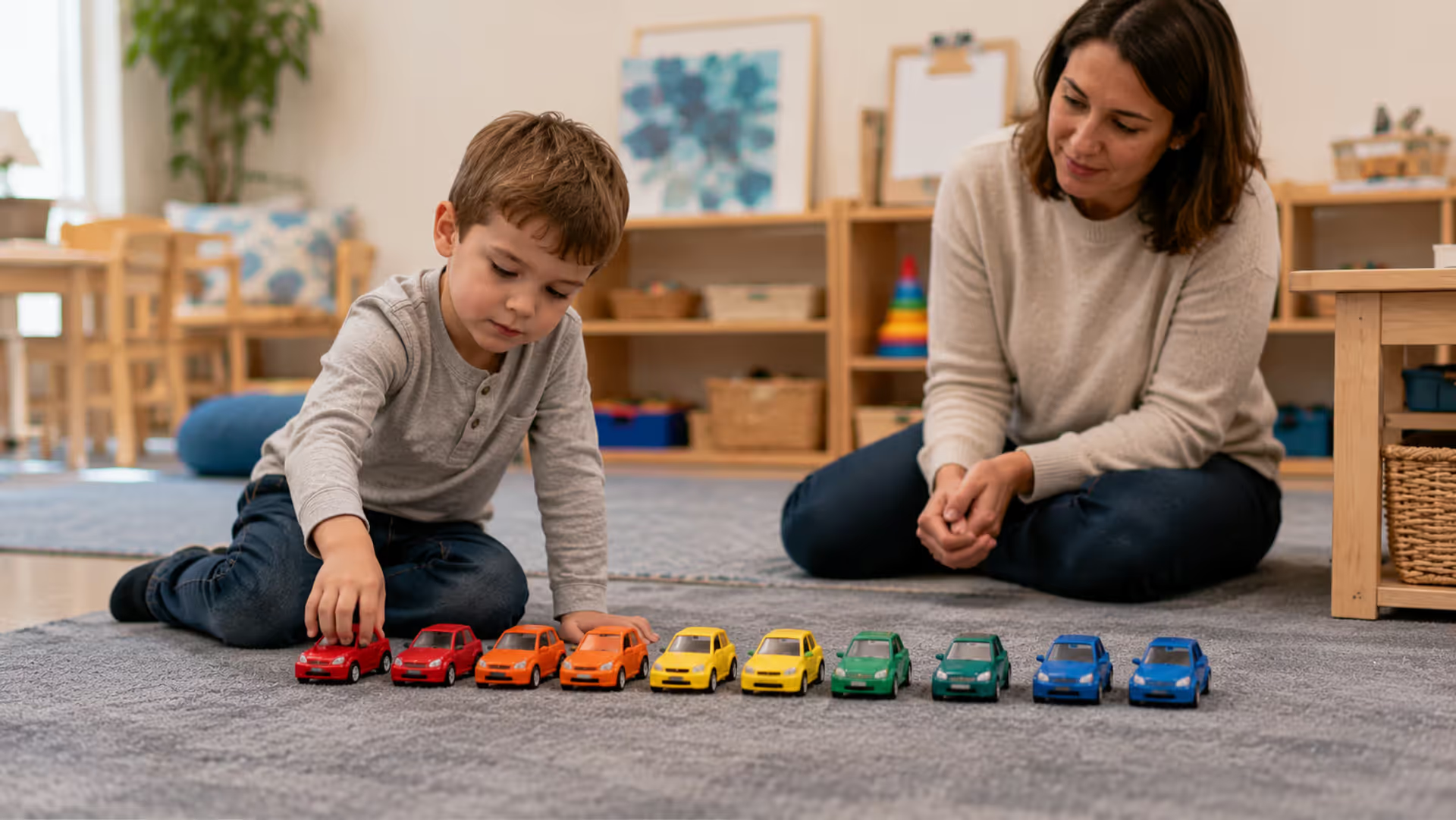
Repetitive behaviors and restricted interests take various forms. Lining up cars by color instead of crashing them together. Spinning objects or themselves. Intense fascination with specific topics like ceiling fans or letters. Hand-flapping, toe-walking, or other repetitive movements that serve a purpose for the child even when adults don't understand it.
Sensory responses often puzzle caregivers. A child might cover their ears at normal conversation volume but not react to their name shouted from across the room. Extreme pickiness about clothing textures. Seeking or avoiding certain sensory experiences intensely—craving deep pressure, refusing to touch Play-Doh, needing to smell everything.
But here's what trips people up: autistic preschoolers don't all look the same. Some are chatty and affectionate. Others hit every motor milestone early. The pattern I see most often is parents who dismissed concerns because their child didn't match the stereotype, only to realize later that autism shows up in countless variations.
When should you seek evaluation? If multiple red flags persist past 18 months, don't wait. Pediatricians use screening tools like the M-CHAT-R/F at 18 and 24-month visits, but parents can request evaluation anytime. Early assessment doesn't lock a child into a label—it opens doors to support.

Author: Daniel Merce;
Source: raynet-merseyside.net
How Autism Affects Play and Social Development
Autism and play development follow different paths, and understanding this helps you support rather than force typical patterns.
Preschool-aged autistic children often prefer solitary play or parallel play (playing near but not with peers) longer than neurotypical children. This isn't antisocial behavior—it's a genuine preference that makes sense to them. A three-year-old might spend 30 minutes arranging blocks by size while classmates build towers together, completely content in their systematic exploration.
Pretend play develops differently or not at all for many autistic preschoolers. While typical four-year-olds create elaborate scenarios where stuffed animals have tea parties, autistic children might focus on the physical properties of toys—how they move, their textures, the sounds they make. Some engage in scripted play, reenacting scenes from favorite shows with precise dialogue but resisting improvisation.
The difference isn't imagination—it's how imagination expresses itself.
Peer interaction challenges stem from multiple sources. Reading social cues requires processing facial expressions, tone of voice, body language, and context simultaneously. That's a lot. Turn-taking in conversation feels arbitrary when you're still figuring out why people talk about things that don't interest you. Joining ongoing play requires navigating unwritten rules that nobody explains.
Common mistake: assuming an autistic preschooler who plays alone is lonely. Many genuinely prefer solitary activities and become stressed by forced social interaction. Others want connection but lack the skills, showing frustration when peers don't understand their approach.
Developmental milestones show a spiky profile. An autistic three-year-old might read letters fluently but struggle to wave goodbye. Master complex puzzles but not respond to "come here." This uneven development confuses people expecting across-the-board delays.
Supporting play development means meeting children where they are. Join their play on their terms first. If a child lines up cars, line up cars with them. Add one small variation—maybe a different color pattern—and see if they incorporate it. Build complexity gradually through their interests, not against them.

Author: Daniel Merce;
Source: raynet-merseyside.net
Communication Strategies for Autistic Preschoolers
Communication support for autism in preschool settings requires rethinking what communication means. It's not just talking—it's connection, expression, and understanding.
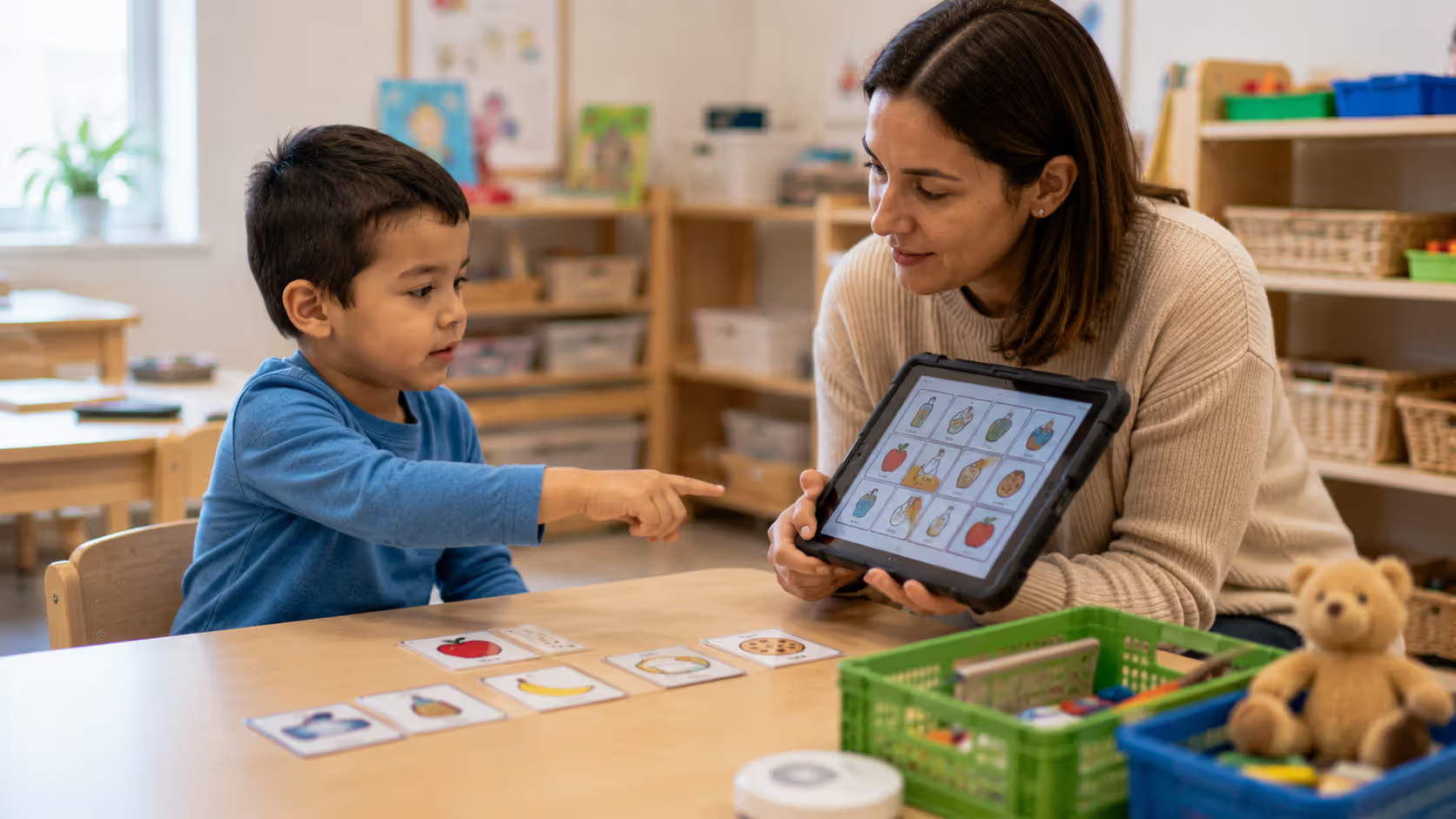
Visual supports work because they stay put. Spoken words disappear the moment you say them, but pictures remain. Use visual schedules showing the day's activities with simple images. Create choice boards with photos of snacks, toys, or activities. Label classroom areas with both words and pictures. This helps all children, not just autistic ones, but it's often necessary for autistic preschoolers to navigate their day.
Augmentative and Alternative Communication (AAC) opens doors for nonspeaking or minimally speaking children. Don't wait to introduce AAC—research consistently shows it supports rather than hinders verbal language development. Options range from simple picture exchange systems (PECS) to speech-generating devices on tablets. A three-year-old using an AAC app to request "more bubbles" is communicating successfully, full stop.
Language-building techniques that actually work:
Modeling and expansion. When a child says "car," you respond with "Yes, blue car!" You're not correcting—you're building.
Commenting instead of questioning. Constant questions ("What's that? What color?") create pressure. Try narrating: "You're stacking the red blocks. That tower is getting tall!" This provides language without demanding responses.
Honoring communication attempts in any form. A child who pulls your hand toward the door is communicating. Acknowledge it: "You want to go outside. Let's get your coat."
Reducing language complexity matters more than people think. "Get your backpack from your cubby and line up at the door" contains multiple steps and abstract concepts. Try: "Get backpack. Then line up." Pause between instructions.
The simpler option usually wins here.
Create communication-rich environments by giving children reasons to communicate. Put favorite toys visible but out of reach. Offer deliberately silly choices ("Do you want to wear this shoe on your head?"). Pause expectantly during routines, giving space for any communication attempt.
And respect non-verbal communication. Not every autistic child will speak, and that's okay. A child who reliably uses gestures, pictures, or a device to express needs, preferences, and ideas is communicating successfully.
Author: Daniel Merce;
Source: raynet-merseyside.net
Creating Supportive Daily Routines and Environments
Routines for autistic children function like scaffolding—they hold up the day so children can focus on learning instead of constantly predicting what happens next.
Structure and predictability reduce anxiety that interferes with everything else. When a preschooler knows circle time follows snack, and outside play comes after circle time, they can relax into activities. Uncertainty about what's coming creates a low-level stress that makes regulation harder.
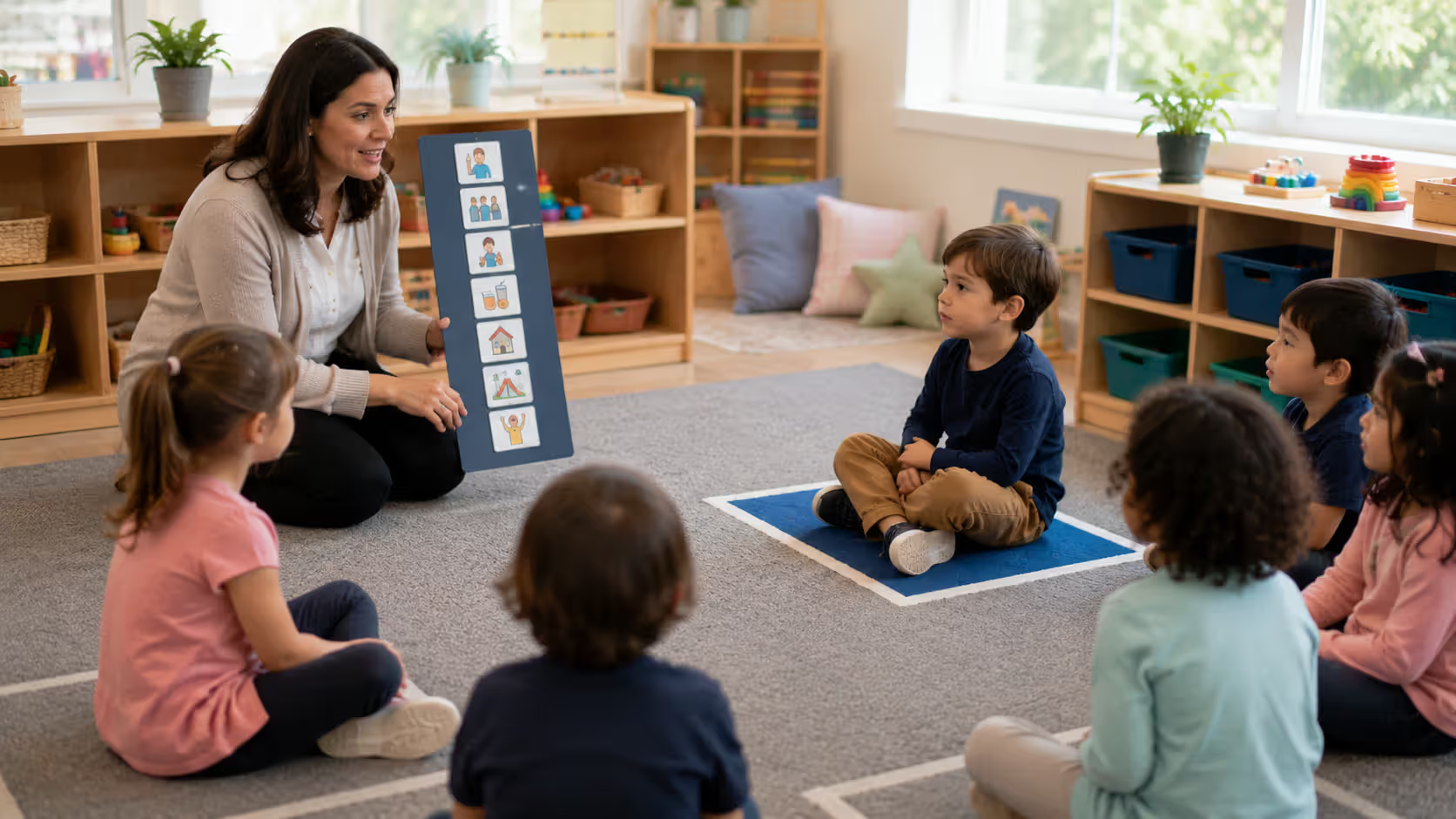
Visual schedules turn abstract time into something concrete. Use a strip of velcro with picture cards showing each activity in order. As you complete each activity, move its card to a "finished" section. This externalizes the day's structure so children can reference it independently. Some children need schedules for the whole day; others need them only for transitions or new situations.
Transition warnings prevent meltdowns. Autistic preschoolers often struggle shifting between activities, especially when leaving something they enjoy. Give a five-minute warning (with a visual timer), then a two-minute warning, then support the transition with a specific next step: "In two minutes, blocks are finished. Then we wash hands for snack."
But rigid adherence to routine can backfire. Real life includes unexpected changes. Build flexibility gradually by introducing small, planned variations. Maybe Friday's schedule looks different. Perhaps you occasionally swap two activities. Frame these as "schedule changes" using visual supports, teaching that routines can flex without breaking.
Managing Sensory Needs in Early Learning Settings
Sensory needs in autism early years settings require both prevention and accommodation. Every child has a sensory profile—combinations of senses they're over-responsive to, under-responsive to, or seek out.
Create a sensory-friendly baseline in your space. Fluorescent lights with audible buzzing? Swap them or add lamps. Reduce visual clutter on walls—those alphabet posters and behavior charts create constant visual noise. Consider sound levels during transitions and group activities.
Offer sensory tools proactively:
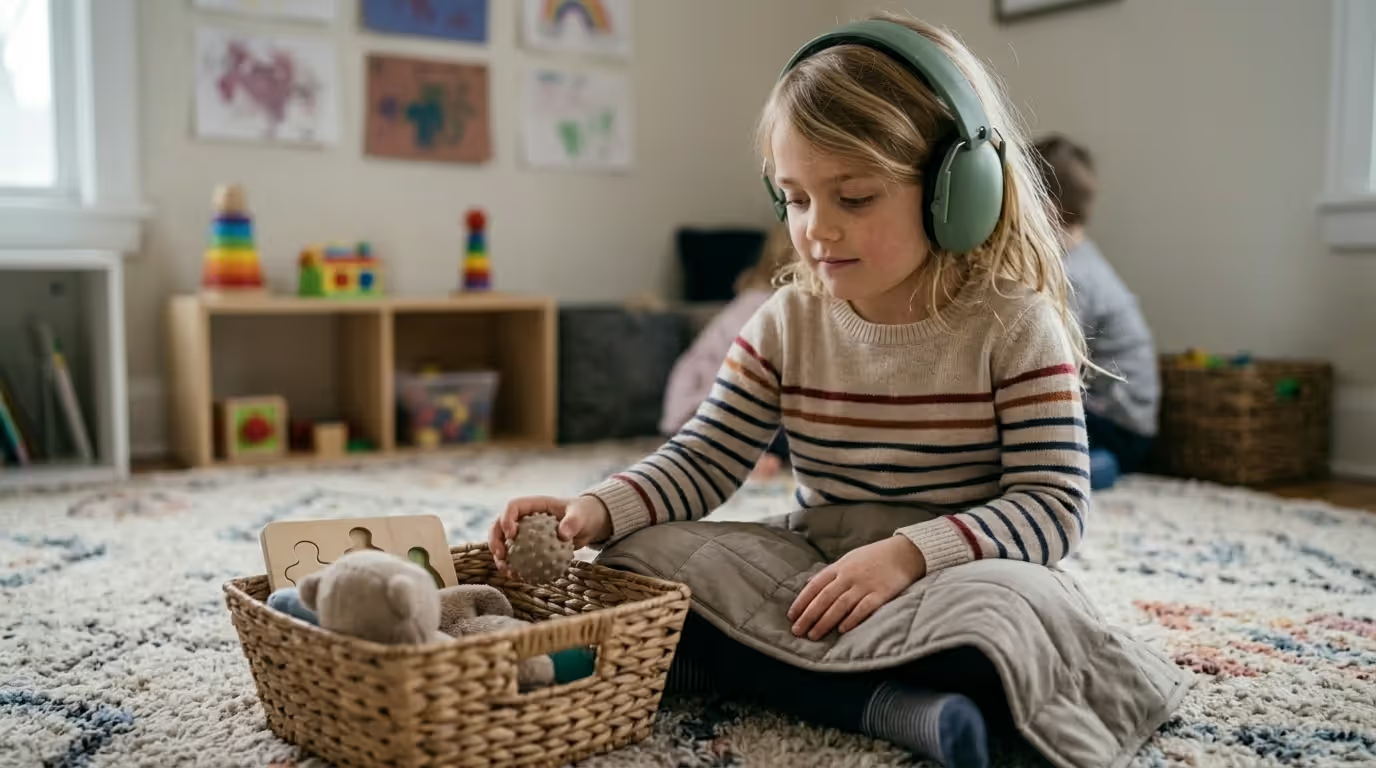
- Noise-reducing headphones for children sensitive to sound
- Fidgets or textured objects for hands during seated activities
- Chewy necklaces for oral sensory seekers
- Weighted lap pads for children who benefit from deep pressure
- Movement breaks built into the schedule, not just offered when a child "needs" them
Sensory breaks shouldn't be rewards or punishments—they're regulations tools like drinking water when thirsty.
Designate a calm-down space (not a time-out corner). Include soft lighting, comfortable seating, and sensory tools. Teach all children it's a place to regulate, not a consequence. An autistic preschooler who recognizes they're overwhelmed and uses the calm space is demonstrating impressive self-awareness.
Common mistake: treating sensory-seeking behaviors as discipline issues. A child who crashes into furniture or spins constantly isn't being defiant—they're meeting a sensory need. Provide appropriate outlets: a crash pad, a spinning chair, heavy work activities like pushing a weighted cart.
Author: Daniel Merce;
Source: raynet-merseyside.net
Designing Autism-Friendly Classroom Spaces
Physical environment shapes behavior more than we acknowledge. Small design changes make preschool spaces work better for autistic children.
Define areas clearly with furniture, rugs, or tape on the floor. Open-concept classrooms feel overwhelming when you can't tell where the block area ends and the reading corner begins. Clear boundaries help children understand expectations for each space.
Reduce sensory overload in learning areas. The art table doesn't need to be next to the loud dramatic play area. Reading corners work better away from windows with changing outdoor light and movement. Think about what each space asks of children, then minimize competing sensory input.
Create visual clarity for expectations. A picture showing two children at the computer area communicates the limit without verbal reminders. Photos of children using materials correctly serve as references.
Offer choices within structure. A shelf with three puzzle options gives autonomy without overwhelming. Too many choices create decision paralysis; too few feel controlling. This balance varies by child.
Incorporate special interests into the environment. If a child loves trains, include train books, train puzzles, and train figures across learning areas. Special interests aren't distractions—they're bridges to engagement and opportunities to build skills in motivating contexts.
Effective Teaching Strategies and Activities
Preschool autism strategies that work share common features: they're individualized, play-based, and build on strengths rather than just addressing deficits.
Supporting autistic children in nursery and preschool settings starts with understanding that one-size-fits-all approaches fail. What helps one autistic four-year-old might not help another. Flexibility matters.
Inclusive preschool autism practices benefit everyone:
Visual instructions for activities. Show the steps for washing hands with pictures above the sink. Demonstrate how to use new materials before expecting independent use. Seeing beats hearing for many learners.
Structured play with clear goals. Free play overwhelms some autistic preschoolers. Offer structured options: "You can build with blocks, read books, or play at the sensory table." Having defined choices reduces anxiety.
Special interest integration. If a child obsesses over dinosaurs, use dinosaur counters for math, read dinosaur books, act out dinosaur movements. Motivation skyrockets when content connects to interests.
Peer buddying systems. Pair autistic children with understanding, patient peers for activities. This works best when you prepare the buddy with simple, concrete ways to help and play together—not as a helper, but as a friend.
Autism classroom activities should emphasize strengths. Many autistic preschoolers excel at:
- Pattern recognition: sorting, matching, sequencing activities
- Visual-spatial skills: puzzles, building, spatial concepts
- Memory: matching games, recalling sequences
- Focused attention: activities requiring sustained concentration on details
Before/after example: A teacher initially struggled with circle time because one autistic student wandered away. After introducing a visual schedule showing circle time's three parts (song, story, movement), giving the child a special carpet square marking his spot, and reducing circle time from 20 to 12 minutes, the child participated successfully. The change wasn't forcing compliance—it was removing barriers.
Break tasks into smaller steps. "Clean up" means nothing specific. Try: "Put blocks in the blue bin. Now put cars in the red bin." Concrete, sequential, achievable.
Use timers to make abstract time concrete. "Play for a little while" versus "play until the timer rings" gives children control over anticipating transitions.
Provide movement opportunities throughout the day. Autistic preschoolers often need more sensory input than typical schedules provide. Build in jumping, pushing, pulling, and climbing regularly.
And celebrate different learning styles. If a child learns better by watching than by listening, show them. If they need to move while learning, let them. Sitting still and making eye contact aren't prerequisites for learning—they're cultural preferences we've mistaken for requirements.
Author: Daniel Merce;
Source: raynet-merseyside.net
Early Intervention and Support Services
Early intervention autism services during the preschool years can significantly improve outcomes. The brain's plasticity during early childhood means intervention has maximum impact now.
Types of therapies commonly used:
Applied Behavior Analysis (ABA) breaks skills into small steps and uses reinforcement to teach them. Quality ABA focuses on meaningful skills and respects the child's autonomy—it shouldn't look like rigid compliance training.
Speech-Language Therapy addresses communication in all forms, not just spoken words. Therapists work on understanding language, expressing wants and needs, social communication, and alternative communication methods.
Occupational Therapy helps with sensory processing, fine motor skills, self-care tasks, and regulation strategies. OTs make daily activities more manageable.
Developmental or play-based therapies follow the child's lead, building skills through natural play interactions. These approaches emphasize relationship-building and intrinsic motivation.
The best therapy plan combines approaches based on individual needs, not ideology.
Accessing services varies by state and situation. Children under three qualify for Early Intervention services through Part C of IDEA (Individuals with Disabilities Education Act), typically provided in home settings. From age three, services shift to the school district through Part B, often delivered in preschool programs.
An Individualized Family Service Plan (IFSP) guides services for children under three. It's family-centered, identifying outcomes the family wants to achieve and services to support them. Parents are equal team members, not just recipients of expert advice.
An Individualized Education Program (IEP) directs services from age three onward. It includes present levels of performance, measurable goals, services provided, and placement decisions. Parents have significant rights in IEP development and can request changes when something isn't working.
Don't wait for a formal diagnosis to access services in many states. If a child shows developmental delays, they may qualify based on need. The evaluation process itself costs families nothing.
The preschool years are not about fixing autism—they're about giving children tools to navigate a world not designed for them. When we focus on building communication, regulation, and confidence rather than enforcing neurotypical behavior, we see children who are happier, more capable, and better prepared for lifelong learning.
— Chen Rebecca
Collaborative care works best. Your team might include parents, teachers, therapists, and medical providers. Regular communication ensures everyone works toward consistent goals using compatible strategies. A monthly check-in email updating everyone on progress and challenges keeps the team aligned.
Private services supplement school-based support for families who can access them. Private therapists often provide more intensive hours or specialized approaches. But school-based services are free and legally required—start there.
Common Preschool Autism Strategies: What Works Where
Different settings require adapted approaches. Here's how common strategies translate across environments:
| Strategy | Home Implementation | Classroom Implementation | Therapy Setting | Key Tips |
| Visual Schedules | Daily routine chart on wall; bedtime sequence in bathroom | Whole-class schedule plus individual schedules as needed | Session schedule showing activity sequence | Use real photos initially, transition to icons as understanding grows |
| Sensory Breaks | Designated calm space with weighted blanket, dim lighting | Sensory corner accessible anytime; scheduled movement breaks | Integrated into session structure based on child's regulation needs | Proactive scheduling prevents meltdowns better than reactive use |
| Communication Supports | AAC device accessible throughout home; visual choice boards for meals, activities | Communication boards in each learning area; peer modeling encouraged | Targeted practice with new communication tools and strategies | Consistency across settings accelerates learning—use same systems everywhere |
| Transition Warnings | Timer for ending preferred activities; "first-then" cards | Visual timer for whole class; individual warnings for children who need them | Explicit practice with transitions as a skill | Five-minute and two-minute warnings work better than countdowns |
| Special Interest Integration | Use interests for teaching daily skills (counting trains, reading dinosaur books) | Incorporate interests into centers; use as bridges to new content | Build rapport and motivation through interests before introducing non-preferred tasks | Balance honoring interests with gentle expansion to new topics |
| Structured Choices | Offer 2-3 options for snacks, activities, clothing | Choice boards for free play; structured options during transitions | Gradually increase choice complexity as decision-making improves | Too many choices overwhelm; too few feel controlling |
| Social Stories | Create stories about upcoming events, new routines, or challenging situations | Use for whole-class preparation (field trips, assemblies) and individual challenges | Develop and practice stories for specific social situations | Include what the child will see, hear, feel, and what they can do |
FAQ: Preschool Autism Questions Answered
Supporting autistic preschoolers isn't about following a rigid protocol. It's about seeing the child in front of you, understanding how their brain works differently, and removing barriers that prevent them from learning and connecting in their own way.
You'll make mistakes. Everyone does. A strategy that works brilliantly for one child might flop with another. An accommodation that helps today might become unnecessary next month as skills develop. That's not failure—it's the reality of working with young children whose needs evolve constantly.
The preschool years offer a remarkable window. Children are developing foundational skills, forming their sense of self, and learning how to navigate the world. When autistic preschoolers receive support that respects their neurology rather than fighting it, they develop confidence, communication, and capabilities that serve them lifelong.
Start where you are. Use what you have. Focus on connection before compliance, communication in any form, and creating environments where autistic children can succeed on their terms. The goal isn't making autistic preschoolers indistinguishable from their peers—it's helping them become the fullest version of themselves.