
Montessori for Active Minds
Is Montessori Good for ADHD in Young Children?

Content
When your preschooler can't sit still during circle time, climbs the bookshelf, or flits from toy to toy in thirty seconds flat, you start wondering about school options. Maybe you've heard Montessori might help. Maybe you're worried it won't provide enough structure. The truth? It depends on your specific child, but the Montessori method offers some surprisingly good matches for how ADHD brains work—and a few potential gaps you'll want to know about.
Understanding ADHD in Preschool and Early Childhood
ADHD in young children looks different than the stereotype. You won't always see a child bouncing off walls. Sometimes it's the kid who zones out during story time, the one who can't remember three-step instructions, or the preschooler who melts down when routines change unexpectedly.
Executive function delays sit at the heart of ADHD. These are the brain's management skills: planning, organizing, switching tasks, controlling impulses, and managing emotions. Most three-year-olds aren't great at these things anyway. But children with ADHD typically lag about 30% behind their age peers in executive function development. A six-year-old with ADHD might have the impulse control of a four-year-old.
Attention challenges in young children with ADHD show up in specific ways. They struggle with sustained attention—sticking with one activity for age-appropriate periods. They have trouble with selective attention, filtering out distractions to focus on what matters. And they often hyperfocus on preferred activities while seeming incapable of attending to non-preferred tasks.
Sensory processing differences frequently tag along. Many children with ADHD are either sensory-seeking (craving movement, touch, and stimulation) or sensory-avoiding (overwhelmed by noise, textures, or visual clutter). Some swing between both extremes.
The pattern I see most often is parents noticing something's different around age three or four, but not getting a formal diagnosis until kindergarten or first grade. That preschool period becomes critical for finding educational approaches that support rather than fight against how these kids naturally operate.
Author: Olivia Bennet;
Source: raynet-merseyside.net
How the Montessori Approach Addresses ADHD Characteristics
The Montessori approach for neurodiverse children wasn't designed specifically for ADHD, but several core principles align remarkably well with what these kids need.
Self-Directed Learning and Focus Development
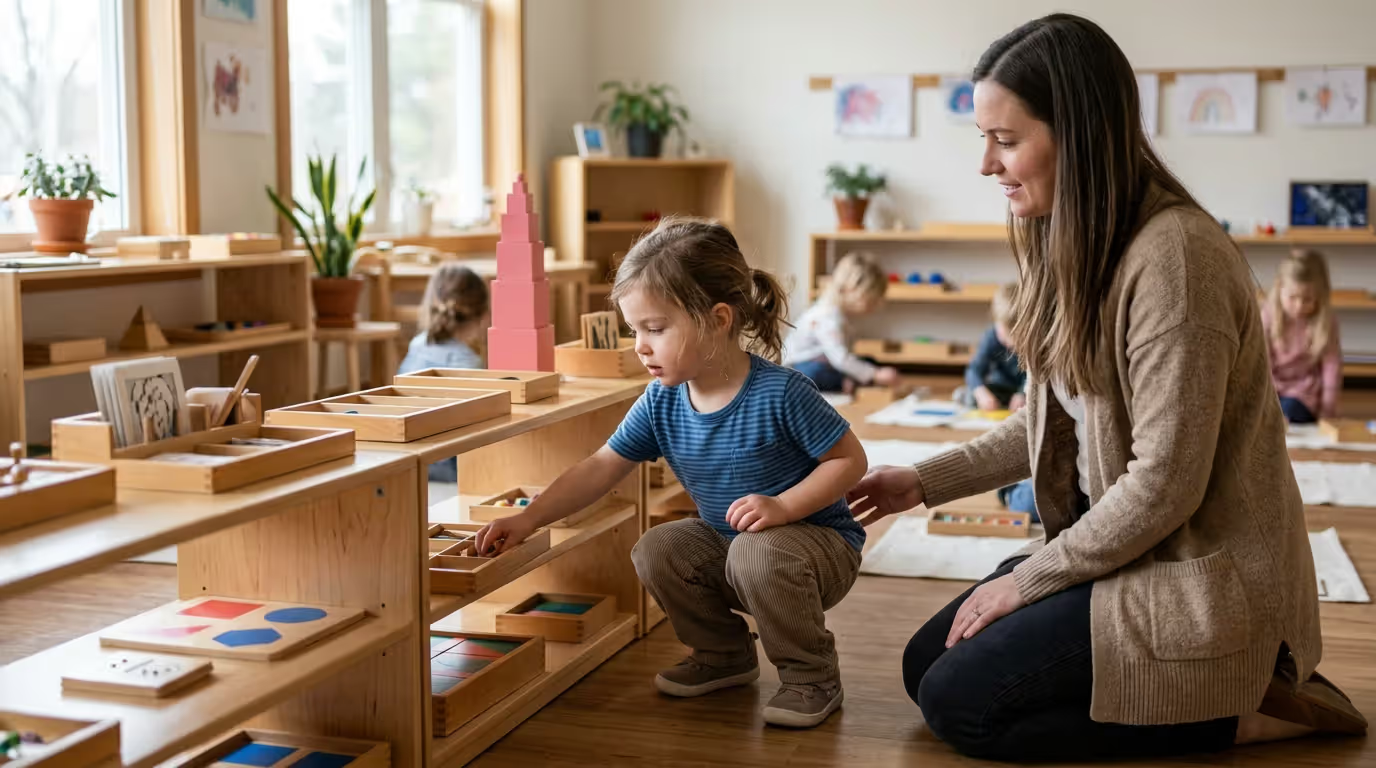
Self-directed learning adhd support happens naturally in Montessori classrooms. Children choose their work from available options. They decide how long to spend with materials (within reason). They move at their own pace.
This matters because ADHD brains struggle with externally imposed focus but can achieve deep concentration when intrinsically motivated. The Montessori term for this state is "normalization"—when a child becomes so absorbed in purposeful work that they reach calm, focused engagement.
You'll see a child who can't sit still for teacher-directed lessons spend forty minutes pouring water between pitchers. That's not random. That's a child finding their focus through choice and repetition.
The key difference: instead of forcing attention, Montessori environments create conditions where attention can emerge naturally. It doesn't work every time, but it works more often than you'd expect.
Structured Environment With Freedom of Choice
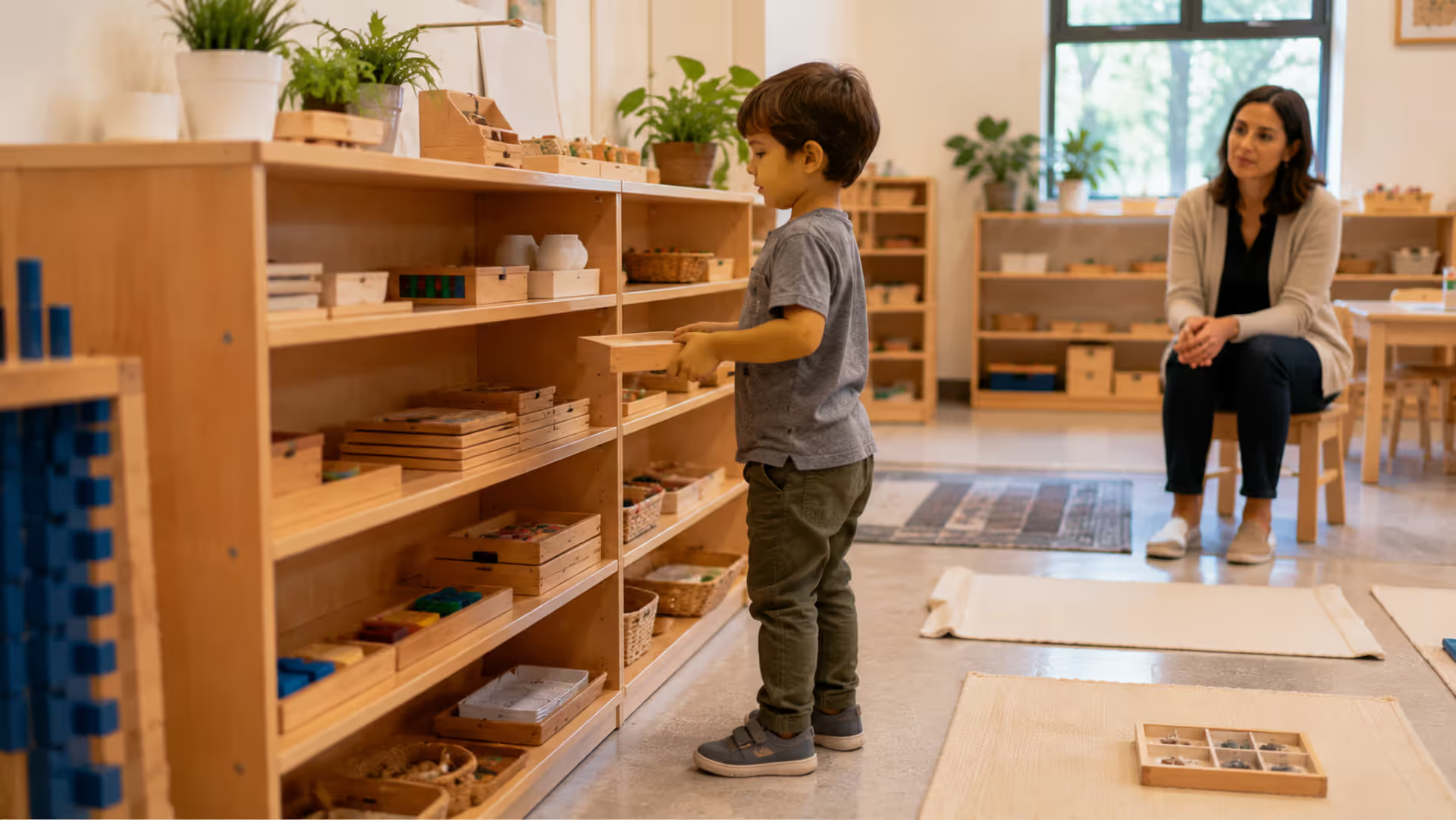
Here's the paradox: a structured environment for adhd actually includes significant freedom. Montessori classrooms have clear boundaries, predictable routines, and organized spaces. But within that structure, children exercise real autonomy.
The classroom layout stays consistent. Materials live in specific spots. Work follows logical sequences. Children know what to expect. This external order helps compensate for internal disorganization that ADHD children experience.
Yet they're not told what to do every moment. They choose from prepared options. This reduces the oppositional behavior that often flares when ADHD children feel controlled. It also builds decision-making skills that executive function delays have left underdeveloped.
Think of it as high structure, low control. The environment guides without dictating.
Sensory-Rich Materials and Hands-On Learning
Montessori materials engage multiple senses simultaneously. Children touch textured letters while saying sounds. They manipulate concrete objects to understand math concepts. They pour, sort, stack, and arrange physical materials rather than sitting with worksheets.
For sensory-seeking children with ADHD, this provides needed input. For sensory-sensitive children, materials are organized and predictable rather than chaotically stimulating. The hands-on approach also allows movement, which ADHD brains need for optimal functioning.
Each material isolates one concept and includes built-in error correction. A child can see immediately if puzzle pieces don't fit or if liquid spills. This concrete feedback helps children with ADHD who struggle with abstract correction or delayed consequences.
Specific Montessori Features That Support Children With ADHD
Author: Olivia Bennet;
Source: raynet-merseyside.net
Beyond broad philosophy, specific Montessori practices address challenges that make traditional preschools difficult for children with attention issues.
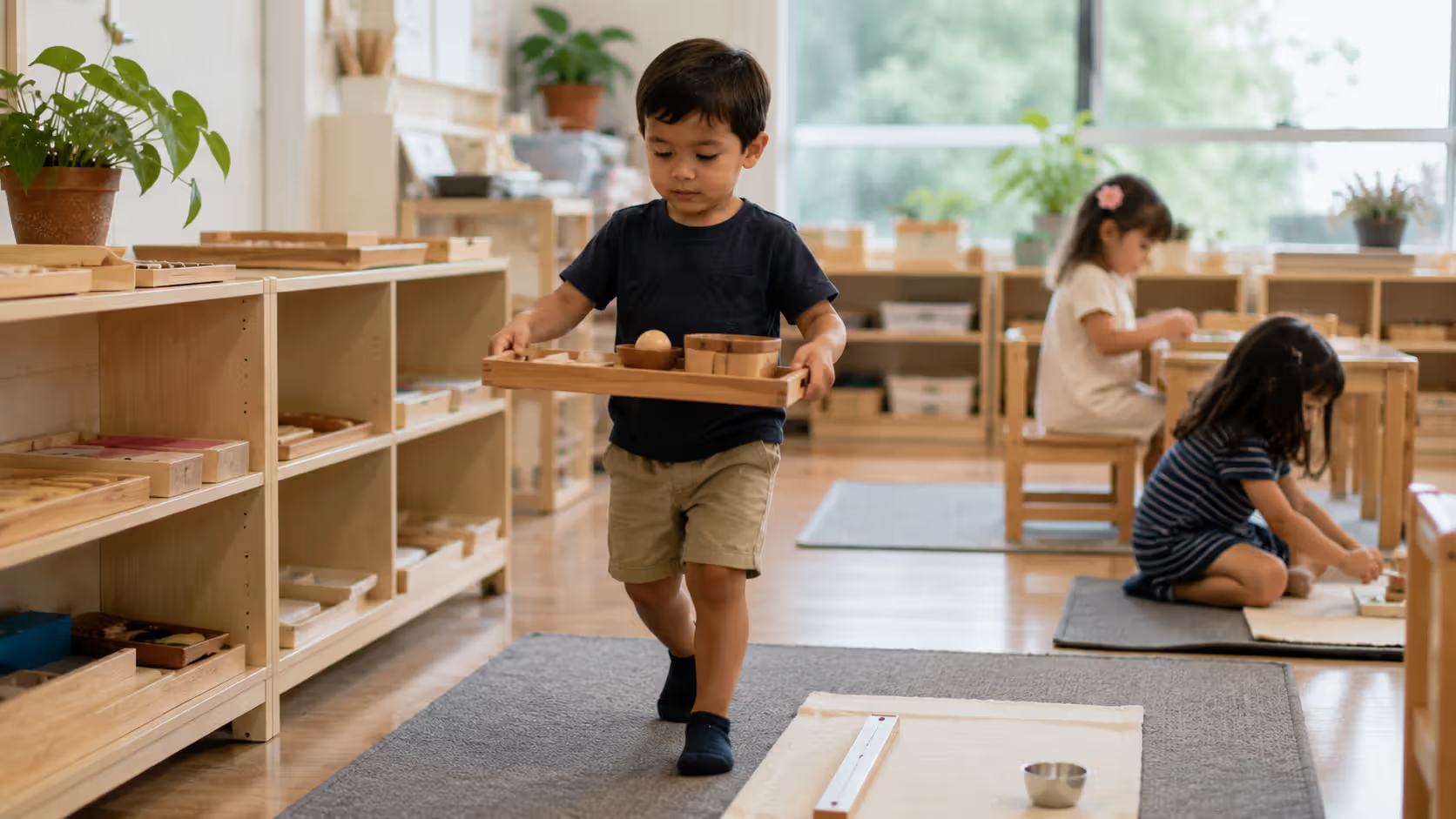
Movement integration happens continuously. Children walk to get materials, carry trays, pour water, sweep floors. They're not expected to sit still for extended periods. This movement isn't disruptive—it's purposeful and built into the work itself. Helping adhd children focus often means letting them move, and Montessori does this naturally.
Individualized pacing means no child is rushed or held back by group timing. A child who needs to repeat an activity twenty times can do so. One who grasps a concept quickly can move forward. This flexibility reduces frustration that triggers behavioral issues.
Minimal transitions characterize Montessori days. Instead of switching activities every fifteen minutes (a nightmare for kids with ADHD), children work in extended blocks—often two to three hours. They transition between self-chosen activities rather than following group schedules. Fewer transitions mean fewer opportunities for dysregulation.
Quiet workspaces with rugs or tables allow children to create personal work areas. This reduces visual and auditory distractions. Children with ADHD can position themselves away from high-traffic areas if they need less stimulation.
Concrete learning materials make abstract concepts tangible. Instead of learning numbers as symbols, children count beads, stack cubes, and manipulate rods. This concrete foundation helps children whose executive function challenges make abstract thinking difficult.
Mastery-based progression means children don't move forward until they've truly understood a concept. There's no shame in repetition. This builds confidence and prevents the gaps in understanding that leave ADHD children feeling perpetually behind and frustrated.
Sensory needs adhd preschool environments must address get met through practical life activities: pouring, spooning, washing, polishing. These activities calm and organize the nervous system while building concentration and fine motor skills.
Montessori education provides a prepared environment where children with diverse neurological profiles can work at their own pace with materials that engage their interests, allowing for the development of sustained attention through intrinsic motivation rather than external control—a particularly valuable approach for children whose executive function is still developing.
— Lillard Angeline
Potential Challenges and When Montessori May Need Supplementation
Montessori isn't magic. Some children with ADHD thrive completely. Others need additional support. And a few do better with different approaches.
Explicit behavioral support isn't typically emphasized in traditional Montessori training. The philosophy assumes that appropriate work and respectful guidance will address most behavioral issues. For children with significant impulse control challenges, this may not be enough. They might need more explicit instruction in behavioral expectations, visual reminders, or structured reward systems that aren't standard Montessori practice.
Social skills instruction happens organically in Montessori through mixed-age groupings and collaborative work. But children with ADHD often need more direct teaching of social skills: how to join play, how to recognize social cues, how to manage conflict. Not all Montessori teachers are trained in this explicit instruction.
Sensory regulation tools like fidgets, weighted items, or movement breaks might need to be added. Traditional Montessori materials provide sensory input, but some children need additional accommodations that aren't part of standard environments.
The biggest challenge? When a child's ADHD symptoms are severe enough that they can't yet access the freedom Montessori offers. If a child is constantly disrupting others, destroying materials, or unable to make constructive choices even with guidance, they might need more intensive intervention before Montessori becomes viable.
This doesn't mean Montessori won't work eventually. It might mean starting with more support—occupational therapy, behavioral therapy, or medication if appropriate—then transitioning to or combining with Montessori education.
Some families find success combining approaches: Montessori school with afternoon occupational therapy, or a Montessori classroom with an aide providing additional behavioral support. There's no rule saying you must choose only one method.
Author: Olivia Bennet;
Source: raynet-merseyside.net
Classroom Accommodations for ADHD in Montessori Settings
Even within Montessori philosophy, thoughtful teachers can implement classroom accommodations adhd early years require without compromising core principles.
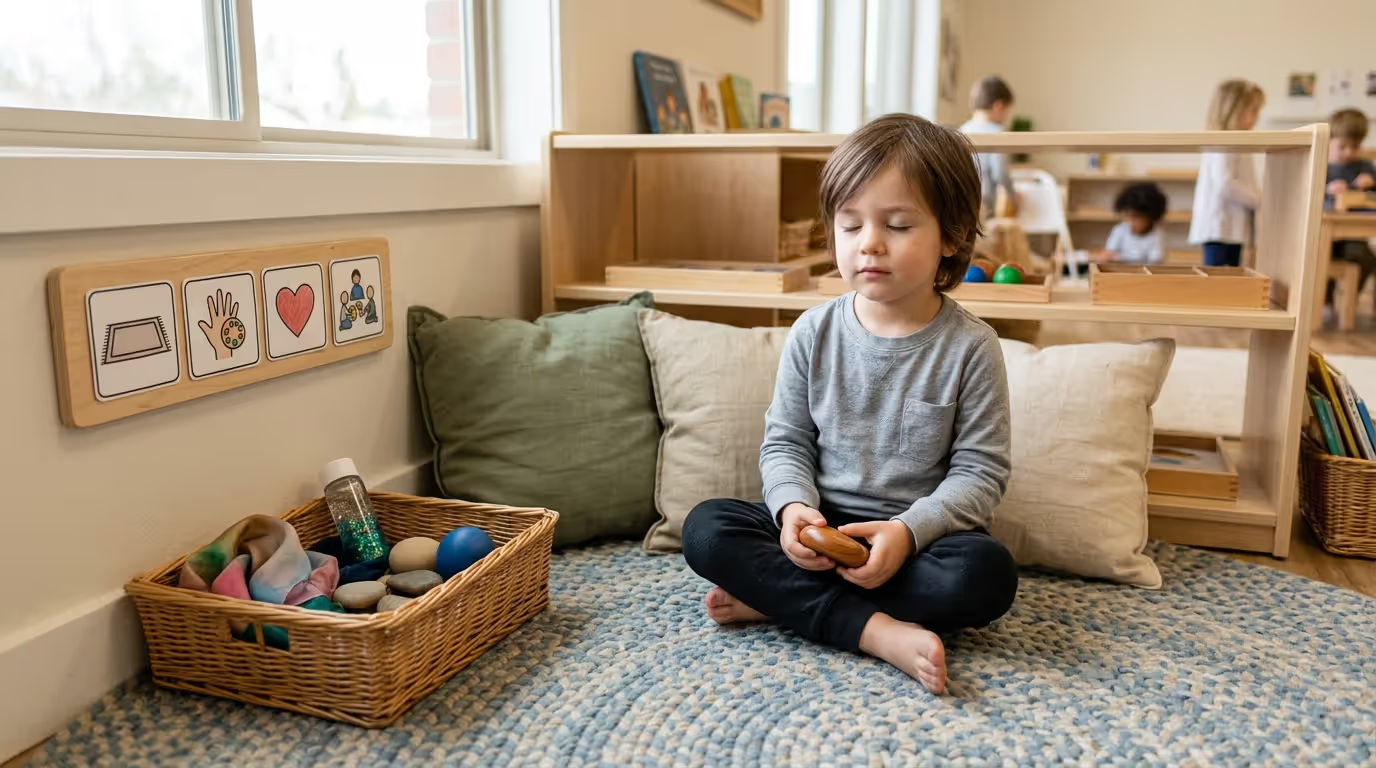
Visual schedules help children with executive function challenges track their day. A simple picture schedule showing morning work time, snack, outdoor time, and afternoon work provides external structure for kids whose internal sense of time and sequence is shaky. This doesn't contradict Montessori—it supports independence.
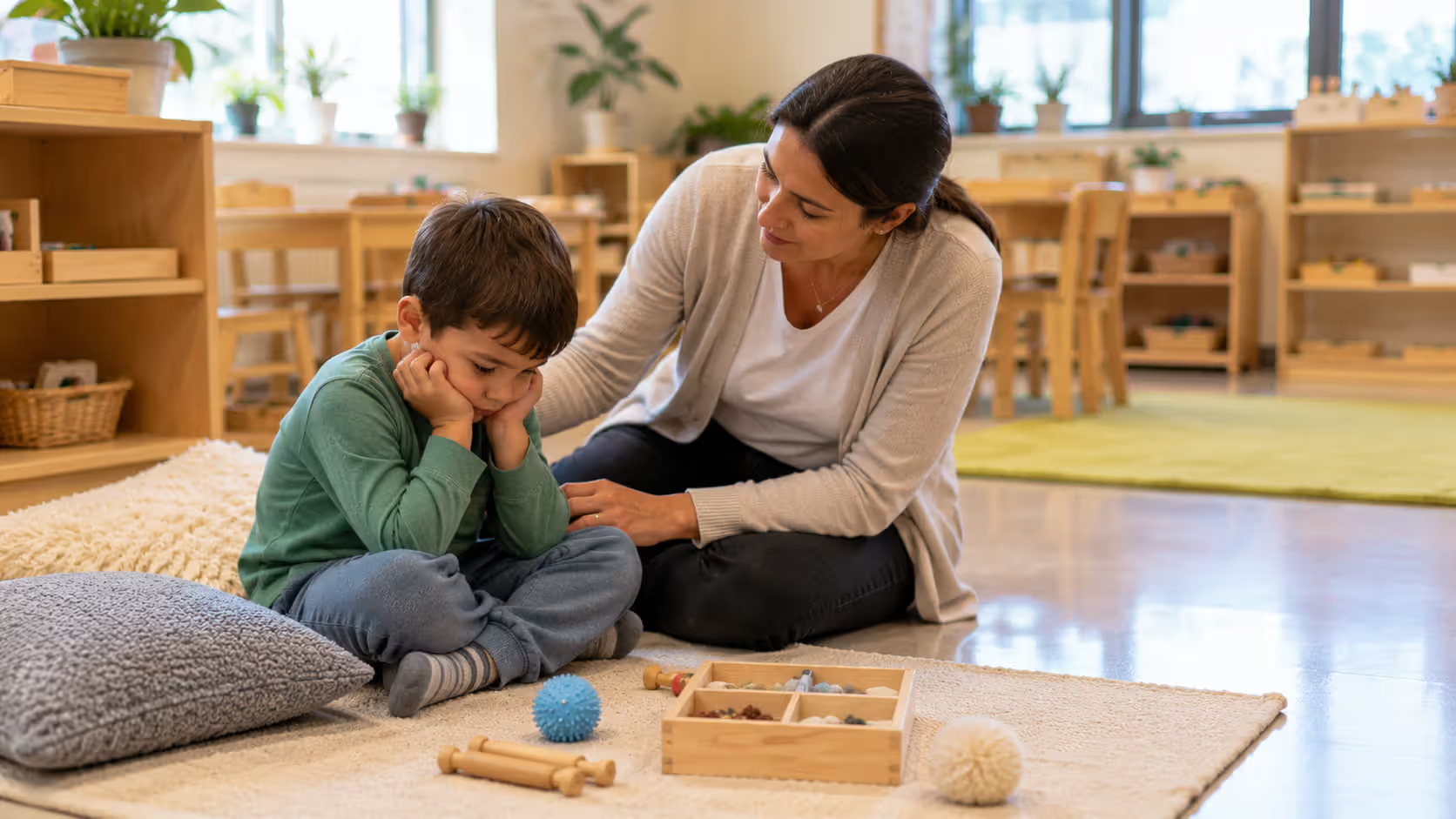
Designated calm spaces give children a place to regulate when overwhelmed. This might be a cozy corner with soft materials, a small tent, or simply a defined rug area. The key is presenting it as a helpful tool, not a punishment or isolation.
Modified work periods might mean shorter initial expectations with gradual increases. A child might start with thirty-minute work periods instead of the full three-hour cycle, building stamina over time. Or they might have a visual timer showing when they can take a movement break.
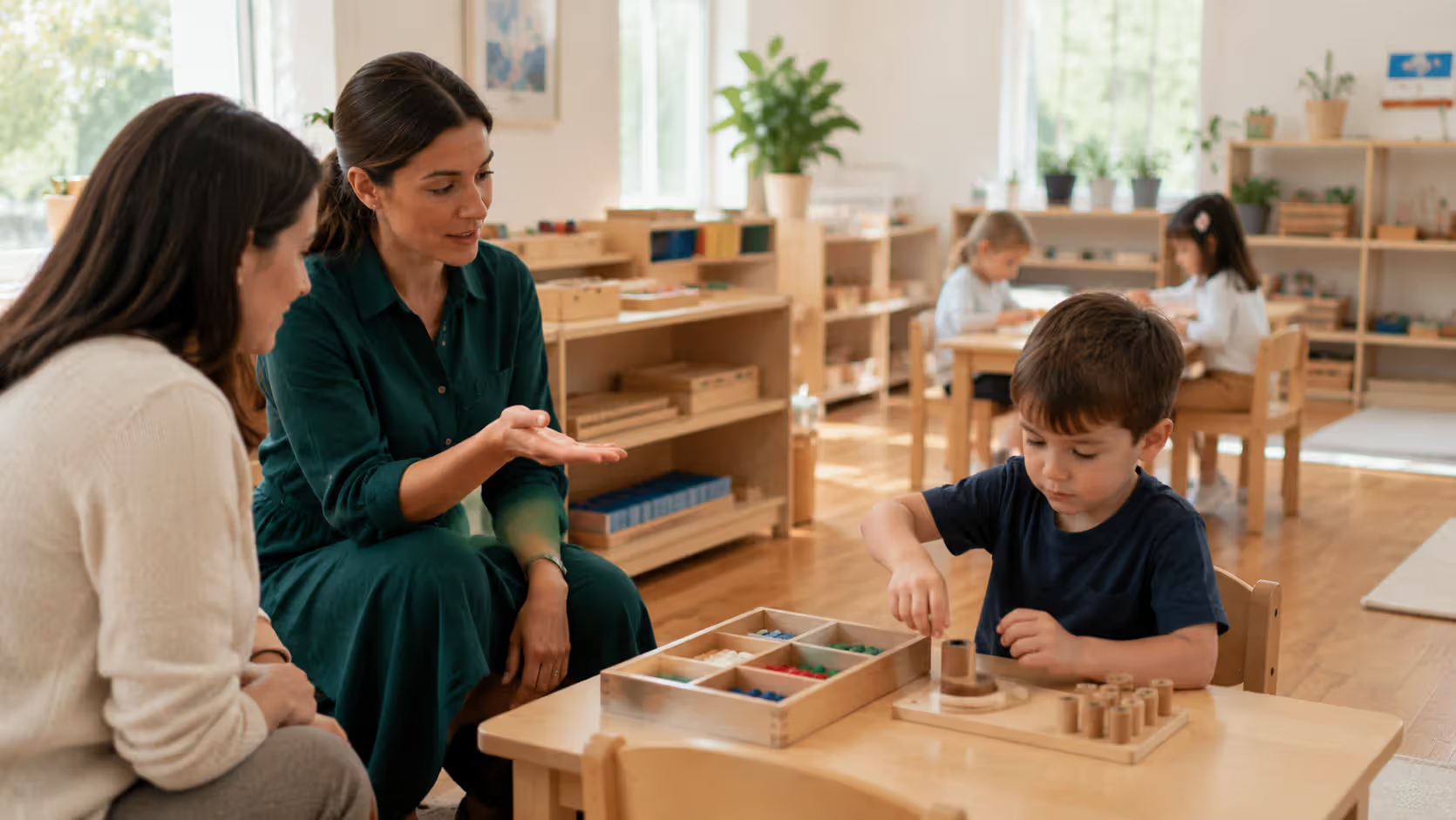
Collaboration with occupational therapists brings specialized knowledge into the classroom. An OT can suggest specific Montessori materials that meet a child's sensory needs, recommend seating options (wobble cushions, standing work spaces), or identify activities that provide needed input.
Communication strategies between teachers and parents ensure consistency. A brief daily note about what worked well, what was challenging, and what the child chose to work on helps parents reinforce skills at home and alerts teachers to outside factors affecting behavior.
Preferential positioning means thoughtfully considering where a child works. Some kids with ADHD need to be near the teacher for gentle redirection. Others do better farther from high-traffic areas. Teachers can guide children toward work spots that set them up for success.
Material modifications might include offering fewer choices initially to prevent overwhelm, or ensuring preferred materials are available when a child needs help transitioning back to productive work after a difficult moment.
The best adhd preschool support in Montessori settings comes from teachers who understand both Montessori philosophy and neurodevelopmental differences. They can adapt without abandoning core principles.
Author: Olivia Bennet;
Source: raynet-merseyside.net
Making the Decision: Evaluating Montessori for Your ADHD Child
So how do you decide if Montessori is right for your child with attention challenges?
Observe classrooms in person. Watch how teachers respond when children struggle. Do they offer calm guidance or seem frustrated? Notice the noise level, the physical space, how much movement is allowed. Does it feel chaotic or peacefully busy? Trust your gut about whether your specific child would feel comfortable there.
Ask about teacher training in neurodiversity. Not all Montessori teachers have training in ADHD or other developmental differences. Some schools actively seek this training; others haven't prioritized it. You want teachers who see neurodiversity as normal variation, not as problems to fix.
Questions to ask:
- How do you support children who struggle with impulse control?
- What happens when a child can't settle into work?
- Have you worked with children with ADHD before?
- Can you describe accommodations you've successfully implemented?
- How do you communicate with parents about challenges?
- What's your policy on outside therapies or specialists consulting with teachers?
Request trial periods. Many Montessori schools offer a few trial days or a probationary first month. This gives everyone a chance to assess fit without long-term commitment. Pay attention to your child's feedback. Are they excited to go? Exhausted but happy after? Resistant and dysregulated?
Consider developmental stage. Starting Montessori at age three (before ADHD symptoms are fully apparent or problematic) often works better than switching at age six after struggles in traditional kindergarten. The earlier start allows children to develop within the Montessori framework rather than needing to unlearn other classroom expectations.
Evaluate individual needs. Does your child need significant behavioral intervention right now? Are they aggressive or unsafe in ways that would disrupt a classroom? Do they have co-occurring conditions (autism, anxiety, language delays) that require specialized support? Montessori might be part of the solution but probably shouldn't be the only intervention.
Work with healthcare providers. Your pediatrician, developmental pediatrician, or child psychologist can offer perspective on whether your child's current functioning level is a good match for Montessori's freedom and expectations. They might recommend starting other supports first or concurrently.
The simpler option usually wins here: if you're drawn to Montessori philosophy and there's a quality school nearby, try it. You'll know within a few months whether it's working. And if it's not? You haven't harmed your child by trying an approach that emphasizes respect, independence, and hands-on learning. Those are good things regardless of educational setting.
Author: Olivia Bennet;
Source: raynet-merseyside.net
Montessori Features vs. ADHD Support Needs
| ADHD Challenge | Montessori Feature | Alignment |
| Short attention span | Self-chosen work based on interest | Strong—intrinsic motivation extends focus |
| Need for movement | Integrated movement in activities | Strong—purposeful movement is built in |
| Difficulty with transitions | Extended work periods, minimal group transitions | Strong—fewer transitions reduce stress |
| Executive function delays | Concrete materials with built-in error correction | Strong—reduces reliance on abstract planning |
| Sensory seeking/avoiding | Hands-on materials, predictable environment | Moderate—meets many needs but may require supplements |
| Impulse control issues | Freedom within limits, respectful guidance | Moderate—philosophy helps but may need explicit teaching |
| Social skills challenges | Mixed-age groups, collaborative work | Moderate—organic learning may need direct instruction |
| Need for external structure | Organized environment, consistent routines | Strong—high structure with appropriate flexibility |
| Difficulty following multi-step directions | One concept per material, child-paced learning | Strong—reduces working memory demands |
| Emotional regulation struggles | Calm environment, individualized attention | Moderate—supportive but may need additional tools |
FAQ: Montessori and ADHD Questions Answered
Choosing an educational approach for a child with ADHD feels high-stakes. You want to get it right. You worry about wasting time or making things harder.
Here's what matters most: Montessori offers genuine benefits for many children with attention challenges. The hands-on learning, built-in movement, self-paced work, and respectful approach align well with ADHD neurology. But it's not universal magic, and some children need more support than standard Montessori provides.
Visit schools. Watch your child in the environment. Trust what you observe more than what you read (including this article). Talk honestly with teachers about your concerns and your child's needs. Give it a real try if it feels right—a few months, not just a week.
And remember that no educational choice is permanent. If Montessori works beautifully, wonderful. If it needs supplementation with therapy or accommodations, that's fine too. If it ultimately doesn't fit, you can change course without guilt. You're not locking in a decision for the next thirteen years. You're choosing what might help your child right now, with the information you currently have.
That's not just good enough. That's exactly what thoughtful parenting looks like.