
Thinking Beyond Their Age
Gifted Characteristics in Early Childhood

Content
Every parent wonders at some point whether their child's quirks mean something more. Maybe your three-year-old asks why the moon follows the car, then won't accept "it just does" as an answer. Or your kindergartener reads chapter books while peers are learning letter sounds. These moments make you pause. They make you question what you're seeing.
Giftedness isn't just about being smart. It's a different operating system entirely. And recognizing it early changes everything about how you support your child's growth.
What Makes a Child Gifted
Giftedness means your child's brain processes information differently from age peers. Not better in some moral sense. Just differently.
The National Association for Gifted Children defines it as demonstrating outstanding levels of aptitude or competence in one or more domains. That's the official version. In practice, it means your child thinks faster, makes connections others miss, and often feels things more intensely than typical kids.
Two main types exist: cognitive giftedness and creative giftedness. Cognitive giftedness shows up in reasoning, memory, and processing speed. These kids solve puzzles quickly, remember details from months ago, and grasp abstract concepts years before peers. Creative giftedness manifests as original thinking, unusual problem-solving approaches, and imaginative play that goes far beyond typical scenarios.
Many gifted children show both types. Some excel in just one area.
Here's what trips people up: giftedness isn't the same as high achievement. A gifted child might struggle in traditional school settings. They might underperform, act out, or seem disengaged. The potential exists whether or not it translates to straight A's.
Developmental asynchrony defines the gifted experience. Your child might read at a fifth-grade level but have the emotional regulation of their actual age (or younger). They can explain photosynthesis but melt down when their toast breaks. This uneven development confuses parents and teachers who expect advanced thinking to come with advanced maturity.
It doesn't. And that gap creates most of the challenges gifted kids face.
Recognizing Gifted Traits in Young Children
Spotting giftedness in early childhood requires looking beyond report cards. Preschoolers don't take tests. They show you who they are through play, questions, and daily interactions.
Author: Hannah Whitaker;
Source: raynet-merseyside.net
Cognitive and Academic Indicators
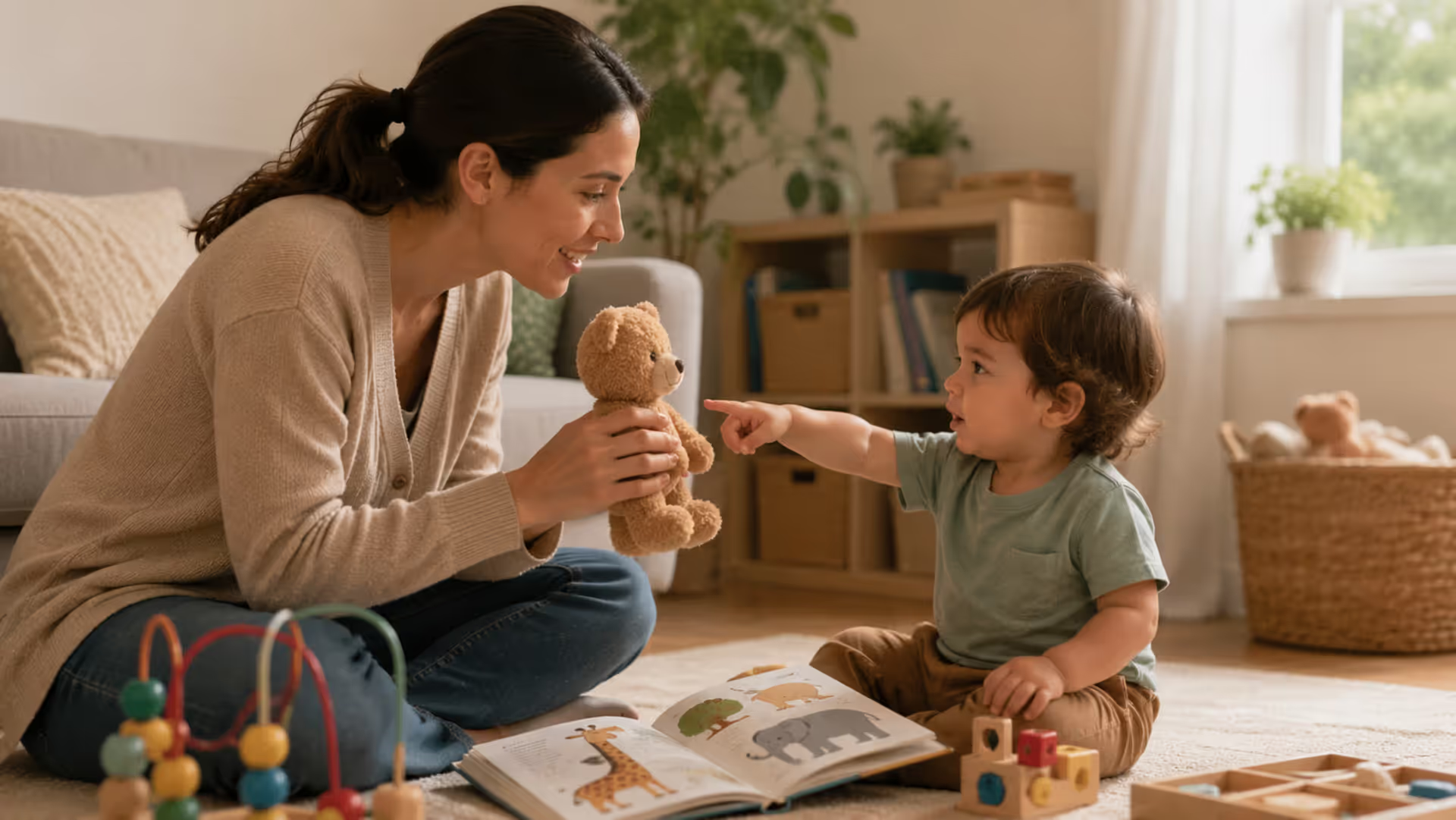
Early language development tops the list. Gifted toddlers often speak in full sentences before age two. They use complex vocabulary naturally—words like "actually," "because," and "unfortunately" pepper their speech before age three. One parent reported her 26-month-old saying, "I'm disappointed we can't go to the park."
That's not typical.
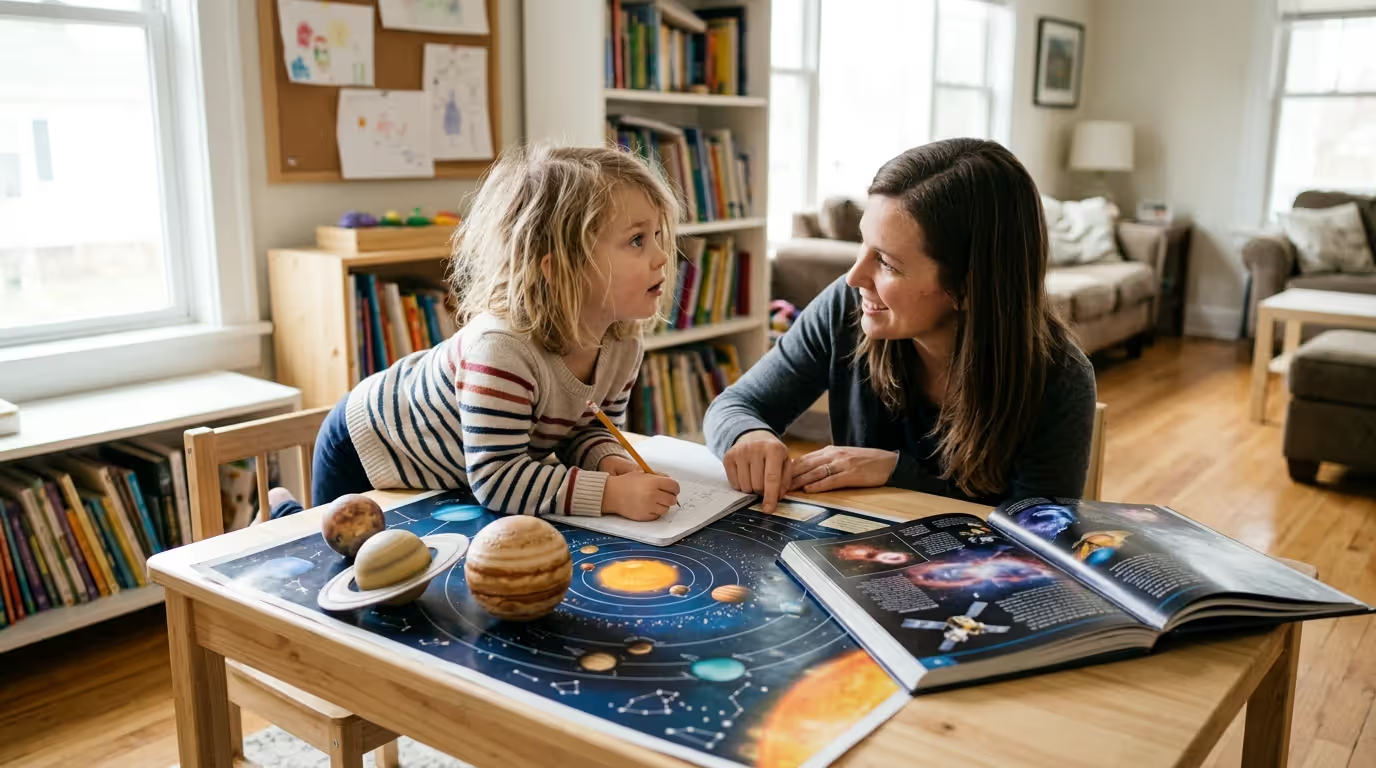
Advanced learners in preschool show intense curiosity about specific topics. Dinosaurs, space, maps, how things work—they dive deep rather than skimming surfaces. A four-year-old might memorize all the planets, their moons, and orbital periods. Then move on to black holes.
Pattern recognition emerges early. These children spot sequences, categorize objects in unusual ways, and notice inconsistencies adults miss. They'll point out that the song lyrics don't match the book version or that the grocery store rearranged the cereal aisle.
Reading often clicks without formal instruction. Many gifted children teach themselves to read between ages three and five. They figure out the code by observing signs, books, and screens around them.
Math concepts come naturally too. They grasp one-to-one correspondence, basic addition, and even multiplication before kindergarten. Not because anyone drilled them. Because they see the patterns.
Social and Emotional Patterns
Intensity defines everything. Gifted children experience emotions at full volume. Joy becomes ecstasy. Frustration turns into rage. Sadness feels overwhelming. This emotional overexcitability (a term from Kazimierz Dąbrowski's research) isn't poor regulation. It's how they're wired.
They form strong attachments to adults and older children. Peers their own age often bore them. A gifted five-year-old would rather discuss science with a teacher than play house with classmates.
Heightened sense of justice appears early. These kids notice unfairness everywhere and want to fix it. They'll defend classmates, question rules that don't make sense, and get genuinely upset about problems like pollution or homelessness. At age four.
Perfectionism emerges without anyone teaching it. They'll redo drawings until they match the mental image, refuse to try new activities if they can't do them well immediately, or have meltdowns over minor mistakes. This self-imposed pressure causes real suffering.
Many gifted young children show advanced empathy. They read facial expressions accurately, sense when others feel sad, and try to comfort people. But they also struggle with perspective-taking—understanding that others don't know what they know.

Author: Hannah Whitaker;
Source: raynet-merseyside.net
Physical and Sensory Sensitivities
Sensory processing differences show up frequently. Tags in shirts feel unbearable. Certain food textures trigger gagging. Loud noises cause genuine pain. Bright lights overwhelm. These aren't character flaws or manipulation tactics. The sensory input actually registers more intensely in their nervous systems.
Some gifted children have high pain thresholds and seem not to notice injuries. Others react strongly to minor bumps.
Fine motor skills often lag behind cognitive abilities. Your six-year-old might explain quantum physics concepts but struggle to tie shoes. This gap frustrates everyone, especially the child.
Sleep patterns tend toward extremes. Either they need very little sleep and wake up ready to go, or they need more than average and become dysregulated without it. Many resist sleep because their brains won't stop generating ideas.
High energy levels are common. These kids go from morning to night, constantly moving, talking, creating, exploring. They're not hyperactive in a disordered sense. They just have more mental and physical energy to burn.
Common Behavioral Patterns in Gifted Children
Understanding typical gifted behaviors helps you distinguish between giftedness and other conditions. Or recognize when both exist together.
Endless questioning drives parents and teachers to exhaustion. "Why?" becomes the most-used word. But it's not just "why is the sky blue?" It's "why do we call it blue when it looks different at different times?" and "who decided what to name colors anyway?" They're not trying to annoy you. They genuinely need to understand how everything connects.
The pattern I see most often is adults shutting down this curiosity because it's inconvenient. That's a mistake. The questions matter more than you think.
Perfectionism manifests differently than in adults. Gifted children often refuse to try new things, not from fear of judgment, but from internal standards. If they can't envision doing it well, they won't start. This looks like stubbornness or anxiety. Sometimes it's both.
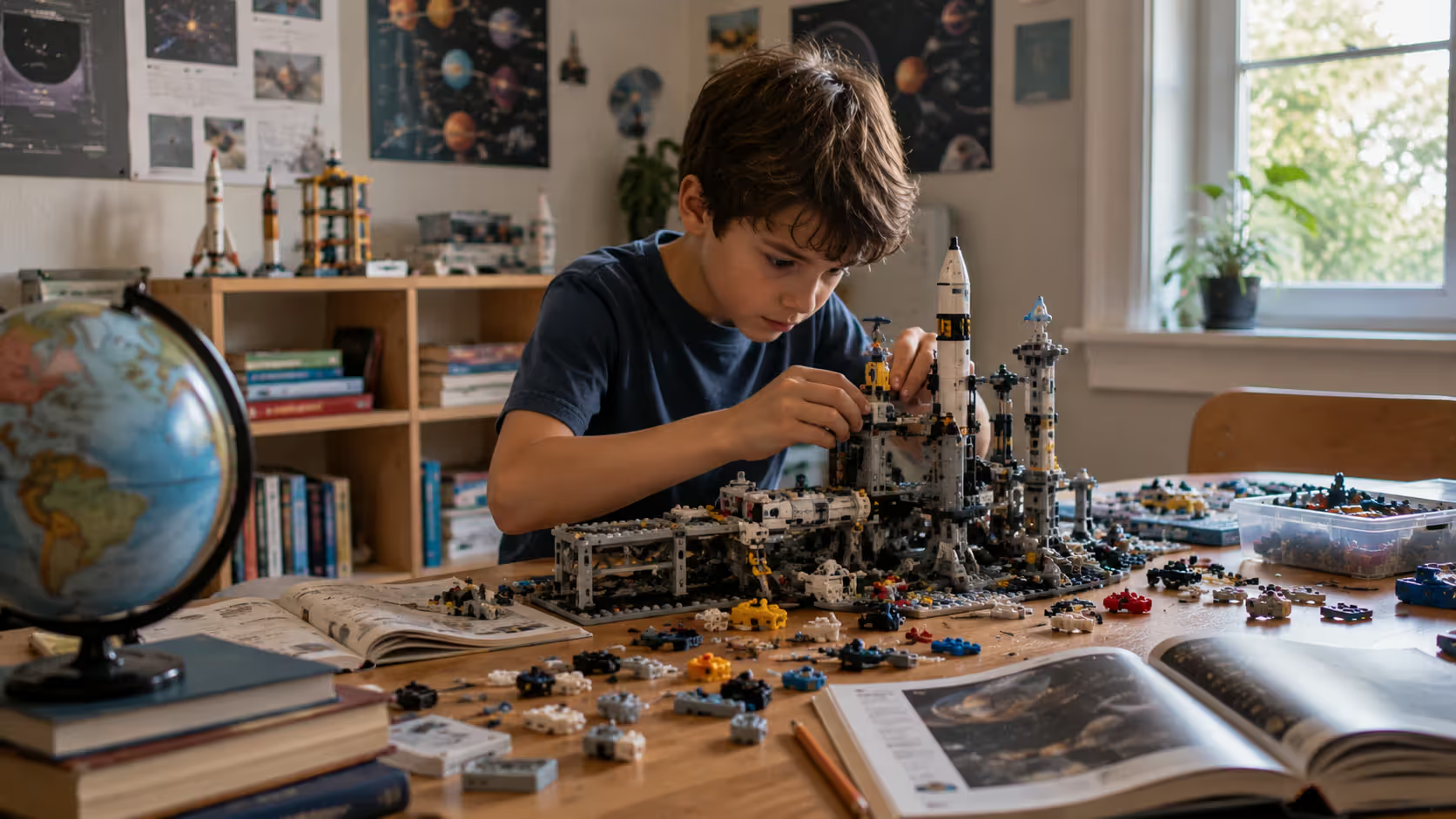
Intense focus on preferred activities is remarkable. A gifted child might spend three hours building an intricate structure, reading about volcanoes, or creating an imaginary world. Interrupting this flow causes major meltdowns. They're not being difficult. You've pulled them out of a deep cognitive state.
But ask them to do something uninteresting? Attention evaporates. This inconsistency confuses people who expect giftedness to mean focus on everything.
Questioning authority starts young. These kids want logical explanations for rules. "Because I said so" doesn't work. They'll follow reasonable rules explained with real reasons. Arbitrary ones? They'll push back hard.
This isn't defiance for its own sake. They need the world to make sense.
Advanced humor shows up surprisingly early. Gifted preschoolers understand puns, sarcasm, and wordplay. They make jokes that go over peers' heads. Then feel confused when nobody laughs.
Asynchronous development creates daily contradictions. Your child discusses philosophy but can't handle their friend choosing a different game. They understand complex scientific concepts but believe in Santa with fierce conviction. Emotional age, social age, intellectual age, and physical age rarely align.
This asynchrony is the defining characteristic of giftedness. It's also the most challenging aspect for everyone involved.
Author: Hannah Whitaker;
Source: raynet-merseyside.net
Social and Emotional Challenges Gifted Children Face
Being different comes with costs. Gifted children notice they don't fit, usually by age five or six. Sometimes earlier.
Peer relationship struggles start in preschool and intensify through elementary school. Gifted children want to discuss topics that don't interest age peers. They play differently—more complex scenarios, stricter rules, deeper imagination. Finding compatible playmates becomes genuinely difficult.
Many gifted kids prefer older children or adults. This works until they want friends their own age and realize they don't know how to connect.
Feeling isolated is incredibly common. Even in supportive environments, gifted children sense they're different. They think differently, care about different things, and experience emotions more intensely. That's lonely. Especially when you're six.
Some hide their abilities to fit in. They'll pretend not to know answers, dumb down their vocabulary, and suppress their real interests. This masking protects them socially but damages their sense of self.
Underachievement surprises people who assume gifted means high grades. But when school feels too easy or too rigid, gifted children disengage. Why work hard on tasks that feel meaningless? They'll do the minimum or refuse entirely.
Boredom looks like behavior problems. A gifted second-grader who finishes work in five minutes then disrupts class isn't being bad. They're understimulated and don't have appropriate alternatives.
Anxiety and depression rates run higher in gifted populations. Existential questions emerge early. A seven-year-old worrying about death, climate change, or the meaning of life isn't being dramatic. They're genuinely grappling with concepts most kids don't consider for years.
The intensity that makes them brilliant also makes suffering more acute. Small setbacks feel catastrophic. Perceived failures devastate them.
Imposter syndrome develops surprisingly young. Despite clear abilities, many gifted children doubt themselves. They think everyone else is smarter and they're just faking it. This paradox—exceptional ability paired with deep insecurity—persists into adulthood if not addressed.
Twice-Exceptional Learners
Twice-exceptional (2e) children are gifted and have a learning difference, disability, or developmental condition. ADHD, autism, dyslexia, dysgraphia, anxiety disorders, and sensory processing disorders commonly co-occur with giftedness.
This combination creates unique challenges. The giftedness can mask the disability. The disability can hide the giftedness. Both remain unidentified while the child struggles.
A 2e child might: read three grade levels ahead but can't organize their backpack. Solve complex math problems mentally but fail to show work. Participate in advanced discussions but melt down over transitions. Hyperfocus on special interests for hours but can't sit through circle time.
The asynchrony is more extreme. The gaps wider. The confusion greater.
ADHD and giftedness overlap in symptoms but stem from different sources. Both involve high energy, intense focus on preferred activities, and difficulty with boring tasks. But ADHD involves executive function deficits. Giftedness involves preference for complex, meaningful work.
Many gifted children get misdiagnosed with ADHD. Some have both. Distinguishing between them requires careful evaluation by professionals who understand giftedness.
Autism and giftedness share traits too. Intense interests, social challenges, sensory sensitivities, preference for routine, and advanced vocabulary appear in both. Autistic gifted children exist in meaningful numbers but often go unrecognized because neither condition looks "typical."
Dyslexia hides behind strong comprehension and vocabulary. A gifted child with dyslexia might understand complex texts read aloud but struggle to decode simple words. They compensate using context clues and memory, masking the reading disability until it becomes impossible to hide.
Masking happens constantly with 2e kids. They work incredibly hard to appear "normal." The effort exhausts them. At school, they hold it together. At home, they fall apart. Parents see meltdowns. Teachers see a capable student. Nobody sees the full picture.
Identifying twice-exceptionality requires looking at the whole child. Strengths and struggles. Not assuming one cancels out the other.

Author: Hannah Whitaker;
Source: raynet-merseyside.net
When and How to Pursue Formal Assessment
Assessment answers questions. It doesn't create labels for their own sake.
Age matters. IQ tests become reliable around age six, though some instruments work for younger children. The Stanford-Binet and WISC (Wechsler Intelligence Scale for Children) are most common for school-age kids. For preschoolers, developmental assessments and observation provide better information than formal IQ testing.
Testing a three-year-old rarely makes sense unless you need documentation for specific programs. Their development changes too rapidly. Results won't stay accurate.
By age six or seven, testing provides useful data. Especially if your child struggles socially, seems bored, or shows extreme asynchrony.
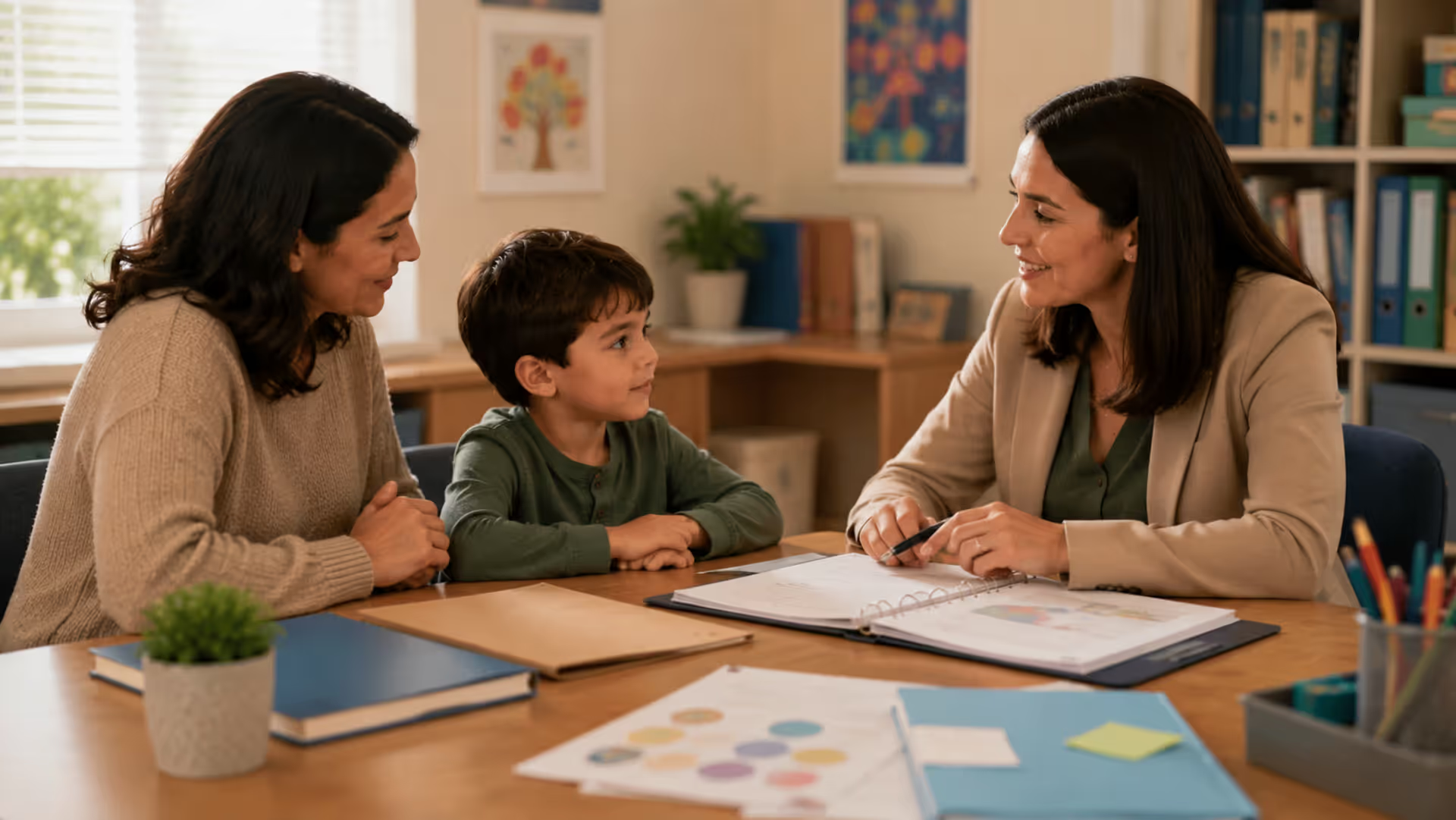
School-based evaluations happen through the special education process. You request an evaluation in writing. The school has timelines to respond. These assessments focus on identifying disabilities and determining eligibility for services.
Schools don't have to test for giftedness unless your state mandates it. Many don't. Even when they do, school psychologists often use group tests or brief screeners rather than comprehensive individual assessments.
Private evaluations cost more but offer advantages. You choose the psychologist. Testing is more thorough. Reports are more detailed. And you get an advocate who explains results and makes recommendations.
Look for psychologists who specialize in gifted assessment. Experience with twice-exceptionality matters if you suspect both giftedness and a disability.
IQ scores provide one data point. Not the whole story. Scores above 130 typically indicate giftedness (that's two standard deviations above average). But cutoffs vary. Some programs use 125. Others require 145+.
Subtest scores matter more than the overall number. A child might score 135 on verbal reasoning but 110 on processing speed. That gap tells you something. It suggests asynchrony or possible learning differences.
Don't obsess over the number. It measures certain cognitive abilities on one day under specific conditions. It doesn't measure creativity, motivation, emotional intelligence, or potential.
What assessment should reveal: cognitive strengths and weaknesses, learning style, social-emotional needs, and whether disabilities or other conditions exist. Good reports include specific recommendations for school and home.
You'll use this information to advocate for appropriate services, understand your child better, and make educational decisions. That's the point.
Supporting Your Gifted Child at Home and School

Author: Hannah Whitaker;
Source: raynet-merseyside.net
Support looks different for every gifted child. But some principles apply broadly.
Differentiation means matching instruction to ability level. Not giving more of the same work. Giving different work. A gifted third-grader doesn't need 50 math problems when they've mastered the concept. They need problems that challenge them.
Schools often resist differentiation. It's harder than whole-class instruction. But it's what gifted children need to keep learning.
Enrichment adds depth and breadth. It explores topics in greater detail, makes connections across subjects, and encourages creative thinking. Enrichment keeps kids engaged without moving them ahead in the curriculum.
Acceleration moves students through content faster. Grade skipping, subject acceleration (like taking fifth-grade math in third grade), or early entrance to kindergarten all qualify. Research consistently shows acceleration benefits gifted students academically and socially when done appropriately.
But schools fear it. Parents fear it. Everyone worries about social-emotional impacts. Here's the thing: being with intellectual peers usually improves social-emotional wellbeing. Being stuck with age peers who don't share your interests or abilities? That causes problems.
The simpler option usually wins here. If your child is ready, acceleration works.
At home, you can:
- Follow their interests deeply rather than broadly
- Provide complex materials (books, kits, supplies) without hovering
- Discuss big questions seriously
- Let them fail safely in low-stakes situations
- Teach emotional regulation skills explicitly
- Connect them with other gifted kids through programs or activities
- Protect downtime for processing and rest
Advocating at school requires persistence. Teachers don't always understand giftedness. Administrators worry about resources and fairness. You'll need to educate while building relationships.
Bring data. Assessment results, work samples, specific examples. Request meetings. Know your rights under your state's gifted education laws (which vary widely). Join parent advocacy groups for support.
Be prepared to supplement at home if school won't meet your child's needs. That's not ideal. But it's reality for many families.
Emotional support matters most. Your gifted child needs to know their intensity is okay. Their questions are welcome. Their feelings are valid. Being different doesn't mean being wrong.
Help them find their people. Other kids who get them. Adults who appreciate their quirks. Communities where they belong.
Giftedness is lifelong. The support you provide now shapes how they see themselves forever.
Gifted children don't just think faster—they think differently. They make connections others don't see, feel emotions others don't experience with the same intensity, and question what others accept. Understanding this difference is the first step in supporting them appropriately.
— Webb James
Bright Child vs. Gifted Child: Key Differences
Understanding the distinction between a bright child and a gifted child helps clarify what you're observing. Both are wonderful. But they learn differently.
| Behavior/Trait | Bright Child | Gifted Child |
| Answers questions | Knows the answers | Asks the questions |
| Learning approach | Works hard to achieve | Knows without working |
| Classroom behavior | Pays attention well | Gets bored, tunes out |
| Interest level | Shows interest | Shows intense curiosity |
| Problem-solving | Answers questions | Questions the answers |
| Peer relationships | Enjoys same-age peers | Prefers older kids or adults |
| Response to challenge | Rises to the challenge | Creates new challenges |
| Perfectionism | Wants to do well | Devastated by imperfection |
| Understanding | Grasps meaning | Makes unusual connections |
| Work completion | Completes assignments | Resists routine work |
This table simplifies complex differences. Real children don't fit neatly into columns. But these patterns help distinguish between high achievement and giftedness.
FAQ: Gifted Children Questions Answered
Recognizing gifted characteristics in your child changes your perspective. Behaviors that seemed confusing now make sense. The intensity, the questions, the social struggles, the uneven development—they're all part of the picture.
You don't need all the answers right now. You need to trust what you're seeing and respond with understanding rather than frustration.
Connect with other parents of gifted children. Join online communities or local groups. You'll find people who get it. Who've navigated the same challenges. Who can recommend resources specific to your situation.
Read about giftedness from reputable sources. The National Association for Gifted Children, Davidson Institute, and SENG (Supporting Emotional Needs of the Gifted) all offer evidence-based information.
Consider assessment when it serves a purpose—accessing services, understanding your child better, or confirming what you already suspect. But don't wait for formal identification to start supporting your child's needs.
Your gifted child needs you to see them fully. The brilliance and the struggles. The advanced thinking and the emotional intensity. The remarkable abilities and the real challenges.
They need you to advocate when systems don't fit. To provide challenge when school doesn't. To validate their feelings when the world seems overwhelming.
And they need you to celebrate who they are. Not who you wish they were or who others think they should be. Who they actually are, in all their asynchronous, intense, questioning, creative glory.
That's the work. And it matters more than you know.