
Autism Misdiagnosis in Children

Content
When a teacher first suggests your child might be autistic, it can feel like the ground shifts beneath you. You start noticing every quirk, every meltdown, every moment they stand alone at recess. But what if the behaviors everyone's pointing to aren't autism at all? What if it's anxiety wearing a convincing disguise?
This happens more often than you'd think. Children get mislabeled in schools, pediatricians make snap judgments based on checklists, and families spend years pursuing the wrong interventions. The overlap between anxiety and autism is real and messy. Both can make a child avoid eye contact, resist new situations, or struggle socially. The difference lies in the why behind the behavior, not just the what.
Getting this right matters enormously. The right diagnosis opens doors to appropriate support. The wrong one can delay help your child actually needs and create unnecessary confusion about who they are.
Why Autism Misdiagnosis Happens in Young Children
Misdiagnosis in early years stems from a perfect storm of factors that converge in those critical preschool and early elementary years.
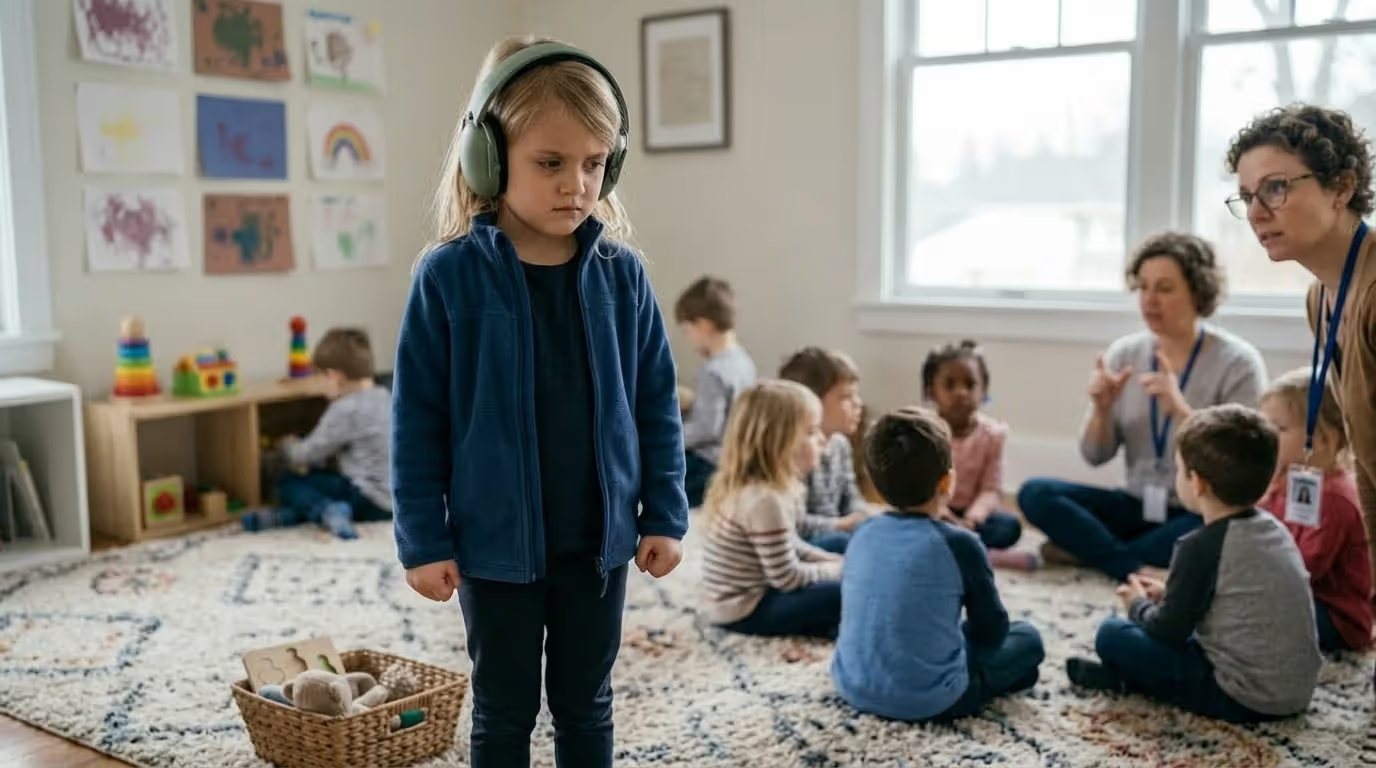
First, there's the symptom overlap. A four-year-old who refuses to join circle time, melts down over schedule changes, and doesn't chat with peers could fit either profile. Anxious children avoid what scares them. Autistic children might avoid what overwhelms their sensory system or disrupts their need for predictability. From the outside, the avoidance looks identical.
Second, access to specialists remains frustratingly limited in 2026. Many families wait six to eighteen months for a comprehensive autism evaluation. In that vacuum, schools and pediatricians often fill the gap with their best guess. That guess frequently relies on brief observations and standardized screening tools that weren't designed to differentiate between conditions.
The pressure in school settings compounds the problem. Teachers see a child struggling and want to help. Special education services often require a label to unlock support. So there's an incentive, however well-meaning, to apply a diagnosis that opens resource doors. Schools can't officially diagnose autism, but they can classify a child as having "autism-like behaviors" or recommend parents pursue an autism evaluation, which carries weight.
Checklist culture plays a bigger role than it should. Does your child line up toys? Check. Prefer routines? Check. Struggle with transitions? Check. These autism screening questionnaires capture surface behaviors without context. They don't ask why the child lines up toys (calming ritual for anxiety vs. deep fascination with patterns) or what happens when you gently interrupt the behavior.
The pattern I see most often is this: a child shows stress responses to a difficult situation (new school, family disruption, learning challenges), adults interpret those stress behaviors through an autism lens, and the label sticks before anyone digs deeper.
Why children are mislabelled often comes down to who's doing the observing and what training they have. A teacher who's had three autistic students might see familiar patterns and assume a fourth. A pediatrician with fifteen minutes and a screening form might check boxes without the full developmental picture. Neither is being careless. They're working within systems that prioritize speed over nuance.
Author: Hannah Whitaker;
Source: raynet-merseyside.net
Anxiety vs Autism Signs: Key Differences Parents Should Know
Here's where things get practical. While overlap exists, anxiety and autism diverge in predictable ways once you know what to look for.
Social Behavior Patterns
Anxious children typically want social connection but fear it. They'll watch other kids play from the sidelines, wanting to join but paralyzed by worry about rejection or doing something wrong. They often have one or two close friends but struggle in larger groups. Their social difficulty is situational and fear-based.
Autistic children often show genuine confusion about social rules rather than fear of them. They might not pick up on social cues like when someone's bored or annoyed. The motivation to connect varies widely among autistic kids, but when they struggle socially, it's usually about not understanding the unwritten rules, not about being too scared to try.
Watch what happens in low-pressure social situations. An anxious child often relaxes and engages more naturally with familiar people or in structured activities. An autistic child's social differences remain consistent regardless of comfort level.

Author: Hannah Whitaker;
Source: raynet-merseyside.net
Communication and Language Use
Language development looks different across these conditions. Anxious children usually develop language on a typical timeline. They might become quieter in stressful situations or around unfamiliar people, but their communication skills are intact. Selective mutism, where a child literally can't speak in certain settings despite normal language ability, is an anxiety disorder, not autism.
Autistic children show more varied language patterns. Some develop speech early and use advanced vocabulary but struggle with back-and-forth conversation. Others have delayed language development. Many are very literal, missing sarcasm or figurative language. Echolalia (repeating phrases) is common in autism but rare in anxiety alone.
The conversational flow differs too. Anxious kids can maintain reciprocal conversation when comfortable. Autistic children might monologue about favorite topics without noticing if you're engaged, or they might struggle to add relevant details to a conversation thread.
Repetitive Behaviors and Routines
Both groups can be rigid about routines, but the function differs.
An anxious child clings to routines because they're predictable and safe. Disruptions trigger worry about what might go wrong. If you prepare them well and provide reassurance, they can often flex, even if it's uncomfortable. The rigidity is protective armor against an unpredictable world.
Autistic children often need routines for regulation and predictability at a neurological level. The same route to school, the same breakfast, the same bedtime sequence aren't just preferences—they're organizing structures. Disruptions can cause genuine distress that reassurance alone won't fix because the need isn't fear-based.
Repetitive behaviors tell a similar story. Anxious children might develop nervous habits like nail-biting or hair-twirling that increase with stress. Autistic children often engage in stimming (self-stimulating behaviors like hand-flapping, rocking, or spinning) for sensory regulation or expression, regardless of stress level.
Anxiety vs Autism: Symptom Comparison in Children
| Symptom Area | Anxiety Presentation | Autism Presentation |
| Social Interaction | Wants connection but fears rejection; improves with familiar people; situational avoidance | May not intuitively understand social rules; consistent differences across settings; variable interest in connection |
| Communication Style | Age-appropriate language that may shut down under stress; understands non-literal language | May show delays, advanced but rigid language, or literal interpretation; challenges with conversational reciprocity |
| Response to Change | Worries about what might go wrong; can adapt with preparation and support | Needs predictability for regulation; disruptions cause dysregulation beyond what reassurance can address |
| Sensory Issues | May develop in response to heightened stress state; variable | Often present from early childhood; consistent sensory seeking or avoiding patterns |
| Repetitive Behavior | Nervous habits that increase with anxiety; serve to self-soothe worry | Stimming for regulation or joy; often present even when calm; part of natural expression |
This table simplifies complex presentations, but it gives you a framework. Real children don't fit neatly into columns.
How Schools Sometimes Mislabel Children

Author: Hannah Whitaker;
Source: raynet-merseyside.net
Schools occupy a strange middle ground. They see your child for hours daily in demanding social and academic contexts. That's valuable observation time. But they're also not diagnostic clinics.
The mislabeling often starts with genuine concern. A kindergarten teacher notices a child who won't participate in group activities, has meltdowns during transitions, and plays alone. She's seen autistic students before. The behaviors look similar. She mentions it to parents, suggests an evaluation, maybe completes an autism screening questionnaire.
Here's the problem: school mislabelling children happens when educational staff interpret behaviors without considering context. That kindergartener might be experiencing separation anxiety, processing a family divorce, or struggling with an undiagnosed learning disability that makes classroom demands overwhelming. The behaviors are real. The conclusion might be wrong.
Schools sometimes apply labels informally to access services. They can't diagnose, but they can classify a child as having "developmental delays" or "social-communication deficits" that qualify for special education. Once that label enters your child's records, it follows them. Other teachers read it and view behaviors through that lens. It becomes a self-fulfilling framework.
The consequences of early mislabeling ripple outward. Children internalize labels and build identity around them. Parents pursue autism-specific interventions that don't address the actual issue. Schools might place a child in programs that aren't the right fit, missing opportunities to treat underlying anxiety or other conditions.
A common mistake schools make is comparing your child to neurotypical developmental charts without considering individual differences that don't rise to the level of autism. A quiet, intense, routine-loving child isn't automatically autistic. Some kids are just temperamentally cautious or highly focused.
What schools should do instead is document specific observations, share concerns without diagnostic labels, and recommend comprehensive professional evaluation when needed. What to do if child is mislabelled starts with understanding that school classifications aren't medical diagnoses and you have the right to disagree and seek independent evaluation.
What a Proper Neurodevelopmental Assessment Includes
Getting the right diagnosis requires more than a checklist. It requires time, expertise, and a team approach.
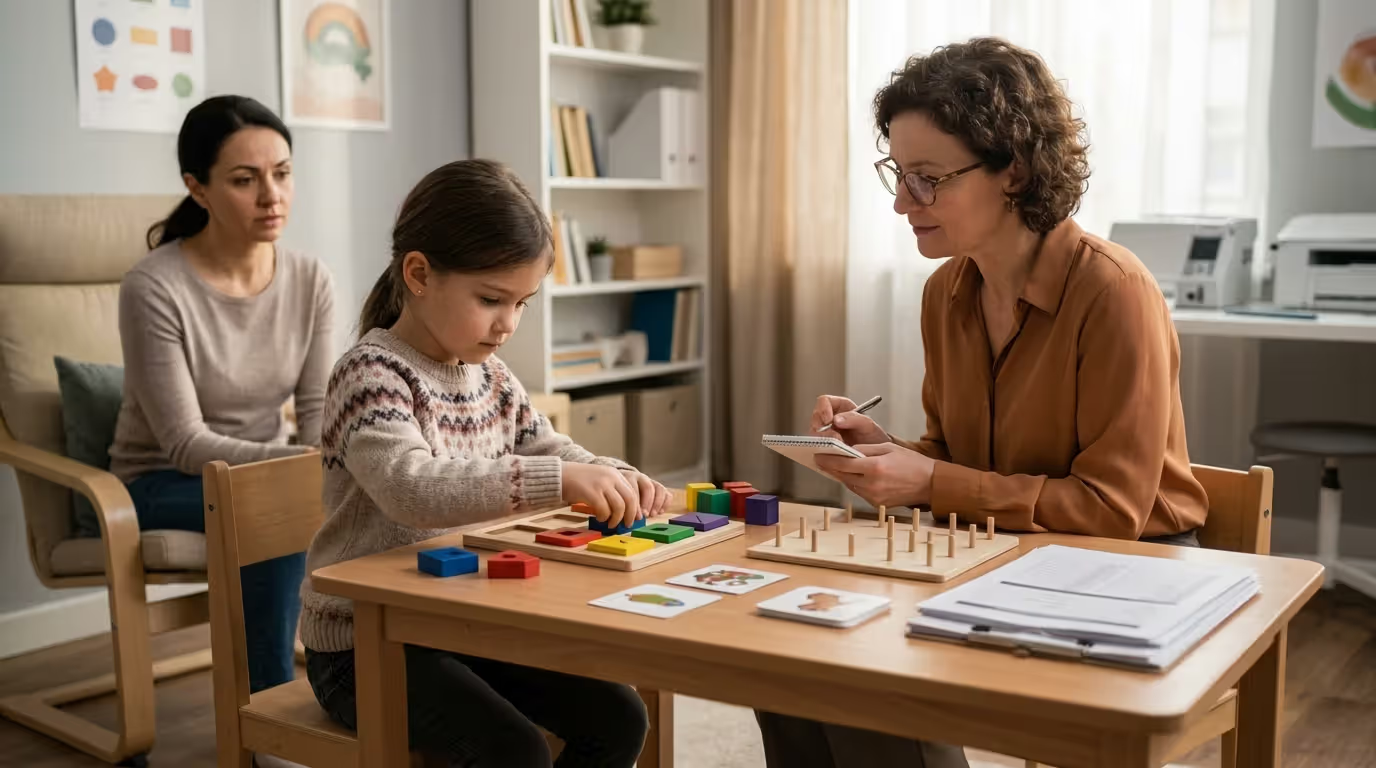
A comprehensive neurodevelopmental assessment children should receive typically involves multiple professionals over several sessions. This isn't a one-hour appointment. Expect anywhere from 4 to 12 hours of assessment time spread across weeks, depending on the clinic and your child's age.
The team usually includes a developmental pediatrician or child psychiatrist, a psychologist (often with neuropsychology training), and sometimes a speech-language pathologist and occupational therapist. Each brings a different lens to understanding your child's development.
The process starts with developmental history. You'll answer detailed questions about pregnancy, birth, early milestones, medical history, family patterns, and current concerns. This context matters enormously. A child who met all early milestones and changed after a traumatic event presents differently than one who showed differences from infancy.
Direct observation happens in multiple contexts if possible. Clinicians watch your child play, interact with you and with them, respond to structured tasks, and navigate transitions. They're looking at how your child communicates, seeks connection, regulates emotions, and processes sensory input.
Standardized tools provide structure. For autism specifically, gold-standard assessments include the ADOS-2 (Autism Diagnostic Observation Schedule) and ADI-R (Autism Diagnostic Interview-Revised). These are research-validated and designed to differentiate autism from other conditions. But they're tools, not magic answers. Skilled interpretation matters.
Cognitive and language testing reveals learning patterns, strengths, and challenges. Adaptive functioning measures look at real-world skills. Sensory profiles document how your child processes sensory information.
Here's what separates good assessments from rushed ones: integration. All these pieces get synthesized by professionals who consider alternative explanations. Does anxiety explain the social withdrawal? Could a language disorder account for communication challenges? Is there trauma history affecting presentation?
The best evaluations end with a feedback session where clinicians explain their reasoning, not just their conclusion. You should leave understanding why they reached their diagnosis and what it means for supporting your child.
Finding the right specialists means looking for professionals with specific training in autism and differential diagnosis. Ask about their assessment process, what tools they use, and how they distinguish between overlapping conditions. If they can give you an autism diagnosis in a single one-hour appointment, be skeptical.
Author: Hannah Whitaker;
Source: raynet-merseyside.net
What to Do If Your Child Has Been Mislabelled
So your gut says the diagnosis doesn't fit. Maybe it's been months or years, and the interventions aren't helping. Maybe your child is telling you the label feels wrong. What now?
Steps to Request a Re-evaluation
Start by documenting your concerns specifically. Not "I don't think this is right" but "These are the behaviors that don't match the diagnosis" and "These are responses to intervention that surprise me." Concrete examples carry weight.
If the original diagnosis came from school, understand that you can pursue an independent educational evaluation (IEE) at district expense if you disagree with their assessment. You'll need to formally request this in writing. Schools can agree or initiate due process, but you have this right under IDEA.
If it was a clinical diagnosis, you can request re-evaluation from the same provider or seek a second opinion elsewhere. There's no shame in this. Diagnostic clarity sometimes requires multiple perspectives, especially for complex presentations.
Gather records from everyone who's worked with your child: school reports, therapy notes, previous evaluations, medical records. New evaluators need this history to understand the full picture.
Be prepared for the possibility that the original diagnosis was correct, or that your child has both conditions. Can a child have both autism and anxiety? Absolutely. Anxiety is one of the most common co-occurring conditions with autism. Sometimes what looks like mislabeling is actually incomplete labeling.
Finding the Right Specialists
Look for professionals who explicitly state they work with differential diagnosis. University medical centers and children's hospitals often have specialized neurodevelopmental clinics with this expertise.
Ask other parents in your area for recommendations, but remember that a great autism specialist for one family might not be the right fit for diagnostic questions. You want someone who's as comfortable ruling out autism as diagnosing it.
Check credentials carefully. Developmental-behavioral pediatricians, pediatric neuropsychologists, and child psychiatrists with neurodevelopmental training are your best bets. General psychologists or pediatricians without specialized training may not have the nuanced knowledge needed.
Wait times for these specialists can stretch six months or more in many areas. Get on waiting lists while you're gathering records and documenting concerns. Use that time to educate yourself about both conditions so you can be an informed participant in the evaluation process.
The most important thing we can do as diagnosticians is resist the urge to force a child's presentation into a familiar box. Every behavior has multiple possible explanations, and our job is to consider all of them systematically before reaching a conclusion. When we rush to diagnosis based on surface similarities, we risk missing what's actually happening for that unique child.
— Chen Melissa
Getting the Right Diagnosis: Questions to Ask Professionals
Advocating for accurate assessment means knowing what questions to ask. Don't just accept pronouncements from authority. Engage with the process.
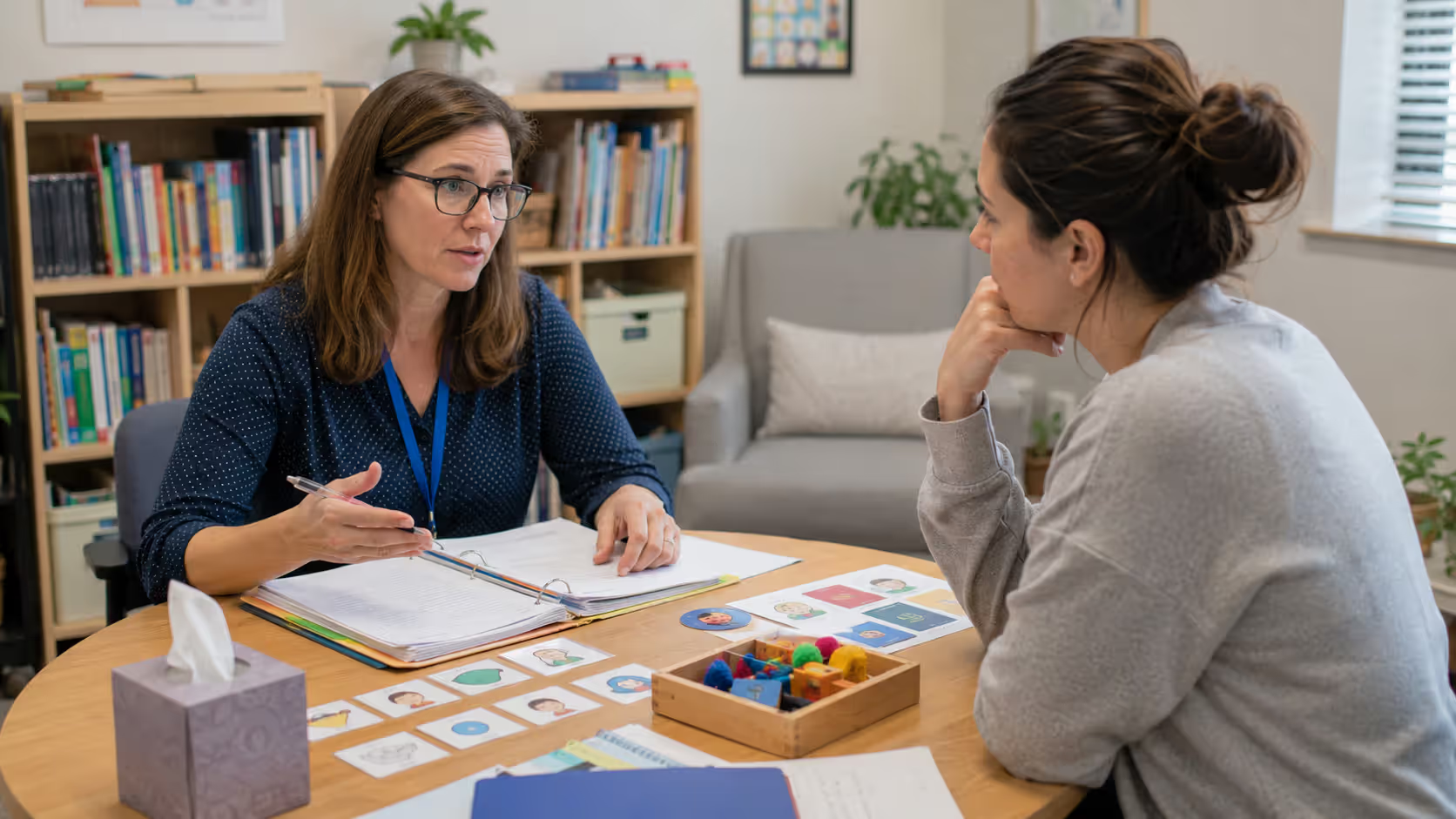
When someone suggests your child might be autistic, ask: "What specific behaviors are you seeing that concern you?" and "What other conditions might explain these same behaviors?" If they can't articulate alternatives they've considered, that's a red flag.
Author: Hannah Whitaker;
Source: raynet-merseyside.net
During evaluation, ask about the tools being used and why. "How does this assessment differentiate between anxiety and autism?" is a fair question. So is "What would you expect to see if this were anxiety instead?"
After diagnosis, ask for the reasoning: "Can you walk me through how you ruled out other possibilities?" and "What were the specific findings that led to this conclusion?" You deserve to understand the logic, not just the label.
If something doesn't sit right, ask directly: "How confident are you in this diagnosis?" and "What would make you reconsider?" Good clinicians acknowledge uncertainty when it exists. Diagnostic humility is a strength, not a weakness.
The simpler option usually wins here: ask more questions. You're not being difficult. You're being thorough about something that profoundly affects your child's life.
FAQ: Autism and Anxiety Diagnosis Questions Answered
Getting to the right diagnosis isn't always a straight path. It might involve false starts, second opinions, and moments of confusion. That's normal when you're dealing with complex developmental presentations that don't come with simple yes-or-no answers.
What matters is staying curious and advocating persistently. Trust your knowledge of your child while remaining open to professional expertise. Question labels that don't fit, but also stay open to unexpected answers.
The goal isn't just a diagnosis. It's understanding your child well enough to support them effectively. Sometimes that means autism. Sometimes it means anxiety. Sometimes it means both, or neither, or something else entirely.
You don't need to figure this out alone. Build a team of professionals who listen, explain their reasoning, and treat you as a partner in understanding your child. Seek out other parents who've navigated similar questions. Give yourself permission to change course when new information emerges.
Your child is the same person regardless of which words professionals use to describe their experiences. But the right words, accurately applied, open doors to the right support. That's worth the effort of getting it right.