
Turning sounds into letters
What Is Encoding in Reading?

Content
When a child sounds out a word to write it down, they're encoding. It's the flip side of reading — taking spoken language and turning it into written symbols. Most parents recognize when their child starts "sounding out" words on the page. But the reverse process? That one flies under the radar.
Encoding doesn't get the same attention as reading. Yet it's just as important. Kids who can decode "cat" on a page need to also spell it when they're writing a sentence about their pet. The two skills feed each other. One builds the other.
Understanding encoding changes how you support early literacy. It explains why some children read fluently but struggle with spelling. It shows you where to focus practice time. And it reveals the hidden architecture behind how children learn to write.
Understanding Encoding in Literacy Development
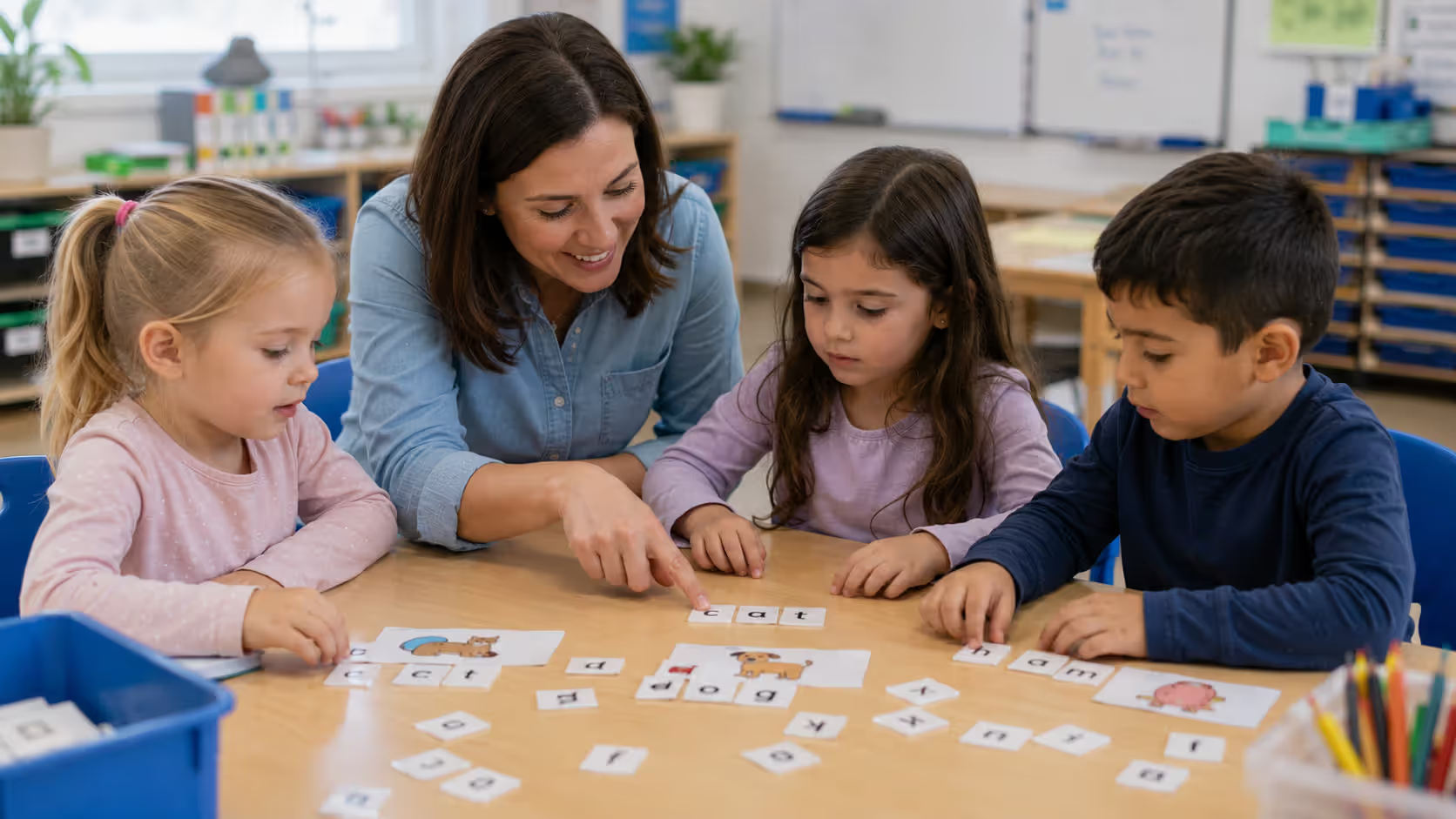
Encoding is the process of breaking spoken words into individual sounds and matching those sounds to letters. When a child wants to write "dog," they segment it into /d/ /o/ /g/ and select the letters that represent each sound. Sound to letter. That's encoding.
This process sits at the heart of early writing development. Before children can compose stories or write messages, they need to translate the sounds in their head into marks on paper. Encoding skills in literacy determine whether a kindergartner can label their drawing or whether a first grader can write a complete sentence independently.
The technical term for this is "sound-to-letter mapping." Children learn that spoken language — which feels continuous and fluid — actually breaks into distinct sound units. Then they discover that our alphabet provides symbols for most of those sounds. The discovery is remarkable when you think about it.
Encoding in early writing looks messy at first. You'll see "KT" for "cat" or "BEDR" for "better." These invented spellings aren't mistakes. They're evidence that a child is actively segmenting sounds and applying letter knowledge. The pattern I see most often is that parents worry about these approximations, but they're actually healthy signs of encoding development.
Balanced literacy instruction treats encoding and decoding as partners. You can't have strong readers who can't spell, and you can't build writers who can't read. The brain pathways overlap significantly. Teaching one reinforces the other.
Author: Olivia Bennet;
Source: raynet-merseyside.net
Encoding vs Decoding in Reading Instruction
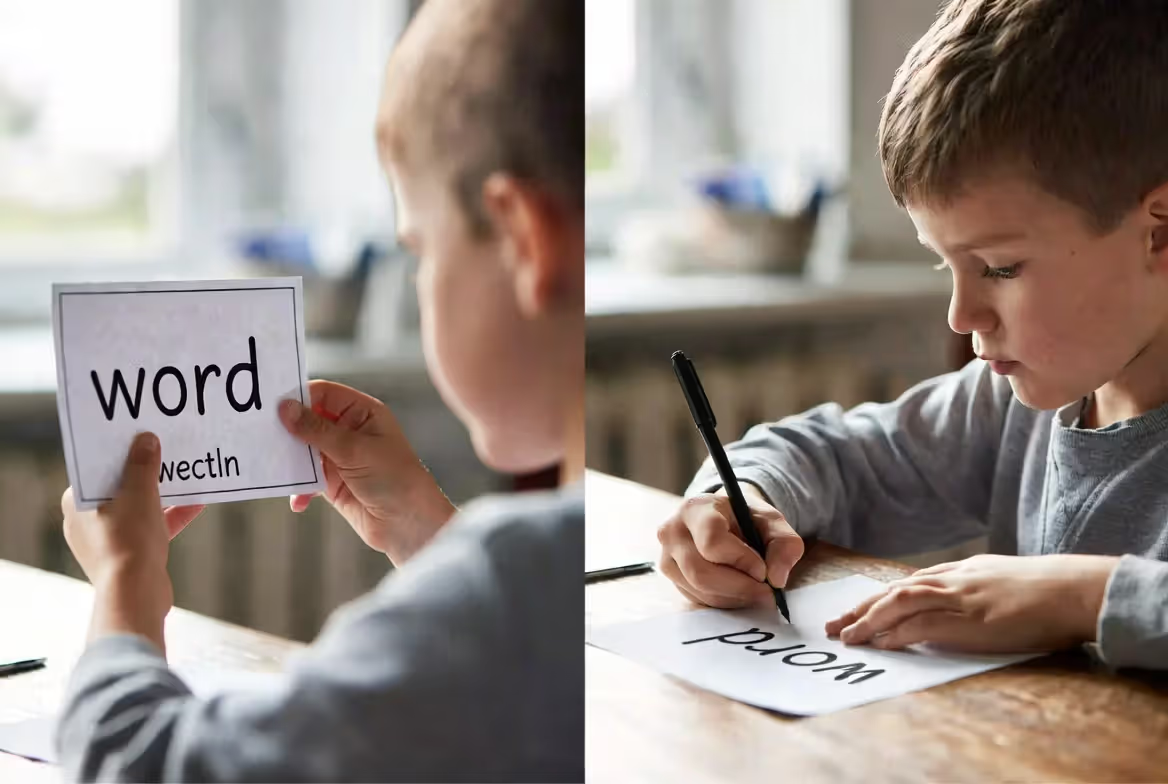
Decoding moves from letters to sounds. Encoding moves from sounds to letters. Opposite directions, same foundational knowledge.
When children decode, they see written symbols and translate them into spoken language. The word "sun" on a page triggers the process: recognize each letter, recall its sound, blend those sounds together, access the word's meaning. Letter to sound to word.
Encoding reverses this. A child thinks "sun," segments it into three phonemes, and writes S-U-N. Sound to letter to word.
Here's the comparison:
| Aspect | Encoding | Decoding |
| Definition | Translating sounds into written letters | Translating written letters into sounds |
| Direction of process | Speech → print | Print → speech |
| Skills required | Phoneme segmentation, letter recall, spelling patterns | Letter recognition, sound blending, word recognition |
| Example activity | Child writes "fish" after hearing the word | Child reads "fish" from a page |
| Common challenges | Remembering correct letter formations, applying spelling rules | Blending sounds smoothly, recognizing irregular words |
| Assessment methods | Spelling tests, writing samples, dictation | Oral reading fluency, nonsense word tests |
Both processes require phonemic awareness — the ability to hear and manipulate individual sounds in words. Both demand solid letter-sound knowledge. And both improve with practice and explicit instruction.
But they're not equally easy. Many children decode more easily than they encode. Reading gives you visual cues and context. Writing starts with nothing but sounds in your head.
Author: Olivia Bennet;
Source: raynet-merseyside.net
How Encoding and Decoding Support Each Other
Think of these skills as two sides of the same coin. When a child practices encoding "ship," they're reinforcing the /sh/ digraph. That same knowledge helps them decode "shop" the next day.
The reciprocal relationship runs deep. Decoding practice builds the phonological representations that make encoding possible. Encoding practice strengthens the orthographic knowledge that makes decoding automatic.
Children who only practice reading often plateau in their spelling development. They recognize words visually without fully analyzing the sound-letter relationships. Then they can't reconstruct those words from scratch when writing.
The reverse happens too. Children who practice encoding develop stronger decoding skills. Writing forces deeper processing. You can't fake your way through spelling a word the way you might guess at a word while reading.
Research consistently shows that integrated instruction works best. Teach the /ai/ pattern, have students read words with that pattern, then have them write words using it. The cycle cements learning.
The Connection Between Encoding and Spelling
Spelling is applied encoding. Every time a child spells a word, they're encoding it.
The spelling and encoding connection goes beyond simple sound-letter matching, though. Proficient spelling requires understanding that English uses patterns, not just individual letter-sound pairs. The "igh" in "light" represents one sound with three letters. The silent "e" in "make" changes the vowel sound without making its own sound.
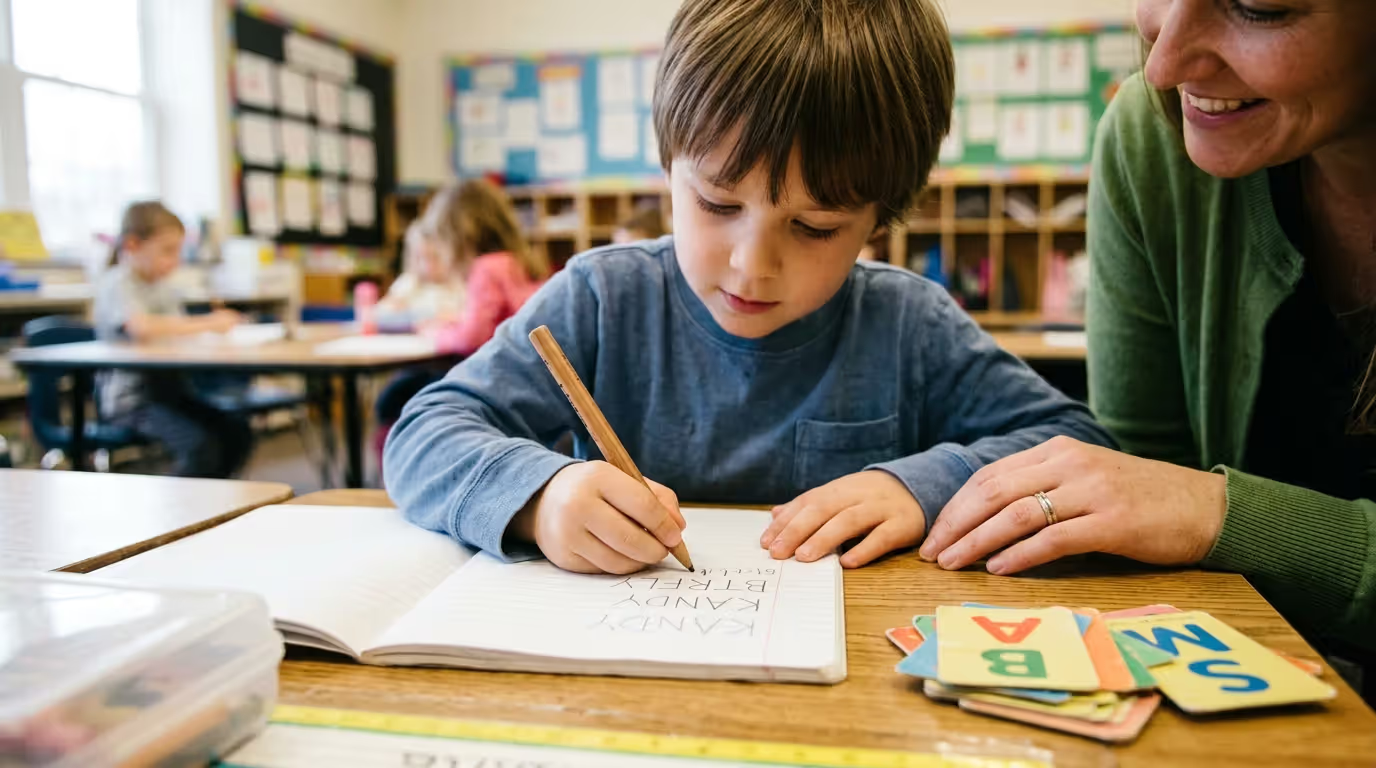
Children progress through predictable spelling stages as their encoding skills develop. First comes the pre-phonetic stage — random letters with no sound correspondence. Then semi-phonetic spelling, where some sounds are represented (KT for cat). Phonetic spelling captures all the sounds but misses conventions (NITE for night). Finally, conventional spelling incorporates pattern knowledge and irregular spellings.
Orthographic mapping is the process that moves children toward conventional spelling. As they encode words repeatedly, their brains store the exact letter sequences. The word "said" doesn't follow typical patterns, but after writing it multiple times, children map that specific sequence to the spoken word.
Common misconception: spelling is about memorization. Not really. Strong spellers have strong encoding skills. They've internalized the patterns and can apply them to new words. Weak spellers often have weak phonemic awareness or incomplete letter-sound knowledge.
Another misconception: invented spelling harms later spelling development. The research says otherwise. Children who are encouraged to use invented spelling in kindergarten and first grade typically become better conventional spellers than those who only copy words or avoid writing.
Author: Olivia Bennet;
Source: raynet-merseyside.net
Key Encoding Skills Children Need to Develop
Encoding isn't one skill. It's a cluster of related abilities that develop over time.
Letter-sound correspondence forms the base layer. Children need to know which letters represent which sounds. Not just the basics — they need the digraphs (sh, ch, th), the blends (bl, str, spl), and eventually the more complex patterns (ough, eigh).
Sound blending matters for encoding too, though it's usually associated with decoding. When writing a word like "plant," children segment it into sounds, but they also need to recognize that /p/ and /l/ blend together at the beginning. Understanding how sounds combine helps with accurate spelling.
Phonological memory plays a role. Children need to hold the word in their working memory while they segment it and write each sound. This gets challenging with longer words. A child might segment "elephant" correctly but forget the middle sounds while writing the first ones.
Phonemic Awareness as the Foundation
You can't encode what you can't hear. Phonemic awareness encoding starts with the ability to perceive individual phonemes within words.
Children develop this awareness gradually. First, they notice rhyme and alliteration — word-level sound play. Then they can break words into syllables. Eventually, they can isolate individual phonemes and manipulate them.
The most critical phonemic awareness skill for encoding is segmentation. Can the child break "map" into /m/ /a/ /p/? Can they do it with "stop" (/s/ /t/ /o/ /p/)? What about "string"?
Without solid phonemic awareness, encoding becomes guesswork. A child might write "JOP" for "jump" because they hear the beginning and ending clearly but miss the medial sounds. Or they might write "SOPT" for "stopped," adding letters they see in similar words without accurately representing the sounds.
Phonemic awareness develops through direct instruction and playful practice. It doesn't emerge naturally for all children. Some need explicit teaching to hear the individual sounds in words.
Author: Olivia Bennet;
Source: raynet-merseyside.net
Segmenting Sounds in Words
Segmenting sounds in words is encoding's most essential component. The child must break the continuous stream of speech into discrete units.
Try it yourself. Say "scratch" slowly. How many sounds do you hear? Six: /s/ /k/ /r/ /a/ /ch/. Not seven letters — six sounds. That's what children must learn to perceive.
Segmentation difficulty varies by word structure. CVC words (consonant-vowel-consonant) like "cat" are easiest — three distinct sounds. CCVC words like "stop" are harder. CCCVC words like "strap" challenge even many second graders.
Vowels cause particular trouble. They're harder to isolate and articulate than consonants. Children often struggle to identify the vowel sound in words like "boat" or "coin" where two letters represent one sound.
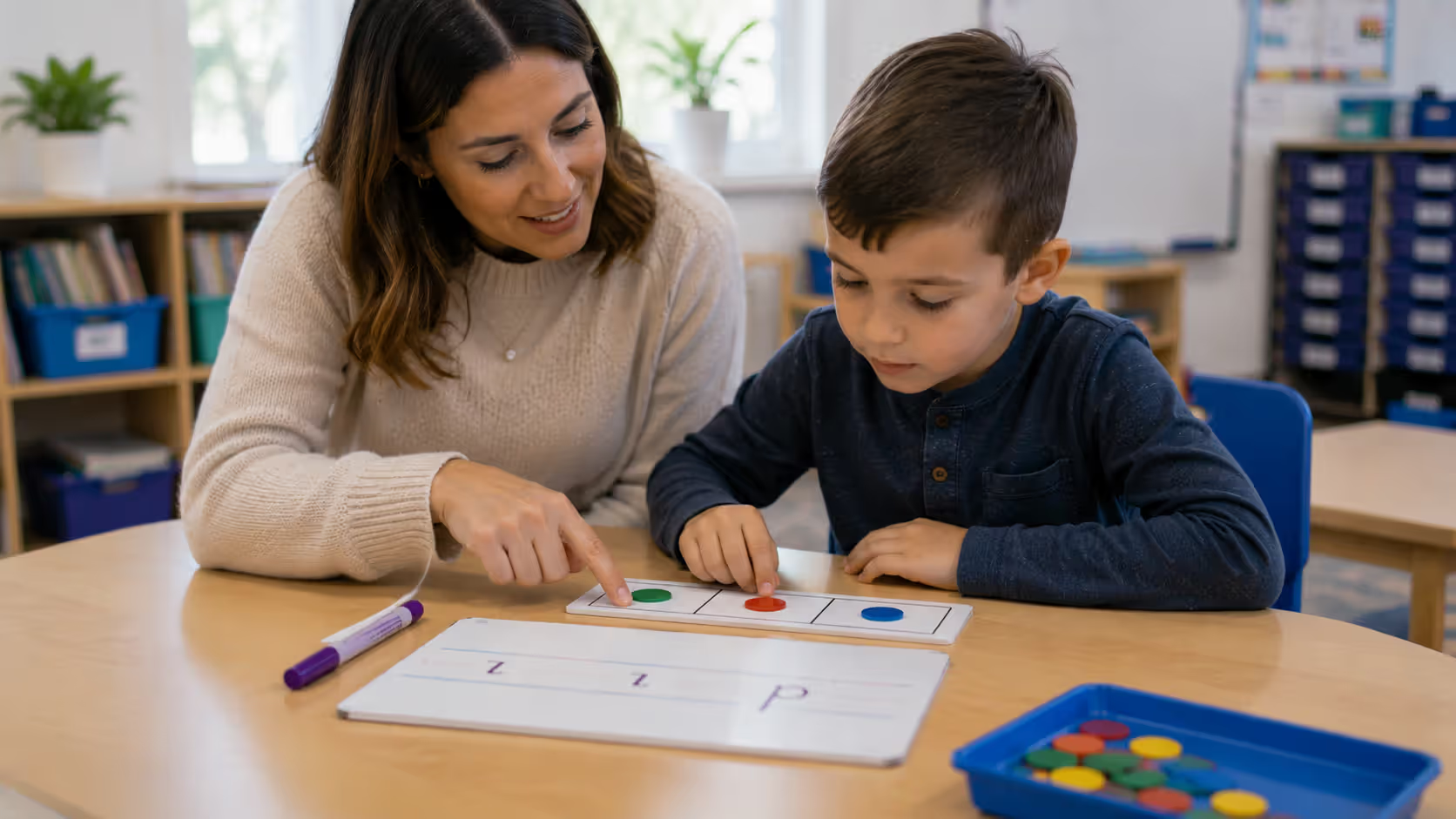
Effective segmentation instruction uses manipulatives. Children push a counter for each sound they hear. They tap their fingers. They use Elkonin boxes — a row of connected squares where each box represents one phoneme. These physical representations make the abstract concept concrete.
We have learned from decades of research that writing and spelling are not just the inverse of reading. They require additional cognitive processes and benefit from systematic instruction that helps students understand how speech maps onto print.
— Moats Louisa
How to Teach Encoding to Beginning Readers and Writers
Start with the simplest sound-letter relationships. Short vowels and continuous consonants (m, s, f, l, n, r) are easier to segment and sustain than stop sounds (p, t, k, b, d, g).
Teach a few letters, then immediately apply them in encoding activities. Don't wait until children know the whole alphabet. If they know M, A, T, and S, they can encode "mat," "sat," "at," and "am." Real writing from day one.
Follow a systematic sequence. Simple to complex. Regular to irregular. High-frequency to low-frequency. This isn't about drilling isolated skills — it's about building a logical progression where each step prepares students for the next.
Differentiation matters because children enter school with vastly different phonological skills. Some kindergartners arrive already reading and spelling simple words. Others can't identify rhyming words. You'll need to assess where each child is and provide targeted instruction.
Multi-sensory approaches work especially well for encoding. Say the word, segment the sounds while moving counters, write the letters while saying each sound, then read the word back. The more sensory pathways involved, the stronger the learning.
Encoding Strategies for Young Readers
The "say it, move it, write it" strategy gives young learners a concrete process. They say the word, move a counter for each sound, then write the letter for each sound in sequence. The movement bridges the gap between hearing and writing.
Dictation exercises build encoding stamina. Start with individual words, then phrases, then sentences. "The cat sat." The child must segment each word, encode it, and remember to use spaces and punctuation. It's cognitively demanding but highly effective.
Word building activities let children manipulate sounds and letters simultaneously. Change "cat" to "cap." What sound changed? What letter changed? This reinforces the sound-letter connection in both directions.
Encourage invented spelling during authentic writing. When a first grader writes a story about their dog, don't stop them to correct every spelling. Let them encode words to the best of their current ability. You can address patterns and corrections later during editing.
The simpler option usually wins here: consistent daily practice beats occasional intensive sessions. Ten minutes of encoding practice every day outperforms an hour once a week.
Sound to Letter Mapping Techniques
Explicit phonics instruction teaches sound to letter mapping systematically. You don't assume children will discover the patterns. You teach them directly.
Keyword charts help children remember letter-sound pairs. "A is for apple, /a/ /a/ apple." The keyword provides a retrieval cue. When writing, a child who forgets the letter for /a/ can think "apple" and recall the letter.
Articulation awareness helps with confusing sounds. Where is your tongue when you say /t/? What about /d/? Feeling the difference in mouth position helps children distinguish similar phonemes and encode them accurately.
Spelling patterns need explicit instruction too. Once children master basic CVC encoding, introduce digraphs (sh, ch, th, wh). Then blends. Then vowel teams. Then silent e patterns. Each pattern expands their encoding capacity.
Word sorts reinforce pattern knowledge. Give children a list of words to categorize by spelling pattern. Words with "ai" in one column, words with "ay" in another. The sorting process requires analyzing the sound-letter relationships.
Practical Encoding Activities for the Classroom and Home
Author: Olivia Bennet;
Source: raynet-merseyside.net
Encoding activities for beginners should feel like games, not drills. Phoneme segmentation with toys works well — line up three toy cars and have the child drive one forward for each sound in "sun."
Sound boxes (Elkonin boxes) provide visual structure. Draw three connected boxes for a three-phoneme word. The child places a counter in each box while saying each sound, then writes the corresponding letter in each box.
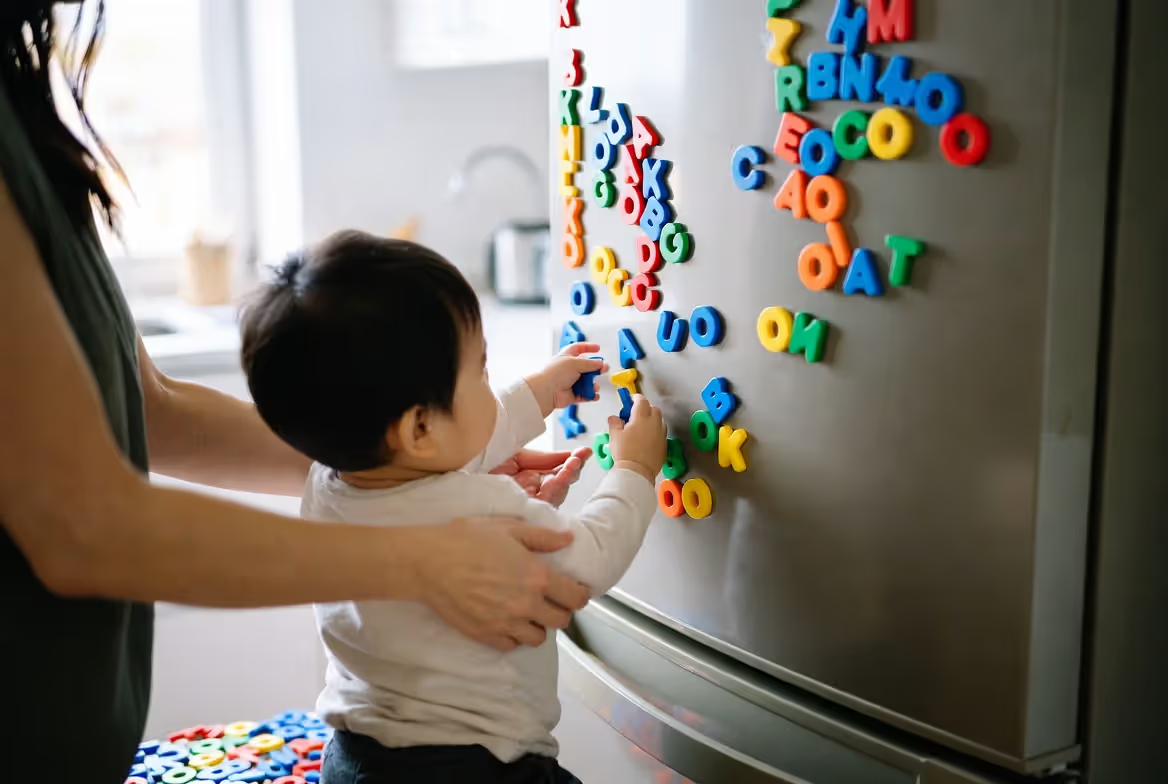
Magnetic letters make encoding tactile. Say "ship," segment the sounds, find the letters s-h-i-p, arrange them in order. The physical manipulation reinforces the learning.
Dictation starts simple and grows. First, individual CVC words. Then words with blends and digraphs. Then phrases. Then complete sentences. Eventually, short paragraphs.
Interactive writing works beautifully in classrooms. The teacher and students compose a message together. The teacher guides students to encode each word, sometimes "sharing the pen" so students write sounds they know while the teacher fills in more complex patterns.
For slightly more advanced students, try these:
Word chains: Write "cat," change one sound to make "can," change one sound to make "man," change one sound to make "map." Each change requires segmenting, comparing, and encoding.
Silly sentence encoding: "Six pink frogs jump in the truck." The absurdity keeps it fun while providing encoding practice with varied phonics patterns.
Personal word books: Children keep a notebook of words they want to use in their writing. They encode each word with teacher support, then have it available for reference. This builds independence.
Sound scavenger hunts: Find and write five words that have the /sh/ sound. Children must listen for the target sound in their environment, segment the words, and encode them.
Frequently Asked Questions About Encoding in Reading
Encoding doesn't exist in isolation from other literacy skills. It's woven into the fabric of how children learn to communicate through written language.
When you understand encoding, you see early writing differently. Those invented spellings aren't errors to correct immediately — they're windows into a child's phonological processing. The kindergartner who writes "MI DOG IS BRN" is demonstrating solid encoding skills for their developmental level.
Strong encoding instruction requires three elements: systematic phonics teaching, regular writing opportunities, and patience with developmental approximations. You can't rush the process, but you can support it with thoughtful practice and feedback.
The payoff extends beyond spelling. Children who develop strong encoding skills become more confident writers. They're willing to attempt unfamiliar words instead of limiting their writing to words they can already spell. That confidence unlocks creativity and communication.
Integration is key. Don't separate encoding into isolated drill sessions. Embed it in meaningful writing. Teach a phonics pattern, practice encoding words with that pattern, then have children use those words in sentences and stories. The connection between pattern and purpose makes the learning stick.
Parents can support encoding at home without formal training. Play word games. Encourage writing for real purposes — shopping lists, letters to relatives, signs for bedroom doors. Accept invented spellings while gently modeling conventional ones. The goal is building comfort with the sound-to-letter process, not perfect spelling.
Encoding transforms spoken language into permanent written form. It's how children capture their ideas, share their stories, and participate in literate communities. That's worth understanding. That's worth teaching well.