Small hands, big milestones
Fine Motor Skills Milestones by Age

Content
Watch a nine-month-old concentrate on picking up a single Cheerio. Her tongue pokes out slightly. Her whole body tenses. Finally—success! That tiny piece of cereal makes it to her mouth, and she beams with triumph.
These small victories matter more than you might think. Your child's journey from reflexive newborn grasps to writing complete sentences involves hundreds of incremental steps. Understanding fine motor skills milestones helps you recognize what's coming next and spot when something might need attention.
Here's your roadmap through the first seven years of hand development—not as a strict timeline (kids vary wildly), but as a framework for what typically happens and when.
What Are Fine Motor Skills and Why They Matter
Fine motor skills involve coordinating the small muscles in your child's hands, fingers, and wrists. Think precision work: plucking a raisin from the floor, working a zipper, or drawing a circle.
Compare this to gross motor abilities, which rely on big muscle groups—legs for running and jumping, arms for throwing balls, core muscles for climbing playground equipment. Your toddler might sprint across the park (gross motor) but struggle to pick up a penny (fine motor). Different systems, different timelines.
Fine motor skills development unlocks independence in ways that matter daily. Your three-year-old who masters buttons can dress herself. Your kindergartner with solid pencil control keeps up during writing time without hand fatigue. Your second-grader who's built good finger strength enjoys art projects instead of avoiding them.
There's a brain connection too. When your baby transfers a toy from her right hand to her left, both brain hemispheres communicate and coordinate. When your preschooler threads beads onto string, he's building spatial reasoning alongside finger control. Research shows these hand activities literally wire the developing brain, strengthening connections that support later academic skills.
None of this happens overnight. Your child needs thousands of opportunities to grasp, squeeze, pinch, and manipulate objects before achieving real proficiency.
Birth to 12 Months: Early Fine Motor Development
Your newborn's hands stay curled in tight fists most of the time. When you slip your finger into her palm, she grabs on—but that's pure reflex, not intentional.
Real control begins around two to three months. Your baby starts swiping at that dangly toy on the play gym. She misses constantly at first, but she's trying. By four months, most babies can hold a rattle you've placed in their hand and bring it straight to their mouth (their primary tool for exploring everything).
Watch for these progressions:
4-6 months: Reaching for toys becomes accurate. Your baby grabs objects with both hands and discovers she can pass things between them. This hand-to-hand transfer represents a big leap—it means both sides of her brain are talking to each other.
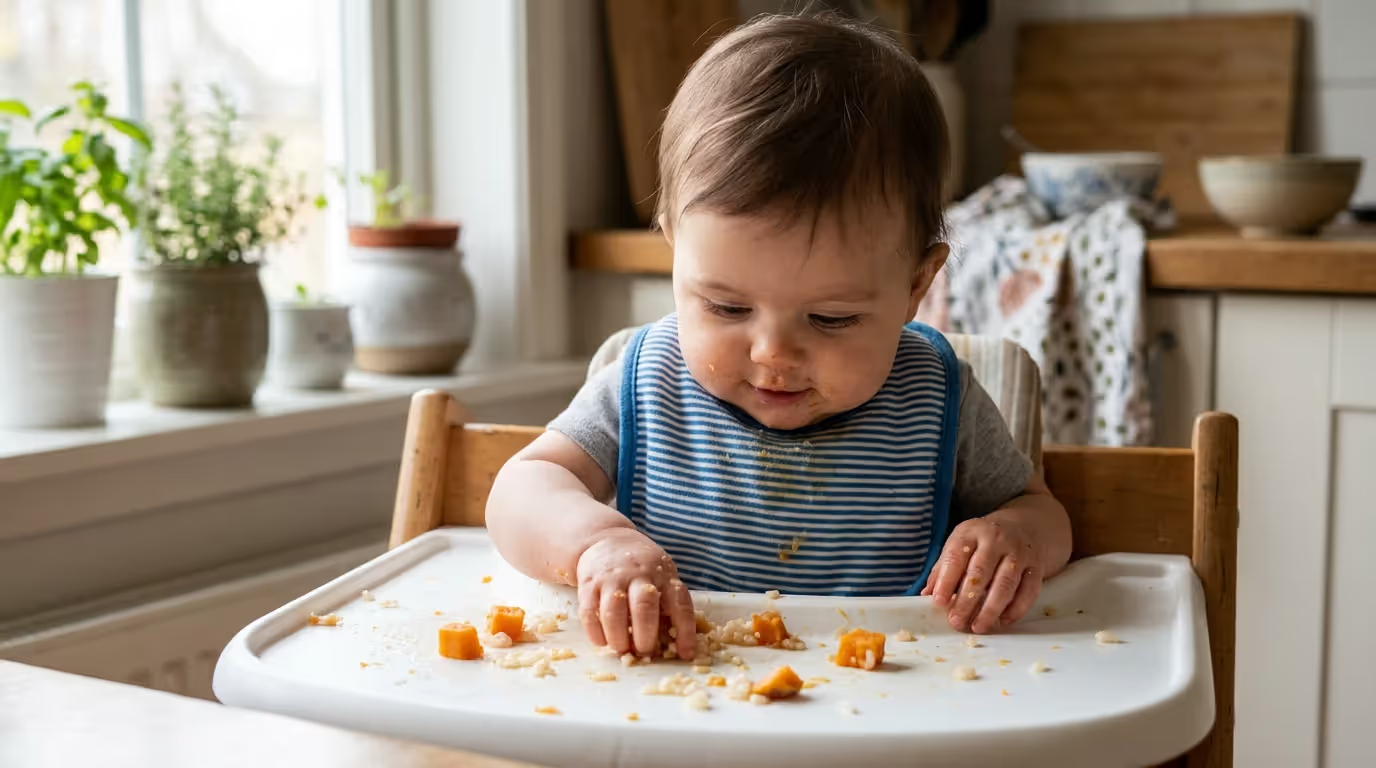
6-9 months: The raking grasp appears. Your baby sweeps her whole hand across the high chair tray, fingers moving together to drag food closer. Not elegant, but effective.
9-12 months: Pincer grasp development takes off. Instead of using her whole palm, your baby starts picking up tiny objects between thumb and index finger.
Pincer Grasp Development Timeline
The pincer grasp doesn't just switch on one day. It evolves through stages.
Around eight or nine months, you'll notice the inferior pincer grasp—your baby picks up objects between the pads of her thumb and forefinger. The motion looks clumsy compared to what's coming, but it works for grabbing Cheerios and small toys.
Between ten and twelve months, the superior pincer grasp emerges. Now your baby uses just her fingertips with surprising precision. She can point at pictures in books, press buttons deliberately, and—every parent's favorite—locate every microscopic crumb and mysterious object on your floor.
You'll know this skill has arrived when you suddenly become hyperaware of what's on your floors. Your baby will find everything.
Author: Hannah Whitaker;
Source: raynet-merseyside.net
Ages 1-3: Toddler Fine Motor Milestones
Toddlerhood brings explosive growth in what those hands can do. Your child moves from basic grabbing to purposeful manipulation.
12-18 months:
- Stacks two or three blocks (then knocks them down with glee)
- Turns pages in board books, usually several at once
- Scribbles spontaneously when you hand over a crayon
- Attempts using a spoon, with food going everywhere
- Points with one finger to show you things or make requests
18-24 months:
- Builds towers of four to six blocks with better stability
- Turns pages one at a time
- Imitates vertical and horizontal lines after you draw them
- Removes shoes and socks independently
- Strings large beads onto thick laces
24-36 months:
- Constructs towers of eight or more blocks and tries simple structures
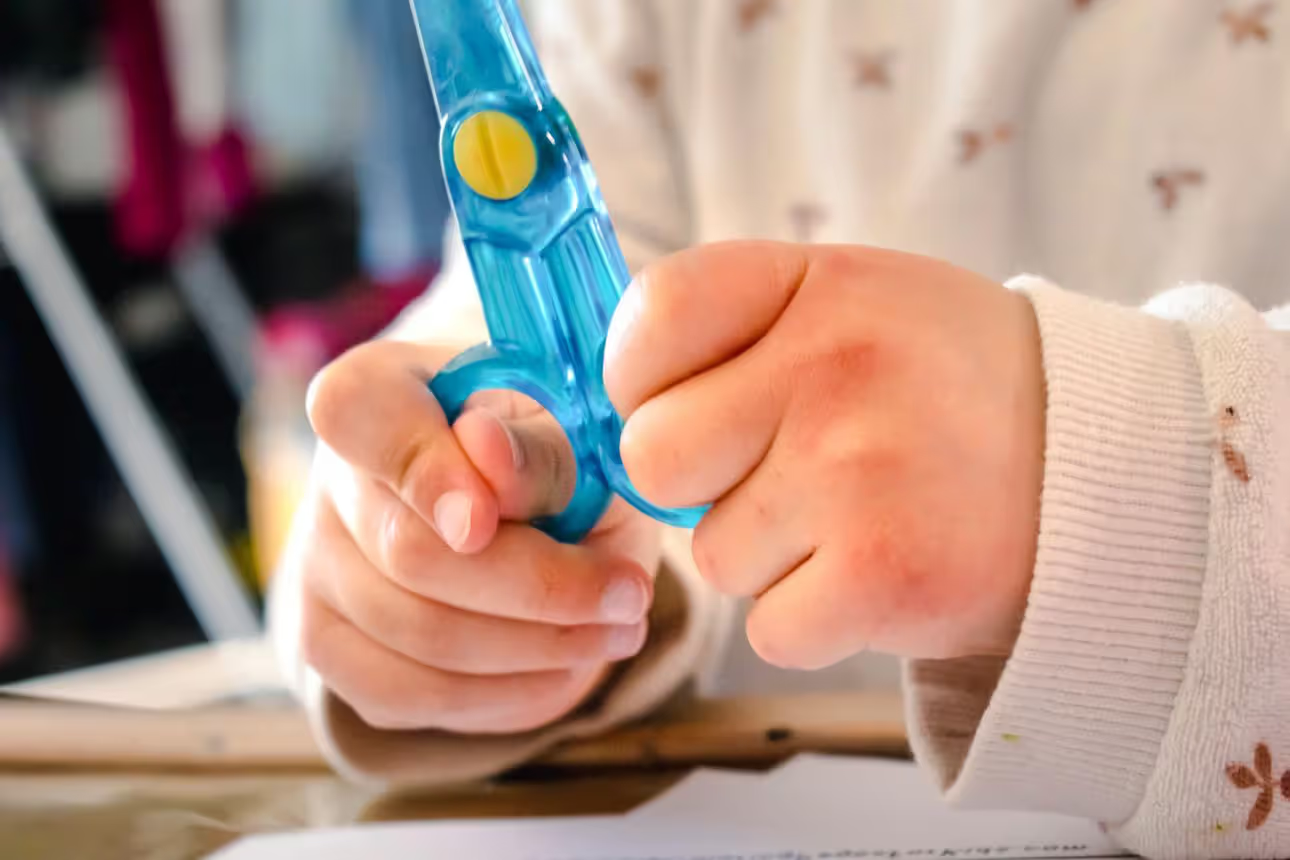
- Snips paper with scissors (not following lines yet)
- Copies a circle after watching you draw one
- Turns doorknobs and twists lids off containers
- Uses utensils with less spillage
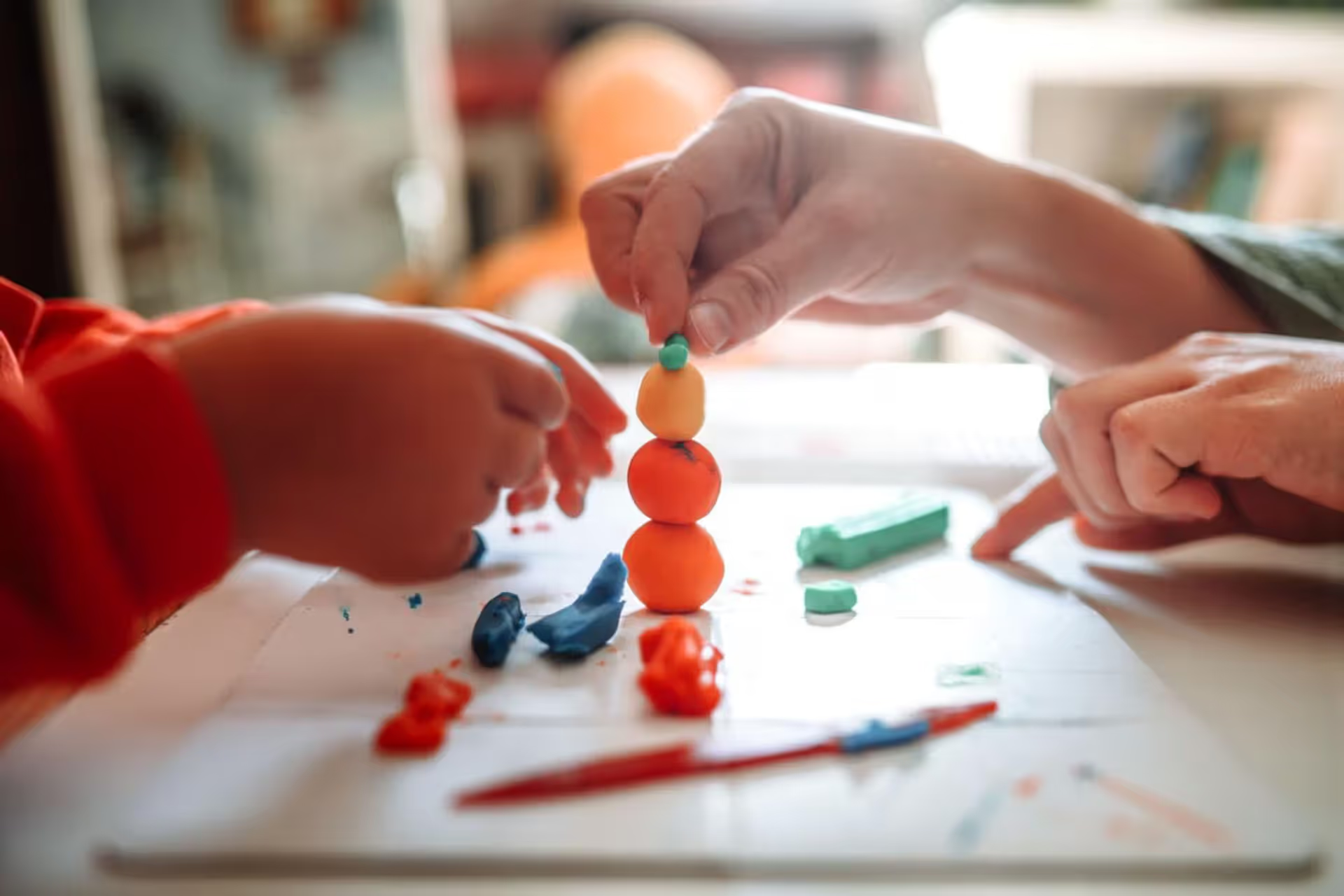
Fine motor activities for toddlers should feel like play, not lessons. Play dough, finger painting, and chunky puzzles work beautifully. You're aiming for repetition and exploration, not perfect results.
Finger dexterity activities at this age can be wonderfully simple. Drop cotton balls into a container. Peel stickers off their backing. Pop individual bubble wrap bubbles. These basic actions build the hand strength and coordination your toddler needs for harder tasks later.
Common mistake? Trying to teach letter writing too early. Your toddler's hands simply don't have the precision yet. Stick with strength-building play instead.
Author: Hannah Whitaker;
Source: raynet-merseyside.net
Ages 3-5: Preschool Fine Motor Skills Progression
During the preschool years, your child's hands become genuinely capable tools for creating and self-care.
Age 3:
- Copies circles and attempts crosses
- Cuts along lines with scissors (though the line gets wobbly)
- Stacks nine or ten blocks
- Buttons and unbuttons large buttons
- Holds crayons with thumb and fingers instead of a fist
Age 4:
- Copies crosses, squares, and some letters
- Cuts out basic shapes
- Uses fork and spoon competently
- Dresses and undresses without help (except tricky fasteners)
- Draws simple stick figures
Age 5:
- Copies triangles and writes several letters and numbers
- Cuts complex shapes while staying on the line
- Ties large bows (shoelaces still challenging)
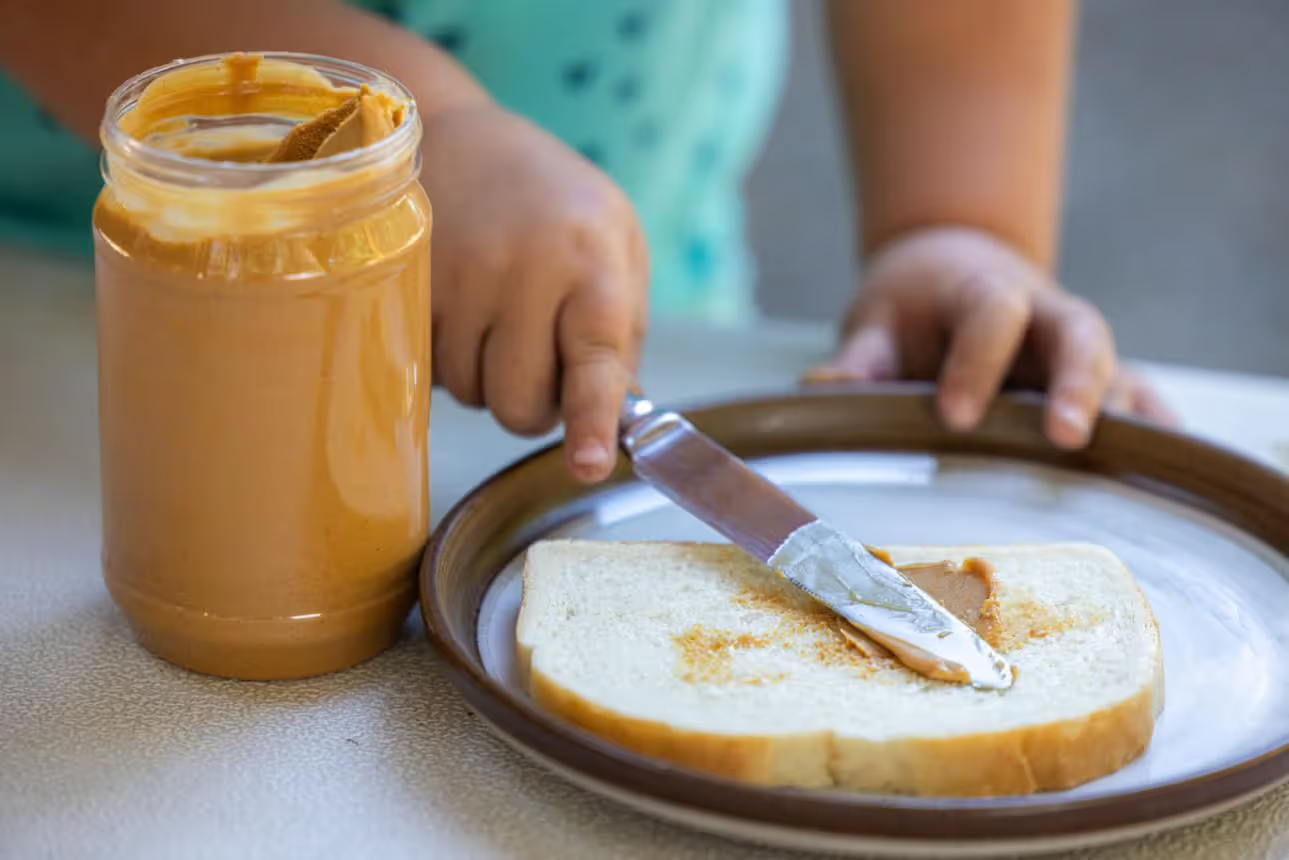
- Uses a spreading knife and handles utensils like adults do
- Colors mostly inside the lines
Fine motor development preschool programs focus heavily on pre-writing skills children need for kindergarten. That's why you see so much cutting, coloring, and tracing in preschool classrooms.
Pencil Grip Development Stages
Pencil grip development follows a predictable sequence. Knowing these stages helps you understand what's appropriate for your child's age and when to consider help.
Fisted grasp (12-18 months): Your toddler wraps his whole fist around the crayon with the tip pointing down. Normal for very young kids, but it should evolve.
Digital pronate grasp (2-3 years): The crayon sits inside the fist with the tip pointing up. All fingers wrap around it. This gives more control than the fisted grasp.
Four-finger grasp (3-4 years): Four fingers hold the pencil against the thumb. The pencil rests against the palm, and movement comes from the whole arm and shoulder.
Tripod grasp (4-6 years): This is the mature grip most adults use. The pencil rests between thumb and index finger, supported by the middle finger. Movement comes from the finger joints rather than the whole arm.
Some kids develop a dynamic quadrupod grip instead—using four fingers rather than three. This works perfectly fine if it's efficient and doesn't tire their hand.
Don't force a mature grip too early. Hand muscles need time to build the strength and coordination necessary for a functional tripod grasp. Short, frequent writing practice beats long sessions that exhaust developing hands.

Author: Hannah Whitaker;
Source: raynet-merseyside.net
Scissor Skills by Age
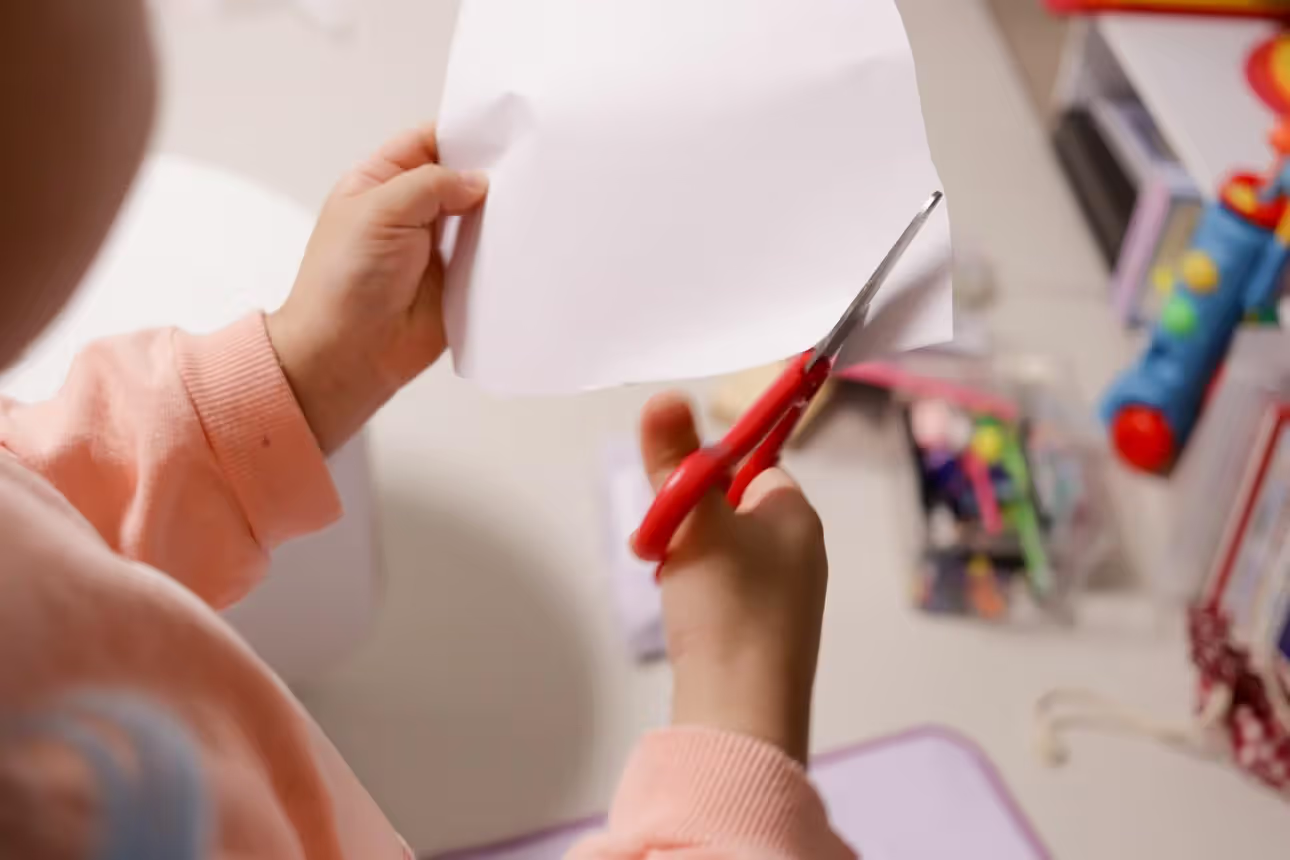
Scissor skills milestones matter more than many parents realize. Cutting requires bilateral coordination—one hand operates the scissors while the other turns the paper. It builds hand strength and teaches kids to cross their body's midline, which supports brain development.
Age 2-3: Snipping—making single cuts into the paper's edge. Your child opens and closes the scissors but can't cut continuously along a line yet.
Age 3-4: Cutting forward along lines, though with drifting. Can cut out large, simple shapes like big circles and squares.
Age 4-5: Cutting out more complex shapes with curves and angles. Stays on the line consistently.
Age 5-6: Cutting out detailed shapes, including small pictures and intricate designs.
Safety scissors made for children make learning easier. Look for rounded tips and ergonomic handles sized for small hands.
Author: Hannah Whitaker;
Source: raynet-merseyside.net
Ages 5-7: School-Age Fine Motor Refinement
The early elementary years polish skills your child has been developing. Tasks become more precise and automatic.
Age 5-6:
- Writes first name and copies most letters and numbers
- Draws people with six or more body parts
- Builds complex structures with blocks or Legos
- Ties shoes (though many still struggle with this)
- Uses keyboard and mouse with basic skill
Age 6-7:
- Writes complete sentences with improving legibility
- Draws detailed pictures with backgrounds and context
- Uses tools like hole punches, staplers, and tape dispensers
- Completes multi-step craft projects
- Shows clear hand dominance
Hand strength children develop during these years directly impacts their writing stamina. Kids with underdeveloped hand muscles tire quickly during writing assignments, which affects both performance and their feelings about schoolwork.
Pre-writing skills children mastered in preschool now translate into functional writing. Letter formation becomes more consistent, sizing improves, and spacing between words develops naturally. By second grade, most kids write legibly without intense focus.
Here's what surprises parents: plenty of capable six- and seven-year-olds still can't tie their shoes. It's one of the most complex fine motor tasks kids learn, requiring bilateral coordination, finger strength, and sequential memory. If your first-grader hasn't mastered it, they're not alone.
Supporting Your Child's Fine Motor Development
Author: Hannah Whitaker;
Source: raynet-merseyside.net
You don't need expensive toys or formal instruction. The best fine motor activities for toddlers and older kids happen during everyday routines and simple play.
For babies and young toddlers:
- Offer toys with different textures and sizes to grasp
- Let them self-feed with finger foods (messy but effective)
- Provide stacking cups, nesting toys, and simple puzzles
- Play pat-a-cake and other finger games
- Include them in safe kitchen tasks like stirring or tearing lettuce
For preschoolers:
- Set up play dough with tools for rolling, cutting, and shaping
- Offer beads for stringing (supervise for choking hazards)
- Give child-safe scissors and paper for cutting practice
- Use tongs or tweezers to transfer small items
- Encourage coloring, painting, and drawing
For school-age kids:
- Involve them in cooking tasks like measuring, stirring, and spreading
- Offer craft projects with multiple steps
- Encourage building with Legos, K'nex, or similar toys
- Teach card games that require shuffling and dealing
- Have them practice buttons, zippers, and snaps during dressing
Screen time deserves mention here. While tablets and smartphones involve finger movements, they don't build hand strength or provide the sensory feedback kids get from physical objects. Balance matters—some screen time won't derail development, but it shouldn't replace hands-on play.
When to seek help:
Most variation in development is normal. Some kids develop skills earlier; others need more time. But certain signs warrant professional evaluation:
- Not reaching for objects by six months
- Can't transfer objects between hands by nine months
- No pincer grasp by 15 months
- Can't stack blocks or turn pages by age two
- Actively avoids fine motor activities or shows extreme frustration
- Shows significant delays compared to peers across multiple areas by preschool
- Loses previously mastered skills
Pediatric occupational therapists specialize in fine motor development. They can assess your child's skills, identify specific challenges, and suggest targeted activities. Early intervention makes the biggest difference.
Children follow individual developmental timelines, and normal encompasses a broad spectrum. What truly matters isn't achieving every milestone on a predetermined date, but demonstrating consistent progress over time. If concerns arise, trust your parental instincts and pursue an evaluation. We consistently prefer reassuring worried parents over missing opportunities for early support.
— Martinez Sarah
Creating practice opportunities:
The best approach? Weave fine motor practice into daily life. Kids learn through meaningful repetition in real contexts, not isolated drills.
Ask your toddler to help unload groceries, placing cans on low shelves. Let your preschooler button their own coat, even if it takes five extra minutes. Have your first-grader help prepare snacks by spreading peanut butter or arranging crackers.
These real tasks beat worksheets every time. They're motivating, purposeful, and develop exactly the skills your child needs.
Fine Motor Skills Milestones Checklist by Age
| Age Range | Expected Skills | Potential Red Flags |
| 0-6 months | Reflexive grasping, reaching toward toys, bringing hands to mouth | Doesn't reach for objects by six months, hands constantly fisted |
| 6-12 months | Passing toys between hands, raking grasp, developing pincer grasp | No pincer grasp by 15 months, doesn't explore objects with hands |
| 1-2 years | Stacking two to six blocks, turning pages, scribbling, using spoon | Can't stack blocks by 18 months, avoids small objects |
| 2-3 years | Building towers of eight-plus blocks, snipping with scissors, copying circles, stringing beads | Can't turn single pages by age two, shows no interest in drawing or manipulating toys |
| 3-4 years | Copying shapes, cutting along lines, managing buttons, using utensils well | Can't copy a circle by age four, extreme difficulty with scissors |
| 4-5 years | Copying letters, cutting complex shapes, dressing independently, drawing people | Can't copy basic shapes by age five, unable to use scissors functionally |
| 5-7 years | Writing letters and words, detailed drawings, using tools, tying shoes | Illegible writing by age seven, significant difficulty with self-care tasks |
FAQ: Fine Motor Skills Questions Answered