Learning through play
What Is Play Based Learning?

Content
Children learn best when they don't realize they're learning at all. That's the magic behind play based learning — an approach that turns curiosity into education and fun into developmental progress. Instead of sitting at desks memorizing facts, children explore, create, and discover through activities that feel like pure play. For parents and educators wondering whether this approach truly prepares children for academic success, the research is clear: play isn't just important for early childhood development. It's foundational.
Understanding Play Based Learning in Early Childhood Education
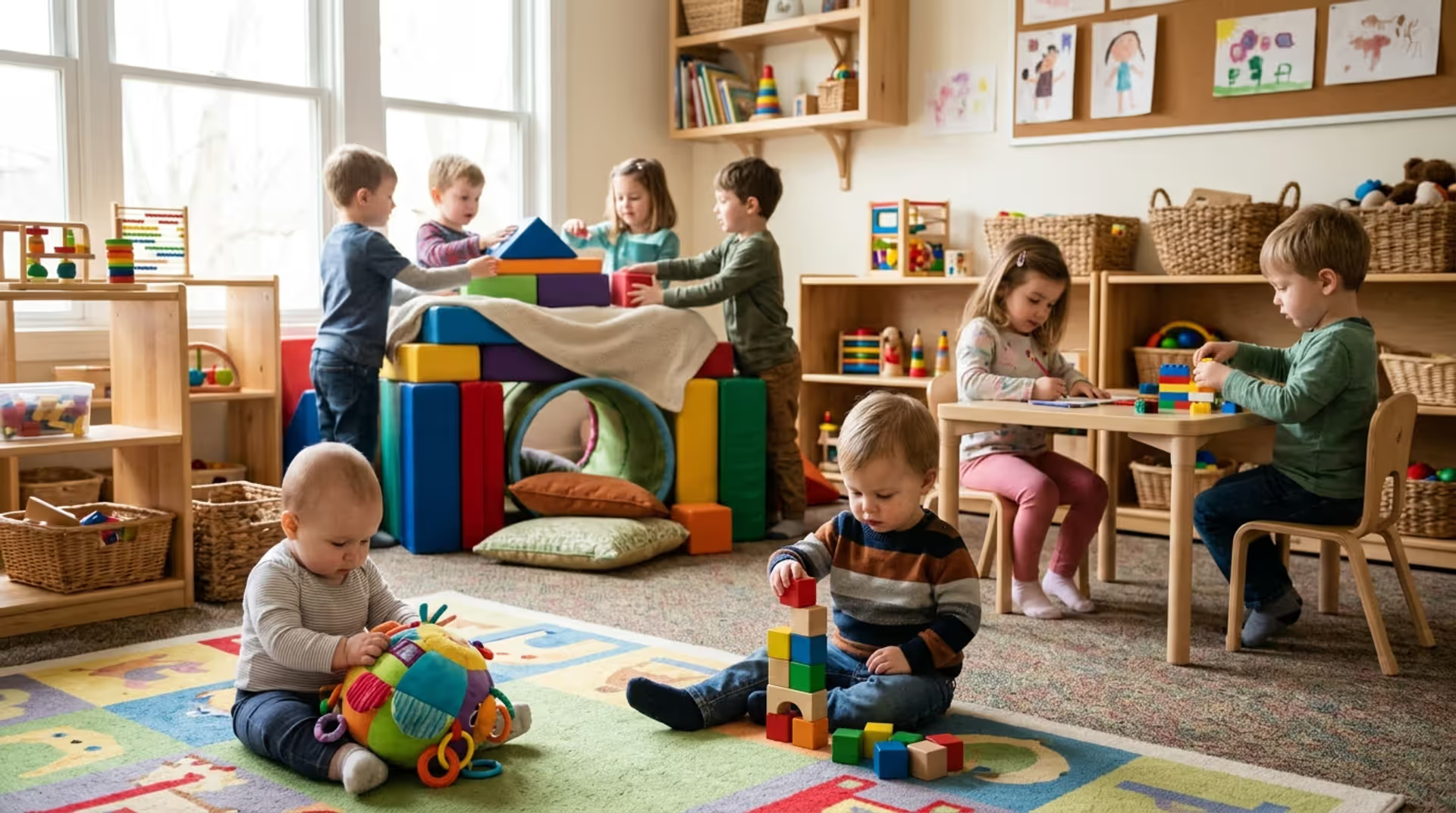
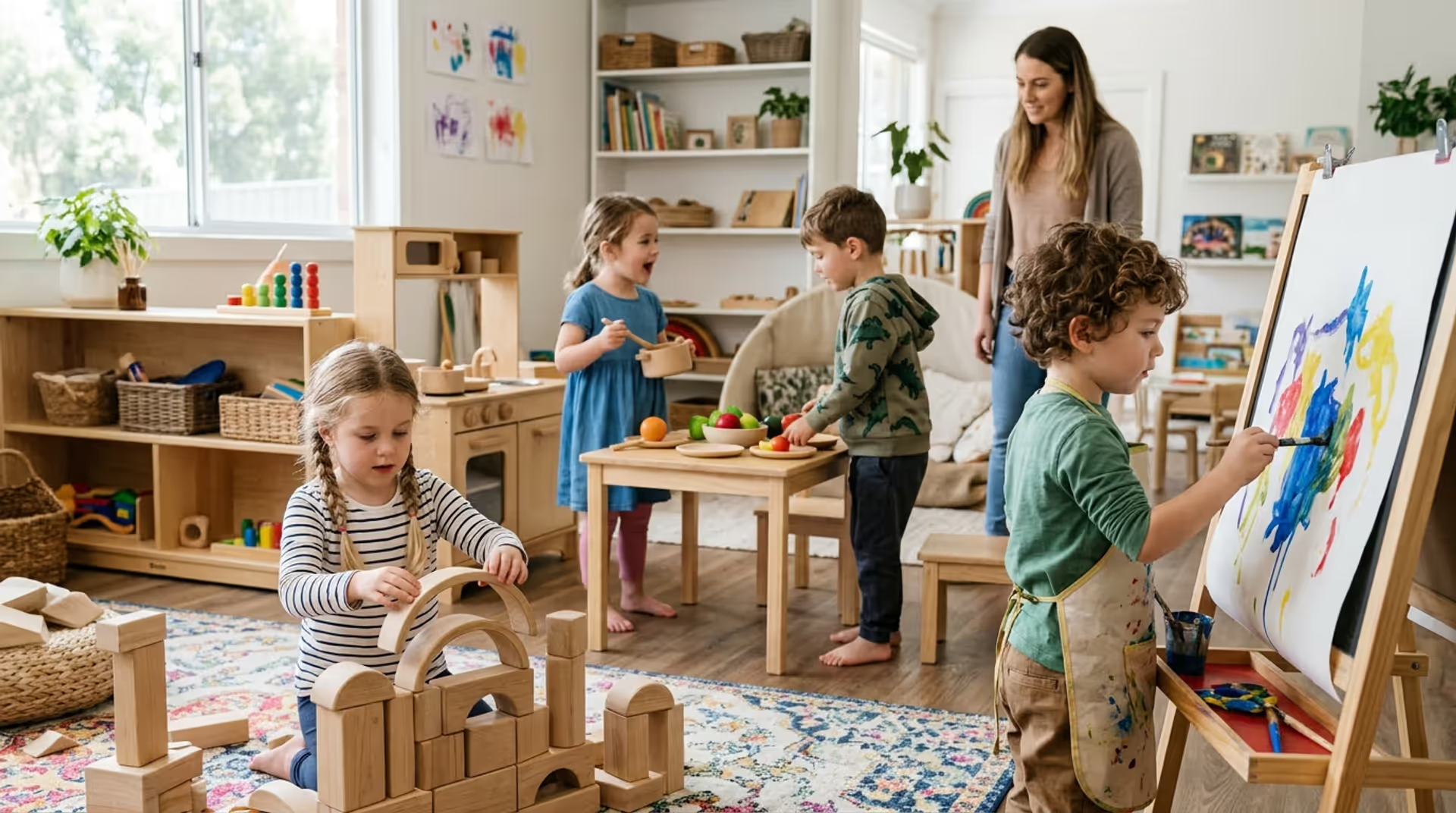
Play based learning is an educational approach where play serves as the primary vehicle for children's development and learning. Rather than following rigid lesson plans, children engage with materials, environments, and peers in ways that spark their natural curiosity and drive to explore.
The core principles are straightforward. Children learn through hands-on experiences. They make choices about what and how they play. Adults set up rich environments and step back to let discovery happen.
This contrasts sharply with traditional structured learning. In conventional classrooms, teachers direct activities from start to finish. Everyone does the same thing at the same time. The teacher talks, children listen, and learning follows a predetermined script.
Play based environments flip this dynamic. Children initiate activities based on their interests. A child fascinated by bugs might spend an hour examining insects under a magnifying glass, drawing what she sees, and building a habitat from blocks. That's science, art, and engineering rolled into one self-directed session.
The educator's role shifts from instructor to facilitator. Teachers in play based settings design environments that invite exploration. They observe carefully, noting what captures each child's attention. When appropriate, they ask open-ended questions or introduce new materials that extend the play. But they don't control it.
Learning through play theory has roots in the work of developmental psychologists like Jean Piaget and Lev Vygotsky. Piaget emphasized that children construct knowledge through active exploration. Vygotsky highlighted how social interaction during play scaffolds learning. Modern neuroscience confirms what these theorists proposed: playful, self-directed activities create stronger neural connections than passive instruction.
A play based curriculum doesn't mean chaos or lack of learning goals. Teachers have clear developmental objectives. They just reach them through play rather than worksheets.
Author: Marcus Hollow;
Source: raynet-merseyside.net
How Play Based Learning Supports Child Development
The benefits of play based learning extend across every domain of child development. Let's break down how play shapes growing minds and bodies.
Cognitive development through exploratory play happens when children manipulate objects and test ideas. A toddler stacking blocks learns about gravity, balance, and spatial relationships. She's doing physics without equations. When the tower falls, she adjusts her strategy. That's hypothesis testing.
Play and cognitive development are inseparable in early childhood. Pretend play especially builds executive function skills — the mental processes that help us plan, focus attention, and juggle multiple tasks. When a four-year-old plays restaurant, he's holding multiple roles in mind, sequencing events, and adapting to his playmate's ideas. These are the same skills he'll need for reading comprehension and math problem-solving later.
Social-emotional skill building happens naturally during play. Children negotiate roles: "You be the doctor, I'll be the patient." They practice empathy by imagining how others feel. They experience disappointment when a game doesn't go their way and learn to regulate those feelings.
Cooperative play teaches children to read social cues, take turns, and resolve conflicts. These aren't lessons from a curriculum guide. They're real experiences with real emotional stakes.
Language and communication growth accelerates during play. Children narrate their actions, ask questions, and engage in complex conversations with peers. A child building a zoo might use vocabulary like "enclosure," "habitat," and "carnivore" — words that emerged naturally from her interest, not from flashcards.
Research shows that children in play based programs often demonstrate stronger vocabulary and narrative skills than peers in highly structured settings. The reason? They use language for authentic purposes all day long.
Physical development and motor skills get a workout during active play. Climbing develops gross motor coordination. Threading beads or manipulating small figures builds fine motor control needed for writing.
Outdoor play especially supports physical development. Running, jumping, and balancing on uneven surfaces build strength and body awareness that sitting at tables simply can't provide.
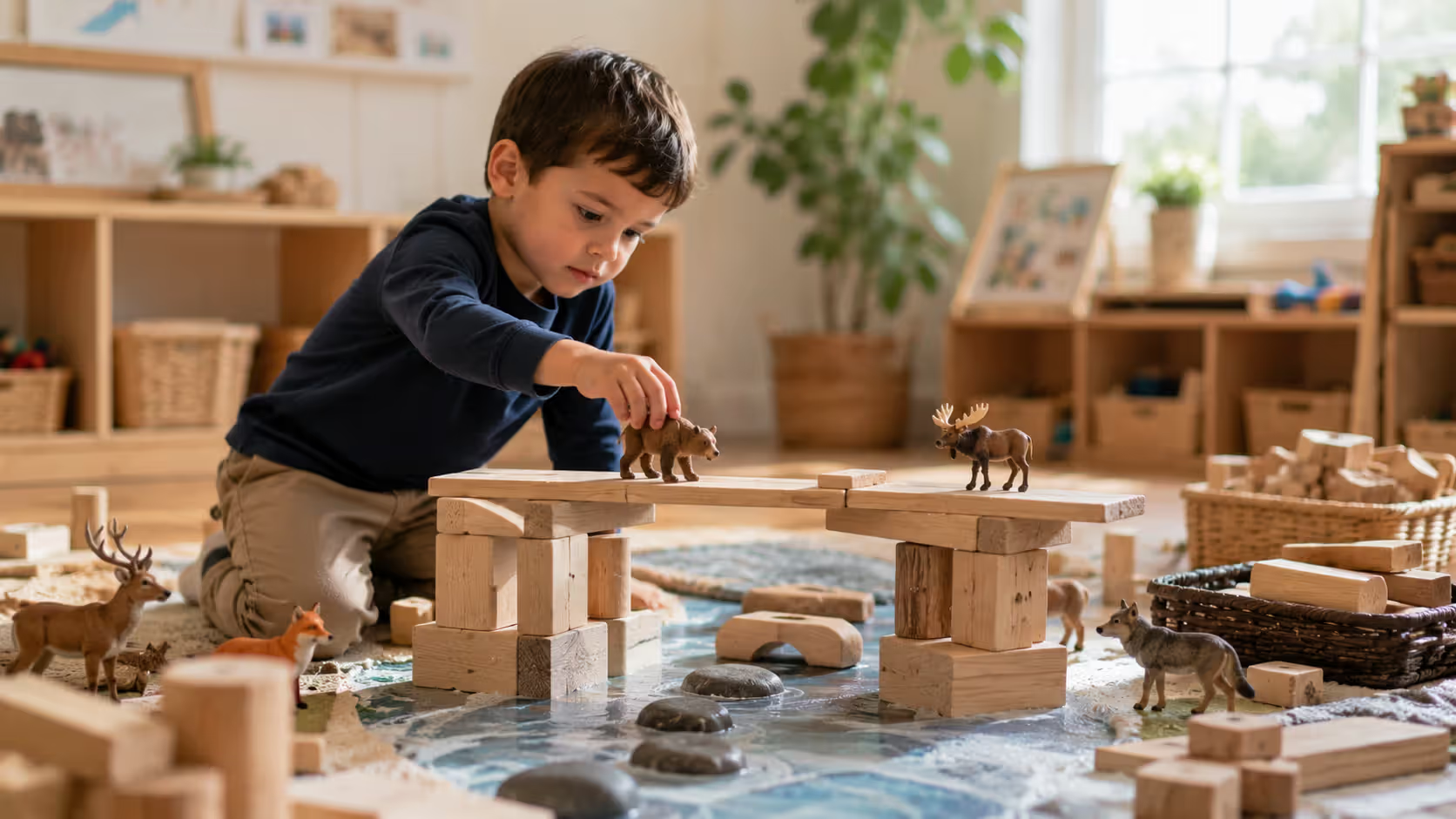
Problem-solving and critical thinking emerge when children face challenges during play. How do you make a bridge that won't collapse? What happens if you mix all the paint colors? Why won't this puzzle piece fit?
These questions drive genuine inquiry. Children form hypotheses, test them, and revise their thinking based on results. That's the scientific method in action, learned through experience rather than explanation.
One pattern I see consistently: children in play based environments show more persistence when facing difficult tasks. They've had practice working through challenges on their own terms.
Play is not frivolous. It is brain building. It is the way children learn to navigate their world, to interact with others, and to express and control emotions.
— Hirsh-Pasek Kathy
Types of Play in a Play Based Curriculum
Not all play looks the same. A well-designed play based curriculum incorporates different types of play, each offering unique learning opportunities.
Child-directed play involves minimal adult intervention. Children choose materials, create scenarios, and follow their interests wherever they lead. This free play is where creativity flourishes and children develop autonomy.
In child-directed play, a group of preschoolers might transform the block area into a fire station, complete with dramatic rescue missions. No adult suggested this. The children built the entire scenario from their imagination and prior knowledge.
The adult's job? Stay nearby, keep everyone safe, and resist the urge to direct the action. That last part is harder than it sounds.
Inquiry-based play starts with children's questions and curiosities. Teachers support exploration by providing resources and asking questions that deepen thinking.
If a child asks why leaves change color, inquiry-based play might involve collecting leaves, sorting them by color, reading books about trees, and creating leaf prints with paint. The child's question drives the investigation. The teacher facilitates access to information and materials.
This approach respects children's natural curiosity while gently guiding them toward deeper understanding.
Cooperative and social play involves two or more children working toward shared goals. Building a block city together, playing house, or creating an obstacle course all require communication, compromise, and collaboration.
These interactions teach children that other people have different perspectives and ideas. Navigating those differences is a critical life skill that starts developing during preschool play.
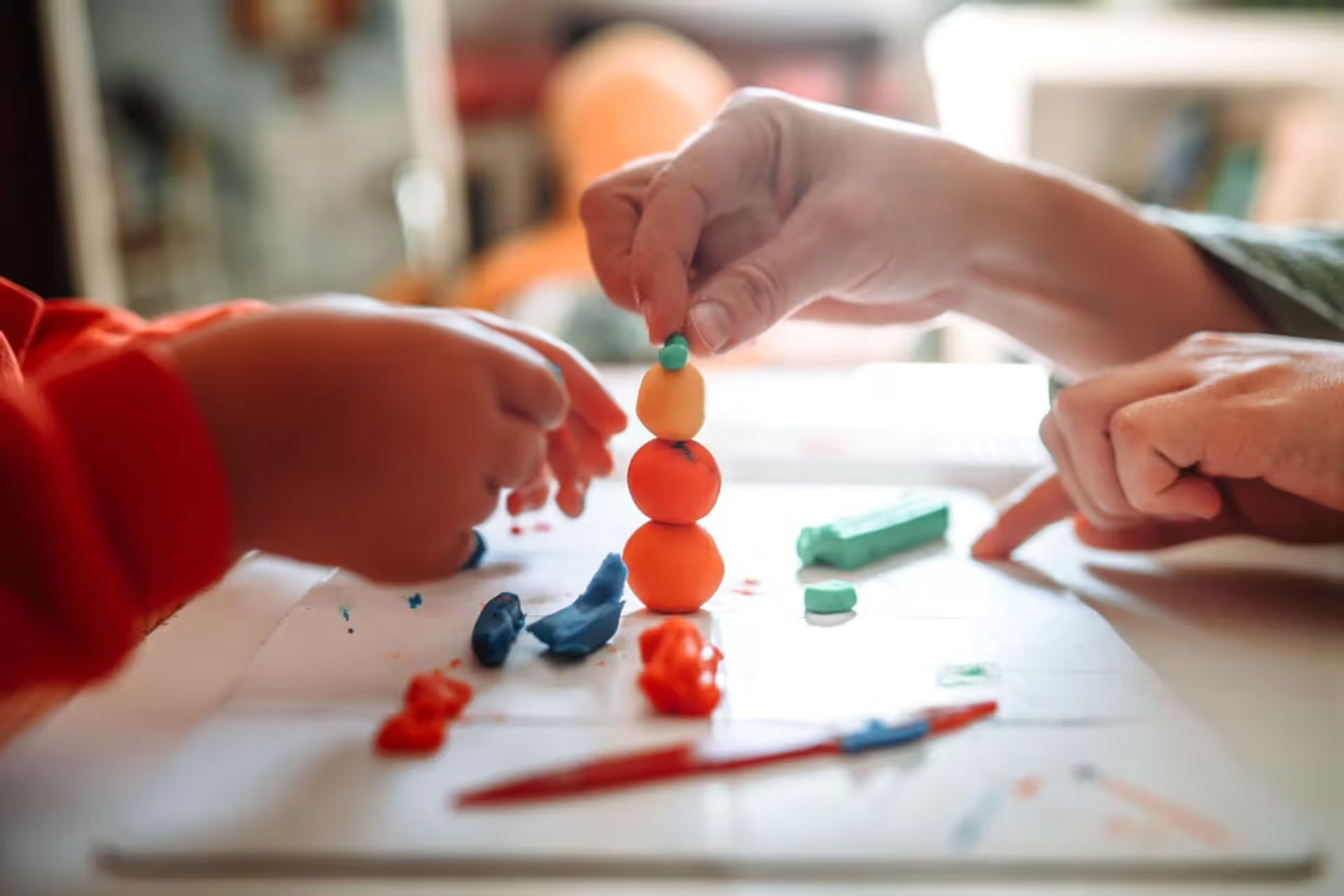
Sensory and exploratory play engages children's senses and invites open-ended investigation. Water tables, sand play, playdough, and sensory bins filled with rice or beans all fall into this category.
Sensory play is especially valuable for younger children still learning about object properties and cause-and-effect relationships. What happens when you pour water through a funnel? How does wet sand feel different from dry sand?
These experiences build neural pathways and provide calming, focusing activities for children who need sensory input to regulate their bodies.
Author: Marcus Hollow;
Source: raynet-merseyside.net
Play Based Learning Activities for Preschool and Home
Wondering what play based learning actually looks like in practice? Here are concrete play based learning examples you can implement whether you're running a classroom or supporting learning at home.
Dramatic play and role-playing scenarios turn everyday experiences into learning opportunities. Set up a pretend grocery store with empty food containers, a toy cash register, and reusable shopping bags. Children practice math skills by "pricing" items and making change. They develop literacy by reading labels and making shopping lists. They build social skills by taking turns as cashier and customer.
Other dramatic play setups: veterinary clinic, post office, restaurant, construction site, or doctor's office. The key is providing props that inspire imaginative scenarios.
Building and construction activities develop spatial reasoning, problem-solving, and perseverance. Blocks are the classic choice, but don't stop there. Magnetic tiles, cardboard boxes, PVC pipes, and even natural materials like sticks and stones all invite construction play.
Challenge children to build something specific — a bridge, a tower taller than themselves, or a maze for toy cars — then step back and let them experiment.
Art and creative expression should focus on process, not product. Forget the adult-directed crafts where every child's work looks identical. Instead, provide open-ended materials: paint, clay, collage materials, markers, and paper in various sizes.
Let children create whatever they imagine. The learning happens in the choosing, mixing, experimenting, and revising — not in producing something Pinterest-worthy.
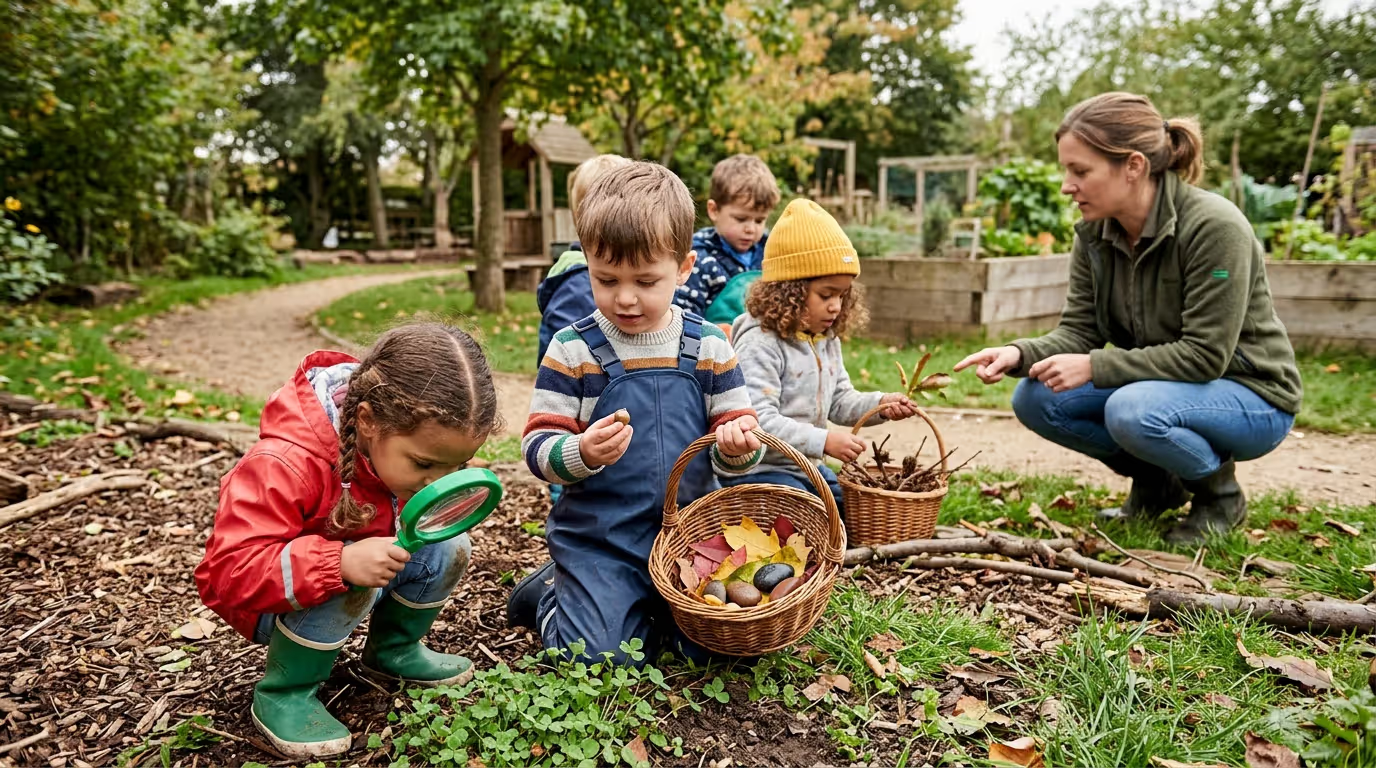
Outdoor and nature-based play offers unmatched learning opportunities. A simple nature walk becomes a science lesson when children collect interesting objects and discuss what they notice. Digging in dirt teaches about textures and small creatures. Climbing trees builds confidence and physical skills.
You don't need elaborate outdoor equipment. Natural spaces with trees, rocks, and varied terrain provide more developmental benefits than plastic playgrounds.
Music and movement activities support physical development, rhythm, and self-expression. Dancing to different types of music, creating instruments from household objects, or playing musical games like freeze dance all count as valuable play based learning activities.
Movement activities also help children who struggle to sit still release energy in productive ways.
Simple science experiments and discovery bins turn children into researchers. Fill bins with themed collections: shells and magnifying glasses, magnetic and non-magnetic objects, items that sink or float, or materials with different textures.
Add simple tools like scoops, tongs, or eyedroppers. Then let children explore. Their observations and questions will guide the learning.
A common mistake parents make is over-explaining. You don't need to lecture about density when a child discovers that rocks sink. Just ask, "What else do you think will sink?" and provide materials for testing.
Author: Marcus Hollow;
Source: raynet-merseyside.net
Play Based Learning in Preschool Settings
What does a play based learning preschool actually look like when you walk through the door?
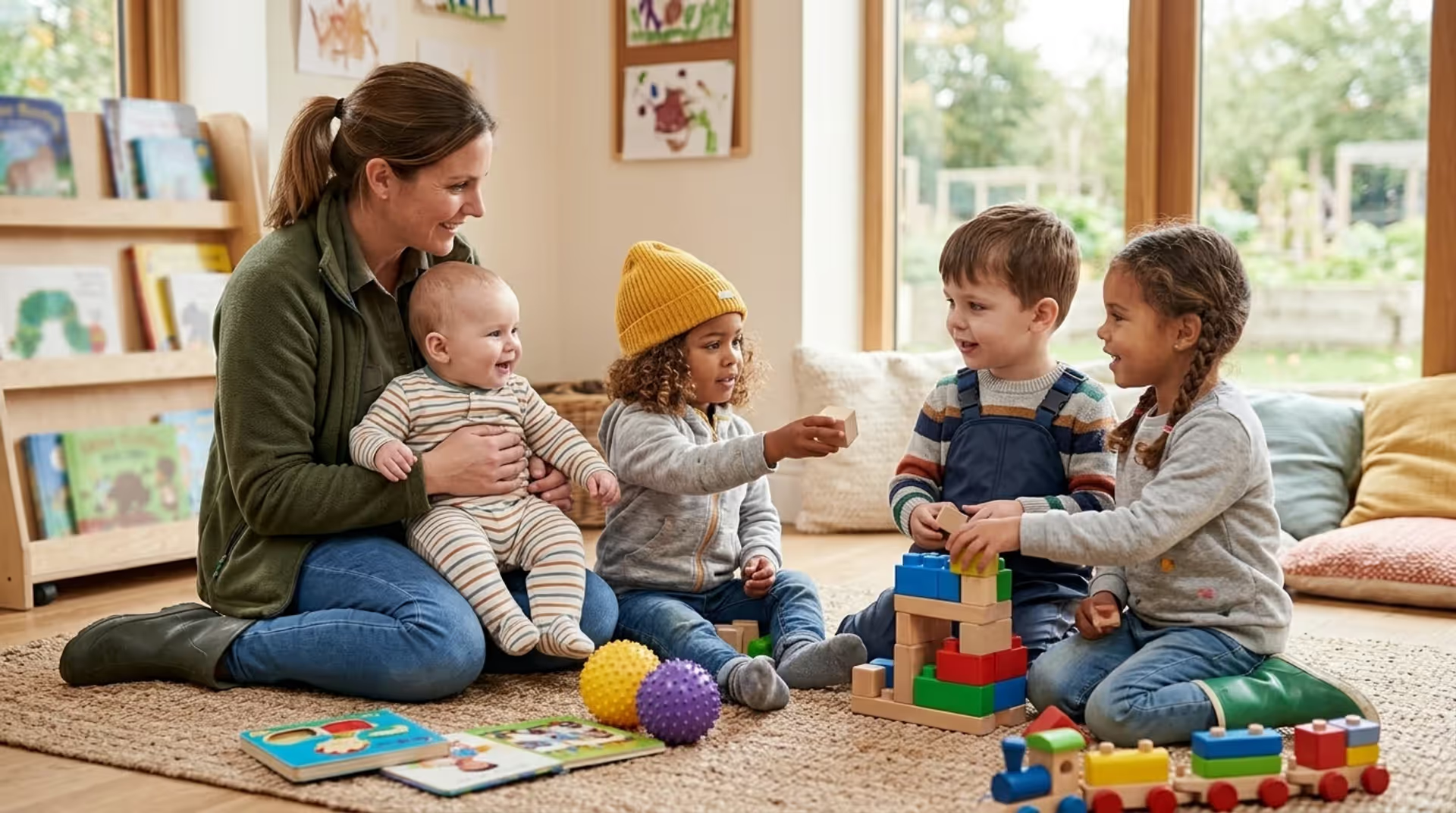
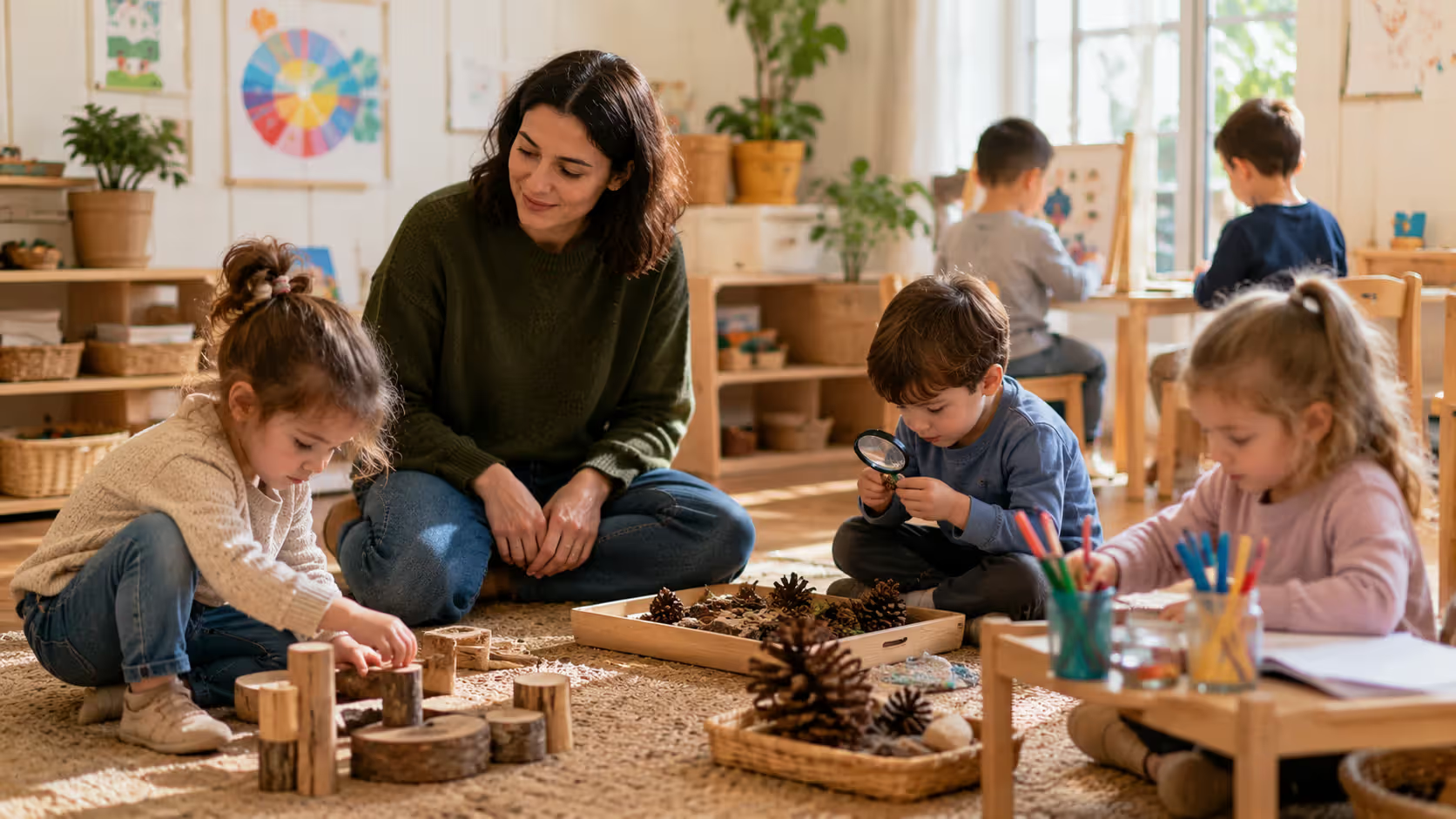
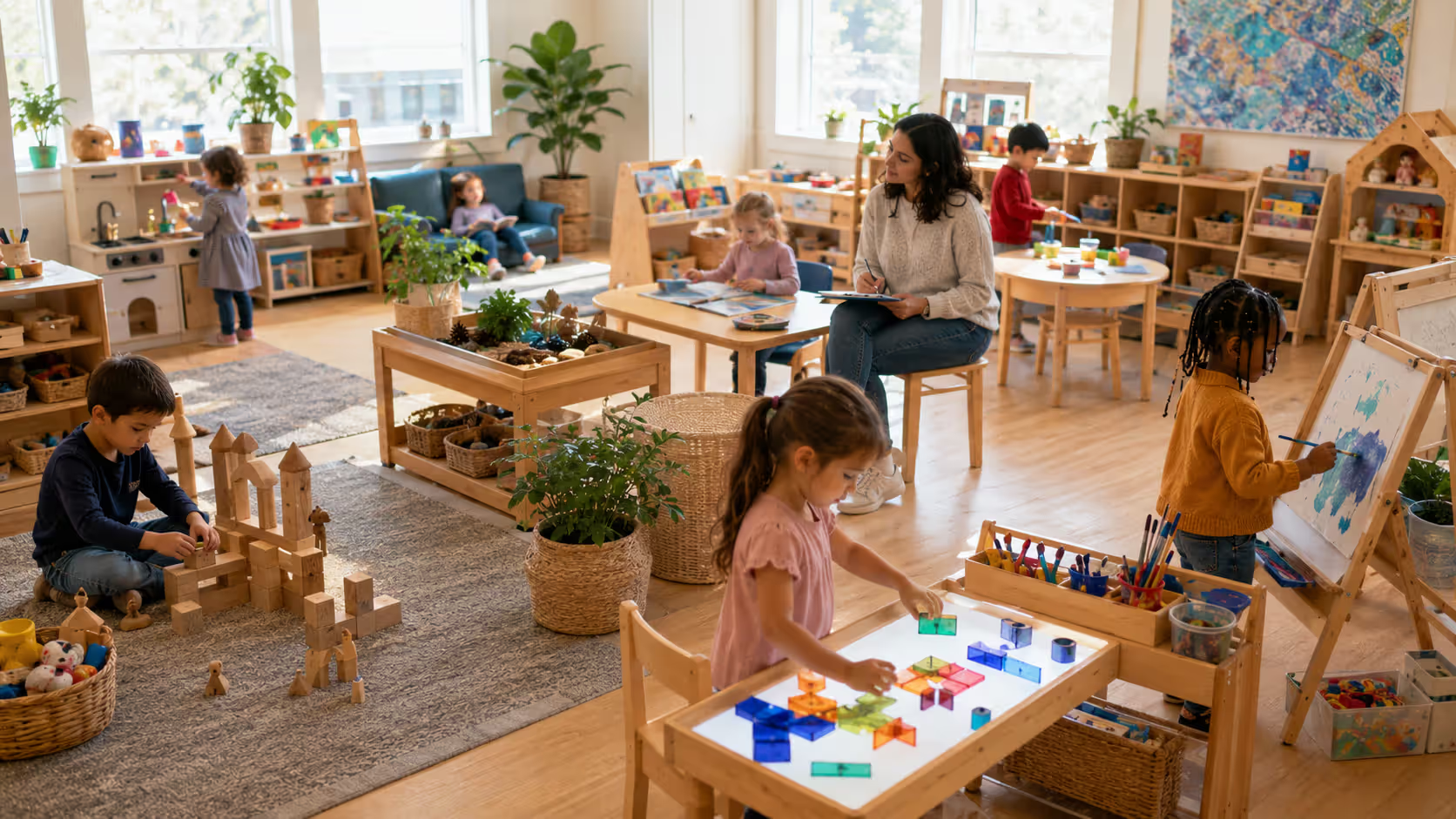
Classroom environment: The space is organized into learning centers or areas, each stocked with materials that invite specific types of play. You'll typically see a dramatic play area with costumes and props, a block center with various building materials, an art station with open-ended supplies, a reading nook with books and comfortable seating, a sensory table, and areas for manipulatives like puzzles and games.
Materials are displayed at child height on low shelves. Children can access what they need independently. The environment itself teaches responsibility and decision-making.
Daily schedule: Play based preschools structure the day around large blocks of uninterrupted play time — often 60 to 90 minutes. This extended time allows children to develop complex play scenarios that shallow 15-minute rotations can't support.
A typical day might include: arrival and free choice time, outdoor play, a brief group meeting or story time, snack (often incorporated into play), more free choice time, and closing circle. Notice what's missing: worksheets, whole-group lessons, and teacher-directed activities that require everyone to do the same thing simultaneously.
Teacher facilitation: Teachers in play based programs are far from passive. They carefully observe children's play, noting interests, developmental progress, and social dynamics. They document learning through photos and notes rather than tests.
When appropriate, teachers join play to extend learning. If children are playing veterinarian, a teacher might ask, "How do you know if the dog has a fever?" This question prompts children to think more deeply and perhaps seek out information.
Teachers also introduce new materials strategically. If children have been building with blocks for weeks, adding animals or vehicles can spark fresh ideas and more complex constructions.
Author: Marcus Hollow;
Source: raynet-merseyside.net
Assessment methods: Forget standardized tests. Play based programs assess learning through observation, documentation, and portfolio development. Teachers note when a child demonstrates new skills during play: using more complex sentences, solving a conflict independently, or showing understanding of a concept like quantity or pattern.
These observations provide rich, authentic evidence of learning that a bubble-sheet test never could. Parents receive detailed narratives about their child's development rather than letter grades.
Here's a comparison of how these approaches differ in practice:
| Aspect | Play Based Learning | Traditional Preschool |
| Daily Structure | Large blocks of child-choice time; flexible schedule | Scheduled rotations; whole-group activities at set times |
| Teacher Role | Facilitator and observer; joins play strategically | Director of activities; leads from the front |
| Learning Method | Hands-on exploration; child-initiated discovery | Teacher instruction; demonstration and practice |
| Assessment | Observation and documentation during play | Worksheets, tests, and structured evaluations |
| Curriculum Flexibility | Adapts to children's emerging interests | Follows predetermined lesson plans |
| Child Autonomy | Children choose activities and materials | Teacher assigns activities and tasks |
| Environment Setup | Learning centers with open-ended materials | Desks or tables; teacher-controlled materials |
| Academic Focus | Integrated naturally into play contexts | Explicit instruction in separate subjects |
FAQ: Play Based Learning Questions Answered
The shift toward play based learning represents a return to what early childhood educators have known for generations: young children learn best through active, joyful engagement with their world. This isn't a trendy educational fad. It's an evidence-based approach aligned with child development science.
For parents evaluating preschool options, look for programs that prioritize extended play time, child choice, and hands-on exploration over worksheets and structured academics. Visit classrooms and watch how teachers interact with children. Are they directing every activity or facilitating children's self-directed exploration?
For educators transitioning to play based methods, start small. Introduce one learning center with open-ended materials. Extend free play time by fifteen minutes and observe what happens. Trust that learning is occurring even when it doesn't look like traditional instruction.
The children in play based environments aren't just preparing for future learning. They're fully engaged in the present, developing skills and knowledge that will serve them throughout their lives. That's not just effective education. It's childhood as it should be.