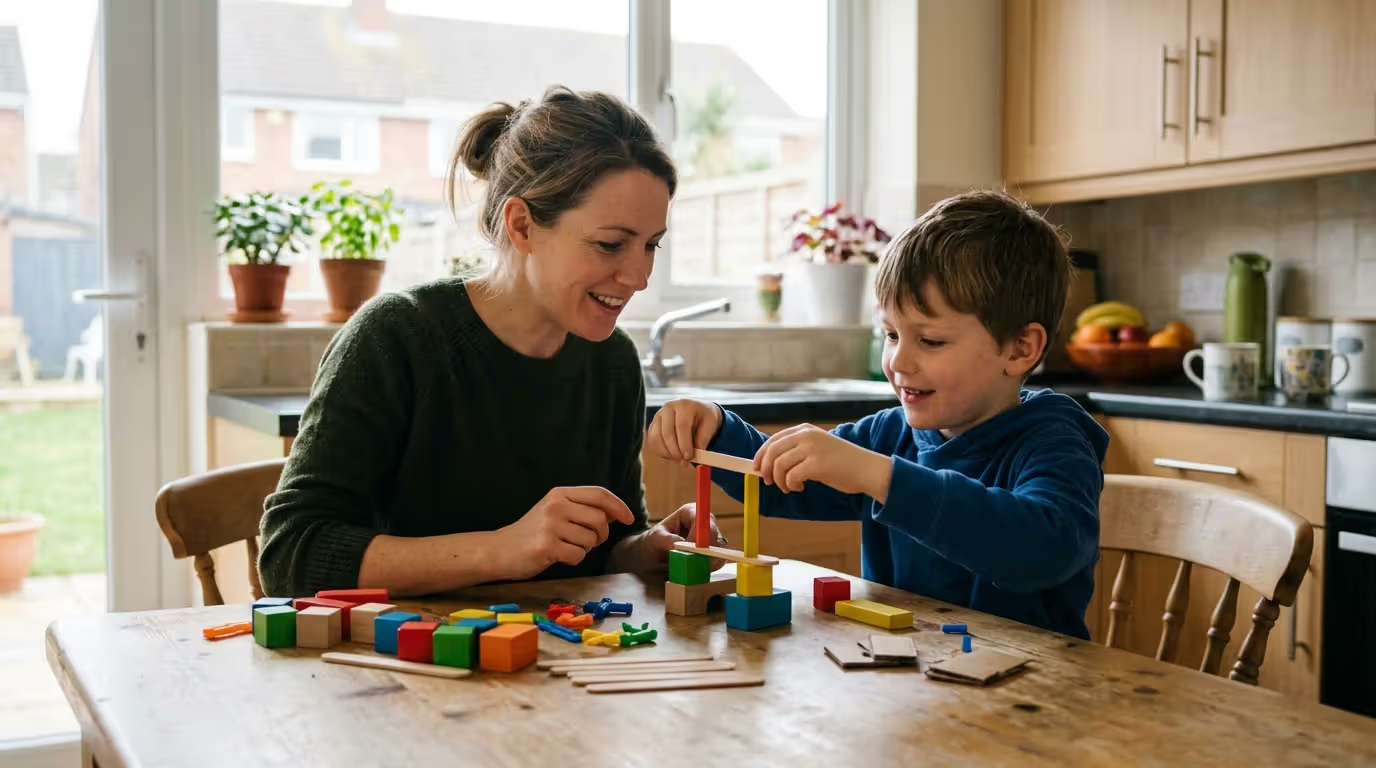
Young children participating in hands-on STEM camp activities
What Is a STEM Camp for Young Children?

Content
When you hear "STEM camp," you might picture lab coats and complicated equations. That's not what happens with young kids. These programs look more like organized play with a purpose. Children build, test, mess up, and try again—all while learning foundational concepts in science, technology, engineering, and math without realizing they're in an educational setting.
STEM camps designed for preschool and early elementary ages focus on curiosity rather than curriculum. They're structured to let kids explore through hands-on activities that feel like games. The real goal? Building comfort with experimentation and problem-solving before formal schooling makes these subjects feel intimidating.
How STEM Camps Work for Preschool and Early Elementary Ages
Most STEM camps for young children run as day programs, typically lasting three to five hours. Some extend to full-day formats for working parents. Week-long sessions are standard, though you'll find weekend workshops and single-day events too.
Age groupings matter here. Programs usually separate 3-4 year-olds from 5-7 year-olds because the developmental gap is huge. Preschoolers need more sensory exploration and shorter activity blocks. Early elementary kids can handle multi-step projects and basic tool use.
The structure varies by provider, but a typical day includes:
- Welcome circle with a theme introduction (15-20 minutes)
- Hands-on exploration stations (45-60 minutes)
- Snack break and outdoor play
- Guided experiment or building challenge (30-45 minutes)
- Free exploration time with materials
- Closing circle to share discoveries
Instructors rotate between direct teaching and facilitated discovery. They'll demonstrate a concept, then step back and let kids experiment. The ratio of adult guidance to independent exploration shifts based on age—younger children need more scaffolding.
Virtual STEM camps emerged as an option and stuck around. These work best for kids aged six and up who can follow screen instructions. Parents receive material kits in advance, and instructors guide activities through video calls. The effectiveness depends heavily on parental involvement.
Parent-child workshop formats split the difference. You attend together, which works well for hesitant preschoolers or parents wanting to learn facilitation techniques they can use at home.
Educational Benefits of Early STEM Programs
The pattern I see most often is parents expecting their child to learn specific facts or skills. That's not really the point at this age.
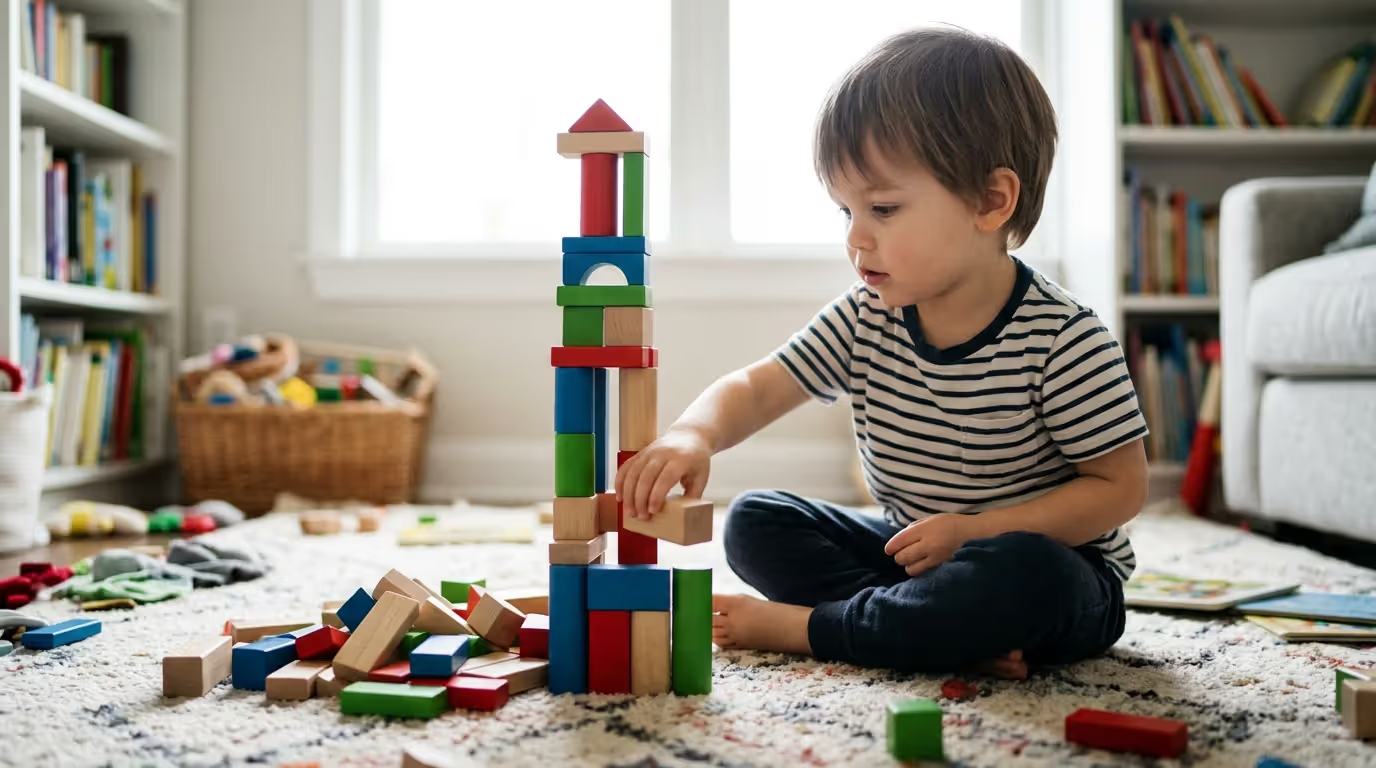
Early STEM programs build cognitive flexibility—the ability to approach problems from multiple angles. When a four-year-old's block tower keeps falling, they're learning to iterate. They adjust the base, try different block sizes, or change their approach entirely. That's engineering thinking without the formal label.
Children who engage with STEM concepts before age seven develop stronger spatial reasoning and mathematical thinking that persists through elementary school, regardless of whether they continue specialized STEM programming.
— Clements Douglas
Problem-solving activities at STEM camps teach kids that failure is data, not defeat. A preschooler mixing colors and getting brown instead of purple hasn't failed—they've discovered something. This mindset shift matters more than any specific science fact they might learn.
Critical thinking activities for early childhood don't look academic. They look like:
- Figuring out why their car won't roll down the ramp
- Predicting which objects will sink or float, then testing
- Sorting materials by properties they choose themselves
- Designing solutions to open-ended challenges
The long-term academic advantages show up in unexpected ways. Children from quality early STEM programs demonstrate better focus, improved fine motor skills from manipulating small components, and stronger verbal skills from describing their observations and reasoning.
Confidence matters too. Kids who spend time in STEM exploration during preschool years don't develop the "I'm not good at math" or "Science is hard" mindsets that plague older students. They see these subjects as playgrounds for curiosity.
Author: Hannah Whitaker;
Source: raynet-merseyside.net
What Children Actually Do at STEM Camps
Forget worksheets. Young children at STEM camps spend their time elbow-deep in materials, building things that sometimes work and often don't.
Science and Engineering Projects
Science activities for young children center on observable phenomena they can manipulate directly. They're growing crystals, watching seeds sprout in clear containers, mixing safe household substances to create reactions, and observing insects through magnifying glasses.
Author: Hannah Whitaker;
Source: raynet-merseyside.net
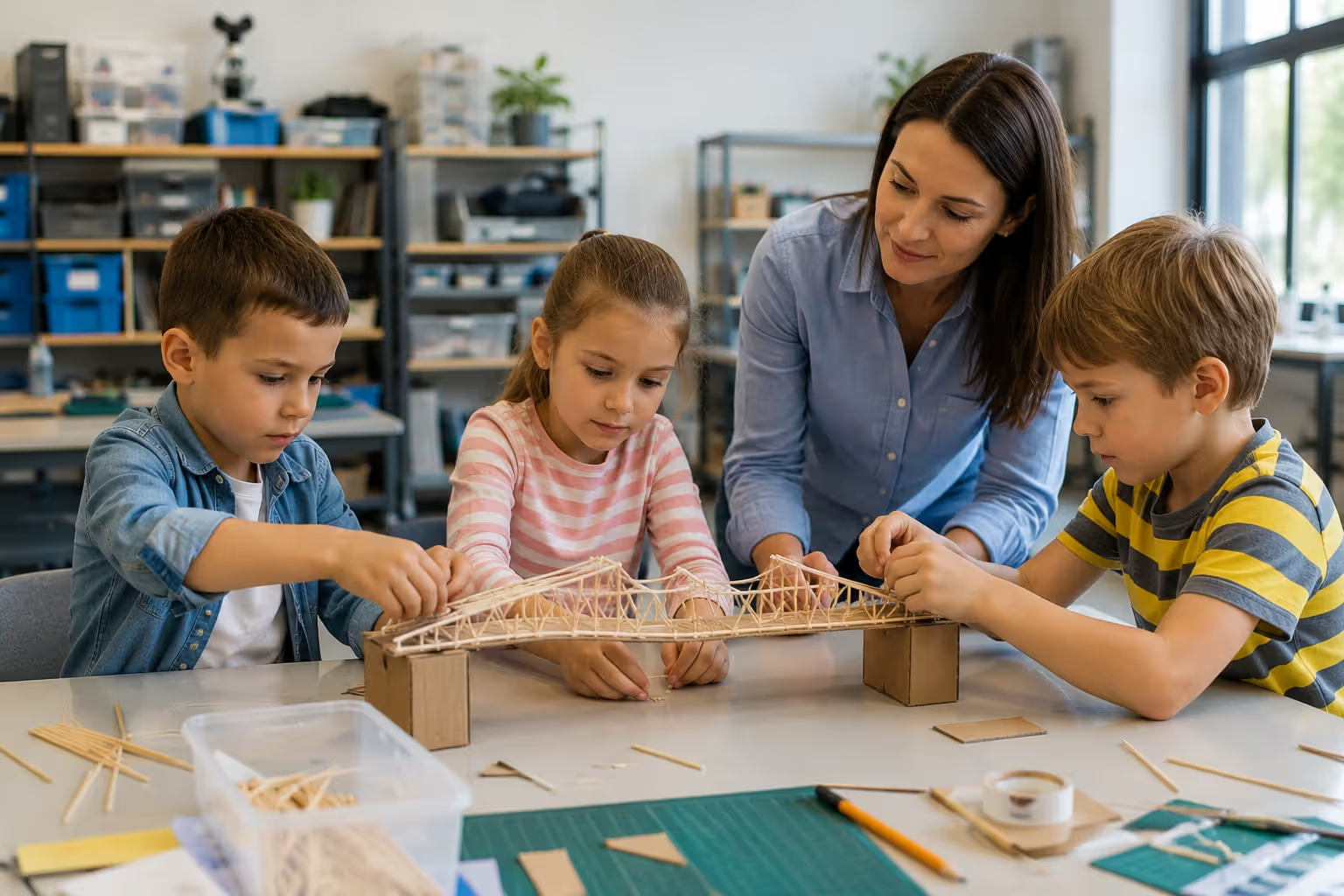
Engineering activities in early years focus on design challenges with simple materials. Kids might build bridges from popsicle sticks, create structures that can hold weight, design ramps for toy cars, or construct towers using only tape and newspaper.
The projects intentionally avoid single "correct" solutions. Ten children given the same challenge will produce ten different designs. Instructors encourage this divergence rather than steering everyone toward one answer.
One common mistake parents make is helping too much during these projects. The struggle is the lesson. A child spending fifteen minutes trying to attach two cardboard pieces is learning more than if you show them the "right" way in thirty seconds.
Technology and Math Exploration
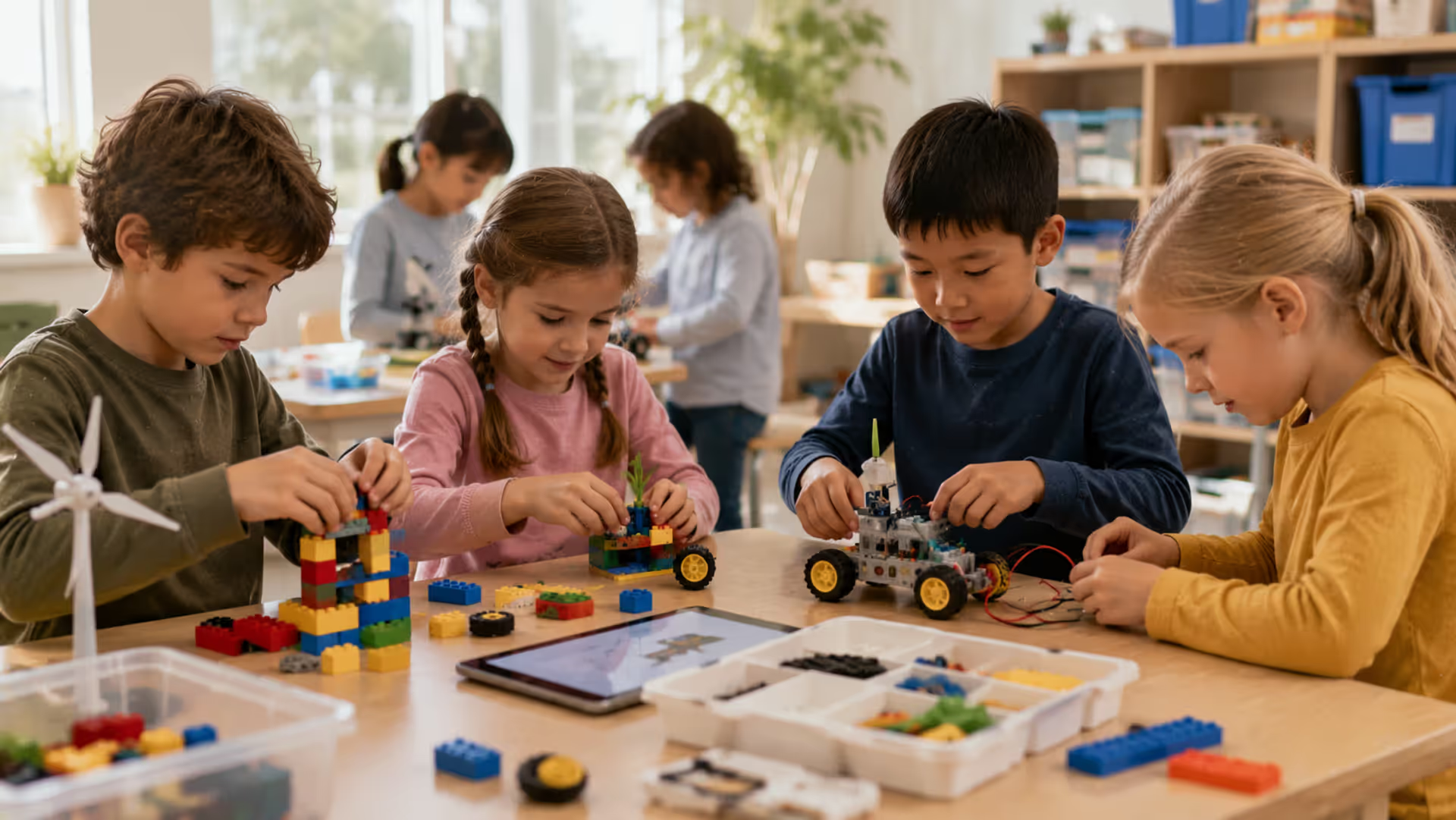
Technology for preschoolers doesn't mean coding languages. It means age-appropriate tools and concepts. Children might use simple robots that respond to button commands, explore cause-and-effect with basic circuits and lights, or document their experiments with tablets or cameras.
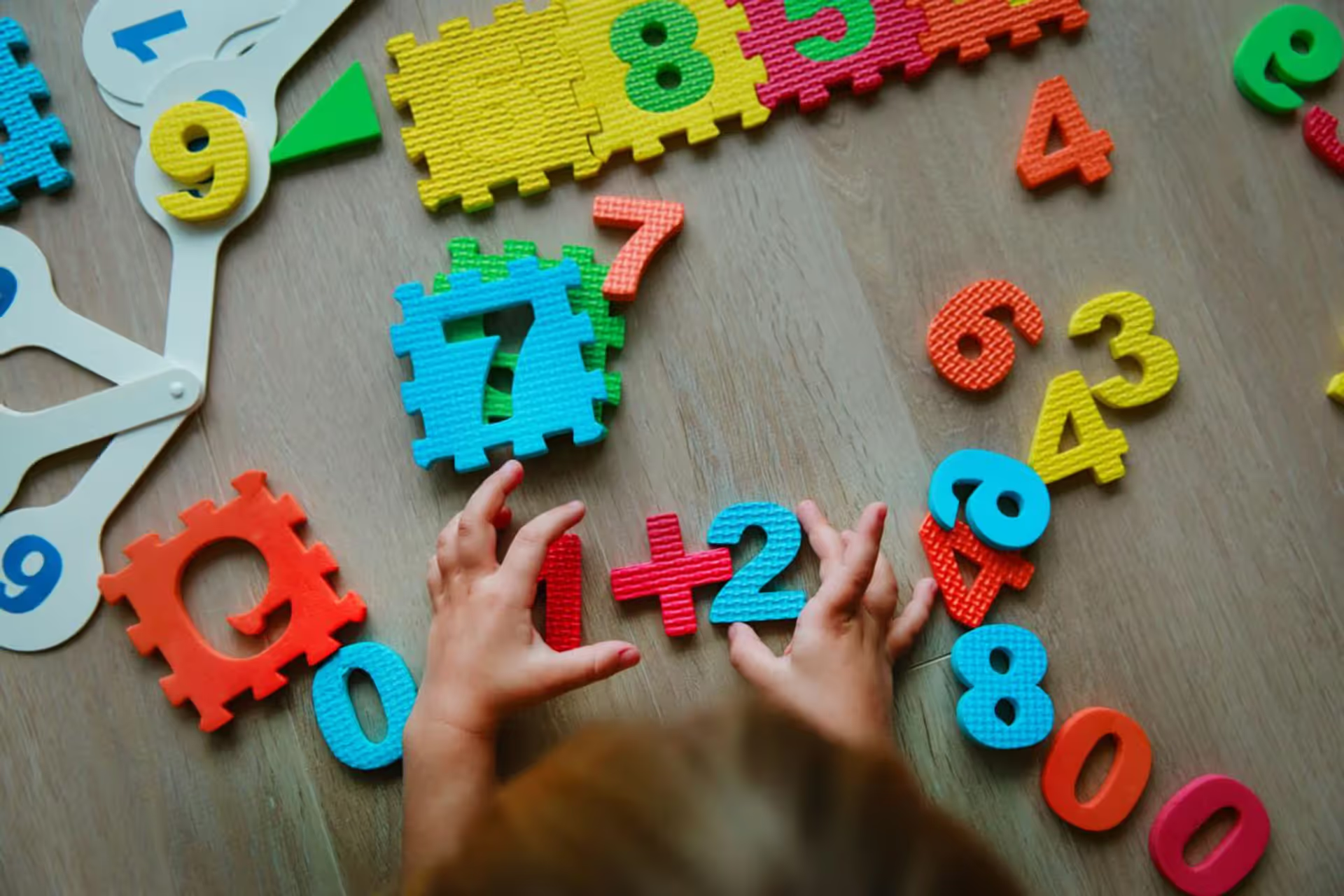
Math exploration happens through pattern recognition, sorting activities, measurement with non-standard units (like counting how many blocks tall something is), and spatial reasoning through puzzles and building.
The technology integration stays minimal at this age. Screen time is limited, and when tech is used, it's interactive rather than passive. A robot that moves when they press buttons teaches sequencing. A tablet showing pictures of their plant's growth over time teaches documentation.
Hands-On Experiments and Building Activities
Hands-on science experiments for young children emphasize sensory learning and immediate results. Popular activities include:
- Making volcanoes with baking soda and vinegar
- Creating slime or oobleck to explore material properties
- Building simple circuits with batteries and bulbs
- Constructing catapults from craft sticks
- Designing boats from foil and testing weight capacity
- Exploring magnetism with various objects
- Growing bacteria cultures (with proper safety protocols)
- Building structures with marshmallows and toothpicks
The experiments prioritize safety and age-appropriateness. Preschoolers aren't handling chemicals or sharp tools. They're exploring concepts through materials that won't cause harm even if used incorrectly.
Building activities rotate between structured challenges and free exploration. Structured time might involve following steps to build a specific model. Free exploration gives kids a pile of LEGOs, cardboard, or other materials with no instructions—just an invitation to create.
How to Choose the Right STEM Camp
Not all STEM camps are created equal. Some are glorified babysitting with science-themed decorations. Others provide genuine learning experiences. Here's what separates them.
Instructor qualifications matter more than fancy equipment. Look for staff with early childhood education backgrounds, not just subject expertise. A mechanical engineer might know physics, but they might not know how to engage a four-year-old. Ask about staff training in child development and age-appropriate pedagogy.
Curriculum depth shows in the details. Quality programs have clear learning objectives for each activity, not just a list of fun experiments. They should explain how activities build on each other throughout the week and connect to early STEM concepts children need.
Class size directly impacts experience quality. For preschoolers, ratios should be no more than 8:1 (children to adults). Early elementary can stretch to 10:1 or 12:1. Larger groups mean less individual attention and more time managing behavior instead of facilitating discovery.
Safety protocols deserve scrutiny. Ask about:
- Background checks for all staff
- Allergy management procedures
- Emergency response plans
- Supervision during transitions and breaks
- Material safety standards
Age-appropriateness isn't just about difficulty level. It's about attention span, physical capabilities, and social-emotional needs. A camp that mixes three-year-olds with seven-year-olds will struggle to meet anyone's needs effectively.
Location and logistics affect the experience. Consider distance, drop-off procedures, whether you need to pack lunch, and what happens if your child needs early pickup. Outdoor space for breaks matters—kids this age can't sit still for hours.
Cost varies wildly. Expect to pay anywhere from $150 to $500+ per week depending on location, duration, and provider prestige. Higher cost doesn't guarantee better quality, but extremely cheap programs often cut corners on staff ratios or materials.
Red flags to watch for:
- Vague descriptions of activities
- No information about instructor qualifications
- Large class sizes with minimal staff
- Heavy emphasis on "keeping kids busy" rather than learning
- No trial class or observation option
- Inflexible refund policies
The simpler option usually wins here. A well-run program with basic materials and great teachers beats a fancy facility with elaborate equipment and overwhelmed staff.
STEM Activities You Can Do at Home
You don't need a formal camp to introduce math and science at home. Most STEM exploration for preschoolers happens with household items and a bit of creativity.
Kitchen science offers endless opportunities. Baking teaches measurement and chemical reactions. Dissolving sugar in water at different temperatures shows how conditions affect outcomes. Freezing liquids in various containers explores states of matter.
Building challenges work with whatever you have:
- Cardboard boxes become structures, vehicles, or marble runs
- Toilet paper tubes transform into ramps and tunnels
- Plastic containers stack, nest, and measure
- Blankets and furniture create engineering problems (fort building)
Nature exploration brings STEM outside. Collect leaves and sort by characteristics. Watch clouds and track weather patterns. Plant seeds in clear containers to observe root growth. Build habitats for bugs you find.
Math concepts hide in daily routines. Cooking involves fractions and measurements. Setting the table teaches one-to-one correspondence. Organizing toys by category introduces classification. Comparing sizes and quantities happens naturally during play.

Author: Hannah Whitaker;
Source: raynet-merseyside.net
Science activities for young children at home don't require kits or special purchases. Try:
- Sink or float predictions with bath toys
- Shadow experiments with flashlights
- Magnet exploration with household items
- Color mixing with food coloring and water
- Ramp experiments with toy cars and books
- Bubble solution making and testing different wands
The key is following your child's interests. If they're obsessed with dinosaurs, explore paleontology concepts. If they love vehicles, investigate how wheels work and design ramps.
Document discoveries together. Take photos, draw pictures, or keep a simple science journal. This teaches observation skills and creates a record they can revisit.
One mistake parents make is over-explaining. Young children learn more from exploration than lecture. Instead of telling them why something happens, ask what they notice and what they think might happen if they change something.
Comparison of STEM Camp Types
| Camp Type | Age Suitability | Typical Cost Range | Time Commitment | Best For |
| In-Person Day Camp | 4-8 years | $200-400/week | Half or full day, 5 days | Working parents, social learners, hands-on exploration |
| Week-Long Residential | 7+ years (rare for younger) | $500-1000+/week | Overnight, 5-7 days | Older elementary, independence building, intensive experience |
| Virtual/Online | 6-8 years | $50-150/week | 1-2 hours daily | Remote areas, budget-conscious, supplementary learning |
| Parent-Child Workshops | 3-7 years | $30-75/session | Single 2-3 hour session | Hesitant children, learning techniques, bonding activity |
Author: Hannah Whitaker;
Source: raynet-merseyside.net
FAQ: STEM Camp Questions Answered
STEM camps offer young children structured opportunities to explore science, technology, engineering, and math concepts through play-based learning. But they're not the only path to early STEM literacy.
The best approach combines formal programs with home exploration. Camps provide social learning, expert facilitation, and access to materials you might not have at home. Home activities offer flexibility, personalization to your child's interests, and integration into daily life.
Watch your child's response to STEM activities. Some kids light up during hands-on experiments and beg for more. Others prefer different types of learning. That's fine. Early exposure plants seeds, but forcing STEM on an uninterested child won't create lasting enthusiasm.
If you're considering a camp, start with a short program—a weekend workshop or single week—before committing to multiple sessions. This lets you evaluate whether the format works for your family and whether your child enjoys the experience.
Remember that at this age, the goal isn't creating future scientists or engineers. It's building curiosity, comfort with experimentation, and the understanding that problems have multiple solutions. Those skills transfer across all learning domains and life situations.
Whether through camps or home activities, early STEM exploration gives children tools for thinking critically and approaching challenges confidently. And that's worth far more than memorizing facts or mastering specific skills at age five.