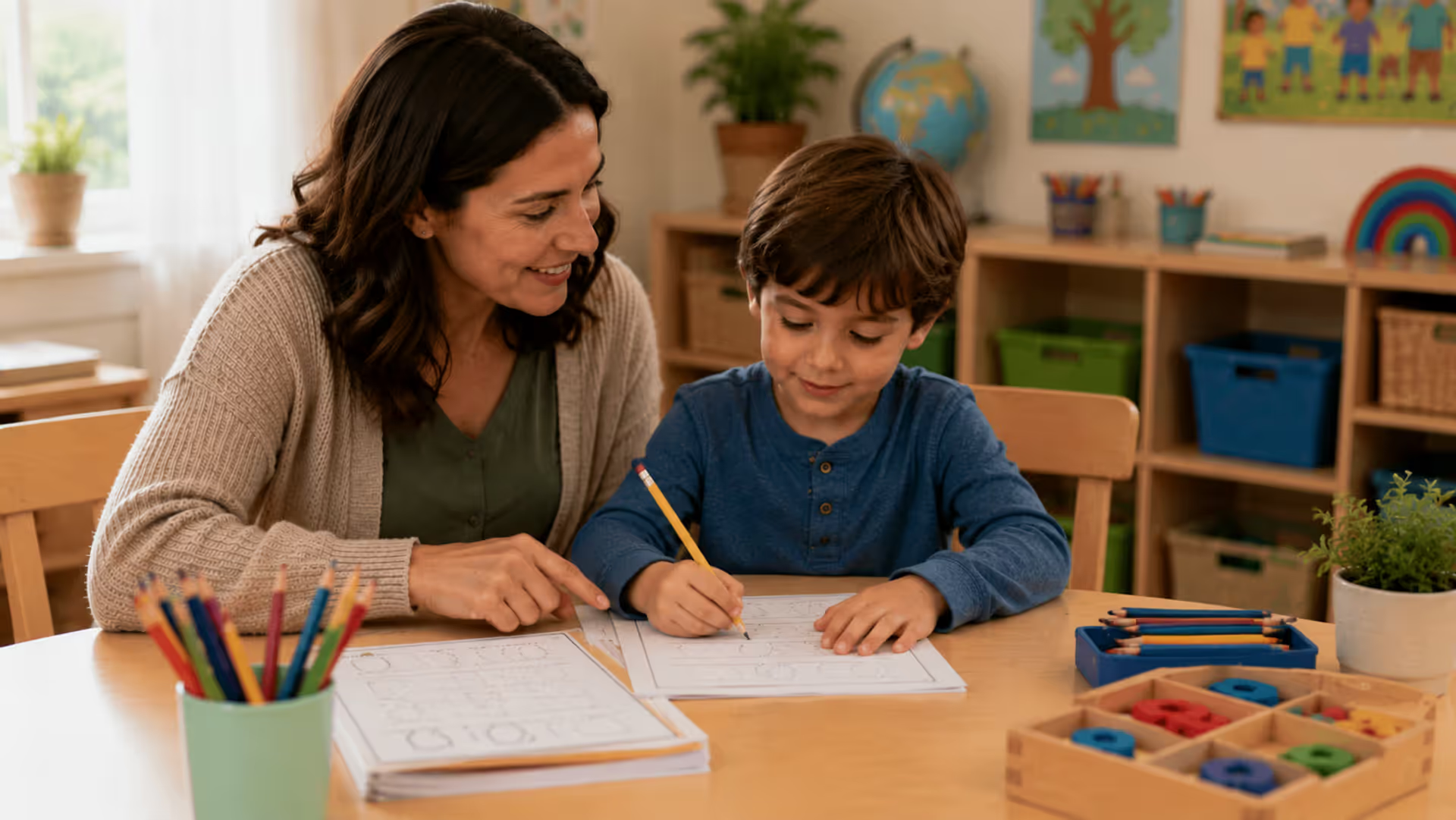

Preschool child having emotional meltdown while calm adult provides support
Challenging Behaviors in Preschool Guide

Content
When your three-year-old drops to the floor screaming in the cereal aisle, or your preschooler bites another child during circle time, it's easy to feel like you're doing something wrong. You're not. Challenging behaviors in preschool are incredibly common—and they're often a sign that your child is struggling to communicate something they don't yet have the words or skills to express. Understanding what's behind these behaviors and how to respond calmly can transform difficult moments into opportunities for growth.
What Are Challenging Behaviors in Young Children?
Challenging behaviors are actions that disrupt learning, harm relationships, or put a child or others at risk. They go beyond typical boundary-testing and happen frequently enough to interfere with a child's ability to participate in daily activities.
Common examples include hitting, biting, kicking, prolonged tantrums, property destruction, refusal to follow instructions, and running away from caregivers. But here's the tricky part: what's challenging at one age might be completely normal at another.
A two-year-old who melts down when you turn off the TV? Typical. A five-year-old who throws furniture when frustrated? That warrants a closer look.
The key distinction isn't just what the behavior looks like—it's how often it happens, how intense it gets, and whether the child can recover and learn from the experience. Most preschoolers will hit a peer once or twice as they learn social rules. A child who hits multiple times daily despite consistent guidance is showing a pattern that needs support.
Age matters here. Two-year-olds are just beginning to understand cause and effect. Three-year-olds test limits constantly as part of normal development. Four-year-olds can usually use words to express frustration, though they still need lots of coaching. By five, most children have basic self-regulation skills, even if they don't use them consistently.
Understanding difficult behavior in children starts with recognizing that the behavior is communication. Your child isn't giving you a hard time—they're having a hard time.
Why Preschoolers Display Difficult Behaviors
The simple answer? Their brains aren't finished yet.
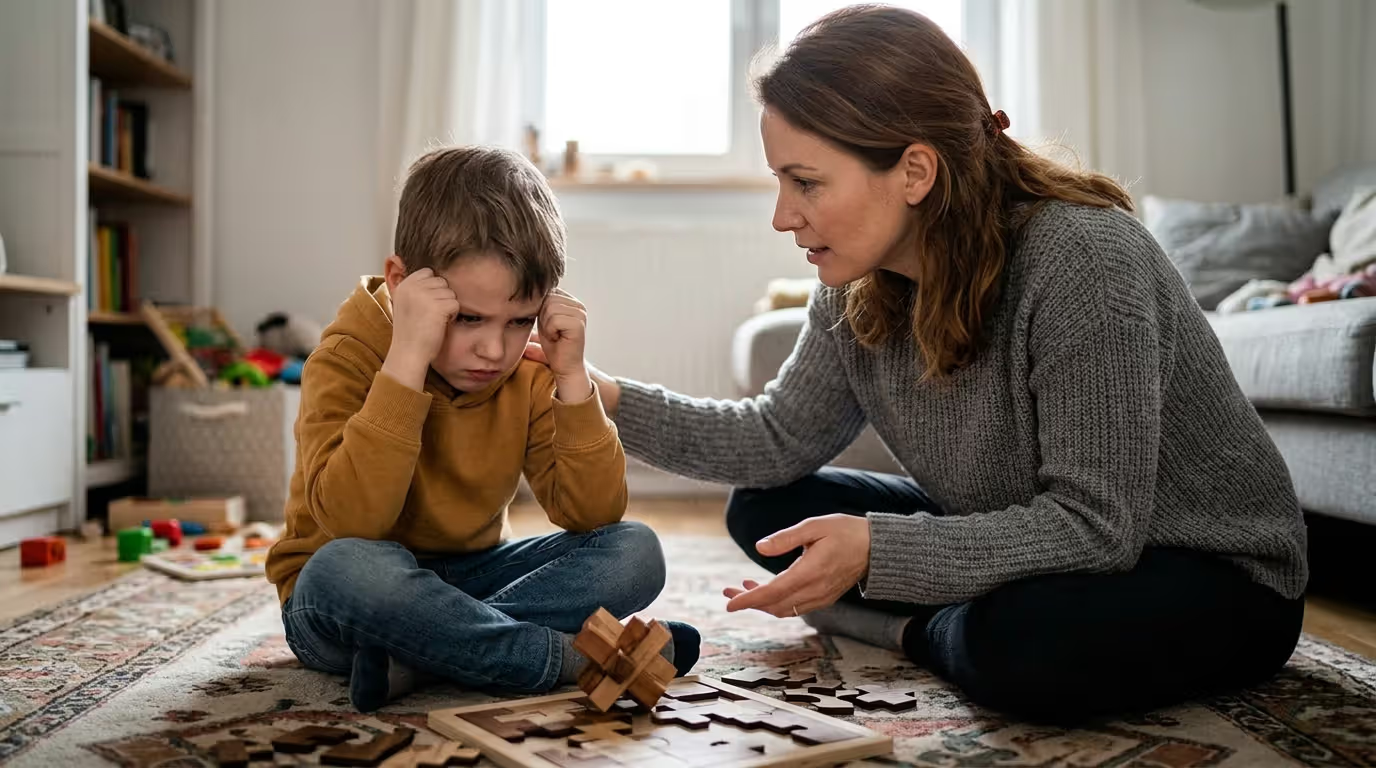
Author: Hannah Whitaker;
Source: raynet-merseyside.net
Preschoolers live in a world where they feel big emotions but lack the tools to manage them. They want independence but still need constant help. They're learning hundreds of new skills simultaneously while navigating complex social rules they barely understand.
Several factors converge to create the perfect storm for behavioral concerns in toddlers and preschoolers:
Limited language skills mean frustration builds quickly. A three-year-old who can't find the words to say "I wanted the red cup, not the blue one" might throw the cup instead.
Underdeveloped impulse control means they act before thinking. The brain regions responsible for "stop and think" won't fully mature until their mid-twenties. Preschoolers are operating with the earliest version of this system.
Big feelings in a small body overwhelm them. When a four-year-old says losing at a game feels like "the worst thing ever," they genuinely mean it. Their emotional experience is real and intense.
Unmet physical needs create behavioral chaos. Hunger, tiredness, overstimulation, and illness all lower a child's ability to cope. The pattern I see most often is challenging behavior spiking right before lunch or at the end of a long day.
The Role of Brain Development in Tantrums and Outbursts
Why children have tantrums comes down to brain architecture.
The prefrontal cortex—your brain's CEO—develops slowly throughout childhood. This region handles planning, decision-making, and emotional regulation. In preschoolers, it's barely online.
Meanwhile, the amygdala—the brain's alarm system—is fully operational and hypersensitive. When a preschooler perceives a threat (which might be "Mom said no cookies"), their amygdala fires up the fight-or-flight response before the prefrontal cortex can step in with reason.
This isn't defiance. It's neurobiology.
During a tantrum, your child literally can't access their logical brain. The emotional brain has taken over completely. That's why reasoning with a screaming preschooler doesn't work—they're not in a state where they can process logic.
Tantrums typically peak between ages two and three, then gradually decrease as language and self-regulation skills improve. But stress, transitions, and developmental leaps can trigger regression at any age.
Common Triggers for Behavioral Concerns in Toddlers
Certain situations predictably spark challenging behaviors:
Transitions between activities or locations. Moving from playtime to cleanup, or from home to preschool, requires mental flexibility that young children are still developing.
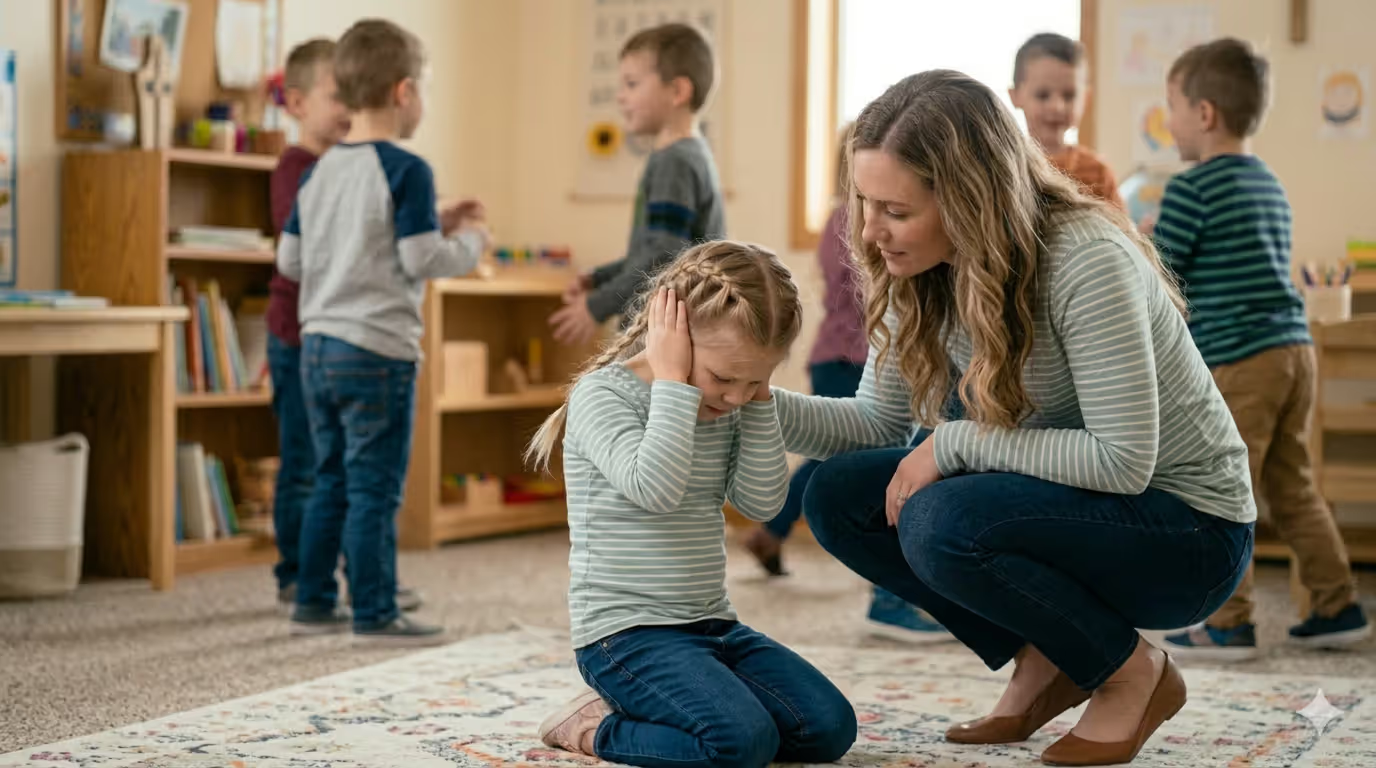
Overstimulation from noise, crowds, or too many choices overwhelms their sensory systems. A child who's fine at home might fall apart at a birthday party.
Lack of control in their environment. Preschoolers are developing autonomy and want some say in their lives. When adults make every decision, frustration builds.
Unclear expectations leave children guessing what's okay. Inconsistent rules across settings or caregivers create confusion and anxiety.
Peer conflict during play. Sharing, turn-taking, and negotiating are advanced skills. Most preschoolers need years of practice and coaching.
Changes in routine disrupt their sense of security. A new sibling, moving houses, or starting school can trigger behavioral regression.
Author: Hannah Whitaker;
Source: raynet-merseyside.net
Recognizing When Behavior Requires Intervention
Here's what keeps parents up at night: Is this normal, or should I be worried?
Most challenging behaviors in preschool fall within typical development. But some patterns do signal a need for professional support.
Red flags include behaviors that:
- Happen multiple times daily despite consistent intervention
- Escalate in intensity over time rather than improving
- Cause injury to the child, peers, or adults regularly
- Persist beyond the age when they typically resolve
- Interfere significantly with learning or relationships
- Seem disconnected from any identifiable trigger
- Don't respond at all to positive behavior support strategies
The frequency and intensity matter more than the behavior itself. One aggressive incident? Normal. Daily aggression that's getting worse? Time to seek help.
Context matters too. A child who hits only during transitions might need support with change. A child who hits randomly throughout the day might be dealing with something deeper—sensory issues, communication delays, anxiety, or trauma.
| Age Range | Typical Challenging Behavior | Behavior That May Need Support |
| 2–3 years | Brief tantrums (5–15 minutes) when frustrated; occasional hitting or biting during conflict; difficulty sharing; saying "no" frequently | Tantrums lasting 30+ minutes multiple times daily; aggressive behavior that causes injury; complete inability to calm with support; severe separation anxiety that doesn't improve |
| 3–4 years | Testing limits consistently; occasional defiance; some physical aggression during high emotion; difficulty waiting for turns | Frequent intentional harm to others or animals; destroying property regularly; extreme reactions to minor changes; persistent inability to follow any instructions |
| 4–5 years | Arguing about rules; occasional emotional outbursts; some difficulty managing disappointment; testing boundaries with language | Daily aggressive incidents; complete lack of remorse after hurting others; inability to play cooperatively with any peers; extreme withdrawal or fearfulness |
Trust your instincts. If something feels off, it's worth discussing with your pediatrician even if the behavior doesn't fit neatly into "concerning" categories.
Positive Behavior Support Strategies That Work
Managing challenging behavior in early years isn't about controlling children—it's about teaching skills.
Positive behavior support starts before problems occur. It focuses on creating environments where children can succeed, teaching them what to do (not just what not to do), and reinforcing progress.
Proactive strategies prevent many challenges:
Structure the environment for success. Put tempting items out of reach. Create clear, labeled spaces for different activities. Use visual schedules so children know what's coming next.
Build in choices throughout the day. "Do you want to wear the red shirt or the blue shirt?" gives autonomy within limits. Even small choices help children feel some control.
Catch them being good. Describe what you see: "You used gentle hands with the baby" or "You waited patiently for your turn." Specific praise teaches more than generic "good job."
Relationship-based practices form the foundation:
Connection before correction works. When a child feels safe and valued, they're more receptive to guidance. Spend one-on-one time daily doing something your child enjoys.
Get down on their level physically during interactions. Eye contact and proximity communicate respect and attention.
Validate feelings even when you can't allow the behavior. "You're really angry that we have to leave the park. It's hard to stop when you're having fun. And it's still time to go."
Setting Limits That Young Children Understand
Limits need to be clear, consistent, and developmentally appropriate.
State what children should do, not just what they shouldn't. "Use walking feet inside" works better than "don't run." Young brains process positive instructions more easily.
Keep rules simple and few. Three to five core rules are plenty for preschoolers. More than that becomes overwhelming.
Explain the "why" in simple terms. "We use gentle touches so everyone stays safe" gives meaning to the rule. But keep explanations brief—one sentence is usually enough for preschoolers.
Follow through every time. If you say "one more turn, then we leave," you must leave after one more turn. Inconsistency teaches children that your words don't mean much.
The simpler option usually wins here. Complicated behavior charts and elaborate reward systems often confuse preschoolers more than they help. Natural consequences and simple, immediate feedback work best.
Teaching Emotional Regulation Through Daily Routines
Emotional regulation strategies need to be taught explicitly and practiced when children are calm.

Author: Hannah Whitaker;
Source: raynet-merseyside.net
Name emotions throughout the day. "You look frustrated that the puzzle piece won't fit" or "I can see you're excited about going to the park." This builds emotional vocabulary.
Model your own regulation. Say out loud: "I'm feeling frustrated that the car won't start. I'm going to take three deep breaths to calm down." Children learn more from what we do than what we say.
Practice calming strategies during neutral moments. Teach belly breathing, counting to five, squeezing hands, or hugging a stuffed animal when everyone's happy. Then these tools are available during tough moments.
Create a calm-down space with soft items, books, and sensory tools. This isn't a timeout or punishment—it's a place to reset. Go there together sometimes.
Build regulation into routines. A brief breathing exercise before transitions, a calming song before naptime, or a check-in about feelings at mealtimes all reinforce these skills.
How to Respond During Challenging Moments
When your preschooler is melting down, your response matters more than you might think.
De-escalation strategies for children start with your own regulation. If you're escalated, you can't help them calm down. Take a breath. Lower your voice. Slow your movements.
Safety comes first. If a child is hurting themselves or others, intervene physically with the minimum necessary force. Move other children away. Remove dangerous objects. Block hits calmly without lecturing.
Use fewer words. During high emotion, long explanations don't work. Simple, calm phrases like "I'm here" or "You're safe" are enough. Save the teaching conversation for after everyone's calm.
Stay nearby but give space if the child isn't in danger. Your calm presence helps, but hovering or trying to force interaction can escalate things.
Don't take it personally. When a four-year-old screams "I hate you," they're expressing big feelings, not truth. Your job is to stay regulated so they can borrow your calm.
What not to do: Don't yell back, threaten, shame, or physically punish. These approaches might stop the behavior temporarily through fear, but they don't teach regulation skills and they damage your relationship.
A step-by-step response framework:
- Ensure safety for everyone
- Regulate yourself first (breathe, lower your shoulders, soften your face)
- Move close but not crowding
- Use a calm, low voice with minimal words
- Wait for the storm to pass—don't try to reason during the peak
- Offer comfort when the child is ready (some kids want hugs immediately, others need time)
- Later, when everyone's calm, briefly revisit what happened and practice what to do next time
The whole process might take five minutes or thirty. It varies.
Challenging behavior is a child's way of showing us they need help developing a skill they don't yet have. Our job isn't to punish the behavior away—it's to figure out what skill is missing and teach it with patience and compassion. When we respond to difficult behavior with curiosity instead of frustration, we become partners in our children's growth rather than adversaries in a power struggle.
— Chen Rebecca
Building a Behavior Guidance Plan for Your Preschooler
Behavior guidance in preschool works best when everyone's on the same page.
Start with observation and tracking. For one to two weeks, notice when challenging behaviors happen. What time of day? What was happening right before? Who was present? What did you try, and what happened next?
Patterns emerge quickly. You might discover that aggression spikes when your child is hungry, or that tantrums happen mainly during transitions.
Collaborate with educators if your child attends preschool. Share what you're seeing at home. Ask what they're observing in the classroom. Discuss strategies that work in each setting.
Consistency doesn't mean everyone does exactly the same thing—it means everyone responds to behavior with the same underlying principles and similar expectations.
Create a simple plan with three components:
- Preventive strategies (what you'll do to set your child up for success)
- Teaching strategies (what skills you'll actively work on)
- Response strategies (how you'll handle challenging moments when they occur)
Write it down. Share it with everyone who cares for your child. Review it monthly and adjust based on what's working.
When to involve specialists:
If you've been consistently implementing positive behavior support strategies for two to three months without improvement, it's time for professional help. Start with your pediatrician, who can rule out medical issues and refer you to appropriate specialists.
Behavior intervention in early years might involve:
- A developmental pediatrician to assess for developmental delays
- A child psychologist for behavioral support
- An occupational therapist if sensory issues are involved
- A speech therapist if communication challenges contribute
- An early intervention program for comprehensive support
Getting help isn't a failure. It's giving your child access to expertise that can make a real difference.
Author: Hannah Whitaker;
Source: raynet-merseyside.net
FAQ: Challenging Behavior in Early Years Questions Answered
Challenging behaviors in preschool test every parent and teacher. They're exhausting, sometimes embarrassing, and can make you question everything you're doing.
But here's the truth: these behaviors are temporary. With patient, consistent guidance, most children develop the regulation skills they need. Your calm, compassionate response during difficult moments teaches your child that they're safe even when they're struggling—and that's a lesson that lasts far beyond the preschool years.
Start small. Pick one or two strategies from this guide and implement them consistently for a few weeks. Notice what changes. Adjust as needed. Celebrate small wins, like a tantrum that lasted five minutes instead of fifteen, or a child who used words instead of hitting even once.
You don't have to be perfect. You just have to be present, patient, and willing to learn alongside your child. The skills you're teaching now—emotional regulation, problem-solving, communication—form the foundation for everything that comes next.
And on the really hard days? Remember that challenging behavior means your child is learning and growing, even when it doesn't feel that way. You're doing better than you think.