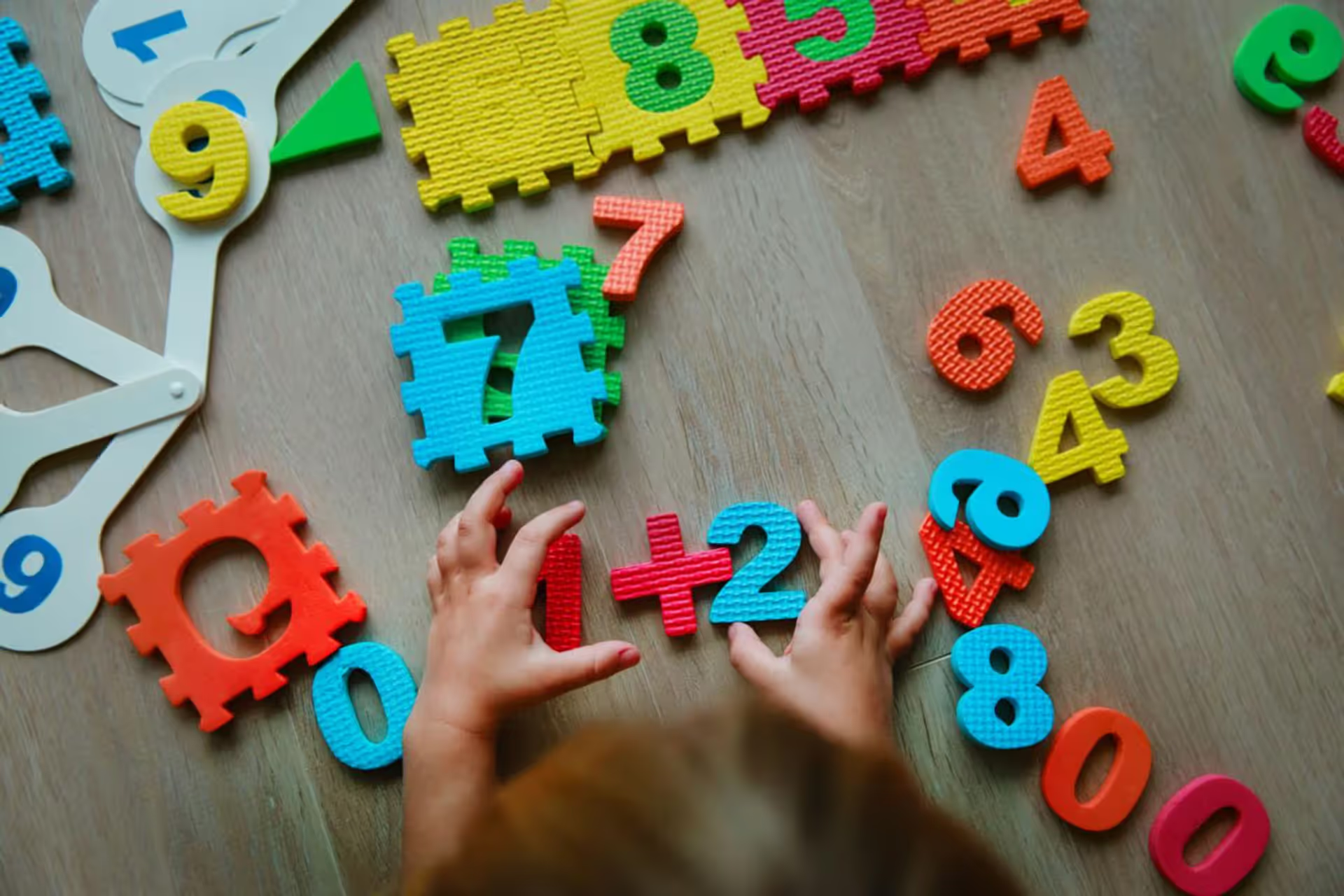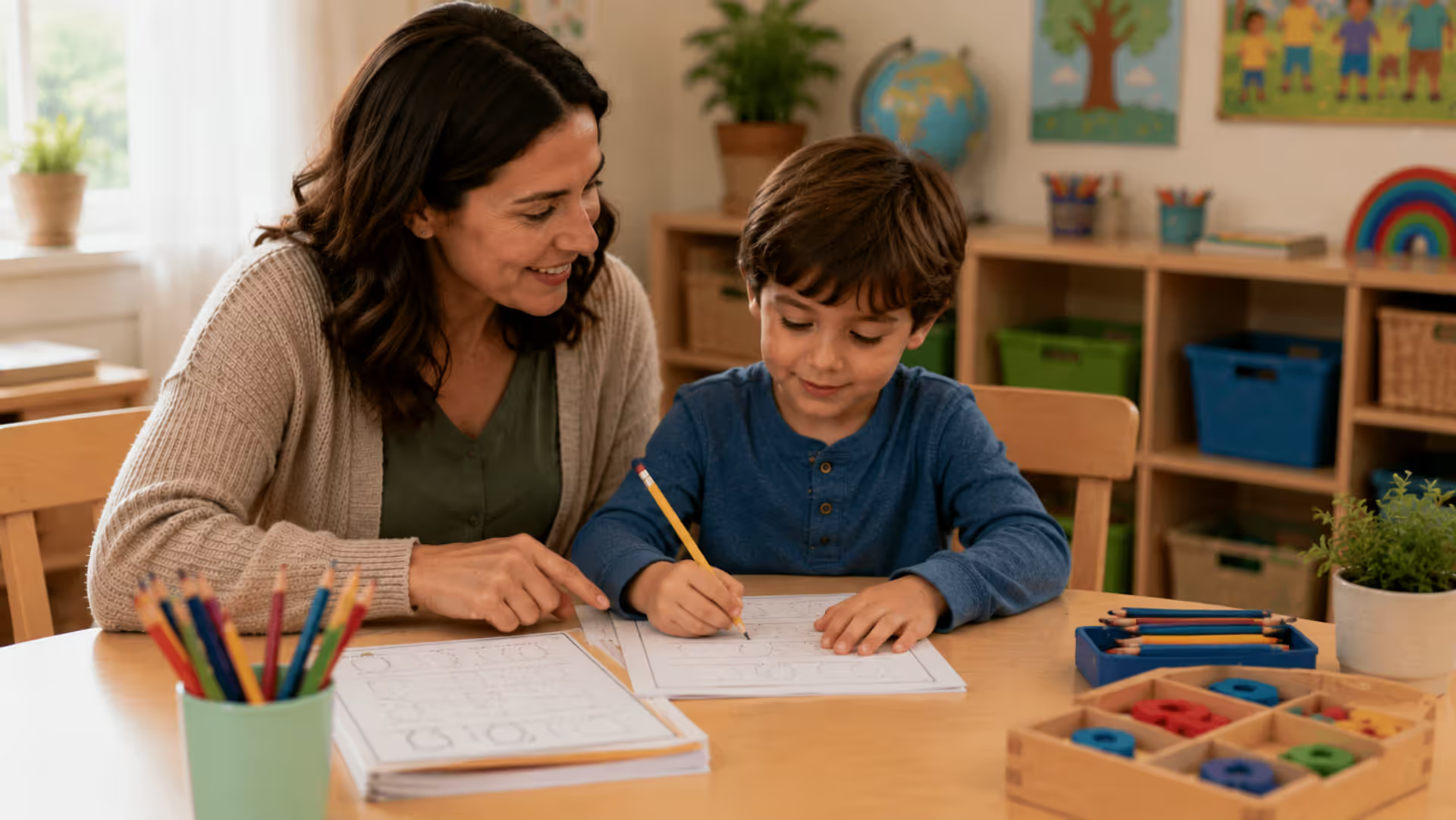
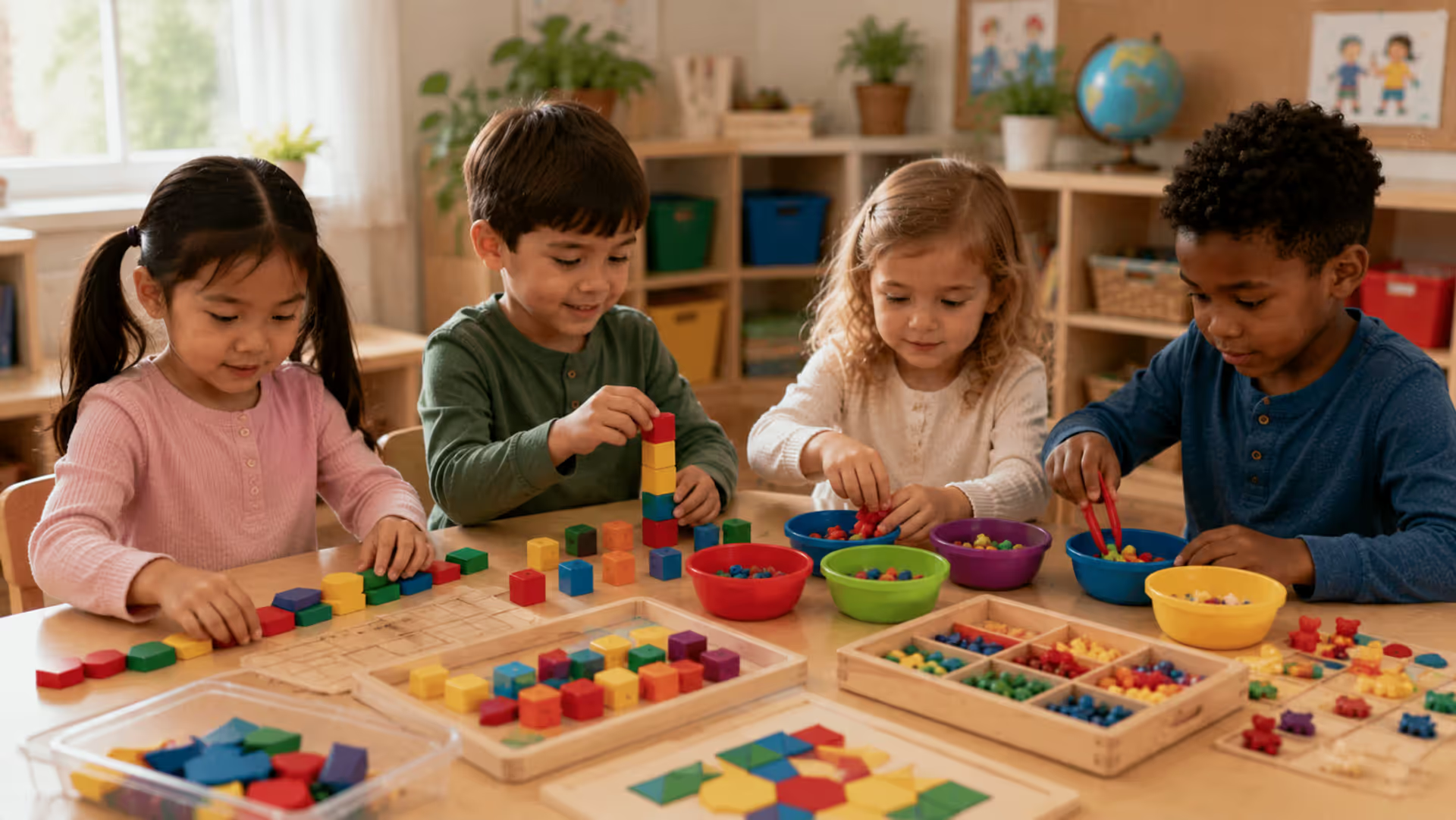
Preschool children learning early math skills with counting blocks and sorting activities
Preschool Math Curriculum Guide for Ages 3 to 5

Content
Teaching math to preschoolers isn't about drilling numbers or pushing flashcards. It's about helping little minds discover patterns, compare sizes, and make sense of the world around them. A well-designed preschool math curriculum builds confidence through play, turns everyday moments into learning opportunities, and sets the stage for years of mathematical thinking. Whether you're a parent looking to support your child at home or an educator designing classroom activities, understanding what math looks like for three- to five-year-olds changes everything.
What Math Skills Should Preschoolers Learn?
Preschool math isn't one thing. It's a collection of interconnected skills that develop at different rates.
Most early numeracy activities fall into five core areas: counting and number recognition, shapes and spatial reasoning, patterns and sorting, measurement and comparison, and basic problem-solving. These aren't separate subjects—they overlap constantly. When a child sorts blocks by color, they're also comparing sizes. When they count crackers at snack time, they're building number sense.
The goal isn't mastery. It's exposure and comfort.
Research from the National Association for the Education of Young Children shows that children who engage with diverse math concepts for preschoolers—not just counting—show stronger mathematical thinking later. They're better at reasoning, estimating, and tackling unfamiliar problems.
Don't expect your three-year-old to count to 100 or your four-year-old to add numbers on paper. That's not developmentally appropriate. Instead, focus on building intuition. Can they tell you which pile has more? Do they notice patterns in their environment? Can they describe where something is using words like "under" or "next to"?
These skills matter more than rote memorization.
Core Components of an Effective Preschool Math Curriculum
A strong curriculum doesn't rush. It revisits concepts in different contexts and lets children explore at their own pace.
Counting and Number Recognition
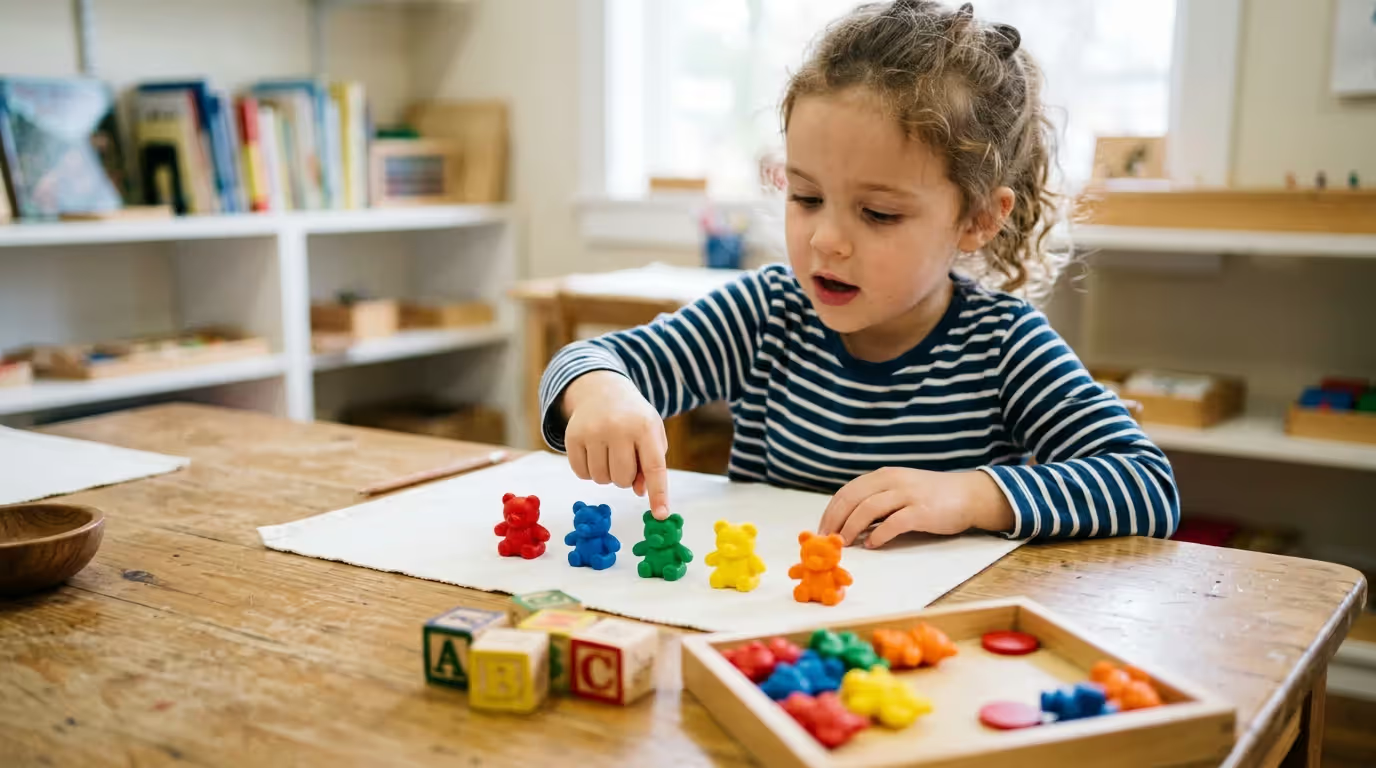
Counting skills in preschool begin with rote counting—reciting numbers in order—but that's just the start. True number sense development means understanding that "five" represents a quantity, not just a word in a sequence.
Author: Daniel Merce;
Source: raynet-merseyside.net
Three-year-olds typically count to ten, though they might skip numbers or mix up the order. That's normal. By age five, most children count to twenty or beyond and can count objects accurately by touching each one.
One-to-one correspondence is the breakthrough moment. It's when a child points to each toy and says one number per item, understanding that the last number tells "how many" total. This usually clicks around age four.
Here's what to practice:
- Count everything. Stairs, crackers, toy cars, fingers.
- Ask "how many" constantly. Make it a game.
- Use fingers to represent numbers. It's a built-in manipulative.
- Play with dice and dominos to recognize quantities without counting.
- Write numbers in sand, shaving cream, or with sidewalk chalk.
Don't worry if your child counts the same group twice and gets different answers. They're building the skill. Accuracy comes with practice.
Shape and Spatial Awareness
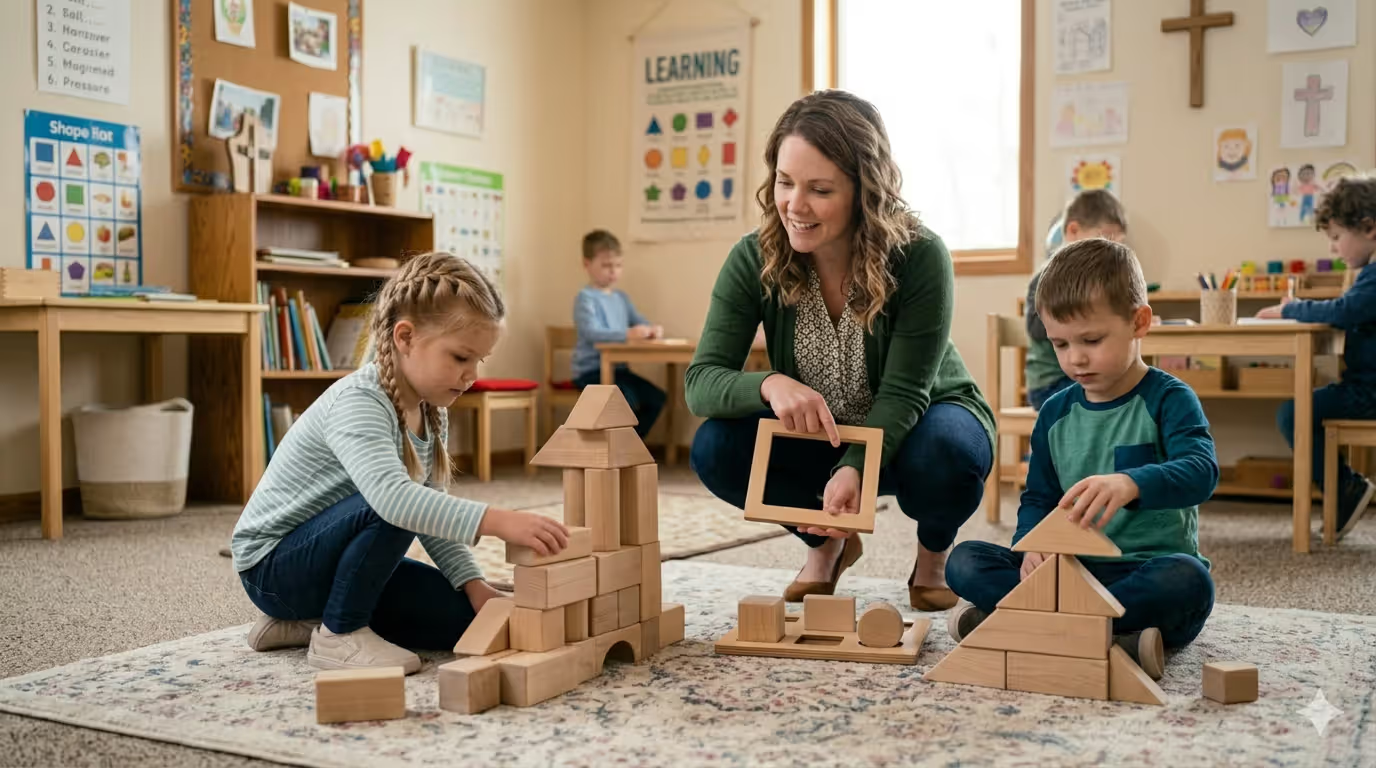
Shape recognition in preschool goes beyond naming circles and squares. It's about understanding properties: corners, sides, curves. It's about seeing shapes in the environment and combining them to create new forms.
Author: Daniel Merce;
Source: raynet-merseyside.net
Spatial awareness—understanding where things are in relation to each other—is just as important. Words like "above," "below," "inside," "behind," and "between" help children navigate space and later understand geometry and measurement.
Three-year-olds can usually identify basic shapes: circle, square, triangle. By five, they're ready for rectangles, ovals, and even simple three-dimensional shapes like spheres and cubes.
Activities that work:
- Shape hunts around the house or neighborhood.
- Building with blocks to see how shapes fit together.
- Puzzles that require spatial reasoning.
- Drawing shapes and talking about their features.
- Playing with tangrams or pattern blocks.
The pattern I see most often is parents teaching shape names but skipping the "why." Talk about what makes a triangle a triangle. Let kids argue about whether a diamond is just a tilted square. That's mathematical thinking.
Patterns and Sorting
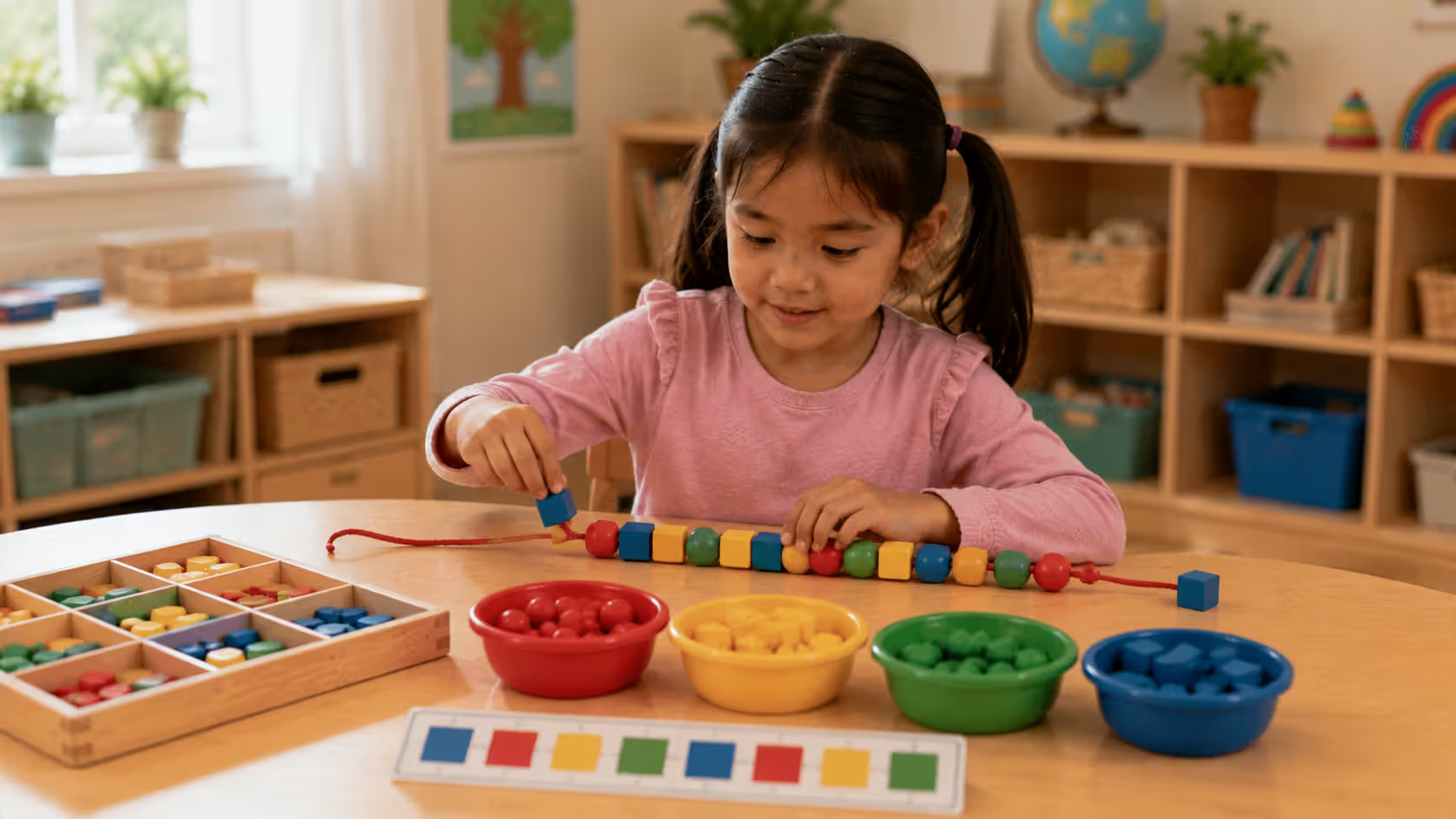
Patterns in preschool math teach prediction and logical thinking. When a child can continue a pattern—red, blue, red, blue, red, ___—they're using the same reasoning they'll need for algebra years later.
Sorting and classifying activities help children organize information and notice attributes. Sorting isn't just by color. It's by size, shape, texture, function, or any characteristic a child notices.
Start simple. AB patterns (red, blue, red, blue) come first. Then try ABB patterns (red, blue, blue, red, blue, blue) or ABC patterns. Let children create their own patterns with sounds, movements, or objects.
For sorting:
- Give children collections to organize: buttons, shells, toy animals.
- Ask them to explain their sorting rule. Sometimes it's surprising.
- Re-sort the same items a different way.
- Play "which doesn't belong" games.
- Use real objects before moving to pictures or worksheets.
Children who get comfortable with patterns notice them everywhere—in music, in daily routines, in nature. That's the goal.
Measurement and Comparison
Measurement activities for toddlers and preschoolers aren't about inches or centimeters. They're about direct comparison: longer/shorter, heavier/lighter, more/less, full/empty.
Young children learn measurement through experience. They pour water between containers and discover capacity. They line up toys and see which is taller. They hold two objects and feel which weighs more.
Comparison words are the foundation. Before a child can measure with a ruler, they need to understand what "longer" means.
Try these:
- Compare everything. "Which tower is taller?" "Who has more crackers?"
- Use non-standard units. "This book is five blocks long."
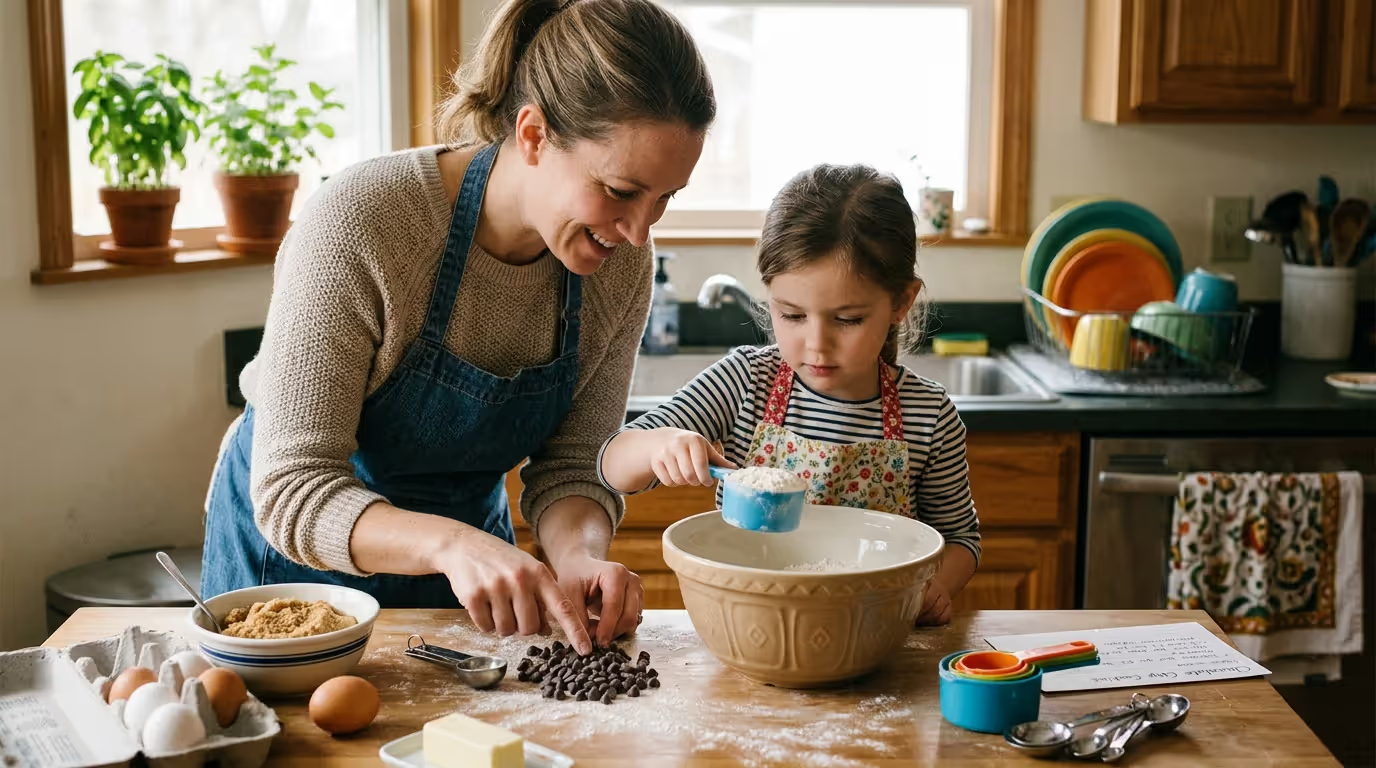
- Cook together. Measuring cups teach volume and fractions.
- Play with balance scales.
- Trace body parts and compare sizes.
One mistake parents make: jumping to standard measurement too soon. Let children estimate and compare informally first. Precision comes later.
Early Problem-Solving Skills
Problem-solving in preschool math isn't about equations. It's about figuring things out: How many more plates do we need? If we share these toys, how many does each person get? Will this block fit through that hole?
These situations teach children to think flexibly, try strategies, and learn from mistakes. That's mathematical reasoning.
You can't teach problem-solving directly. You create situations where children need to figure something out, then step back. Offer hints, not answers.
High-quality early mathematics education can set children on a trajectory for school success. Children who start school with more mathematical knowledge show higher mathematics achievement in later years, and early math knowledge predicts later reading achievement better than early reading skills predict later math achievement.
— Clements Douglas
Age-Appropriate Math Activities for Preschoolers
The best early numeracy activities don't feel like lessons. They feel like play.
For ages 3–4:
- Count toys as you clean up together.
- Sort laundry by color or type.
- Play with nesting cups and stacking rings.
- Sing counting songs and rhymes.
- Build with large blocks and talk about shapes.
- Make simple AB patterns with crackers or cereal.
- Compare sizes: big teddy bear, little teddy bear.
For ages 4–5:
- Set the table and figure out how many plates you need.
- Play board games with dice or spinners.
- Create complex patterns with beads or stickers.
- Measure ingredients for simple recipes.
- Draw shapes and count their sides.
- Group toys by multiple attributes (color and size).
- Play "I Spy" with shape and number clues.
Math games for young children work best when they're:
- Short. Five to ten minutes is plenty.
- Concrete. Use real objects, not just pictures.
- Playful. If it feels like a test, you've lost them.
- Repeated. Children learn through repetition with variation.
One activity I recommend: a "math basket" with dice, small toys, cards with dots, and counting bears. Rotate items weekly. Let your child explore freely, then join in and ask questions. "Can you make two groups with the same amount?" "Which has more?"
This beats worksheets every time.
How to Build Number Confidence in Young Children
Building number confidence early years isn't about being the fastest counter. It's about feeling comfortable with mathematical thinking.
Children develop math anxiety early—sometimes as young as five or six—often by absorbing adult attitudes. If you say "I'm bad at math" or show frustration with numbers, your child notices.
Strategies that work:
Make math part of daily life. Don't set aside "math time." Count steps as you walk. Notice shapes in buildings. Compare prices at the store. When math is everywhere, it stops feeling like a special, scary subject.
Celebrate effort over correctness. "You worked hard to figure that out" beats "Good job, that's right." Process matters more than answers in preschool.
Let children see you problem-solve. Talk through your thinking. "Hmm, I need four forks but I only have three. How many more do I need?" Model that it's okay to pause and think.
Use math vocabulary casually. Words like "more," "fewer," "equal," "pattern," "estimate," "measure" should be part of regular conversation.
Play games where everyone wins sometimes. Competition can shut down learning for young children. Cooperative games or games with an element of chance keep it light.
Number sense development happens slowly. Some children count confidently at three. Others need until five. Both are normal. Pushing too hard backfires.
The simpler option usually wins here: follow your child's interest, keep it playful, and trust the process.
Common Mistakes When Teaching Preschool Math
Even well-meaning adults make these errors.
Skipping hands-on learning. Worksheets and apps have their place, but preschoolers learn math through physical manipulation. They need to hold, move, and arrange objects. Abstract symbols come much later.
Focusing only on counting. Counting is important, but it's not the whole picture. A child who can count to 50 but can't compare quantities or recognize patterns has gaps in number sense.
Correcting too quickly. When a preschooler miscounts, resist the urge to immediately fix it. Ask them to count again. Let them discover the error. Self-correction builds confidence.
Teaching procedures instead of concepts. Don't teach "the way" to do something. Let children explore multiple strategies. There's more than one way to figure out if two groups are equal.
Not connecting to real life. Abstract math is meaningless to a four-year-old. Always tie concepts to their world: sharing toys, pouring juice, building towers.
Pushing formal academics too early. Some preschools introduce addition and subtraction on paper. Most children aren't ready. They need concrete experiences first.
Comparing children. "Your friend can count to 20 already" creates anxiety, not motivation. Development varies widely in the preschool years.
One counterintuitive point: sometimes less is more. A few meaningful math moments each day beat an hour of forced activities.
Author: Daniel Merce;
Source: raynet-merseyside.net
Choosing Math Games and Materials for Your Preschooler
You don't need expensive programs. But thoughtful materials help.
What to look for:
Manipulatives that grow with your child. Blocks, counting bears, pattern blocks, and linking cubes work for ages three through six. They're open-ended, so children use them in increasingly complex ways.
Games with mathematical thinking built in. Look for games that involve counting spaces, matching quantities, or recognizing patterns. Classic board games like Chutes and Ladders or Hi Ho! Cherry-O teach counting and one-to-one correspondence.
Books that explore math concepts. Picture books about shapes, counting, or measurement make math feel like a story. Look for books that invite interaction, not just passive reading.
Everyday items. Don't overlook what you already have. Measuring cups, coins, playing cards, egg cartons, and buttons are excellent math tools.
Age-appropriate apps (used sparingly). Digital games can reinforce concepts, but they shouldn't replace hands-on learning. Look for apps that adapt to your child's level and avoid time pressure or excessive rewards.
By age:
- Age 3: Large blocks, simple puzzles, nesting toys, chunky counters, books with counting and shapes.
- Age 4: Pattern blocks, dice games, more complex puzzles, measuring tools, beginning board games.
- Age 5: Card games, dominoes, tangrams, graph paper for drawing, games with simple addition concepts.
The pattern I see most often: parents buy too much. A few quality items used repeatedly beat a closet full of toys touched once.
And here's something most people miss: the best math material is your attention. A child sorting rocks with a parent who asks curious questions learns more than a child alone with a fancy toy.
Preschool Math Skills by Age
| Age | Counting Skills | Shape Recognition | Patterns & Sorting | Measurement Concepts |
| 3 years | Counts to 10 (may skip numbers); beginning one-to-one correspondence | Identifies circle, square, triangle | Recognizes simple patterns; sorts by one attribute (color or size) | Uses comparison words: big/small, more/less |
| 4 years | Counts to 20; reliable one-to-one correspondence; recognizes written numerals 1-10 | Names rectangle, oval; begins to describe shape properties | Continues and creates AB patterns; sorts by two attributes | Compares length and height directly; understands full/empty |
| 5 years | Counts to 30+; counts backward from 10; understands "how many" | Identifies 3D shapes (sphere, cube); combines shapes to make pictures | Creates complex patterns (ABB, ABC); explains sorting rules | Uses non-standard units to measure; understands heavier/lighter |
Author: Daniel Merce;
Source: raynet-merseyside.net
FAQ: Preschool Math Curriculum Questions
Building a strong mathematical foundation in the preschool years doesn't require special training or expensive materials. It requires patience, playfulness, and a willingness to see math in everyday moments.
Your child won't remember specific lessons from age three or four. But they'll remember how math felt. If it felt like play, discovery, and success, they'll approach numbers with confidence. If it felt like pressure, correction, and frustration, they'll carry that forward too.
Focus on the five core areas—counting, shapes, patterns, measurement, and problem-solving—but don't stress about covering everything perfectly. Exposure matters more than mastery. Let your child explore, make mistakes, and figure things out.
The best preschool math curriculum is the one that happens naturally, woven into daily life, adjusted to your child's pace and interests. You're not preparing them for a test. You're helping them see the mathematical structure of the world around them.
That's a gift that lasts far beyond preschool.