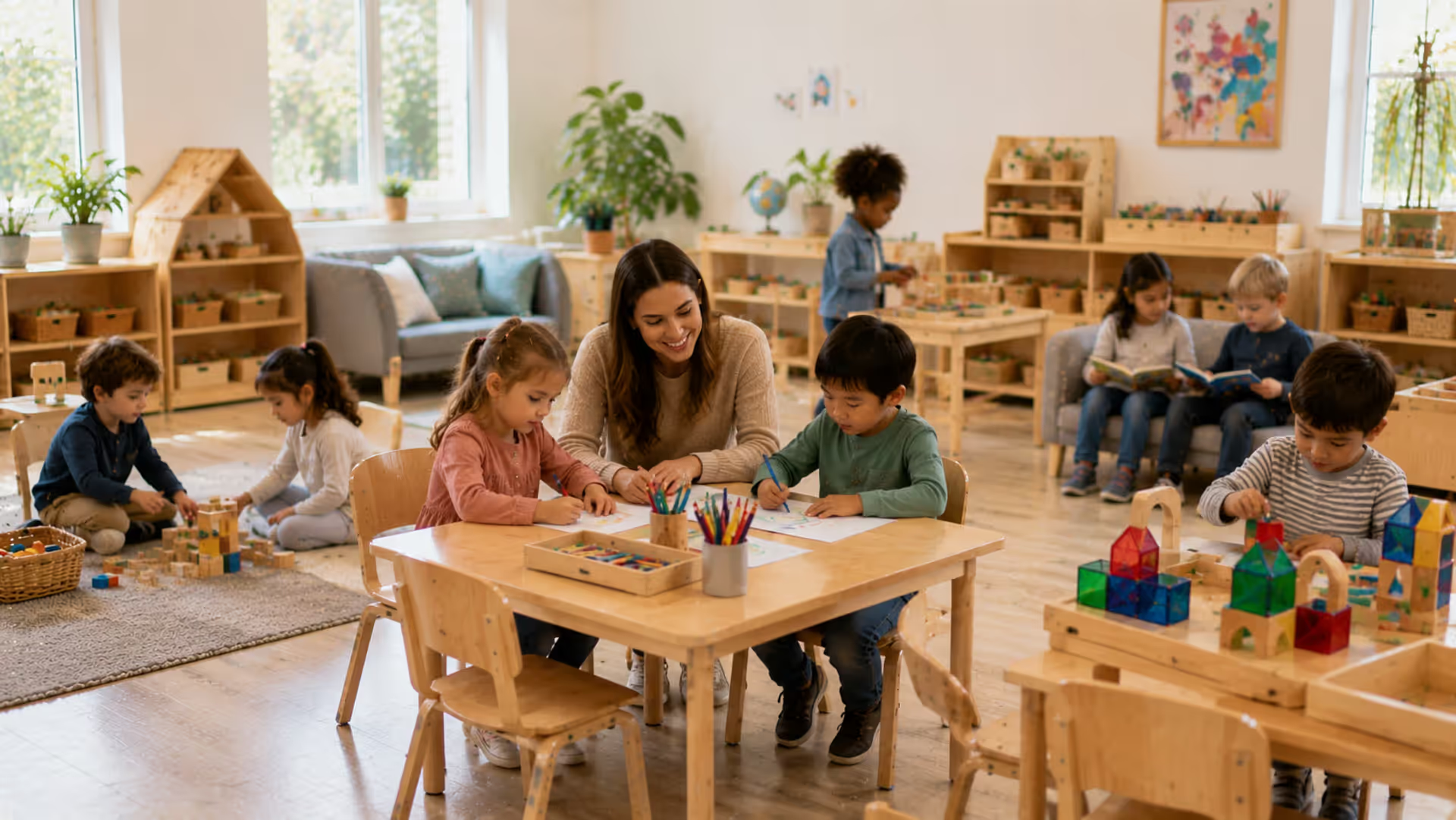
Pre-K children learning and playing in modern classroom environment
Pre K Curriculum Guide for Parents and Educators

Content
Choosing the right educational foundation for your child can feel overwhelming. Pre-K isn't just about keeping kids busy—it's a carefully designed year that bridges the gap between early childhood and formal schooling. But what exactly should a quality pre-K curriculum include, and how can you tell if your child is on track?
Let's break down what matters most.
What Is a Pre K Curriculum and Why It Matters
A pre-K curriculum is a structured framework that guides what children learn and how they learn it during the year before kindergarten. It's not a rigid schedule of worksheets and drills. Instead, it's a thoughtful blend of activities designed to build foundational skills across multiple developmental areas.
Here's the key difference: daycare focuses primarily on supervision and basic care. Pre-K programs, on the other hand, follow intentional learning objectives tied to child development research. Teachers plan activities with specific goals in mind—whether that's building vocabulary, practicing turn-taking, or exploring cause-and-effect relationships.
The best pre-K curricula take a developmental approach rather than pushing academics too early. This means recognizing that four-year-olds learn differently than eight-year-olds. They need hands-on experiences, movement, social interaction, and play to build neural pathways that support later academic success.
Research shows that children who attend quality pre-K programs enter kindergarten with stronger language skills, better self-regulation, and more confidence in group settings. But—and this matters—the quality of the program makes all the difference. A worksheet-heavy approach can actually backfire, creating stress and turning kids off from learning.
Core Skills and Developmental Milestones in Pre K
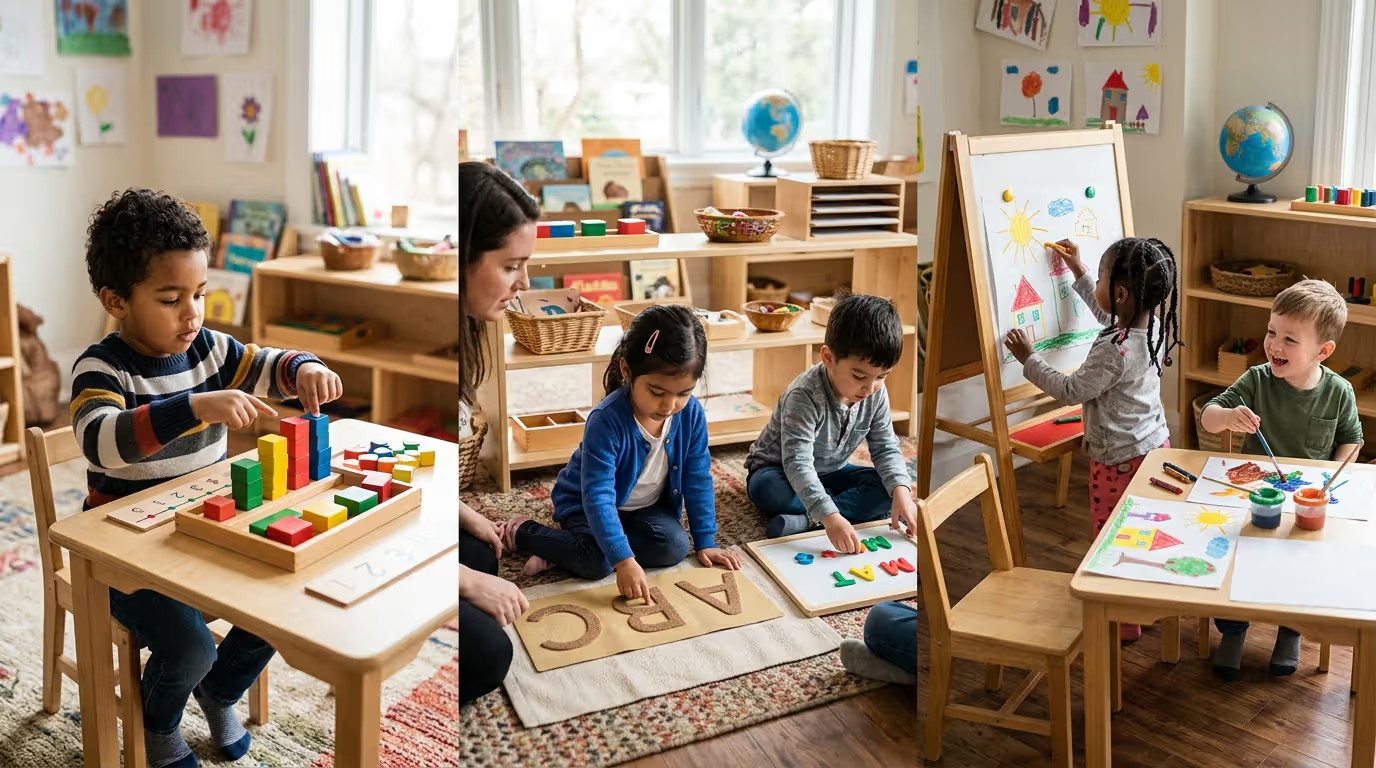
Pre-K children develop across multiple domains simultaneously. Your child isn't just learning letters—they're also figuring out how to share, how to hold a pencil, and how to ask questions about the world around them.
Author: Hannah Whitaker;
Source: raynet-merseyside.net
Literacy and Language Development
Pre-K literacy skills form the foundation for reading and writing. But we're not talking about reading chapter books yet.
Children should develop phonological awareness—the ability to hear and play with sounds in words. They'll start recognizing rhymes, clapping out syllables, and identifying the first sound in familiar words. Most four-year-olds can recognize their own name in print and understand that print carries meaning.
Vocabulary explodes during this year. Kids typically add 2-3 new words to their vocabulary every day through conversations, stories, and new experiences. They should be able to speak in complete sentences of 5-6 words and tell simple stories with a beginning, middle, and end.
Letter recognition matters, but it's not a race. By the end of pre-K, most children can identify 10-15 uppercase letters, with many recognizing more. They'll start making connections between letters and sounds, especially for letters in their name.
The pattern I see most often is parents stressing about reading readiness when their child's oral language skills actually need more attention. Strong speaking and listening skills predict reading success better than early letter drills.
Early Math Concepts and Number Sense
Pre-K math concepts go far beyond counting to ten. Young learners build their understanding of how numbers work and how quantities relate to each other through concrete experiences.
By the end of pre-K, most children can count to 20 or beyond, though they might skip numbers occasionally. More importantly, they're developing one-to-one correspondence—touching each object once while counting. They can typically answer "how many?" after counting a small group of objects.
Shape recognition expands beyond circles and squares. Kids learn to identify and name triangles, rectangles, ovals, and even hexagons. They start noticing shapes in their environment: "That sign is an octagon!"
Sorting and patterning build logical thinking. Children can group objects by color, size, or type, and they can create and extend simple patterns (red-blue-red-blue). These skills form the foundation for algebraic thinking later on.
Basic spatial concepts emerge too: more/less, bigger/smaller, first/last, before/after. Kids can compare quantities and use comparative language naturally in play.
Social-Emotional Learning and Classroom Behavior
Pre-K social development might be the most underrated aspect of the curriculum. These skills determine whether children can actually access academic learning.
Four-year-olds should be developing emotional regulation—the ability to calm themselves when upset, wait for a turn, and handle disappointment without complete meltdowns. This doesn't mean perfect behavior. It means gradually improving over time.
Friendship skills become more sophisticated. Children move from parallel play (playing near each other) to cooperative play (playing together toward a shared goal). They're learning to negotiate, compromise, and resolve simple conflicts with minimal adult intervention.
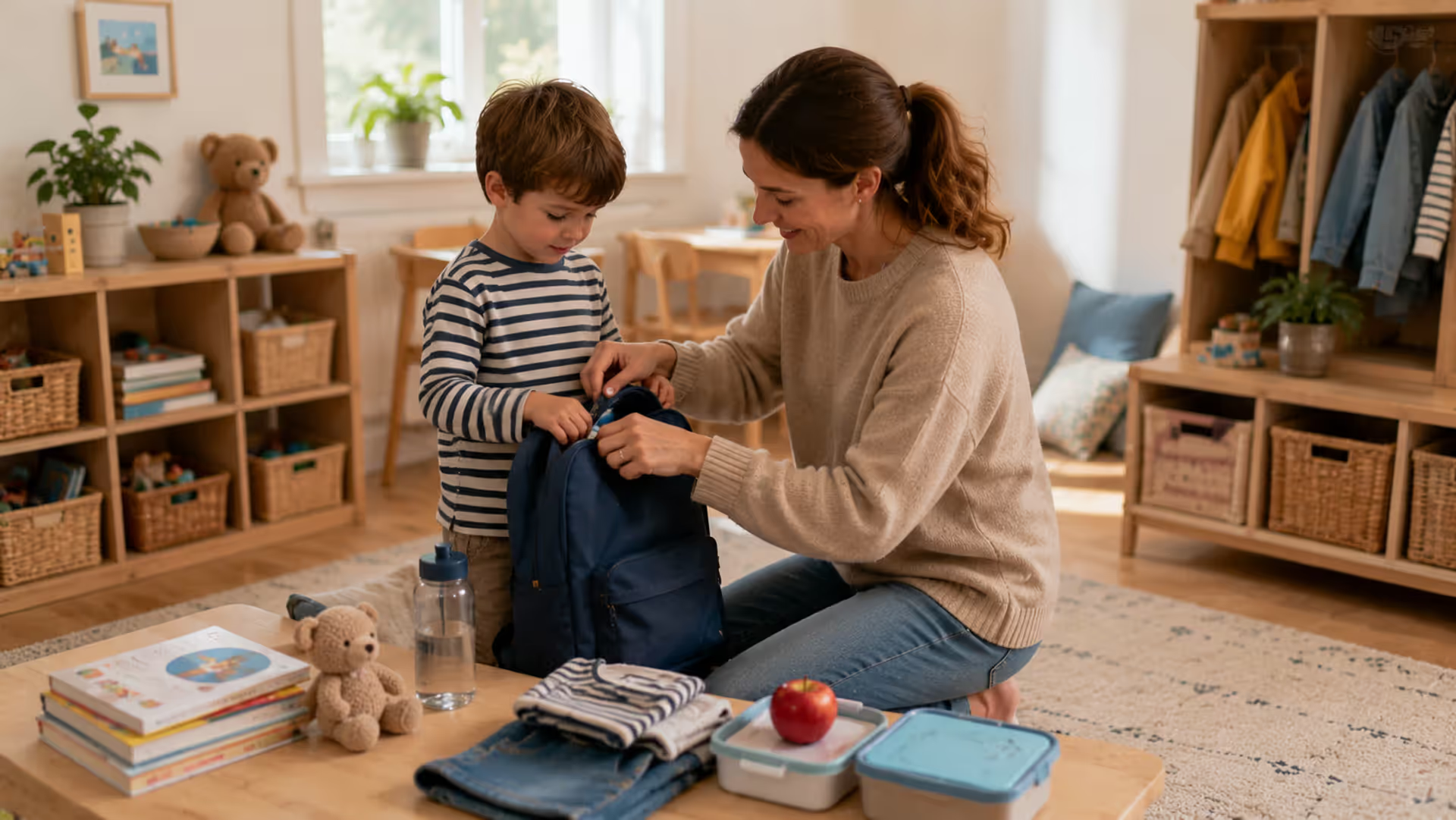
Following multi-step directions is a big milestone. "Put your backpack in your cubby, wash your hands, and sit at the table" should be manageable by mid-year for most children.
Empathy starts to develop. Kids can recognize basic emotions in others and might offer comfort to an upset classmate. They're beginning to understand that other people have different thoughts and feelings than they do.
Physical Development and Motor Skills
Physical abilities affect everything from self-care to handwriting readiness. During pre-K, children strengthen their control over both large body movements and precise hand coordination.
Large muscle development includes running smoothly, jumping with both feet, balancing on one foot for several seconds, and catching a large ball. Kids should be able to climb playground equipment safely and pedal a tricycle or bike with training wheels.
Small muscle control becomes more refined this year. Children should be able to hold a pencil or crayon with a tripod grip (thumb and two fingers), cut along a line with scissors, and manipulate small objects like beads or puzzle pieces. These abilities directly support later writing development.
Self-care skills matter too. Most pre-K children can dress themselves (though buttons and zippers might need practice), use the bathroom independently, and wash their hands without constant reminders.
Pre K Learning Activities Across Key Domains
Quality pre-K programs balance different types of activities throughout the day. Children need variety to stay engaged and to develop skills across all domains.
Science Exploration and Hands-On Discovery
Pre-K science exploration introduces the scientific method through simple, concrete experiences. Kids aren't memorizing facts—they're learning to observe, predict, experiment, and draw conclusions.

Author: Hannah Whitaker;
Source: raynet-merseyside.net
Water and sand play teach properties of matter. Children discover that water takes the shape of its container, that some objects sink while others float, and that adding water to sand changes its properties. These aren't just fun activities—they're physics lessons.
Nature observation builds curiosity and classification skills. Collecting leaves, watching caterpillars transform into butterflies, or planting seeds and tracking their growth connects children to the natural world. They learn to notice details, ask questions, and look for patterns.
Simple experiments make abstract concepts concrete. What happens when you mix colors? Which materials are magnetic? How do shadows change throughout the day? These investigations build critical thinking and problem-solving skills.
The best science activities follow children's interests. If your class is fascinated by dinosaurs, that becomes a springboard for learning about fossils, extinction, size comparison, and classification.
Creative Arts and Self-Expression
Pre-K arts activities do more than create cute bulletin boards. They develop fine motor skills, encourage creative thinking, and give children a non-verbal way to express ideas and emotions.
Open-ended art experiences beat coloring sheets every time. When children have access to various materials—paint, clay, collage materials, markers—without a predetermined outcome, they experiment, make choices, and develop their own artistic voice.
Music and movement support multiple developmental areas. Singing helps with memory, language development, and phonological awareness. Moving to music builds body awareness, coordination, and the ability to follow directions.
Dramatic play is where creativity really shines. When children create scenarios in the housekeeping area, dress up as community helpers, or act out familiar stories, they're developing language, social skills, problem-solving, and abstract thinking all at once.
Process matters more than product. The learning happens during creation, not in the finished craft. A child who spends twenty minutes experimenting with how different brushes make different marks is learning more than one who follows step-by-step instructions to make identical turkeys.
Play-Based Learning vs. Structured Lessons
This is where curriculum philosophy really shows up. Play-based learning and structured lessons aren't opposites—they're partners.
Play-based learning means children learn through self-directed exploration and play. Teachers set up the environment with intentional materials, observe children's play, and extend learning through questions and suggestions. A child building with blocks is learning spatial relationships, problem-solving, and physics concepts without a formal lesson.
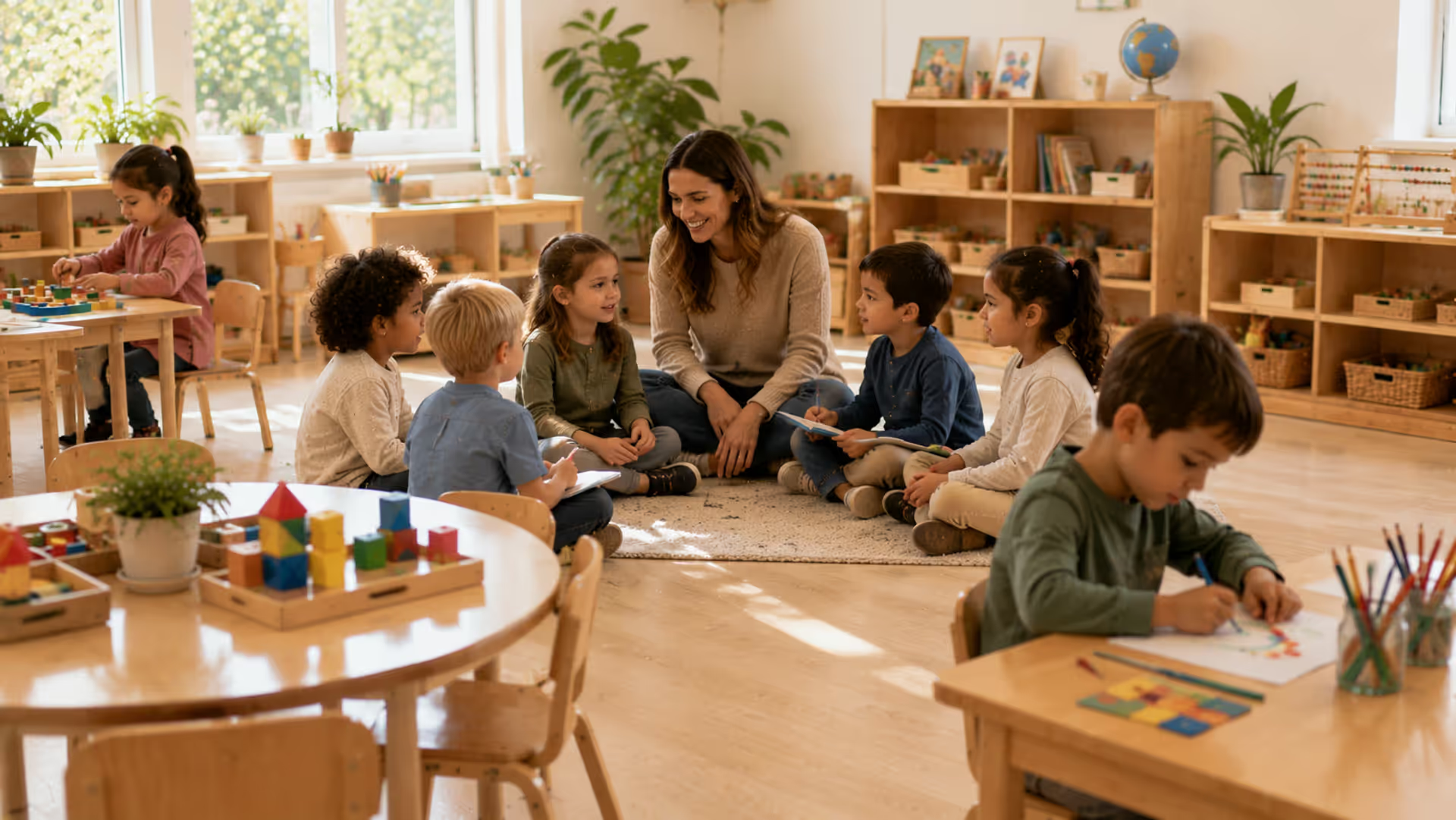
Structured lessons have their place too. Circle time, where children gather for a story, song, or focused activity, teaches group participation skills. Small-group instruction allows teachers to target specific skills with children who need extra support.
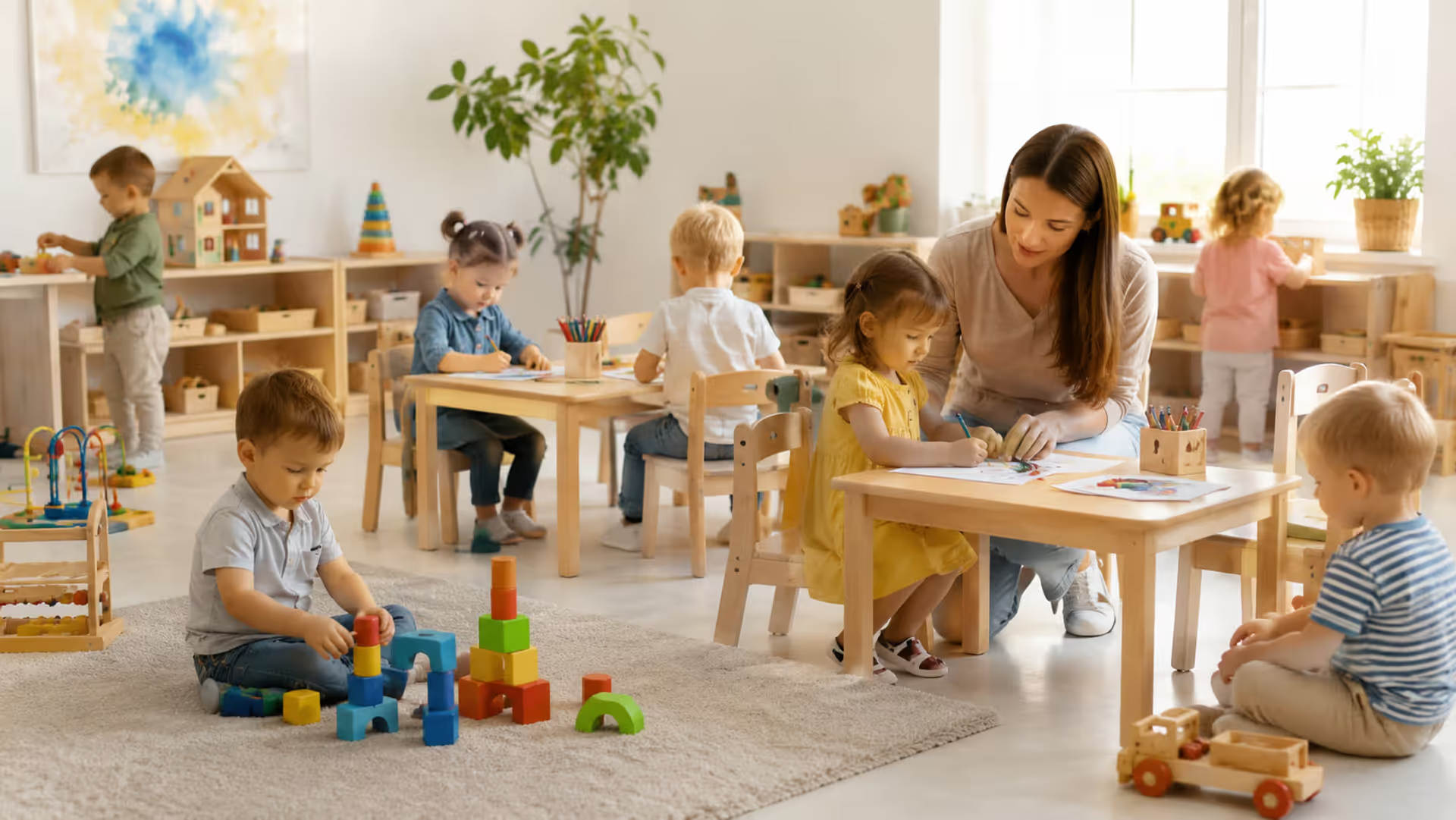
The best programs blend both approaches. You might see free play in learning centers, followed by a structured music activity, then outdoor play, then a small-group math game. The schedule provides rhythm and predictability while allowing flexibility.
Common mistake: thinking that play-based means unstructured or that children "aren't learning anything." Quality play-based programs are highly intentional. Teachers have clear learning goals—they just achieve them through play rather than worksheets.
Play is not frivolous. It is brain building. When children engage in rich, meaningful play, they are developing the executive function skills, creativity, and social competence that predict success in school and life.
— Hirsh-Pasek Kathy
Pre K Skills Checklist: What Should Your Child Know
Parents often want a clear checklist. What should pre-K children know by the end of the year? Here's a realistic overview organized by developmental domain.
| Skill Domain | What Children Should Know | Activities to Support Development |
| Literacy | Identify 10-15+ alphabet letters; match rhyming words; recount simple stories with sequential events; find their own name in print; understand book orientation and page turning | Share books daily; create rhyming silly songs; notice environmental print together; encourage storytelling; offer crayons, markers, and paper freely |
| Math | Recite numbers to 20; match counting words to objects accurately; name common shapes and identify them in surroundings; group items by characteristics; extend AB patterns; use quantity comparison words | Practice counting stairs, toys, snacks; enjoy dice and card games; construct with blocks; organize laundry or groceries; make patterns with cereal; discuss "which has more" naturally |
| Social-Emotional | Say goodbye to caregivers calmly; engage in shared play with other children; wait for turns and share materials; complete tasks with 2-3 steps; identify feelings in themselves and others; communicate wants using language | Schedule regular peer interactions; model waiting patiently; explore emotion books together; practice social scenarios through pretend play; break down household tasks into steps; name feelings as they happen |
| Physical | Move confidently through running, jumping, and hopping; coordinate throwing and catching larger balls; use scissors to follow lines; grasp writing tools with three fingers; reproduce circles, crosses, and lines; manage clothing independently | Ensure daily active play; supply safety scissors with practice materials; offer clay, beads, and manipulative toys; establish self-dressing routines; keep art supplies accessible |
| Science/Discovery | Pose questions about natural phenomena; forecast simple outcomes; notice and describe transformations; organize objects into categories; recognize action-reaction connections | Investigate outdoors regularly; try kitchen science projects; ask "what might happen next?"; supply magnifiers and collection jars; pursue topics your child wonders about |
| Creative Arts | Experiment with diverse art supplies; remember and perform simple melodies; respond physically to different rhythms; participate in imaginative scenarios; communicate concepts through creative work | Keep art materials open-ended and available; sing throughout the day; explore different musical genres; supply costumes and props; celebrate and discuss creations together |
End-of-year readiness benchmarks vary by program and state. Don't panic if your child hasn't mastered every skill on this list. Development isn't linear, and children have different strengths.
Red flags versus normal variation: it's normal for some four-year-olds to struggle with scissors or to still be learning letter names. It's worth discussing with your pediatrician if your child has significant difficulty following simple directions, can't engage in back-and-forth conversation, shows no interest in peers, or has extreme difficulty separating from parents after several months in the program.
Supporting skill gaps at home doesn't require expensive programs. Read together daily. Have conversations during everyday routines. Let your child help with cooking, sorting laundry, and other tasks that build real-world skills. Play is the work of childhood—board games, building toys, and outdoor play all contribute to development.
How to Evaluate Pre-Kindergarten Readiness
Pre-kindergarten readiness means different things to different people. Schools assess it one way, but readiness isn't just about skills—it's about the whole child.
Assessment methods used by schools vary widely. Some districts conduct formal kindergarten screenings that check letter knowledge, counting, shape recognition, and ability to follow directions. Others use portfolio-based assessments that look at growth over time. Many teachers conduct informal observations during play-based activities to gauge social readiness, attention span, and problem-solving approaches.
The difference between readiness and age requirements matters. Most states require children to turn five by a certain date (often September 1st) to enroll in kindergarten. But chronological age doesn't always match developmental readiness. A child who just made the cutoff might be nearly a year younger than classmates—a significant difference at this age.
When to consider an extra year or transition program depends on multiple factors. If your child is young for their grade and showing signs of struggle—difficulty sitting for short activities, limited social skills, or significantly delayed language—an extra year might help. But it's not a simple decision.
Some children benefit from transitional kindergarten (TK) programs, which provide an extra year between pre-K and kindergarten. These programs work well for children who need more time to develop but don't have significant delays requiring special education services.
Academic skills alone don't determine readiness. A child who knows all their letters but can't manage emotions, follow group routines, or interact with peers will struggle more than a child with fewer academic skills but strong self-regulation and social competence.
Talk with your child's pre-K teacher. They've seen hundreds of children transition to kindergarten and can offer valuable perspective on your specific child's readiness.
Choosing the Right Pre K Program for Your Child
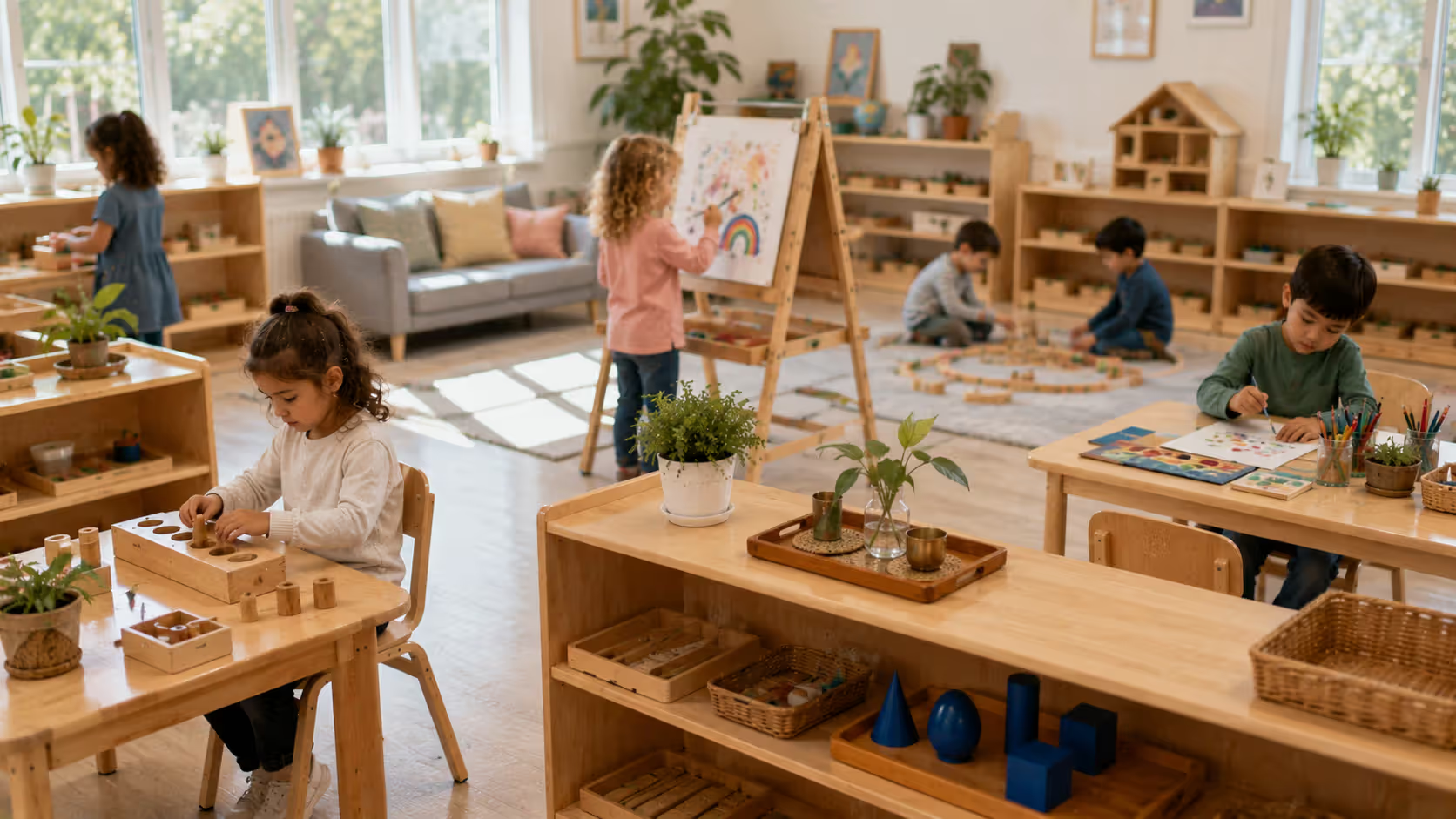
Not all pre-K programs follow the same curriculum model. Understanding different approaches helps you find the right fit for your child and family values.
| Curriculum Type | Teaching Approach | Best For | Typical Structure |
| Play-Based | Learning emerges through child-chosen activities in prepared environments; teachers facilitate and extend play | Active, curious learners; families valuing childhood as distinct developmental period | Extended choice time in learning centers; brief whole-group gatherings; outdoor exploration |
| Montessori | Self-directed work with specialized materials; adults step back to observe and support when needed | Children who flourish with independence and consistent routines; families prioritizing self-motivated learning | Uninterrupted work periods; mixed-age classrooms; individual material selection |
| Reggio Emilia | Extended investigations driven by student questions; teachers as co-learners; environment as third teacher | Creative thinkers; families valuing inquiry and artistic expression; communities seeking deep project work | Long-term projects; extensive use of art media; careful recording of learning through photos and notes |
| HighScope | Balance of child initiative and teacher scaffolding; students forecast their work, execute it, then discuss results | Children benefiting from predictable routines with built-in choice; families wanting structured flexibility | Consistent daily rhythm; planning and reflection built into schedule; active hands-on experiences |
| Academic-Focused | More teacher-led instruction in literacy and numeracy; structured skill-building activities | Children who enjoy guided learning; families emphasizing kindergarten academic preparation | Designated lessons for specific subjects; more seat work; clear skill progression |
Author: Hannah Whitaker;
Source: raynet-merseyside.net
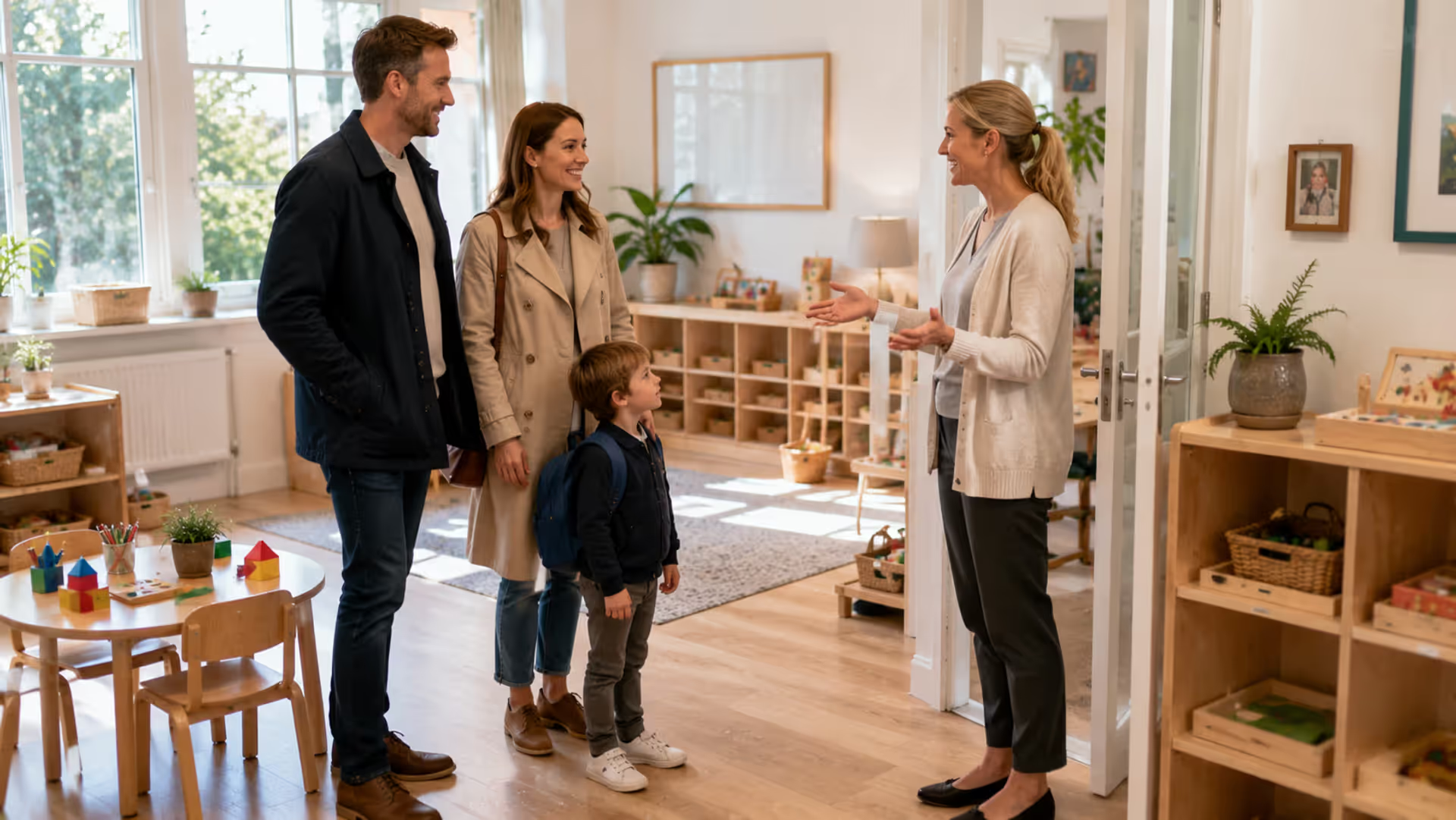
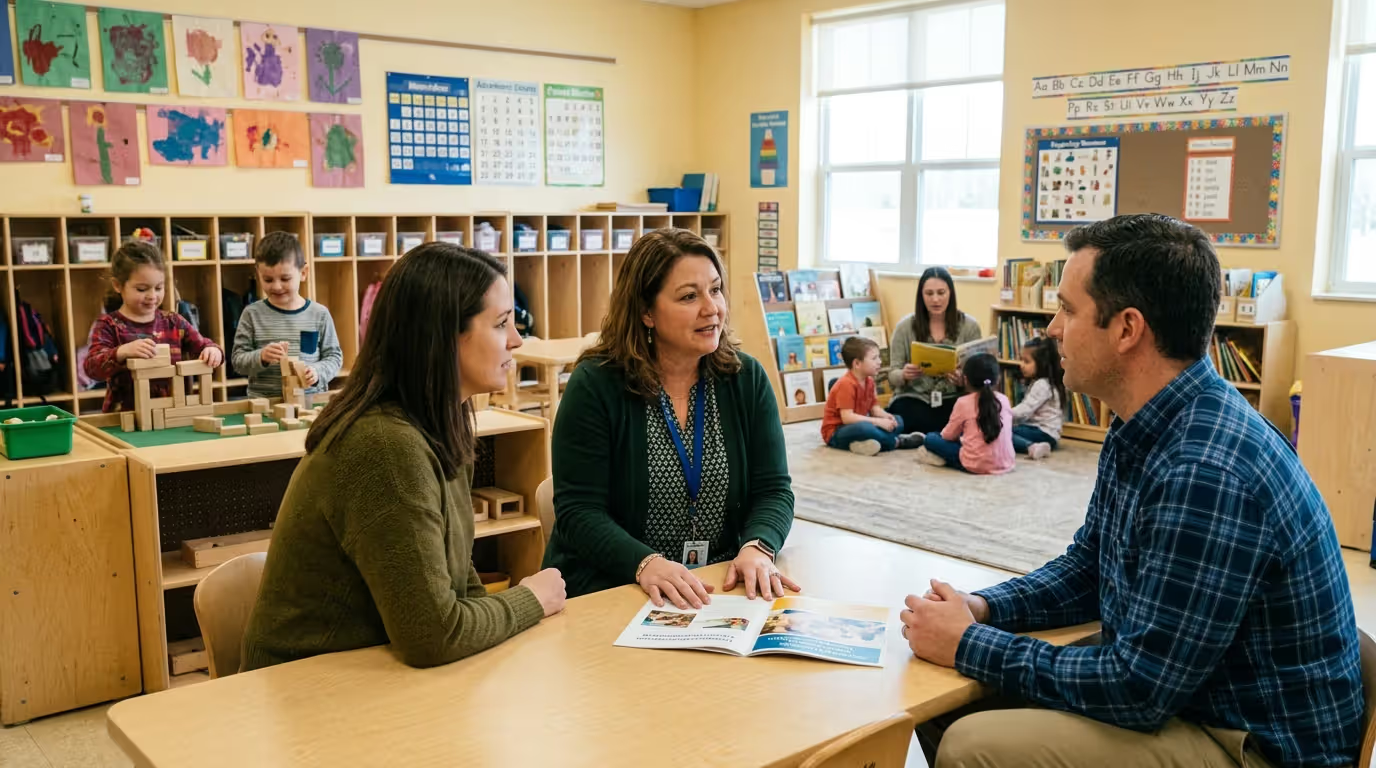
Questions to ask during school visits reveal program quality:
- How do children spend most of their day—choosing activities or following teacher direction?
- Walk me through what happens from arrival to pickup.
- What's your philosophy on managing difficult moments with children?
- How do you introduce early reading and mathematics?
- What methods do you use to keep parents informed about development?
- What's the adult-to-child ratio in the classroom?
- How do you differentiate for children at different skill levels?
- Is it possible to spend time watching the class in action?
Public versus private versus home-based options each have trade-offs. Public pre-K programs (available in many states) cost nothing but may have limited spots and less flexibility. Private programs offer more curriculum choices and potentially smaller class sizes but require tuition. Home-based programs provide intimate settings with mixed-age groups but may have fewer resources and less oversight.
The simpler option usually wins here: the best program is one that aligns with your child's temperament, fits your family's schedule and budget, and feels right when you visit. Trust your instincts.
Author: Hannah Whitaker;
Source: raynet-merseyside.net
FAQ: Pre K Curriculum Questions Answered