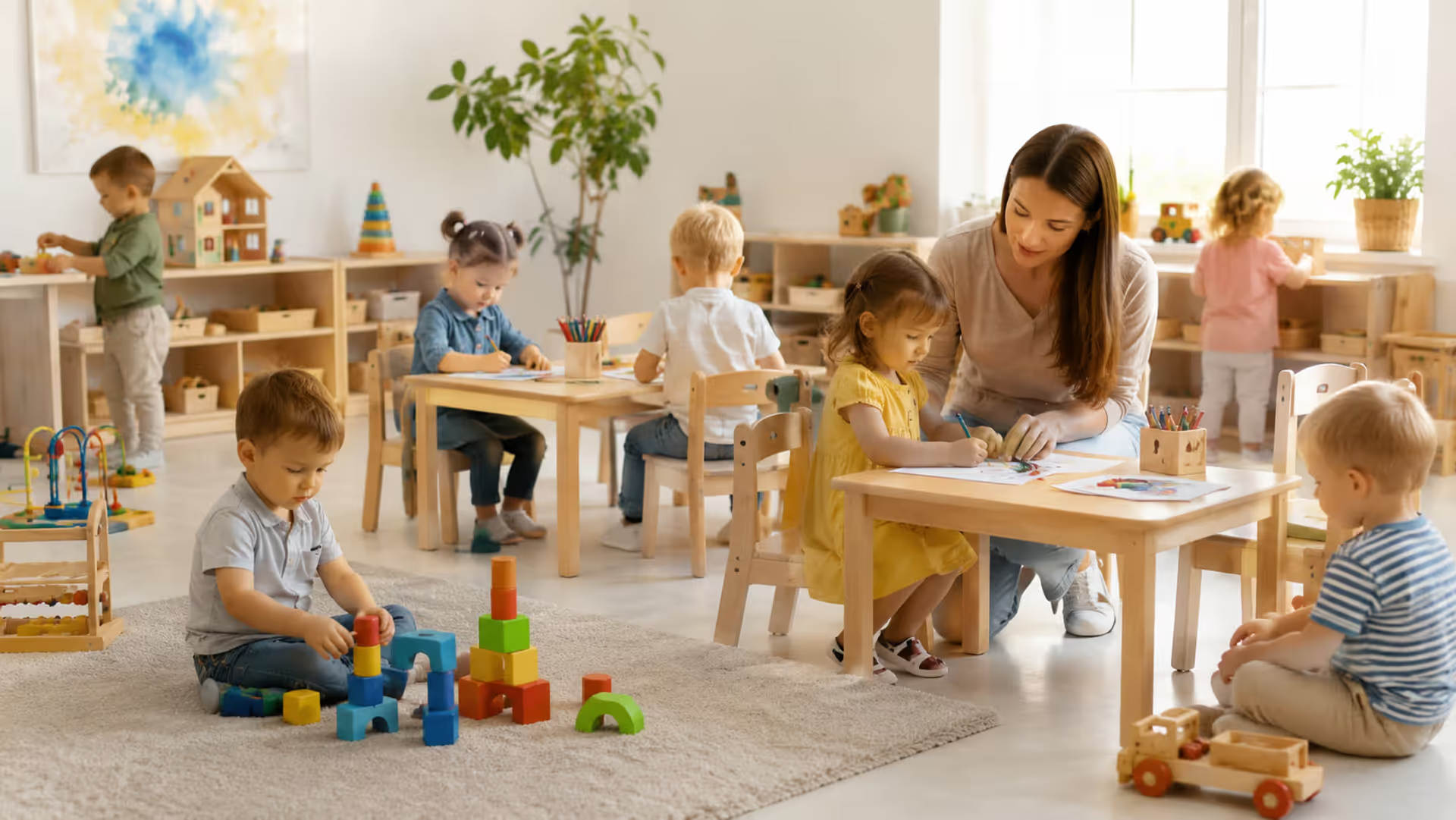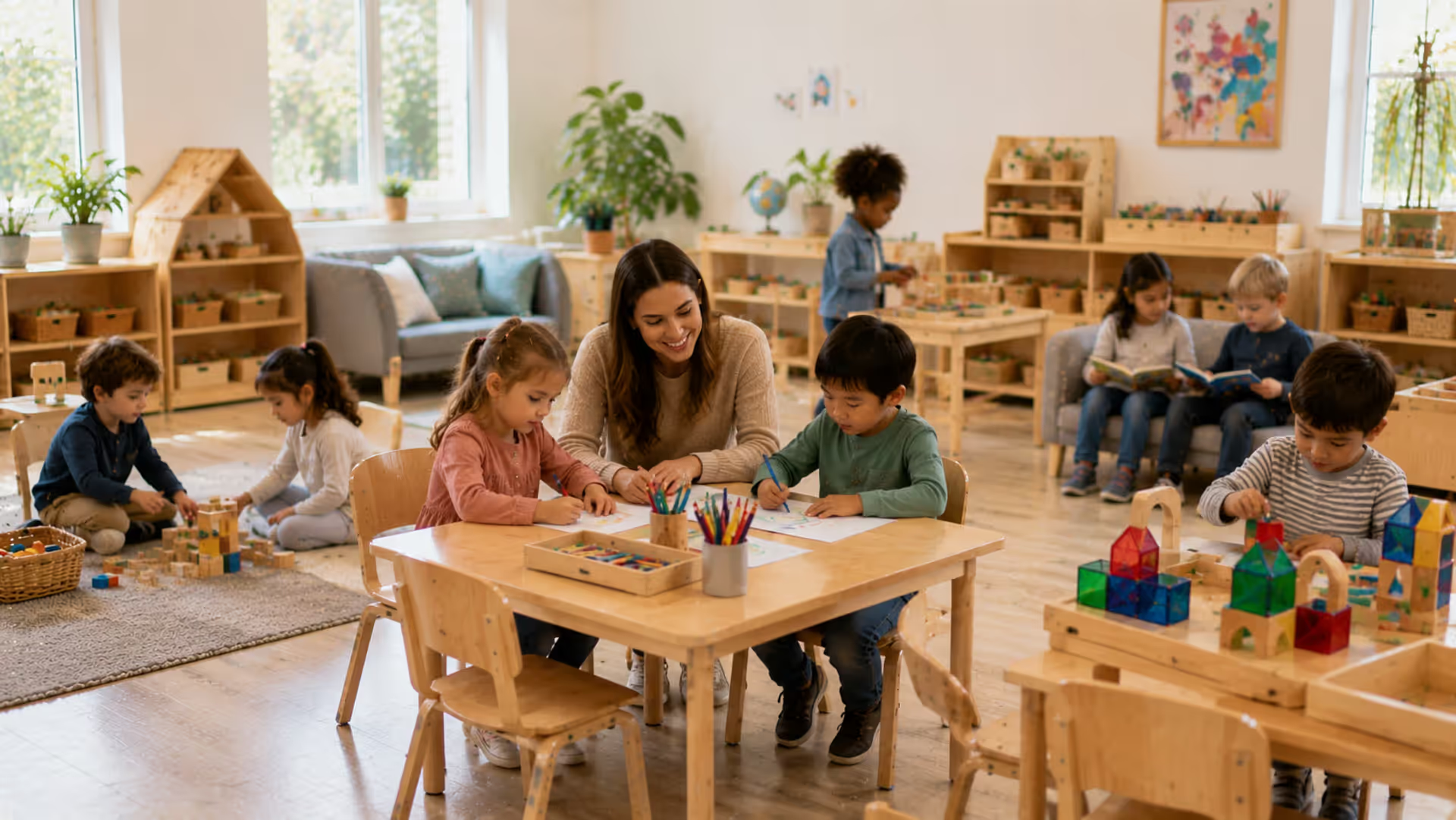
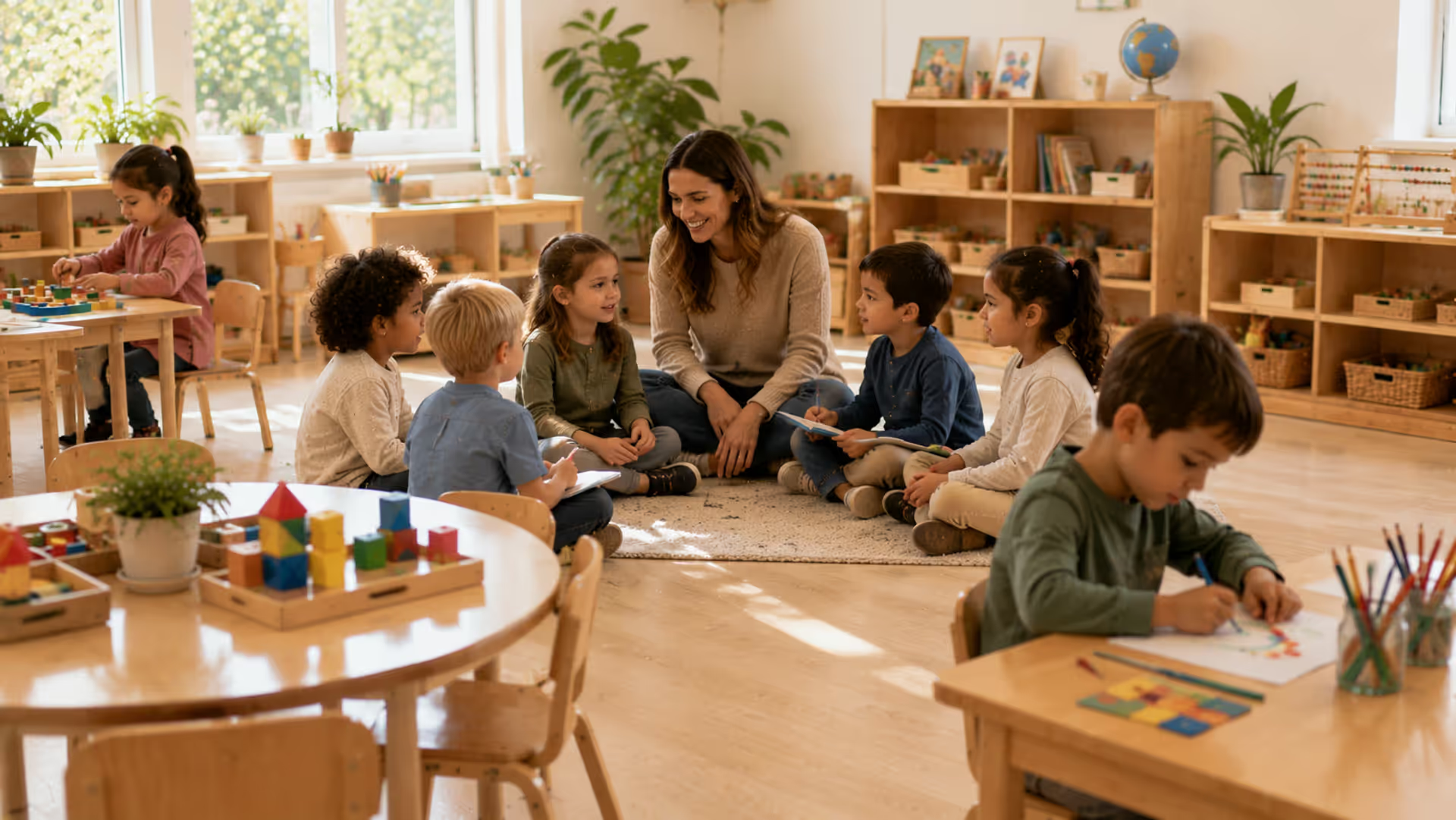
Kindergarten children learning and playing in modern classroom
Kindergarten Curriculum Guide

Content
Choosing the right kindergarten curriculum can feel overwhelming. You're looking at your child—maybe they still tie their shoes with bunny ears, maybe they don't tie them at all—and wondering what they're supposed to master in the next nine months. The answer is more nuanced than a simple checklist. Kindergarten sits at a unique intersection where play meets structured learning, where social skills matter as much as letter recognition, and where the goal isn't perfection but progress. This guide breaks down what kindergarteners actually learn, what benchmarks matter, and how to support that learning whether your child attends public school, private school, or learns at home.
What Kindergarteners Learn in School
Most kindergarteners are five or six years old, though some states allow younger enrollment. At this age, children's brains are wired for exploration, not memorization. They learn best through hands-on experiences, repetition, and play that doesn't feel like work.
The kindergarten year balances academic instruction with social-emotional development. Teachers spend significant time on routines: lining up, taking turns, raising hands, transitioning between activities. These aren't just classroom management tactics. They're foundational skills that enable all other learning.
Academic content exists, but it's delivered differently than in higher grades. A math lesson might involve counting bears and sorting them by color. Reading instruction often happens on a carpet with picture books, not at desks with worksheets. Science means observing how plants grow in the classroom window, not reading about photosynthesis.
The pattern I see most often is parents expecting too much academic rigor too soon. Kindergarten isn't first grade lite. It's a distinct developmental stage with its own pace and priorities.
Core Academic Subjects in Kindergarten
Reading and Literacy Development
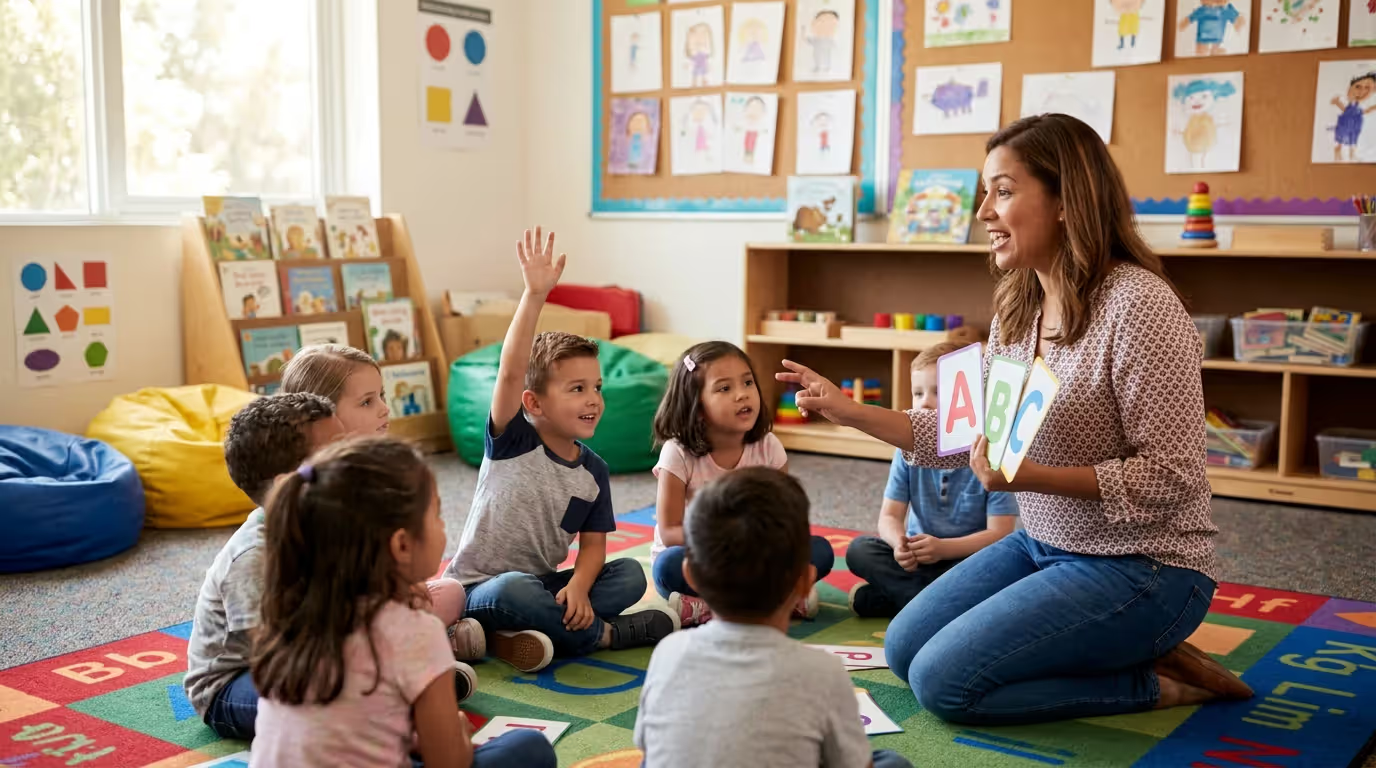
Kindergarten reading instruction focuses on phonemic awareness—the ability to hear and manipulate individual sounds in words. Can your child hear that "cat" has three sounds? Can they tell you what word remains if you remove the /c/ sound from "cat"?
Author: Daniel Merce;
Source: raynet-merseyside.net
Letter recognition comes next. By mid-year, most kindergarteners can identify all uppercase letters and most lowercase ones. They start connecting letters to their sounds, which sets the stage for decoding simple words.
Print concepts matter too. Children learn that text flows left to right, that spaces separate words, and that punctuation means something. They practice "reading" familiar books by memory, which builds confidence even before true decoding begins.
By year's end, many kindergarteners can read simple CVC words (consonant-vowel-consonant patterns like "dog," "sit," "run"). Some read basic sight words. Reading levels vary widely, and that's normal. The goal is establishing a foundation, not creating fluent readers overnight.
Math Concepts and Number Skills
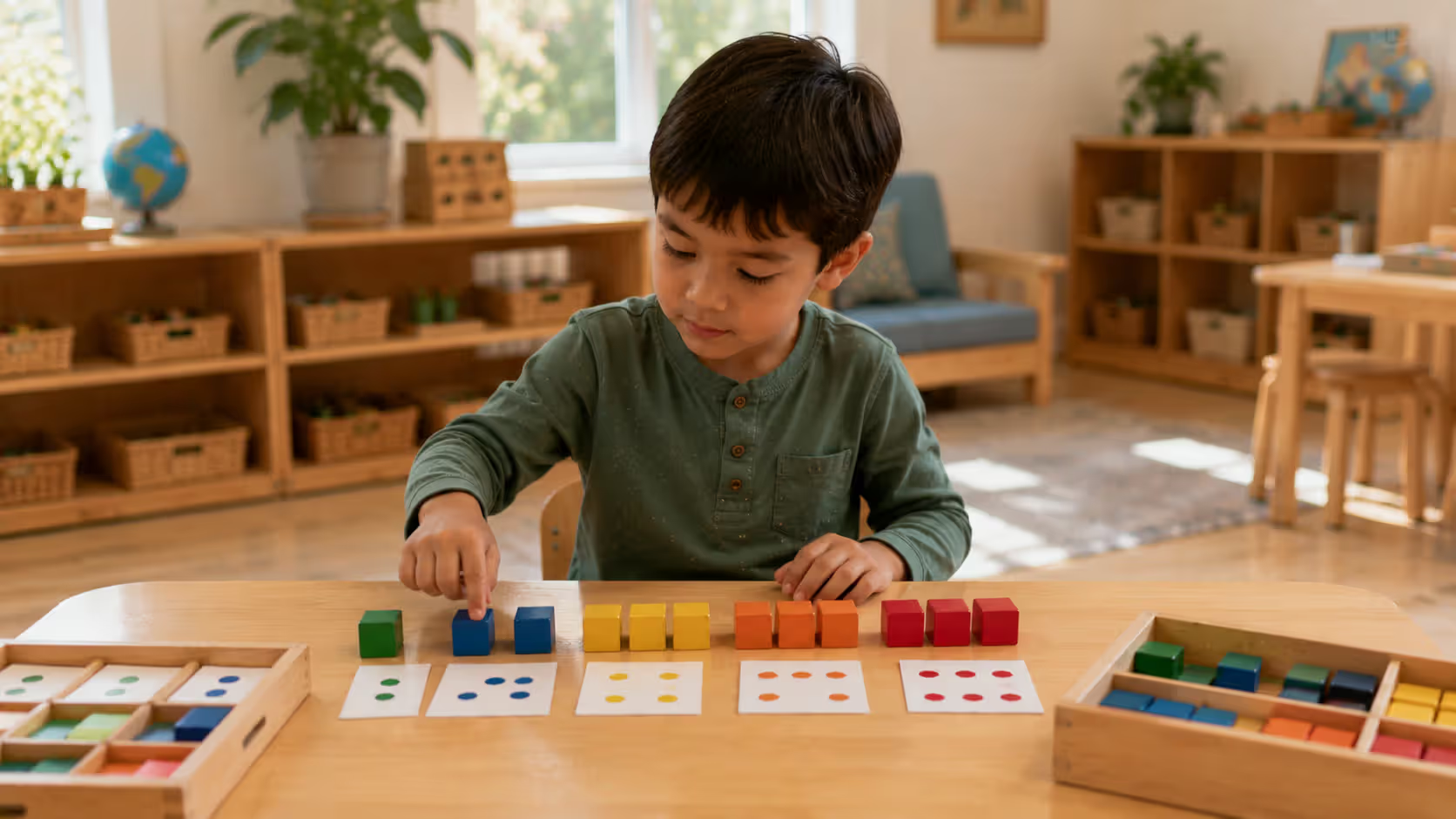
Kindergarten math skills center on number sense—understanding what numbers represent, not just reciting them. Children learn to count to 100, though counting with meaning to 20 is more important than rote counting to higher numbers.
One-to-one correspondence is a big focus. When counting objects, does your child touch each one once and only once? It sounds simple, but it's a skill that develops over time.
Basic addition and subtraction appear, usually with numbers under 10. This often involves physical objects: "You have three crackers. I give you two more. How many now?" Word problems help children see math in context.
Geometry at this level means identifying and describing shapes. Circles, squares, triangles, rectangles—plus their properties. "A triangle has three sides" is kindergarten geometry.
Measurement and data collection round out the curriculum. Children compare lengths ("Which pencil is longer?"), sort objects into categories, and create simple graphs.
Science Exploration and Discovery
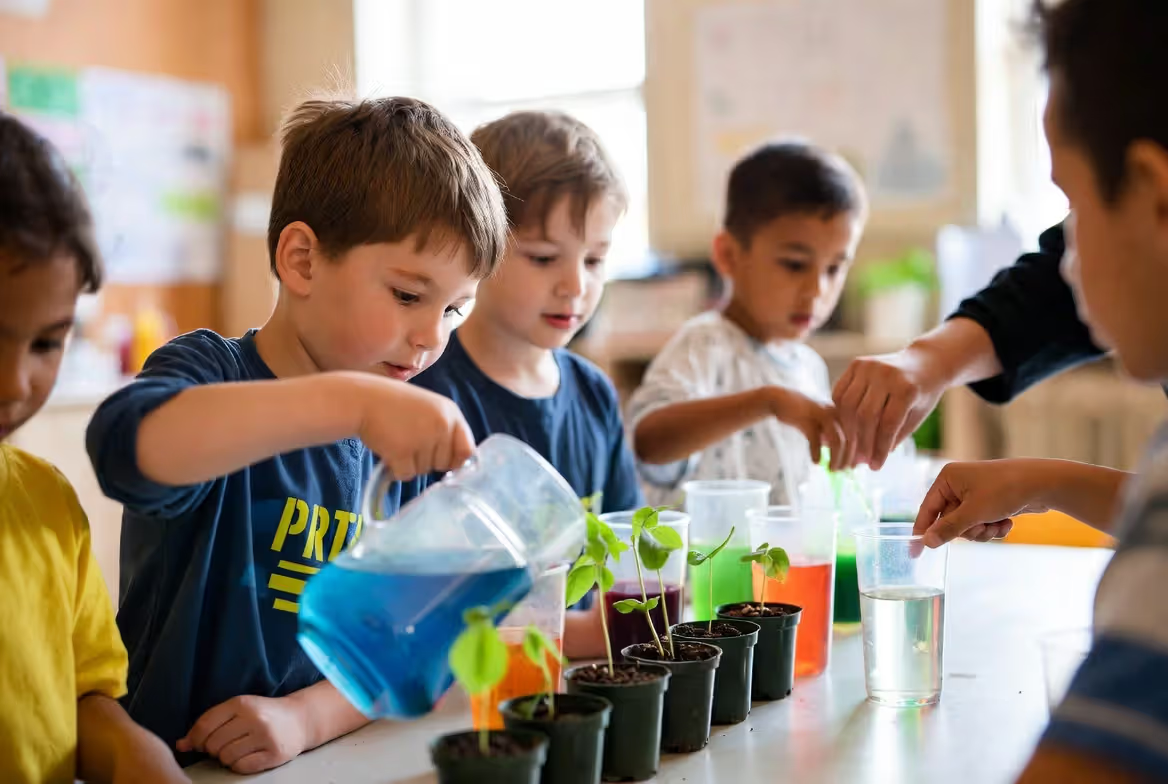
Kindergarten science activities emphasize observation and questioning. The scientific method appears in simplified form: What do you notice? What do you wonder? What happens if we try this?
Author: Daniel Merce;
Source: raynet-merseyside.net
Common topics include:
- Life cycles (butterflies, plants, frogs)
- Weather patterns and seasons
- Properties of matter (solid, liquid, gas)
- Simple machines
- The five senses
- Living vs. non-living things
Hands-on experiments dominate. Planting seeds and tracking growth. Mixing colors. Observing ice melt. Building ramps and testing which objects roll fastest. The goal is curiosity, not memorization of facts.
Writing Foundations and Fine Motor Skills
Kindergarten writing milestones start with fine motor development. Children strengthen hand muscles through cutting, coloring, and manipulating small objects. Proper pencil grip develops gradually.
Letter formation comes next. Most kindergarteners learn to write all uppercase letters and many lowercase ones. Spacing between letters improves over the year, though invented spelling is encouraged.
By year's end, many children can write simple sentences with approximated spelling. "I lik mi dog" counts as success. The message matters more than perfect spelling at this stage.
Kindergarteners also practice writing their names, copying words from the board, and labeling pictures. Some schools introduce journal writing where children draw pictures and add words or sentences.
Kindergarten Learning Objectives by Domain
Academic skills for kindergarten extend beyond reading and math. Standards typically organize objectives into four domains: cognitive, physical, social-emotional, and language development.
Cognitive objectives include problem-solving, memory, attention span, and logical thinking. Can your child complete a simple puzzle? Follow multi-step directions? Recognize patterns? These skills support all academic learning.
Physical objectives cover both gross motor skills (running, jumping, balancing) and fine motor skills (writing, cutting, buttoning). Recess isn't a break from learning—it's where physical development happens.
Social-emotional objectives involve self-regulation, empathy, cooperation, and persistence. Can your child wait their turn? Recognize when a classmate is upset? Keep trying when something is difficult? These skills predict long-term success more than early reading ability.
Language objectives encompass speaking, listening, and vocabulary development. Kindergarteners should be able to speak in complete sentences, follow verbal instructions, and engage in conversations. Their vocabulary should expand significantly over the year.
Mastery by year's end doesn't mean perfection. It means demonstrating skills consistently in familiar contexts. Some children will exceed benchmarks. Others will still be developing certain skills. Both scenarios are normal.
Social and Emotional Skills Development
Kindergarten social skills often challenge children more than academics. Sharing materials, taking turns, and accepting "no" require self-control that five-year-olds are still building.
Following classroom routines is a major focus. Children learn to transition between activities, clean up materials, line up quietly, and sit during group time. These behaviors don't come naturally—they're taught and practiced daily.
Conflict resolution skills develop through guided practice. Teachers help children use words instead of grabbing, ask for help when needed, and understand different perspectives. "How do you think Emma felt when you took her crayon?" becomes a frequent question.
Self-regulation—managing emotions and impulses—is perhaps the most important skill kindergarteners develop. Can your child calm down after disappointment? Wait for the teacher to call on them? Keep their hands to themselves? These abilities develop at different rates for different children.
Classroom behavior expectations include listening when others speak, following directions the first time, and asking for help appropriately. Teachers understand that accidents happen and attention wanders. Consistency matters more than perfection.
Reading and Math Readiness Benchmarks
Kindergarten reading readiness at the year's start looks different than at the end. Here's what typical progression looks like:
| Skill Area | Beginning of Year | End of Year |
| Reading | Recognizes some letters; enjoys being read to; may know a few sight words | Identifies all letters and most sounds; reads simple CVC words; recognizes 20-30 sight words |
| Math | Counts to 10; recognizes some numbers; understands "more" and "less" | Counts to 100; adds and subtracts within 10; identifies coins; understands place value to 20 |
| Writing | Writes own name; draws pictures to communicate; may write some random letters | Writes all uppercase and most lowercase letters; writes simple sentences with invented spelling |
| Social Skills | Plays alongside others; struggles with sharing; seeks adult help for conflicts | Plays cooperatively; takes turns; attempts to resolve conflicts independently |
Author: Daniel Merce;
Source: raynet-merseyside.net
Phonemic awareness benchmarks include rhyming words, identifying beginning sounds, and blending sounds to make words. These skills predict reading success better than letter knowledge alone.
Number sense benchmarks go beyond counting. Can your child tell you which number is bigger, 7 or 4? Can they represent the number 6 with objects? Can they count backward from 10? These skills show true understanding.
Shape identification extends to describing properties. A rectangle has four sides, with opposite sides equal. A square is a special rectangle. This level of understanding goes beyond just naming shapes.
Choosing a Kindergarten Homeschool Curriculum
Kindergarten homeschool curriculum selection depends on several factors. Your teaching style matters first. Do you prefer scripted lessons or flexibility? Some parents thrive with open-and-go programs. Others want room for rabbit trails and child-led exploration.
State requirements vary significantly. Some states have specific kindergarten standards you must address. Others consider kindergarten optional. Check your state's homeschool regulations before choosing materials.
Author: Daniel Merce;
Source: raynet-merseyside.net
Structured programs provide daily lesson plans, all materials, and clear objectives. Popular options include programs like Sonlight, The Good and the Beautiful, and Abeka. These work well if you want a clear roadmap and minimal planning time.
Flexible programs offer resources without rigid schedules. You might use a reading curriculum but create your own math and science activities. This approach requires more planning but allows customization to your child's interests and pace.
Common mistake: buying too much too soon. Many families purchase complete curriculum packages only to discover their child learns differently than expected. Start with core subjects (reading and math) and add others as needed.
Consider your child's learning style. Kinesthetic learners need movement and manipulatives. Visual learners benefit from colorful materials and charts. Auditory learners thrive with songs and verbal instruction. No curriculum fits every child perfectly, but some align better with certain styles.
Budget matters too. Comprehensive programs can cost several hundred dollars. But kindergarten can also be done affordably with library books, free printables, and household materials for hands-on learning.
The best kindergarten curriculum is the one that makes your child excited to learn. If they're engaged, curious, and developing a love of learning, you're doing it right—regardless of which program you chose or how quickly they master specific skills.
— Martinez Dr. Elena
FAQ: Kindergarten Curriculum Questions Answered
Kindergarten curriculum encompasses far more than ABCs and 123s. It's where children learn to learn—developing curiosity, persistence, and social skills that will serve them for years. The academic content matters, but it's not the whole story.
Whether you're preparing your child for kindergarten, teaching at home, or just wondering what happens in that classroom, remember that children develop at different rates. Some will read by year's end. Others will still be mastering letter sounds. Both are normal.
Focus on progress, not perfection. Celebrate small wins. Support your child's natural curiosity. The kindergarten year establishes patterns and attitudes that extend far beyond any single skill or benchmark.
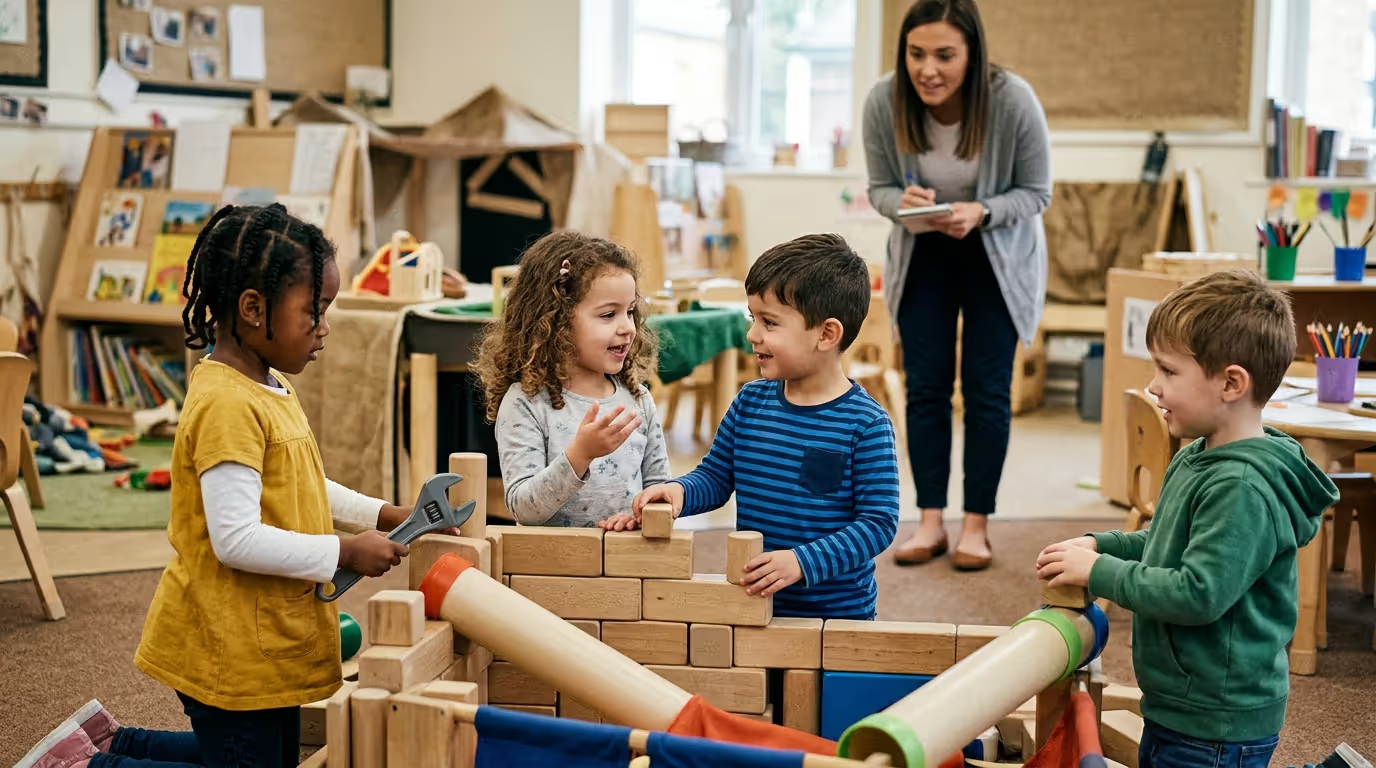
And don't forget: play is learning at this age. That block tower? Spatial reasoning and problem-solving. That pretend restaurant? Language development and math skills. That argument over the red crayon? Conflict resolution practice.
Your kindergartener is learning constantly, even when it doesn't look like "school." Trust the process, support their development, and enjoy this unique year of growth and discovery.