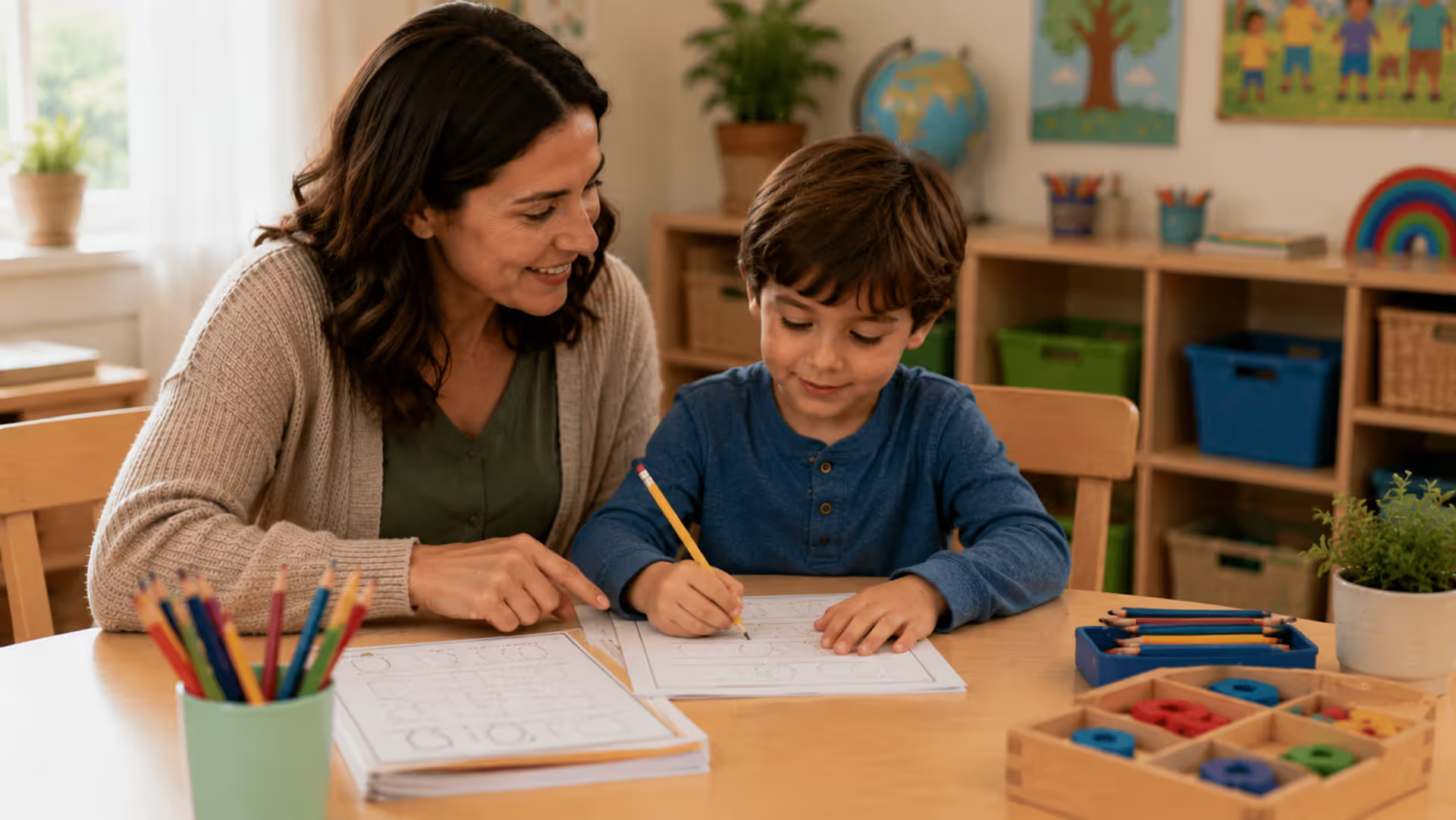
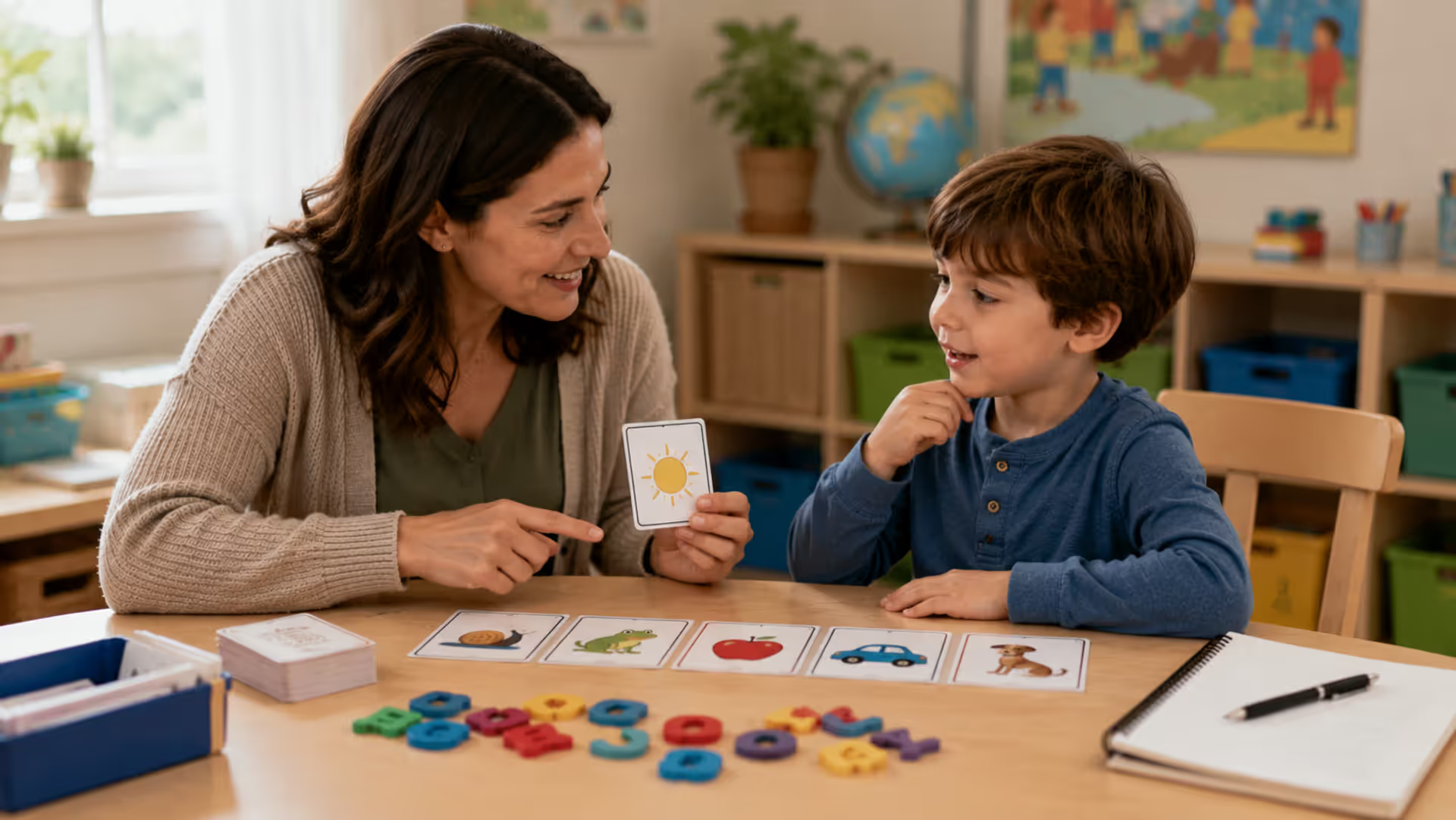
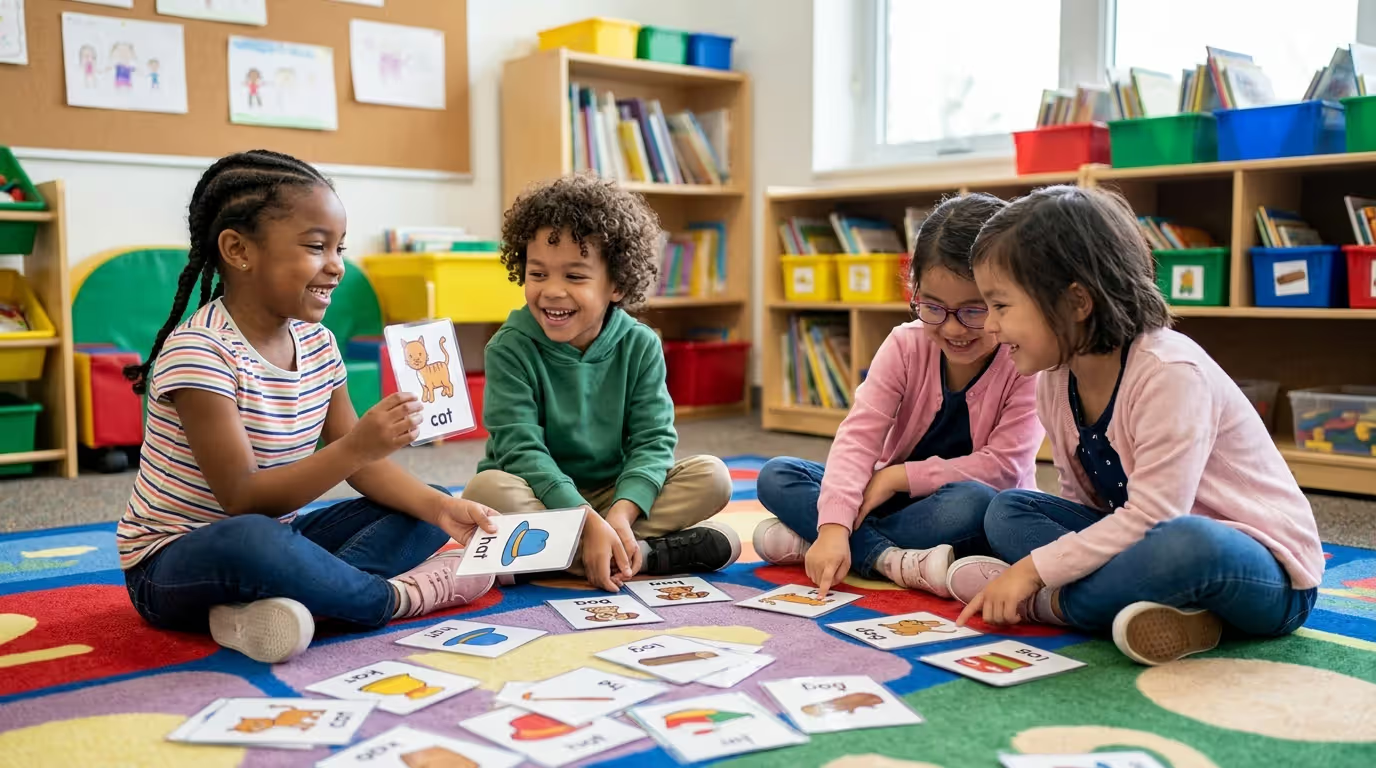
Parent helping child practice phonological awareness activities with learning cards
Phonological Awareness Umbrella Guide

Content
Understanding how children learn to hear and manipulate sounds in spoken language can feel overwhelming. There's a lot of jargon. But once you grasp the phonological awareness umbrella framework, everything clicks into place. This umbrella covers all the sound-based skills kids need before they can decode written words. It's not about letters yet—just sounds. And it develops in a predictable order, from simple to complex.
What Is Phonological Awareness?
Phonological awareness is the ability to recognize and work with sounds in spoken language. Notice: spoken, not written. Kids don't need to see letters to develop these skills.
We call it an "umbrella" term because it covers several related abilities. Think of it as a hierarchy. At the top, you have broad sound skills like recognizing rhymes. At the bottom, you have precise skills like isolating individual sounds in words.
The umbrella includes:
- Recognizing rhymes and alliteration
- Breaking words into syllables
- Identifying onset and rime patterns
- Blending individual sounds together
- Segmenting words into separate sounds
Each skill builds on the previous one. Kids typically master them in this order, though there's overlap. A child might start working on syllables while still refining rhyming skills.
Here's what matters: phonological awareness happens entirely through listening and speaking. No alphabet required. That's what separates it from phonics, which we'll discuss later.
The pattern I see most often is parents assuming their child needs to know letters first. Not true. Sound awareness comes before letter knowledge, and it predicts reading success better than almost any other early skill.
Skills Under the Phonological Awareness Umbrella
Rhyming and Alliteration
This is where most kids start. Rhyming means recognizing when words end with the same sound: cat, hat, bat. Alliteration means noticing when words start with the same sound: big, blue, ball.
Author: Hannah Whitaker;
Source: raynet-merseyside.net
Children usually recognize rhymes before they can produce them. A three-year-old might nod when you say "Do cat and hat rhyme?" but can't yet come up with a rhyming word on their own.
Why start here? Rhyming is fun. It's musical. Kids encounter it naturally through songs, nursery rhymes, and books like those by Dr. Seuss. There's no pressure, just playful exposure.
Alliteration works the same way. "Silly Sally sells seashells" isn't just tongue-twisting fun—it's building awareness that words can share beginning sounds.
Common mistake: drilling rhyming flashcards with a reluctant four-year-old. If a child isn't ready, they're not ready. Back up and just read rhyming books together. Let it be organic.
Syllable Awareness
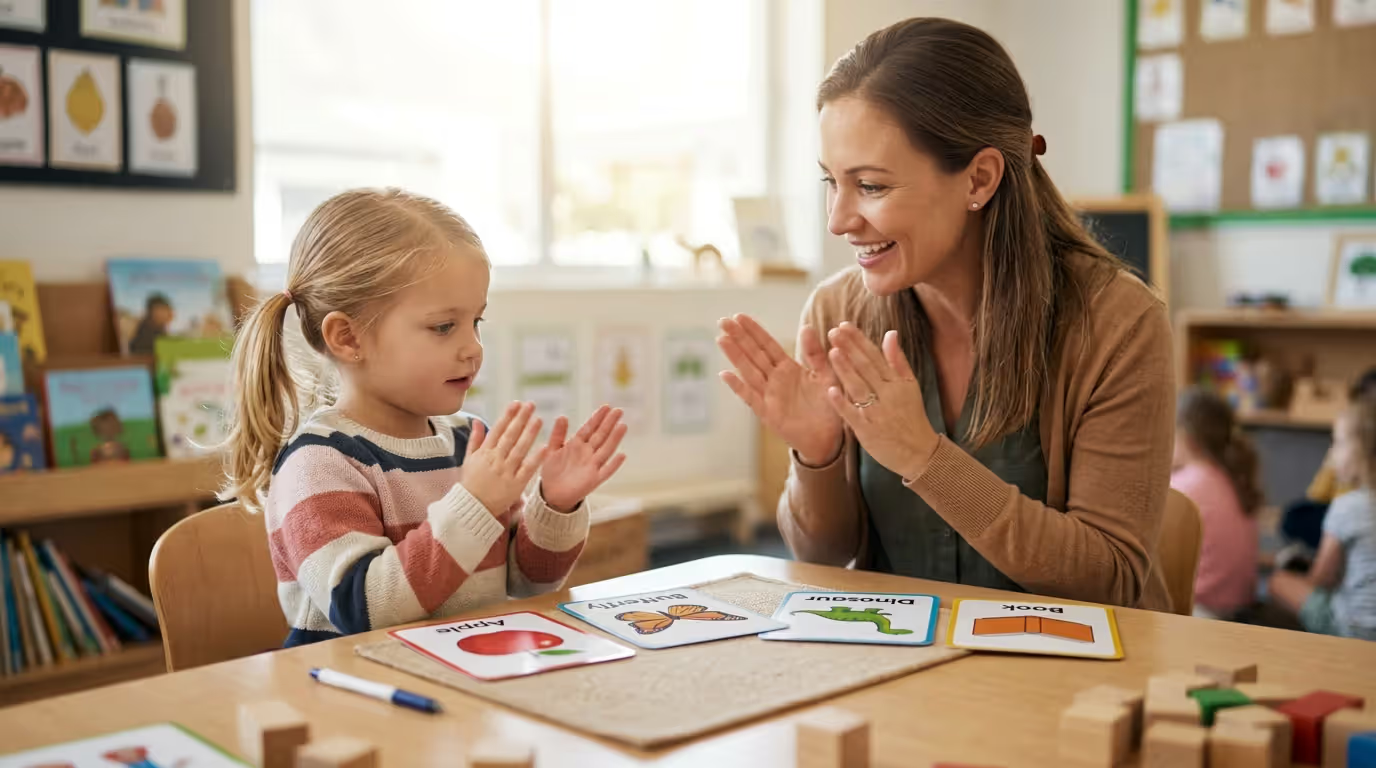
Syllables are the beats in words. Dinosaur has three: di-no-saur. Cat has one. Banana has three: ba-na-na.
Most kids can clap syllables by age four or five. It's a physical, rhythmic activity that makes abstract sound concepts concrete.
You can count syllables, blend them (putting "base" + "ball" together to make "baseball"), or segment them (breaking "rainbow" into "rain" + "bow").
This skill sits in the middle of the umbrella. It's more complex than rhyming but easier than working with individual sounds. Kids can hear syllable breaks naturally because they're tied to how we speak.
Onset and Rime
Now we're getting more specific. Every syllable has two parts: the onset and the rime.
The onset is the initial consonant or consonant cluster. In "cat," it's /c/. In "stop," it's /st/. The rime is everything else: the vowel and what follows. In "cat," it's /at/. In "stop," it's /op/.
Why does this matter? Word families. Once kids understand that "cat," "hat," "mat," and "sat" all share the same rime (/at/), they can manipulate sounds more easily.
Onset-rime work bridges the gap between syllables and individual sounds (phonemes). It's still chunked, not fully segmented, which makes it more accessible for five- and six-year-olds.
You'll hear reading specialists talk about "word families" or "rhyme families." That's onset-rime awareness in action.
Phonemic Awareness: Blending and Segmenting
This is the most advanced skill under the umbrella. Phonemic awareness means working with phonemes—the smallest units of sound.
The word "cat" has three phonemes: /c/ /a/ /t/. The word "ship" also has three: /sh/ /i/ /p/. (Notice "sh" is one sound, even though it's two letters. We're still not looking at print.)
Blending means hearing separate sounds and pushing them together: /c/ /a/ /t/ becomes "cat." Segmenting means pulling a word apart: "dog" becomes /d/ /o/ /g/.
Kids need both skills to decode and encode words when they start reading and spelling. Blending helps them sound out words. Segmenting helps them spell.
This is hard work. Most children don't fully develop phonemic awareness until age six or seven, often with explicit instruction. And that's okay. It's supposed to be the last piece of the puzzle.
Phonological Awareness vs Phonics: Key Differences
People confuse these constantly. They sound similar. They're both about sounds. But they're not the same.
Author: Hannah Whitaker;
Source: raynet-merseyside.net
Phonological awareness is auditory. It's about hearing sounds in spoken words. You can do it in the dark, with no books, no letters, no paper.
Phonics is about connecting sounds to letters. It's visual and auditory. You're learning that the sound /b/ is represented by the letter B. That's a reading skill.
Here's the relationship: phonological awareness comes first. It's the foundation. Phonics builds on top of it. If a child can't hear the difference between "bat" and "cat," they'll struggle to understand why B and C represent different sounds.
| Aspect | Phonological Awareness | Phonics |
| Definition | Ability to hear and manipulate sounds in spoken language | Understanding the relationship between letters and sounds |
| Focus | Sounds only (auditory) | Sounds + letters (auditory + visual) |
| Examples | Clapping syllables, rhyming, blending /c/ /a/ /t/ to say "cat" | Knowing the letter C makes the /k/ sound; sounding out written words |
| When Taught | Preschool through early elementary (ages 3–7) | Kindergarten through early elementary (ages 5–8) |
| Materials Needed | None—done entirely through listening and speaking | Letters, books, written words |
You can—and should—teach both together once kids start kindergarten. But phonological awareness activities should start earlier, long before formal phonics instruction.
Developmental Milestones by Age
Development varies. Some kids rhyme at three; others don't get it until five. But here's a general timeline:
Ages 2–3: Enjoys rhyming songs and books. May start to fill in rhyming words in familiar songs ("Twinkle, twinkle, little ___").
Ages 3–4: Recognizes rhymes when you say them. Might produce a rhyme occasionally. Begins to notice alliteration in silly phrases.
Ages 4–5: Claps or counts syllables in words. Produces rhymes more reliably. Starts blending syllables (e.g., "sun" + "shine" = "sunshine").
Ages 5–6: Blends and segments syllables easily. Begins onset-rime activities. Starts isolating initial sounds in words ("What's the first sound in 'dog'?"). May begin blending simple phonemes with support.
Ages 6–7: Blends and segments individual phonemes. Can delete or substitute sounds ("Say 'cat' without the /c/"). This is when phonemic awareness solidifies, often with classroom instruction.
Most kindergarten and first-grade teachers formally assess these skills. If a child is significantly behind, early intervention helps. A lot.
Activities and Games for Each Skill Level
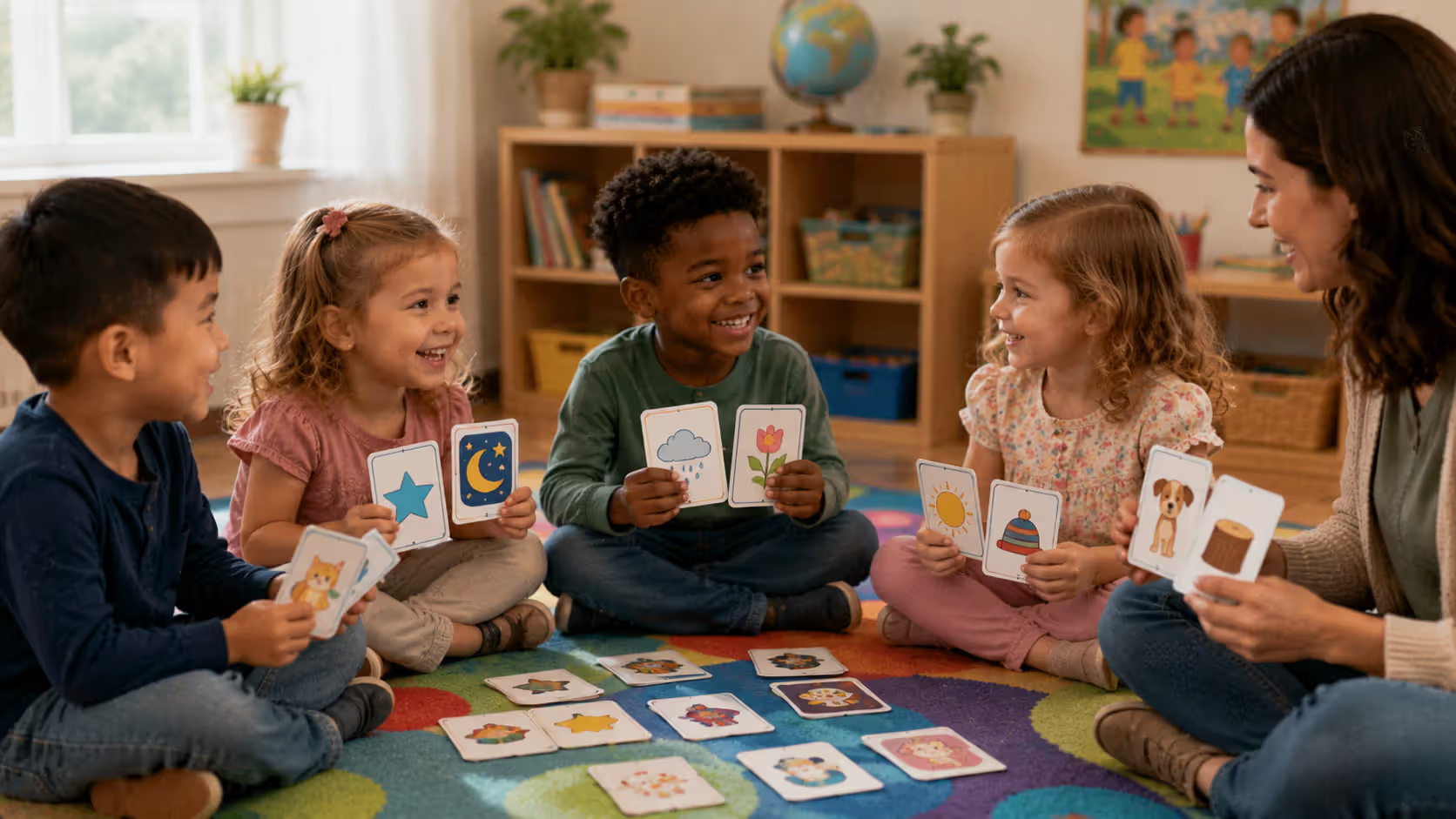
You don't need fancy programs. Most phonological awareness work happens through simple, playful activities.
Author: Hannah Whitaker;
Source: raynet-merseyside.net
Rhyming and Sound Matching Activities
Read rhyming books. A lot. "The Cat in the Hat," "Llama Llama Red Pajama," "Chicka Chicka Boom Boom." Point out the rhymes. Ask your child to predict the rhyming word.
Play rhyme scavenger hunts. "Can you find something in this room that rhymes with 'door'?" (floor, or more if you're flexible).
Sing songs with rhymes. "Down by the Bay" is perfect—kids create their own silly rhymes. "Did you ever see a bear combing his hair?"
For alliteration, play "I'm thinking of..." games. "I'm thinking of an animal that starts like 'dog'... it's a duck!"
Syllable Clapping and Counting
Clap out names during snack time. "Let's clap Olivia's name: O-li-vi-a. Four claps!"
Use a drum or tambourine. Each syllable gets a beat. Kids love making noise.
Jump syllables. Draw a hopscotch grid. Each hop is one syllable. Say "elephant" and jump three times.
Sort pictures by syllable count. One pile for one-syllable words (cat, dog, fish), another for two-syllable words (tiger, monkey, rabbit).
Onset-Rime Blending Games
Play "Guess the Word." You say the onset and rime separately: "/c/... /at/. What's the word?" Child says "cat!"
Use puppets. One puppet says the onset, the other says the rime. The child blends them together.
Build word families. Write the rime "-at" and let kids add different onsets with magnetic letters or just orally: cat, bat, rat, sat, mat.
Sound Segmenting and Blending Practice
Start with two-sound words. "Blending: /i/ /t/. What word?" (it). "Segmenting: Say the sounds in 'up.'" (/u/ /p/).
Use sound boxes (Elkonin boxes). Draw three connected squares. As you say each sound in "cat," push a token into each box: /c/ /a/ /t/.
Play "Sound Swap." "Say 'cat.' Now change the /c/ to /b/. What's the new word?" (bat).
Robot talk. You talk like a robot, stretching out each sound: "I want a /d/ /o/ /g/." Child has to blend it and fetch the toy dog.
The simpler option usually wins here. Don't overthink it. Five minutes of playful sound games beats a 30-minute worksheet any day.
When to Screen for Phonological Awareness Concerns
Most kids hit milestones within a typical range. But some don't. And early identification matters.
Author: Hannah Whitaker;
Source: raynet-merseyside.net
Red flags to watch for:
- A five-year-old who can't clap syllables or recognize any rhymes
- A six-year-old who can't isolate the first sound in simple words
- A child who struggles significantly compared to same-age peers
- Difficulty following the rhythm or patterns in songs and chants
- Family history of reading difficulties or dyslexia
Phonological awareness screening typically happens in kindergarten and first grade. Teachers use quick assessments to check rhyming, blending, segmenting, and sound manipulation.
Common screening tools include DIBELS (Dynamic Indicators of Basic Early Literacy Skills), PAST (Phonological Awareness Screening Test), and PALS (Phonological Awareness Literacy Screening).
If screening shows delays, don't panic. Phonological awareness is highly teachable. Speech-language pathologists and reading specialists can provide targeted intervention.
When should you seek help? If your child is six months to a year behind peers on multiple skills, talk to their teacher. If they're in first grade and can't blend or segment simple three-sound words, request an evaluation.
The most important predictor of early reading success is not IQ, not socioeconomic status, but phonological awareness—the ability to notice, think about, and manipulate the sounds in spoken words.
— Shaywitz Sally
Early intervention works. The brain is plastic. With the right support, most kids catch up. But the window is real. Waiting until third grade to address phonological weaknesses makes everything harder.
FAQ: Phonological Awareness Questions Answered
The phonological awareness umbrella isn't complicated once you break it down. It's a progression of sound skills that starts with rhyming and ends with manipulating individual phonemes. Each level builds on the last.
You don't need expensive programs or advanced training. Read rhyming books. Clap syllables. Play sound games in the car. Keep it light and playful, especially with preschoolers.
Watch for typical milestones, but remember that kids develop at different rates. If you notice significant delays, talk to your child's teacher or seek a screening. Early support makes all the difference.
Phonological awareness is the invisible foundation of reading. You can't see it when a child decodes a word, but it's there—the auditory scaffolding that makes phonics possible. Build it strong, and everything else follows.