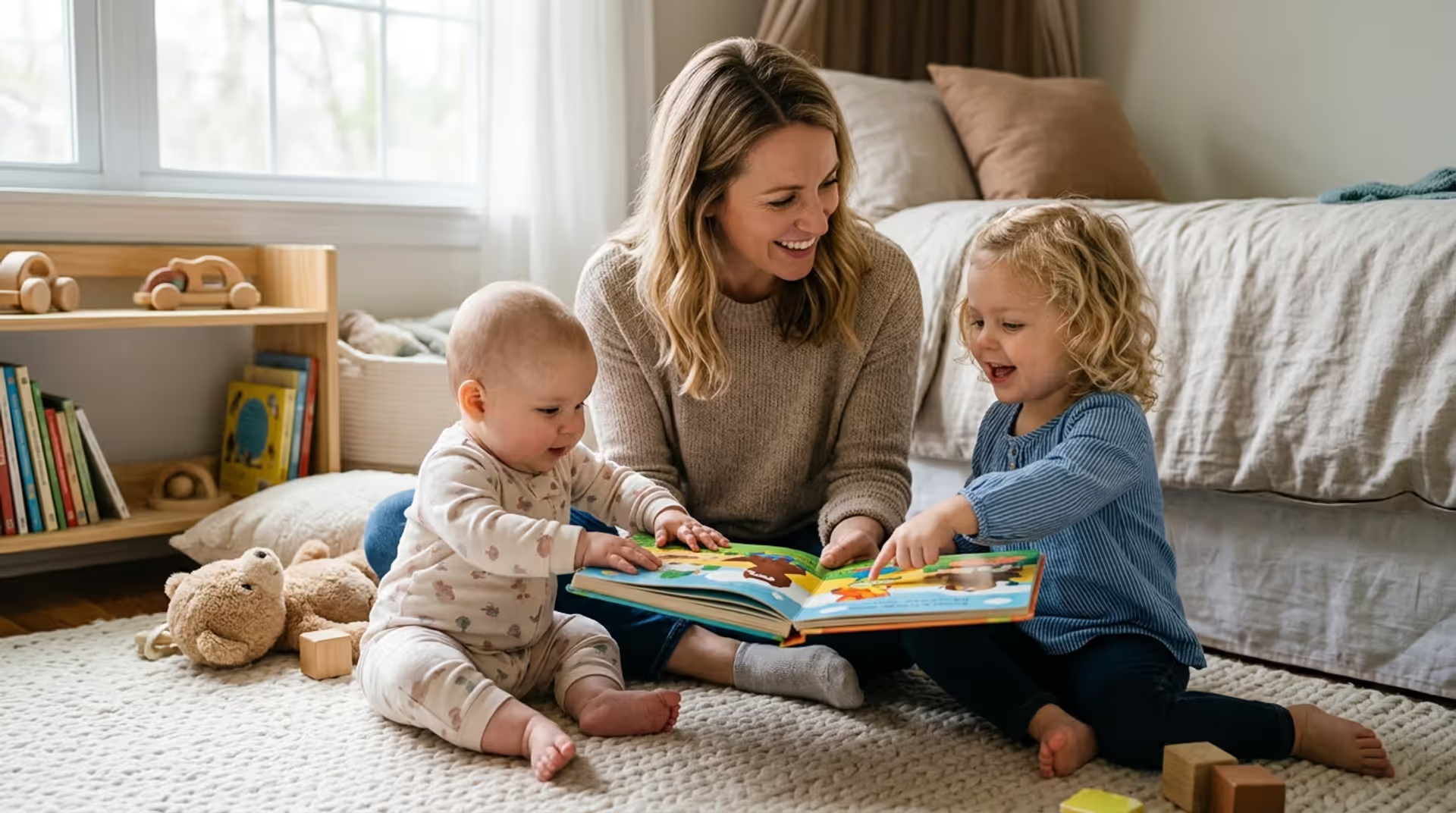

Building reading confidence
Phonics and Stuff Parents Need to Know About Teaching Reading

Content
Reading instruction doesn't need to be mysterious. But somewhere along the way, it became tangled in debates, jargon, and conflicting advice that left parents and teachers confused about what actually works.
Here's what matters: phonics works. Not because it's trendy or traditional, but because decades of research show it's the most reliable path to reading success for most kids. And you don't need a teaching degree to understand how it works or support it at home.
This guide cuts through the noise. You'll learn exactly what phonics instruction involves, how it differs from other methods, and practical ways to help your child become a confident reader.
What Is Phonics Instruction and Why It Matters
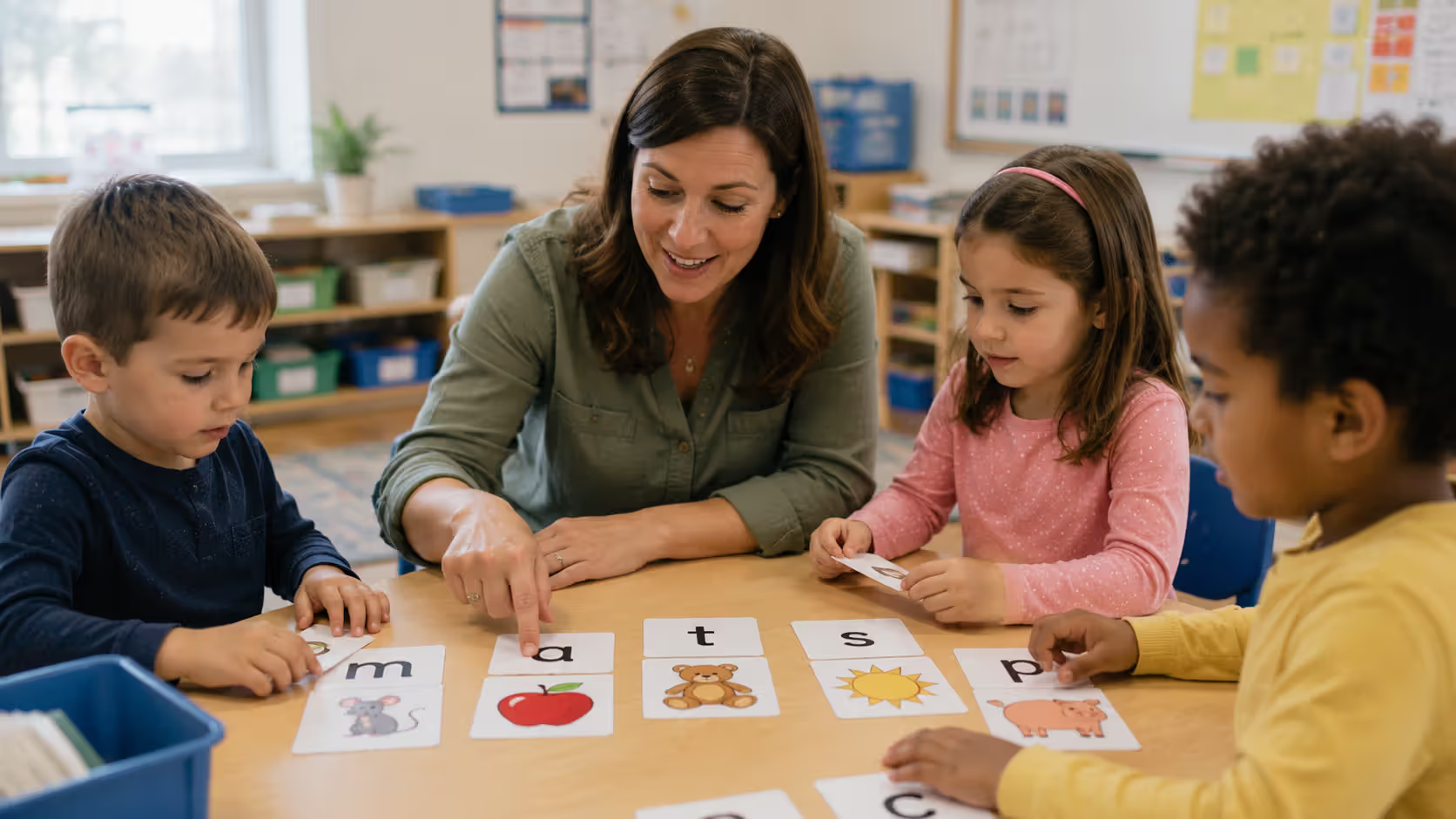
Phonics instruction teaches kids the relationship between letters and sounds. That's the simple version.
The technical term is grapheme-phoneme correspondence. A grapheme is a written letter or letter combination (like "sh" or "oa"). A phoneme is the smallest unit of sound in spoken language. Phonics teaches kids to connect these two systems so they can decode written words into spoken language.
When a child sees the word "cat" and knows that C makes a /k/ sound, A makes an /æ/ sound, and T makes a /t/ sound, they can blend those sounds together to read the word. They're not guessing from pictures or memorizing word shapes. They're applying a systematic code.
This matters because English has roughly 44 phonemes but only 26 letters. We use letter combinations and patterns to represent all those sounds. Without explicit instruction in these patterns, many kids struggle to crack the code on their own.
Reading isn't natural like speaking. Our brains aren't hardwired for it. Speaking evolved over hundreds of thousands of years. Writing systems? Only about 5,000 years old. That means reading requires deliberate instruction that rewires the brain to connect visual symbols with language sounds.
Phonics provides that instruction. It gives kids a reliable tool for approaching unfamiliar words instead of leaving them to guess or memorize thousands of word shapes individually.
Author: Daniel Merce;
Source: raynet-merseyside.net
How Phonics Instruction Actually Works
Effective phonics instruction follows specific principles. It's not just pointing at letters and saying sounds randomly.
Systematic Phonics Teaching Methods
Systematic phonics teaching follows a planned sequence. Kids learn sounds in a logical order, starting with the most common and useful patterns.
A typical sequence might begin with single consonants and short vowels (m, s, t, a, p). These let kids quickly build and read simple words like "mat," "sat," and "tap." Success comes fast, which builds confidence.
Then instruction progresses to consonant blends (st, bl, cr), digraphs (sh, ch, th), long vowels, and eventually more complex patterns like vowel teams (ea, oa, ai) and syllable types.
The key word is systematic. Every lesson builds on previous knowledge. There's no random jumping around. Teachers don't introduce silent-e patterns before kids master short vowels. They don't expect kids to read words with sounds they haven't learned yet.
This sequencing isn't arbitrary. It's based on frequency in English text and developmental readiness. The patterns kids learn first appear most often in early reading materials.
Author: Daniel Merce;
Source: raynet-merseyside.net
The Structured Literacy Approach Explained
Structured literacy is the broader framework that includes systematic phonics as one component. It's explicit, systematic, and cumulative.
Explicit means direct teaching. The teacher doesn't wait for kids to discover patterns naturally. They model, explain, and demonstrate exactly how sounds and letters work together. "The letters O-A together usually say /ō/ like in 'boat.' Watch me blend this word: b-oa-t, boat."
Cumulative means constant review. New concepts build on old ones, and previously taught skills get practiced repeatedly. A lesson on long vowels still includes words with short vowels learned weeks earlier.
Structured literacy also emphasizes multiple language components simultaneously: phonology (sound structure), morphology (word parts like prefixes and suffixes), syntax (sentence structure), and semantics (meaning). It's comprehensive, not just phonics in isolation.
The pattern I see most often is confusion between phonics and structured literacy. Phonics is one element. Structured literacy is the complete instructional framework that ensures all aspects of reading get addressed systematically.
Phonics vs Whole Language Reading Methods
This debate has raged for decades. Understanding both approaches helps you evaluate what your child's school uses and make informed decisions.
| Aspect | Phonics Approach | Whole Language Approach |
| Philosophy | Reading is code-based; must teach letter-sound relationships explicitly | Reading is natural; kids learn through exposure to meaningful text |
| Teaching Method | Direct, systematic instruction in sound-letter patterns; structured sequence | Immersion in authentic literature; incidental skill instruction as needed |
| Skills Emphasized | Decoding, blending, segmenting sounds; accurate word reading | Context clues, picture cues, predicting words; reading for meaning |
| Research Support | Extensive evidence from National Reading Panel (2000), multiple meta-analyses showing superior outcomes | Limited research support; studies show weaker outcomes for most students, especially struggling readers |
| Best For | All beginning readers; particularly effective for at-risk students and those with dyslexia | May work for some students with strong natural language skills; often insufficient alone |
The whole language movement emerged in the 1980s with good intentions. Advocates believed reading should be meaningful and joyful, not reduced to drilling sounds. They emphasized real books over worksheets, meaning over mechanics.
But the implementation often meant kids weren't taught how to decode words. Instead, they learned strategies like looking at the first letter and guessing from context or pictures. This works until it doesn't.
A child might successfully "read" a simple predictable book using pictures and patterns. But when text complexity increases and pictures disappear, guessing strategies fail. The child hits a wall.
Research settled this debate years ago. The National Reading Panel's 2000 report analyzed decades of studies and concluded that systematic phonics instruction produces better reading outcomes than approaches that don't teach phonics explicitly. Subsequent research has only strengthened this finding.
That doesn't mean phonics instruction should be joyless or disconnected from meaning. The best instruction combines systematic phonics with rich language experiences, read-alouds, and discussions about books. It's not either-or.
Author: Daniel Merce;
Source: raynet-merseyside.net
How to Teach Phonics at Home
You don't need to replicate a classroom to support phonics learning. Small, consistent efforts make a real difference.
Start by understanding what your child's learning at school. Ask the teacher which sounds and patterns they're currently studying. Your home practice should align with and reinforce classroom instruction, not introduce random new concepts.
Phonics Activities at Home That Work
Keep it short and playful. Ten minutes of focused practice beats an hour of frustrated struggle.
Sound hunts: Pick a target sound (like /sh/). Walk through your house finding objects that contain that sound. Shoe, shelf, fish tank, dishwasher. Say each word slowly, emphasizing the target sound.
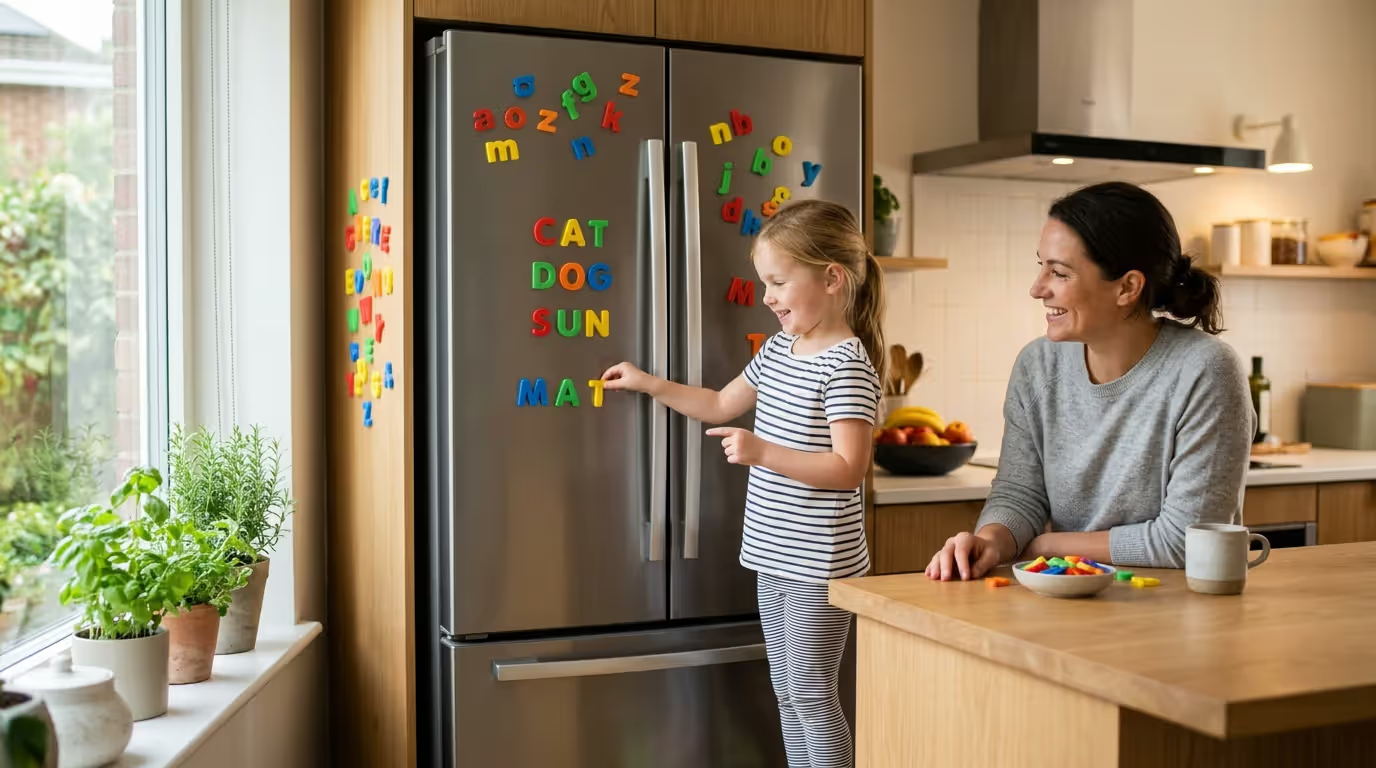
Magnetic letters: Build words on the fridge. Start with three-letter words using sounds your child knows. Change one letter at a time to make new words: cat → bat → bit → sit. This shows how changing one sound changes the word.
Word chains: Write a simple word like "mat." Ask your child to read it. Then change one letter: "Now it says 'map.'" Change another: "Now 'mop.'" This builds flexibility with sounds and letters.
Rhyme time: Play with word families. If your child can read "cat," they can probably read "bat," "sat," "hat," and "rat." Make up silly sentences: "The fat cat sat on a mat with a rat wearing a hat."
Sound boxes: Draw three boxes on paper for a three-sound word. Say "sun" slowly. Ask your child to push a penny or chip into each box as they say each sound: /s/ /u/ /n/. Then write the letters in the boxes. This connects sounds to symbols visually.
The key is making it feel like play, not homework. Kids learn better when they're engaged and relaxed.
Using Decodable Text for Practice
Decodable text reading is reading practice using books specifically designed for phonics learners. These books contain only sound patterns the child has already learned, plus a small number of common "heart words" (irregular words like "the" and "was" that kids memorize).
Regular children's books often include words with patterns kids haven't learned yet. A beginning reader who only knows short vowels can't decode words like "said," "could," or "friend." They're forced to guess or memorize.
Decodable books eliminate that problem. If a child has learned short vowels and a few consonants, a decodable book at that level contains only those patterns. The child can actually read every word by applying their phonics knowledge.
This builds confidence and fluency. It also provides practice applying skills in context, not just in isolation.
Many phonics programs include decodable readers. You can also find free decodable texts online or purchase sets from publishers like Flyleaf Publishing or The Reading League.
Use them as practice, not the only books your child experiences. Still read rich picture books aloud to your child for language development, vocabulary, and joy. Decodable books serve a specific training purpose.

Author: Daniel Merce;
Source: raynet-merseyside.net
Choosing Phonics Programs for Kids
Not all phonics programs are created equal. Some follow research-based principles. Others slap "phonics" on the label but lack systematic instruction.
Here's what to look for:
Systematic and sequential scope: The program should teach sounds in a logical order with clear lesson plans. You should be able to see the progression from simple to complex.
Explicit instruction: Lessons should include direct teaching, not just discovery activities. The teacher or parent should model and explain, not just facilitate.
Cumulative review: Each lesson should review previously taught concepts while introducing new ones. Skills should spiral back repeatedly.
Sufficient practice opportunities: Kids need lots of practice applying new skills. Look for programs with multiple practice activities per concept, including reading connected text.
Assessment tools: Good programs include ways to check whether kids are actually learning. This might be informal checks or formal assessments.
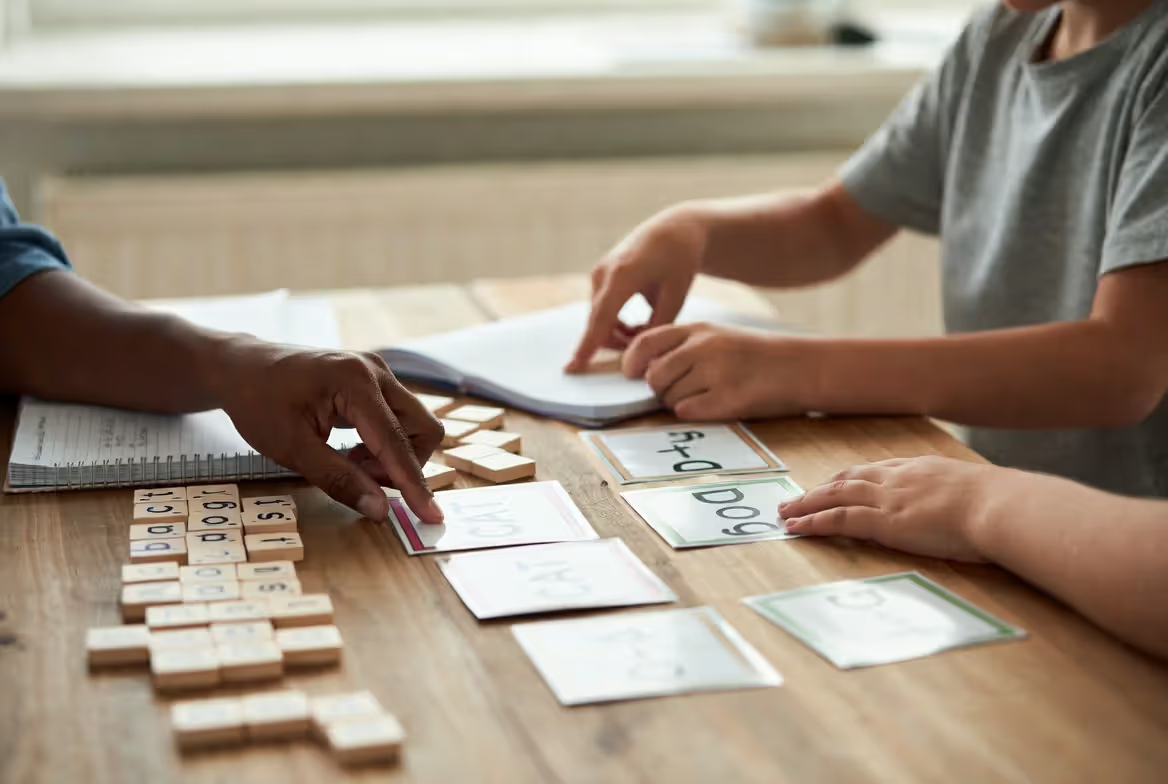
Multisensory elements: Using visual, auditory, and kinesthetic activities helps more kids learn. Letter tiles, sound cards, and movement activities engage multiple senses.
Red flags to watch for:
- Programs that teach letter names before letter sounds (names come later)
- Instruction that jumps around randomly without clear sequence
- Heavy emphasis on worksheets without reading practice
- Lack of decodable texts matched to the scope and sequence
- Marketing that promises reading success in unrealistically short timeframes
Popular evidence-based programs include Orton-Gillingham-based approaches, Wilson Reading System, Fundations, and many others. But program quality matters less than implementation quality. A simpler program taught consistently beats a fancy program used sporadically.
Common Phonics Teaching Mistakes and How to Avoid Them

Author: Daniel Merce;
Source: raynet-merseyside.net
Even well-meaning parents and teachers make predictable errors. Recognizing these helps you avoid them.
Moving too fast: This is the most common mistake. Kids seem to grasp a concept in one lesson, so adults move on. But mastery requires extended practice. A child might recognize the /sh/ sound when you point it out but still not automatically use that knowledge when reading.
Solution: Overdo the practice. If you think your child needs five more examples, give them fifteen. Automaticity takes time.
Skipping phonemic awareness: Some programs jump straight to letters and sounds without building oral sound awareness first. But kids need to hear and manipulate sounds in spoken words before connecting them to letters.
Solution: Include oral activities. Rhyming, counting syllables, identifying first sounds—all without letters. This builds the foundation for phonics.
Inconsistent practice: Learning to read requires regular, frequent practice. Twice a week doesn't cut it for most kids.
Solution: Daily practice, even if brief. Ten minutes every day beats an hour once a week.
Teaching too many sounds at once: Introducing five new letter sounds in one session overwhelms most kids. They need time to solidify each sound before adding more.
Solution: Introduce one or two new sounds at a time. Practice until they're automatic before moving forward.
Ignoring irregular words: English has many high-frequency words that don't follow typical phonics patterns (said, was, one, two). Kids need to memorize these.
Solution: Teach irregular words explicitly as "heart words" or "tricky words." Practice them separately from decodable words.
Using only isolated drills: Phonics skills practiced only in isolation don't always transfer to real reading.
Solution: Always include practice reading connected text (decodable books) that applies the skills being learned.
Teaching reading is rocket science. The cognitive and linguistic processes involved in learning to read are complex, and effective instruction requires substantial knowledge and skill.
— Moats Louisa
That quote captures an important truth. Reading instruction looks simple from the outside but requires understanding of language structure, child development, and instructional design. Don't feel bad if it seems complicated. It is.
FAQ: Phonics Instruction Questions Answered
You now understand what phonics instruction involves and why it matters. You know how it differs from other approaches and what effective instruction looks like.
The next step is simple: start where your child is. If they're just beginning, focus on letter sounds and simple blending. If they're further along, practice the patterns they're currently learning at school. Keep sessions short and positive.
Reading is one of the most important skills your child will learn. It opens doors to knowledge, imagination, and opportunity. Phonics instruction provides the foundation.
Don't get overwhelmed by debates or complicated terminology. The fundamentals are straightforward: teach the sound-spelling patterns systematically, provide lots of practice, and support your child's progress with patience and encouragement.
Most kids learn to read successfully when given good instruction and adequate time. Trust the process, stay consistent, and celebrate small wins along the way. Your involvement makes a difference.