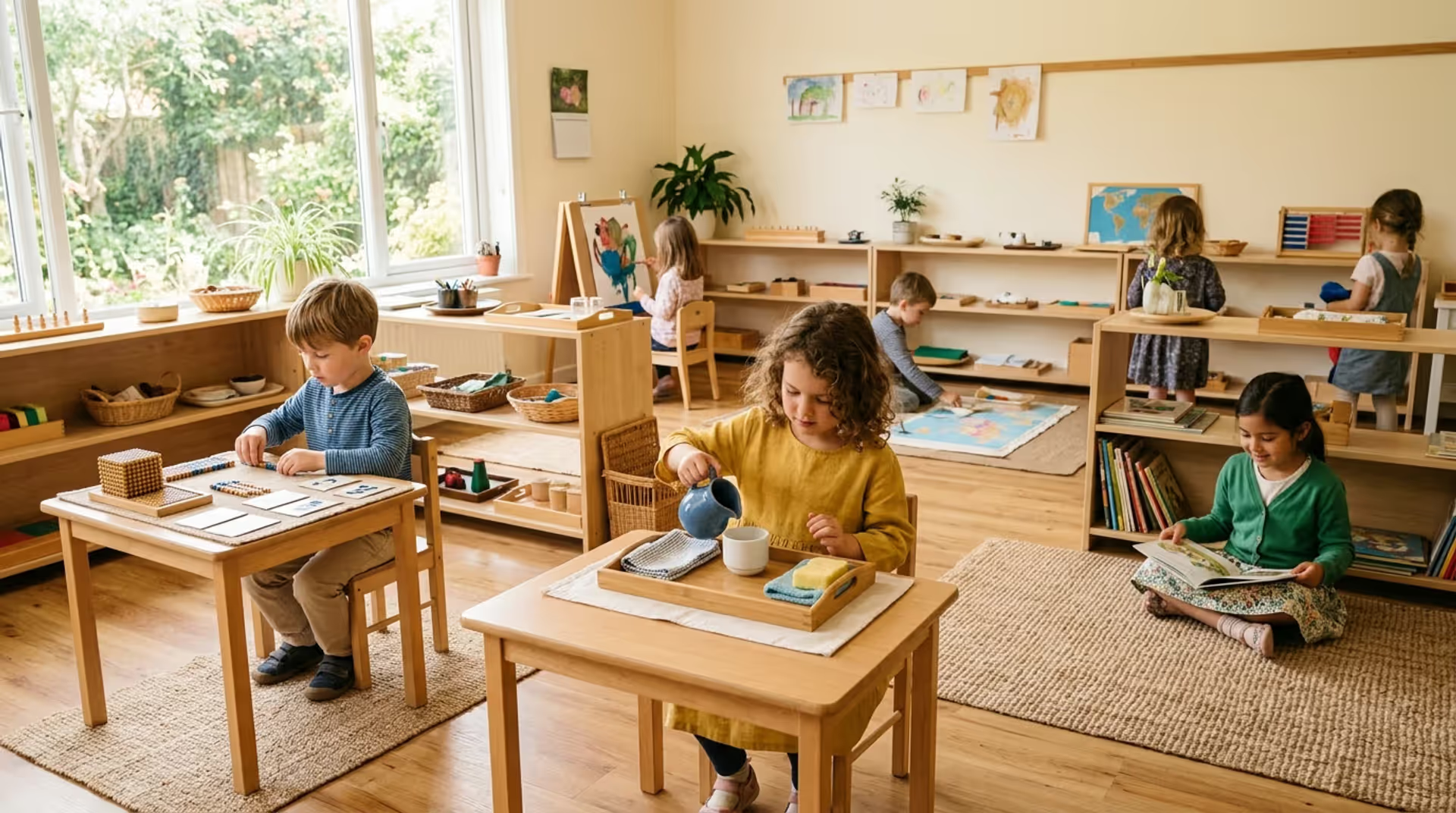
Learning through independence
Montessori School Guide for Parents

Content
You're knee-deep in preschool research for your four-year-old. One option keeps popping up: Montessori. Your coworker raves about it—her daughter started reading before kindergarten and now packs her own lunch without help.
But what actually goes on in these classrooms?
The marketing materials look impressive. The tuition? Also impressive. You need facts, not sales pitches.
Here's what Montessori really means for your family. We'll cover how these schools operate day-to-day, what makes them different from the public school down the street, and whether the philosophy fits your kid's personality.
What Is Montessori Education?
In 1907, Dr. Maria Montessori—Italy's first woman to earn a medical degree—opened a childcare center in Rome's poorest neighborhood. She expected to babysit while parents worked. Instead, she witnessed something that challenged conventional teaching wisdom.
The children, when offered simple materials and freedom to explore them, educated themselves.
She didn't tell them what to learn or when. She arranged the space, provided tools, then stepped back. Kids gravitated toward activities that matched their developmental needs. They concentrated for surprisingly long periods. They helped each other without being asked.
This discovery turned traditional education upside down.
Most classrooms work like this: teacher talks, students listen. Information flows one direction. Everyone learns the same content on the same schedule, ready or not.
Montessori flips that model. Kids choose their activities from prepared options. They work at their own pace. The classroom setup—not the adult—becomes the primary teacher.
Here's what you won't see: assigned seating by last name. Homework packets for five-year-olds. Gold stars for completing assignments. Whole-class lessons where everyone sits on the carpet.
Dr. Montessori's core belief? Children arrive with built-in curiosity and a natural hunger to learn. Education should harness that drive rather than replace it with external rewards and rigid schedules.
Today, approximately 4,500 Montessori programs operate across the United States. Some serve eight babies in home-based settings. Others enroll 400+ students from infancy through middle school.
Author: Marcus Hollow;
Source: raynet-merseyside.net
Core Principles of the Montessori Method
Six core ideas define authentic Montessori programs. Schools using the name without these elements? They're borrowing branding, not practicing the philosophy.
Child-directed choice anchors everything. During long work periods—typically two to three uninterrupted hours—students pick their own activities. One five-year-old might spend forty minutes carefully transferring water between pitchers while another traces sandpaper letters. Both are doing exactly what their brain needs right now.
Mixed-age groupings combine students in three-year spans: infant/toddler (0-3), primary (3-6), lower elementary (6-9), upper elementary (9-12), and adolescent (12-15). Younger kids watch older ones tackle advanced work and absorb concepts through observation. Older students solidify their knowledge by teaching beginners—when a nine-year-old explains fractions to a seven-year-old, she has to truly understand them herself.
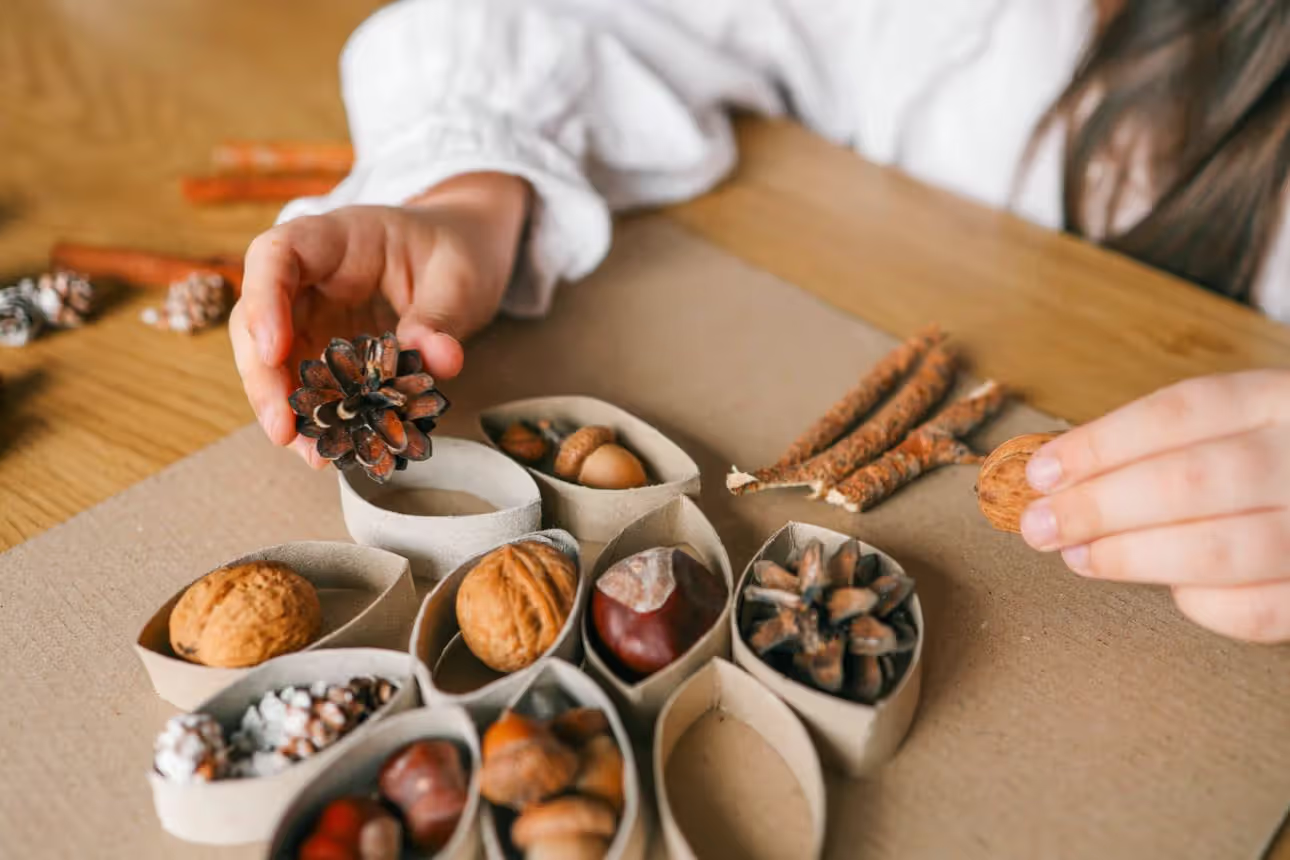
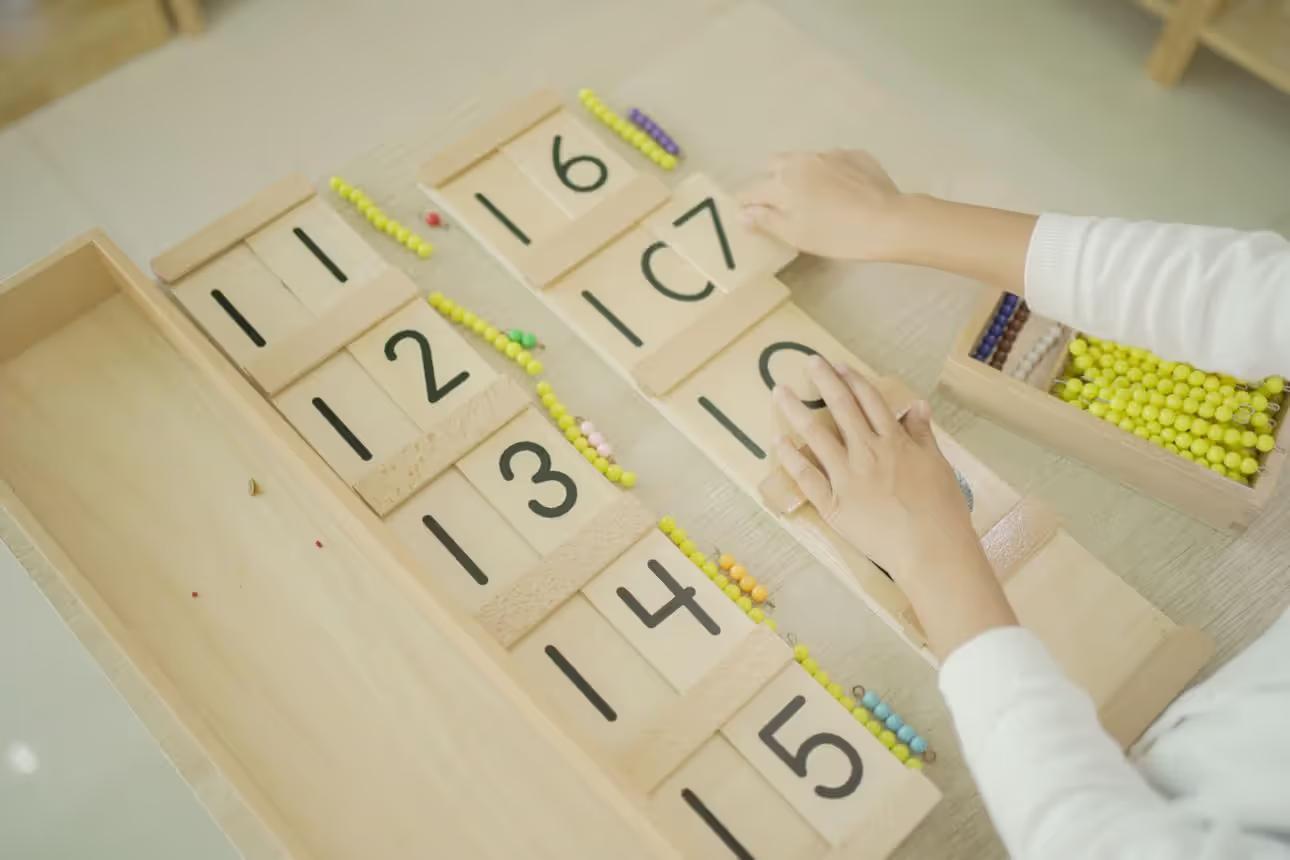
Hands-on, concrete learning replaces abstract instruction. Specially designed materials isolate single concepts for physical manipulation. Need to grasp the decimal system? Handle golden beads representing ones, tens, hundreds, and thousands. Learning phonics? Trace sandpaper letters while saying their sounds out loud. The body teaches the mind.
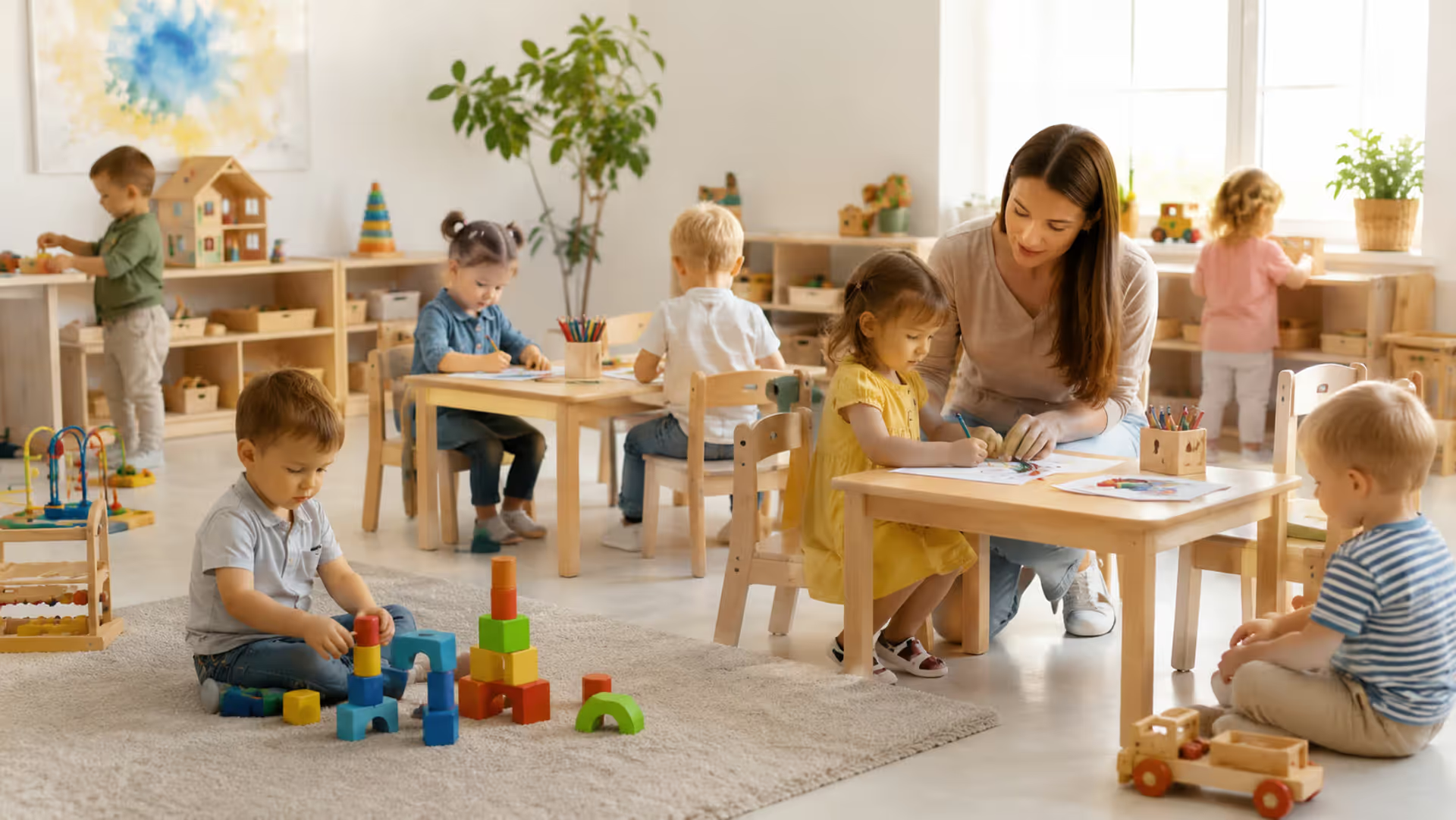
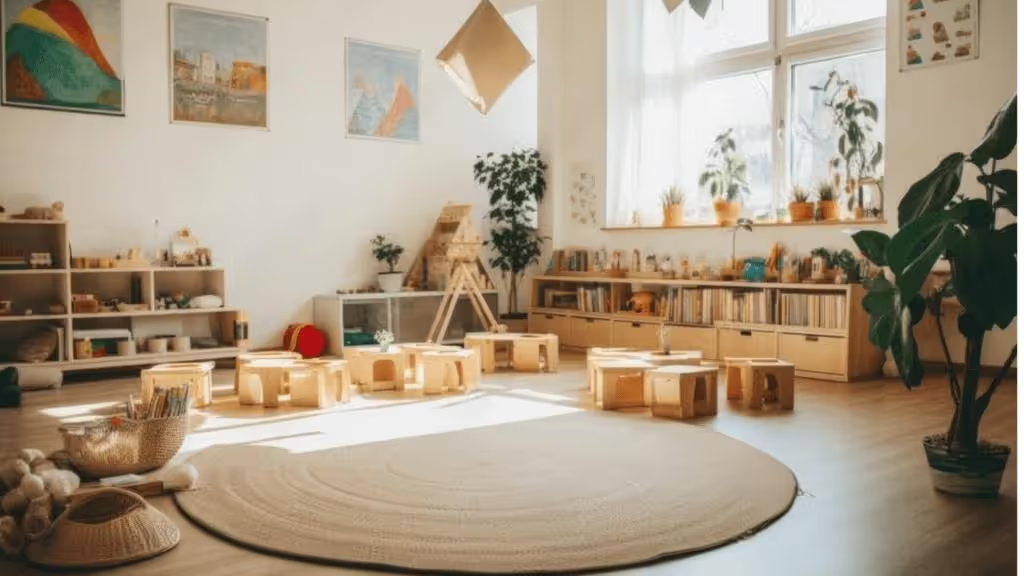
Prepared environments mean everything has a purpose and a place. Materials sit on child-height shelves for independent access. Furniture fits student bodies. The layout invites exploration while teaching order and respect for shared space.
Independence and responsibility start early. Three-year-olds pour their own water, clean up spills, and slice soft fruit for snack time. Nine-year-olds design multi-week research projects with minimal adult input. Competence develops through practice, not waiting until they're "ready."
When students work independently without needing me, that's when I know I've succeeded as their guide.
— Montessori Maria
These principles work together to build sustained focus, internal discipline, and genuine love of learning. Parents often worry about the apparent lack of structure, then watch their children develop concentration that seems impossible for their age.
How Montessori Classrooms Work
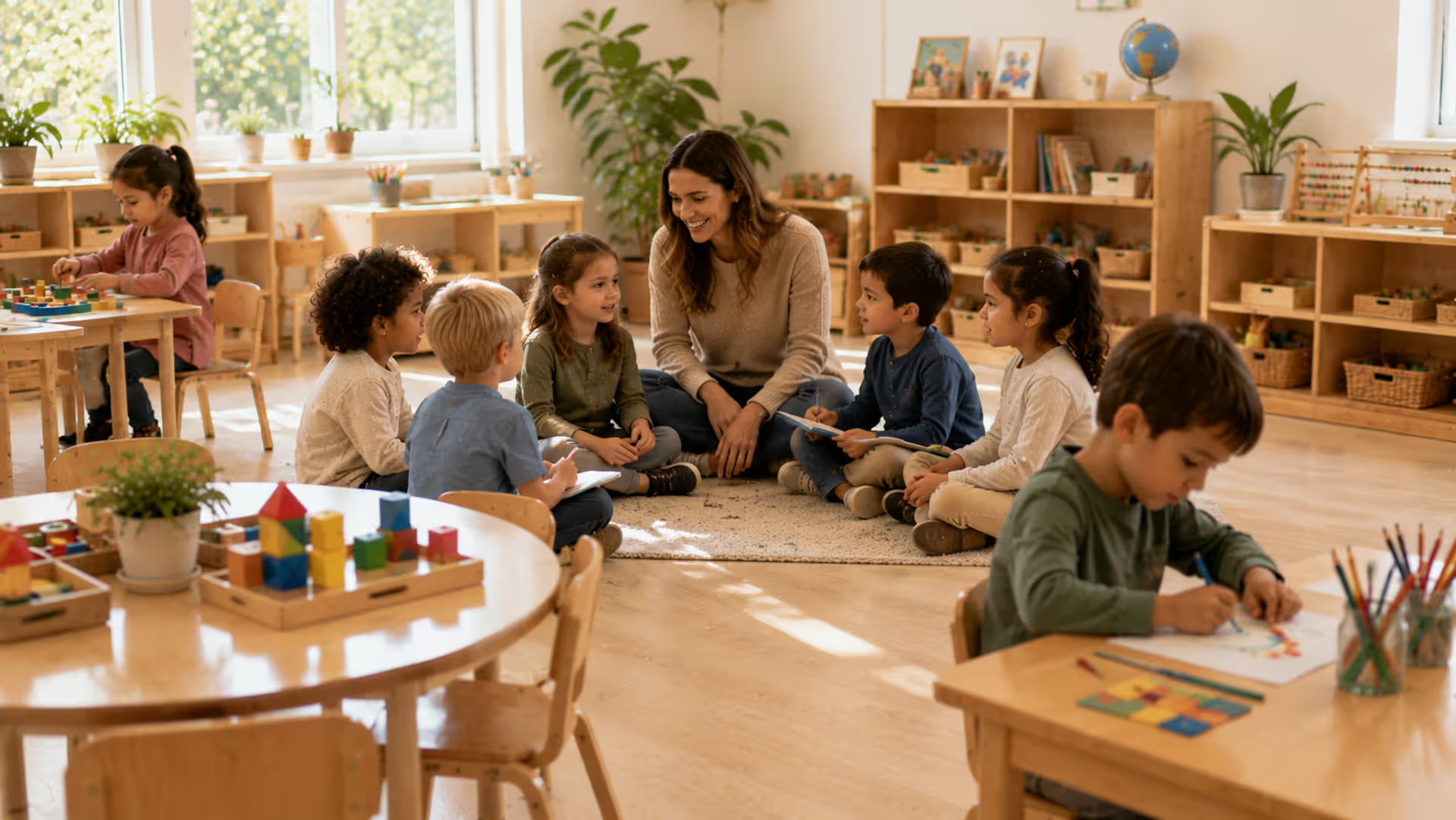
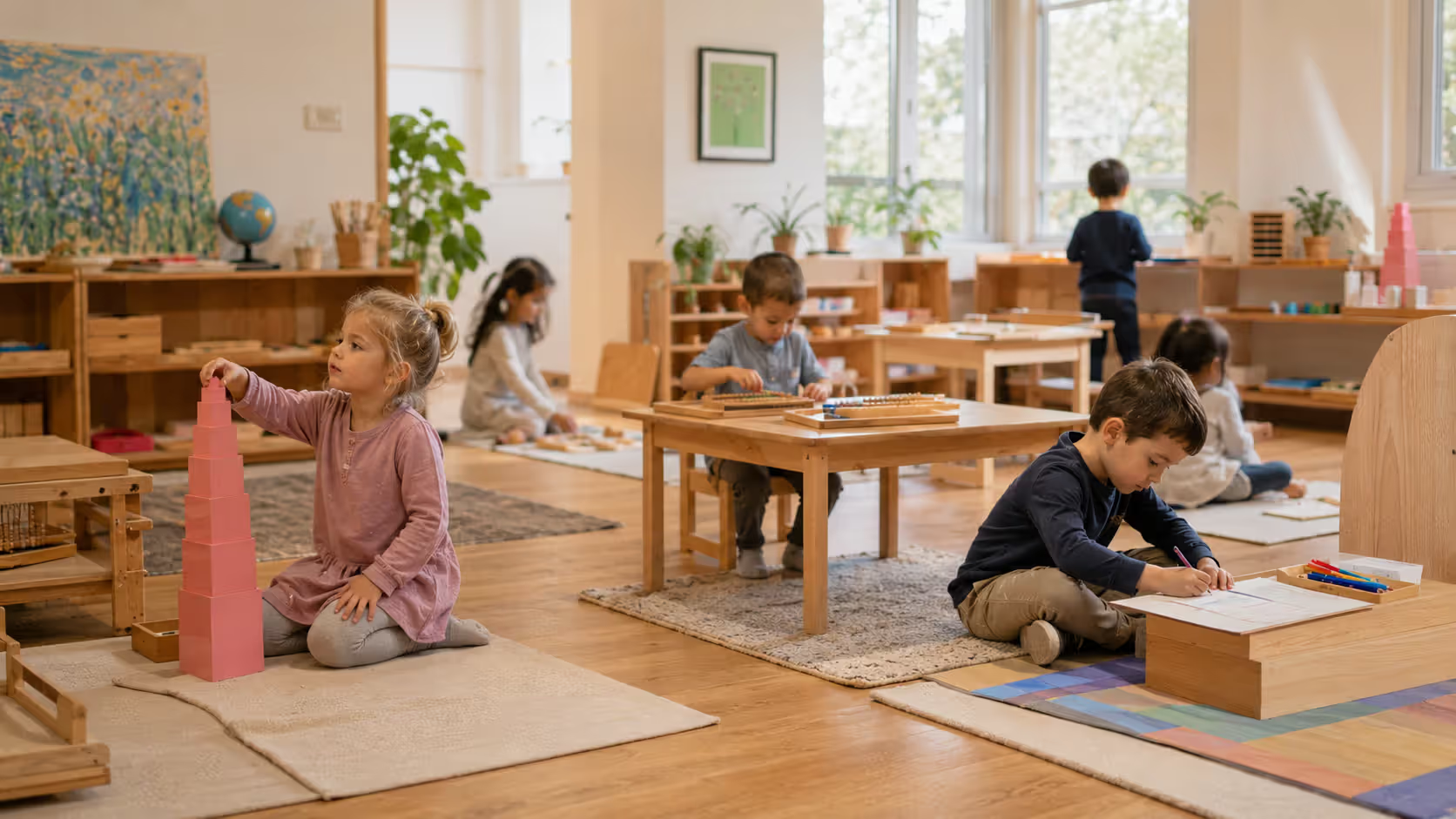
Walk into a Montessori room at 10 AM and you'll notice the purposeful calm. Not chaos. Not a teacher lecturing from the front. Just children deeply absorbed in self-chosen work.
The room divides into learning areas: practical life, sensorial exploration, language, mathematics, and cultural subjects (geography, biology, history, arts). Within each area, activities progress from simple to complex. Students master one level before moving to the next.
Teachers observe constantly. They track which materials each child has completed, which concepts need reinforcement, when someone's ready to advance. Instead of teaching to the middle of the class, they deliver personalized or small-group lessons matched to each student's readiness.
The daily rhythm offers choice within boundaries. Children must select meaningful work and engage purposefully. Wandering aimlessly or bothering others isn't allowed. After choosing a material, they work with it until satisfied, then return it to the shelf for the next person.
Work cycles run two to three hours without interruption. This length enables what Montessori called "normalization"—those deep concentration states. You'll see four-year-olds maintain intense focus for thirty minutes or more, contradicting everything conventional wisdom says about young children's attention spans.
Assessment happens through documentation, not tests. Teachers record progress through detailed notes and photographs. They know exactly where each student stands because they watch daily work. Parents receive comprehensive narratives instead of letter grades.
Author: Marcus Hollow;
Source: raynet-merseyside.net
Montessori Materials and Learning Tools
These materials look beautiful, but they're precision-engineered teaching instruments. Each isolates one concept and includes a "control of error"—a way for students to recognize mistakes independently, without adult correction.
Practical life activities build self-care and environmental care skills. Dressing frames with buttons, snaps, zippers, and buckles strengthen fine motor control. Transferring exercises (moving beans with tongs, pouring water between containers) build hand-eye coordination and focus. Food preparation teaches sequencing and independence. These aren't cute busy-work—they're prerequisites for academic learning.
Sensorial equipment sharpens perception and classification abilities. Ten pink cubes graduating in size teach visual discrimination of dimension. Sound cylinders of varying volume develop auditory distinction. Textured boards refine tactile sensitivity. Students learn precise observation and logical categorization.
Math equipment makes abstract ideas tangible. Golden bead materials let children hold and count units, tens, hundreds, thousands. The base-ten system becomes visible and manipulable. When students eventually transition to symbolic math on paper, they've internalized concepts through physical experience.
Language tools include sandpaper letters (traced while learning sounds), moveable alphabets for building words before handwriting develops, and grammar symbols that turn parts of speech into hands-on sorting activities. Reading and writing emerge naturally, often ahead of conventional timelines.
Cultural materials spark world curiosity. Geography puzzle maps teach continents through touch. Science investigations use real equipment, not toy versions. Music and art permeate daily life instead of existing as separate weekly subjects.
Author: Marcus Hollow;
Source: raynet-merseyside.net
Montessori vs Traditional School: Key Differences
Parents struggle to understand how radically Montessori differs from their own school memories. The contrast isn't about one being superior—it reflects fundamentally different beliefs about how humans learn.
| Feature | Montessori Approach | Traditional Approach |
| Classroom structure | Three-year age ranges; open spaces with learning zones | Same-age groups; individual desks in rows or clusters |
| Teacher role | Watches and guides; gives individual lessons | Main knowledge source; leads whole-group instruction |
| Curriculum | Child chooses from available materials; follows individual readiness | Teacher assigns; everyone covers same content on same timeline |
| Assessment | Observation records; narrative reports; no grades in early years | Tests, quizzes, letter grades, standardized exams |
| Learning pace | Individual; students advance when ready | Age-based grade levels; everyone expected to learn same material in set time |
| Age grouping | Multi-year communities (3-6, 6-9, 9-12) | Annual promotions (kindergarten, first grade, second grade) |
| Materials/tools | Hands-on manipulatives; self-correcting tools; real equipment | Textbooks, worksheets, tablets; teacher confirms right answers |
The teacher's role shift surprises most visitors. Montessori educators arrange environments and observe, stepping in strategically. Traditional teachers actively direct learning throughout the day.
Assessment philosophies also differ dramatically. Montessori students aren't ranked against classmates. They track their own growth over time. Traditional systems rely heavily on comparative grading and standardized metrics.
Parents often mistake Montessori for unstructured permissiveness. Actually, clear structure exists—it just looks different. Children exercise substantial freedom, but within carefully designed boundaries.
Benefits of Montessori Education
Scientific research on Montessori outcomes has grown considerably over the past decade. Results vary by individual, but certain patterns show up consistently.
Academic performance in Montessori settings often exceeds conventional programs, particularly in early literacy and math. A 2017 Frontiers in Psychology study found Montessori students showed significantly stronger academic achievement and social cognition compared to traditionally educated peers. By age five, many read fluently, write independently, and work with mathematical concepts typically reserved for first or second grade.
Here's the thing: academic acceleration isn't the goal. It's a side effect of the approach.
Social-emotional development shows notable benefits. Multi-age communities reduce competitive pressure and foster collaboration. Children normalize asking for help and offering assistance without shame. They develop emotional regulation through sustained work periods and freedom of movement.
Independence and executive function strengthen notably in Montessori settings. Students learn planning, time management, organization, and persistence through challenges. These abilities translate powerfully to adult life and career success.
Intrinsic motivation replaces dependence on external rewards. When children choose activities and experience natural consequences, they develop genuine interest in learning. They work because the work itself satisfies, not for stickers or grades.
Creativity and critical thinking flourish when students have time for exploration and experimentation. The Montessori emphasis on hands-on discovery and following interests creates thinkers rather than information memorizers.
Long-term impact proves harder to measure scientifically, but anecdotal evidence compels attention. Google's Larry Page and Sergey Brin, Amazon's Jeff Bezos, Wikipedia's Jimmy Wales—all attended Montessori programs. Each has publicly credited the experience with fostering creativity and entrepreneurial thinking.
One surprising finding: Montessori students don't flounder when encountering structure later. They adapt smoothly because they've built genuine self-discipline and work habits, not just compliance.
Author: Marcus Hollow;
Source: raynet-merseyside.net
Applying Montessori Principles at Home
You don't need enrollment in a Montessori program to adopt these ideas. Many families successfully implement Montessori philosophy at home, either as primary education or to complement conventional schooling.
Create accessible environments where your child independently reaches what they need. Install coat hooks at their eye level. Place a sturdy stool at the bathroom sink. Arrange shelving with carefully curated toys or activities—fewer choices displayed attractively beat overflowing toy boxes with forgotten items. Rotate materials periodically to maintain interest without overwhelming decision-making.
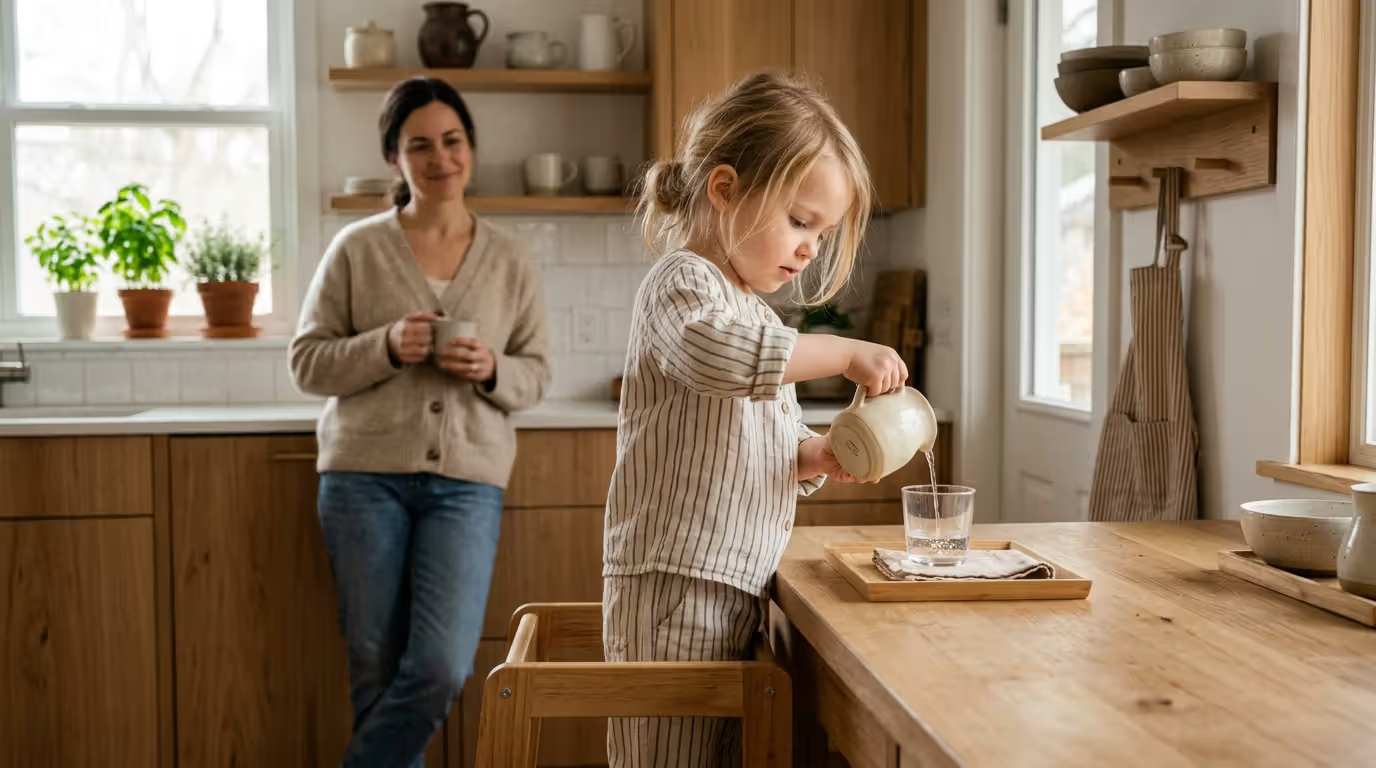
Foster growing independence through daily routines. Let your two-year-old pour milk from a small pitcher, accepting spills as learning opportunities. Allow your five-year-old to prepare simple breakfast. Give your eight-year-old full responsibility for packing their school bag. Perfection isn't the goal—confidence and capability are.
Follow interests rather than imposing predetermined lessons. If dinosaurs captivate your child, explore paleontology through library books, documentaries, museum visits, fossil digging, art projects, and dramatic play. Deep exploration of self-chosen topics teaches research skills and sustained attention.
Observe before intervening when your child encounters difficulty. Resist immediately solving puzzle frustrations or task challenges. Allow time for independent problem-solving. Productive struggle builds resilience and confidence.
Age-appropriate activities:
Ages 2-3: pouring and scooping with various containers, simple wooden puzzles, practicing clasps (buttons, snaps), washing vegetables, folding cloths, watering plants.
Ages 4-6: meal preparation with real knives under supervision, sorting objects by attributes, nature walks with specimen collection and observation, basic science experiments (sink/float, color mixing), sandpaper letters and numbers.
Ages 7-9: following recipes independently, interest-driven research projects, nature journaling with sketches and observations, community service involvement, chapter book reading, building and engineering challenges.
Simple usually wins. You don't need expensive specialty materials. A bowl of dried beans and various spoons teach as effectively as any purchased product.
Author: Marcus Hollow;
Source: raynet-merseyside.net
Choosing a Montessori School
Any school can call itself "Montessori"—the term lacks legal protection. Your job involves evaluating whether a program authentically implements the philosophy or just borrows the appealing name.
Professional accreditation provides crucial quality signals. Look for schools recognized by Association Montessori Internationale (AMI) or American Montessori Society (AMS). These organizations maintain rigorous standards for teacher preparation and program implementation. Recognized schools undergo periodic reviews to keep certification.
Teacher credentials prove essential. Genuine Montessori teachers complete specialized training extending one to two years beyond standard teaching degrees. Ask about lead teachers' Montessori credentials and where they trained.
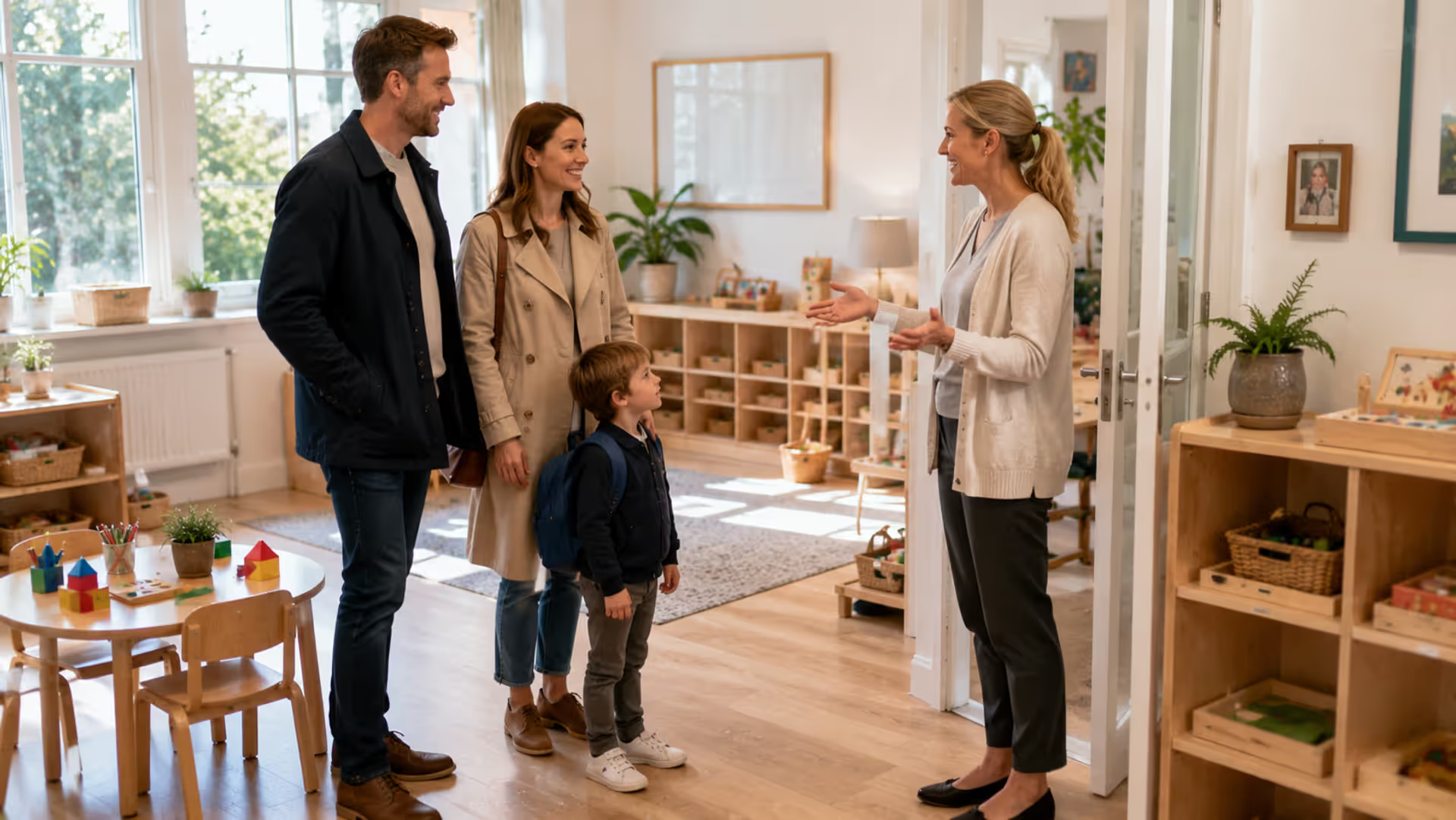
Classroom observation before enrollment is non-negotiable. Authentic programs welcome parent visits. Watch for:
- Students working independently with clear purpose
- Three-year age groupings
- Uninterrupted work blocks lasting three hours
- Complete Montessori material sets in excellent condition
- Peaceful, concentrated atmosphere
- Teacher observing and giving individual presentations, not lecturing the entire group
Essential questions for your visit:
- What's your student-to-teacher ratio? (Optimal is roughly 1:10-12 for ages 3-6)
- How long do uninterrupted work periods last?
- How do you respond when children resist engaging in work?
- What's your approach to conflict resolution?
- How do you update parents on developmental progress?
- What happens when a student masters all age-appropriate materials?
Financial planning varies dramatically. Some Montessori programs operate as tuition-free public charter schools. Private options range from $8,000 to $25,000 annually depending on location and program hours. Infant/toddler programs (0-3) typically cost more than primary programs (3-6) due to lower student-teacher ratios. Ask whether schools offer need-based assistance or flexible payment plans.
Parents sometimes choose schools based solely on the Montessori label without investigating implementation quality. A poorly-executed Montessori program doesn't automatically beat a strong conventional school.
FAQ: Montessori School Questions Answered