More than preschool
Head Start Program Guide for Parents

Content
Finding quality early education when money is tight can feel impossible. Since 1965, Head Start has opened doors for millions of American families, giving children access to learning experiences they might not otherwise receive. Yet confusion surrounds the program—what it actually includes, who gets in, and how it stacks up against other options. This guide answers those questions and helps you decide if Head Start fits your family's situation.
What Is Head Start and How Does It Work?
The federal government created Head Start to give young children from financially struggling families a fair shot at school success. While the U.S. Department of Health and Human Services provides funding and oversight through the Administration for Children and Families, actual program delivery happens locally through community organizations.
You'll find Head Start serving kids anywhere from newborn through their fifth birthday—a broader span than most parents expect. The main program works with three- to five-year-olds getting ready for kindergarten. Early Head Start, the program's other branch, works with younger children and families expecting babies.
What sets this apart from typical preschool? Education represents just one piece of a much larger puzzle. Your child doesn't simply attend classes—they receive dental exams, eat balanced meals, get developmental evaluations, and benefit from mental health support. Meanwhile, your family gets help navigating challenges that might interfere with your child's learning.
Community organizations run individual Head Start programs. School districts, nonprofit groups, or local action agencies might operate the program in your area. Each follows federal standards while adapting to local needs. You'll find full-day centers in some neighborhoods, half-day programs in others. Some run year-round like daycare, others mirror traditional school calendars.
Federal tax dollars fund everything. Each year, Congress decides the budget, and the Office of Head Start distributes money to communities based on how many eligible children live there and what local needs look like.
Who Qualifies for Head Start Services?
Money matters most for qualification, but several other pathways exist. Here's how eligibility actually works.
Your household earnings need to fall at or below the federal poverty threshold. In 2026, a four-person family qualifies with annual income around $31,200 or less. After programs fill seats for the poorest families, they can sometimes accept households earning up to 130% of poverty level if space remains.
Income rules don't apply to everyone, though. Foster children get automatic entry regardless of their foster family's financial situation. Kids whose families receive Supplemental Security Income, Temporary Assistance for Needy Families, or SNAP benefits generally qualify without additional income verification.
Diagnosed disabilities create another qualification route. Federal rules require Head Start to fill at least 10% of spots with children who have disabilities, and income limits often don't apply to these families.
Children without stable housing qualify immediately. The same goes for kids whose families get any form of public assistance.
Here's something that catches parents off guard: citizenship doesn't factor into your child's eligibility. The program welcomes children regardless of where they were born or their family's immigration paperwork. Staff won't ask about citizenship status or share information with immigration authorities.
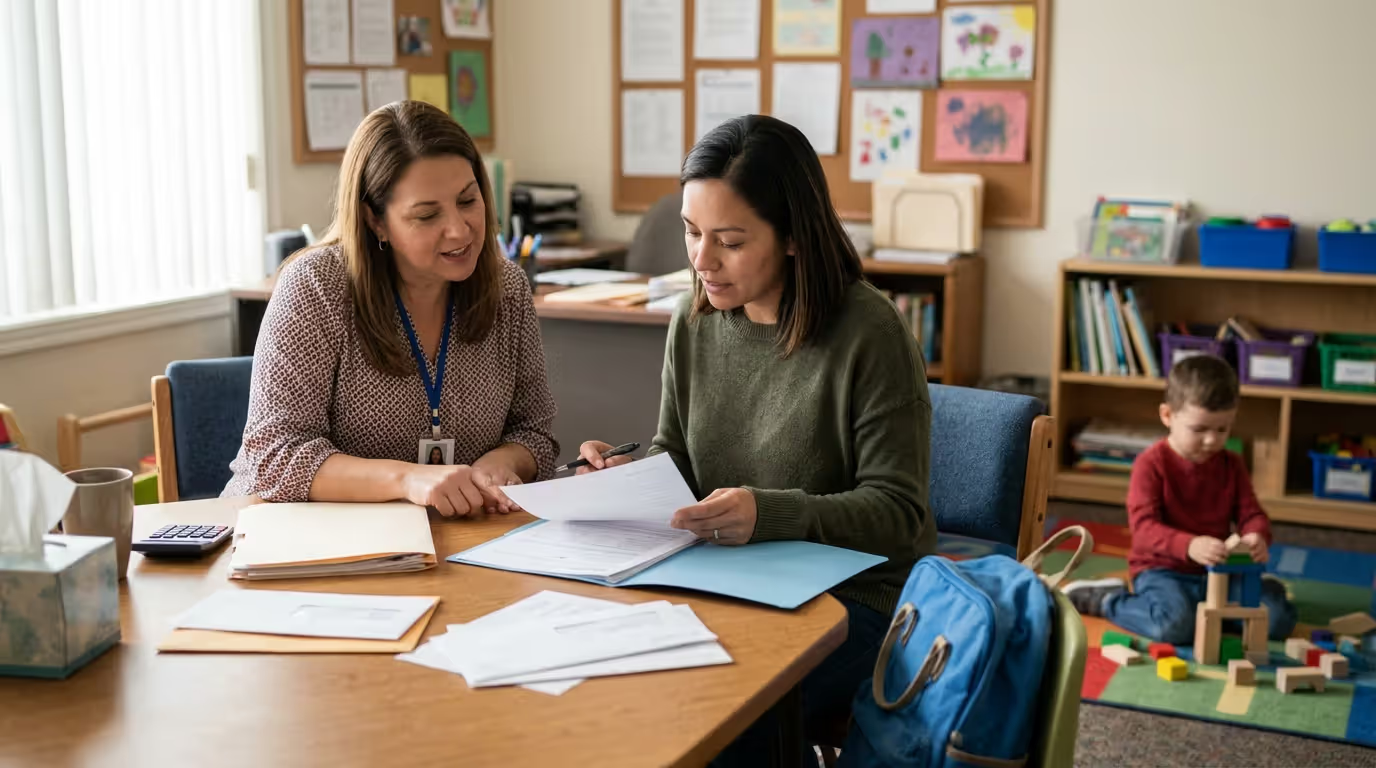
Application requirements differ by location, but expect to show income verification (recent pay stubs, last year's tax return, or letters confirming benefits), your child's birth certificate, shot records, and something proving where you live. Application windows vary—some programs take applications continuously while others only accept them during specific months.
Author: Marcus Hollow;
Source: raynet-merseyside.net
Early Head Start for Infants and Toddlers
Early Head Start brings program benefits to the youngest children—newborns through three-year-olds. Uniquely, it also works with pregnant mothers, starting support before babies even arrive.
Babies and toddlers need different things than preschoolers, so the developmental approach shifts accordingly. Early Head Start prioritizes secure attachment relationships, language exposure, safe exploration opportunities, and learning woven into everyday moments like diaper changes and mealtimes.
Two main delivery models exist. Center-based options look similar to infant-toddler childcare, with trained caregivers working with small groups in classroom spaces. Home-based programs send trained visitors to your residence each week to work alongside you and your child.
Families choose center-based care when they need full-day supervision while working. Home-based services appeal to parents who want to stay home with their baby but need developmental guidance and support. Occasionally you'll find combination programs mixing weekly home visits with some center attendance.
Expectant mothers in Early Head Start receive education about pregnancy, connections to prenatal medical care, guidance about nutrition during pregnancy, and preparation for bringing baby home. Once the child is born, services continue seamlessly into the infant program.
Staff-to-child numbers stay deliberately small. Centers typically maintain one caregiver for every four infants, and ratios of one-to-four or one-to-five for toddlers. These low numbers let staff respond immediately to each child's signals and build the trusting relationships babies need.

Author: Marcus Hollow;
Source: raynet-merseyside.net
What Services and Benefits Does Head Start Provide?
Head Start's real value becomes clear when you see everything included. This isn't just free preschool—it's a comprehensive support network.
Four main service categories exist: education, health, nutrition, and family well-being. Let's examine each area.
Educational Components and Child Outcomes
Research-backed curricula form the foundation of Head Start teaching. Instructors emphasize early literacy skills, mathematical thinking, scientific inquiry, relationship building, and creative expression.
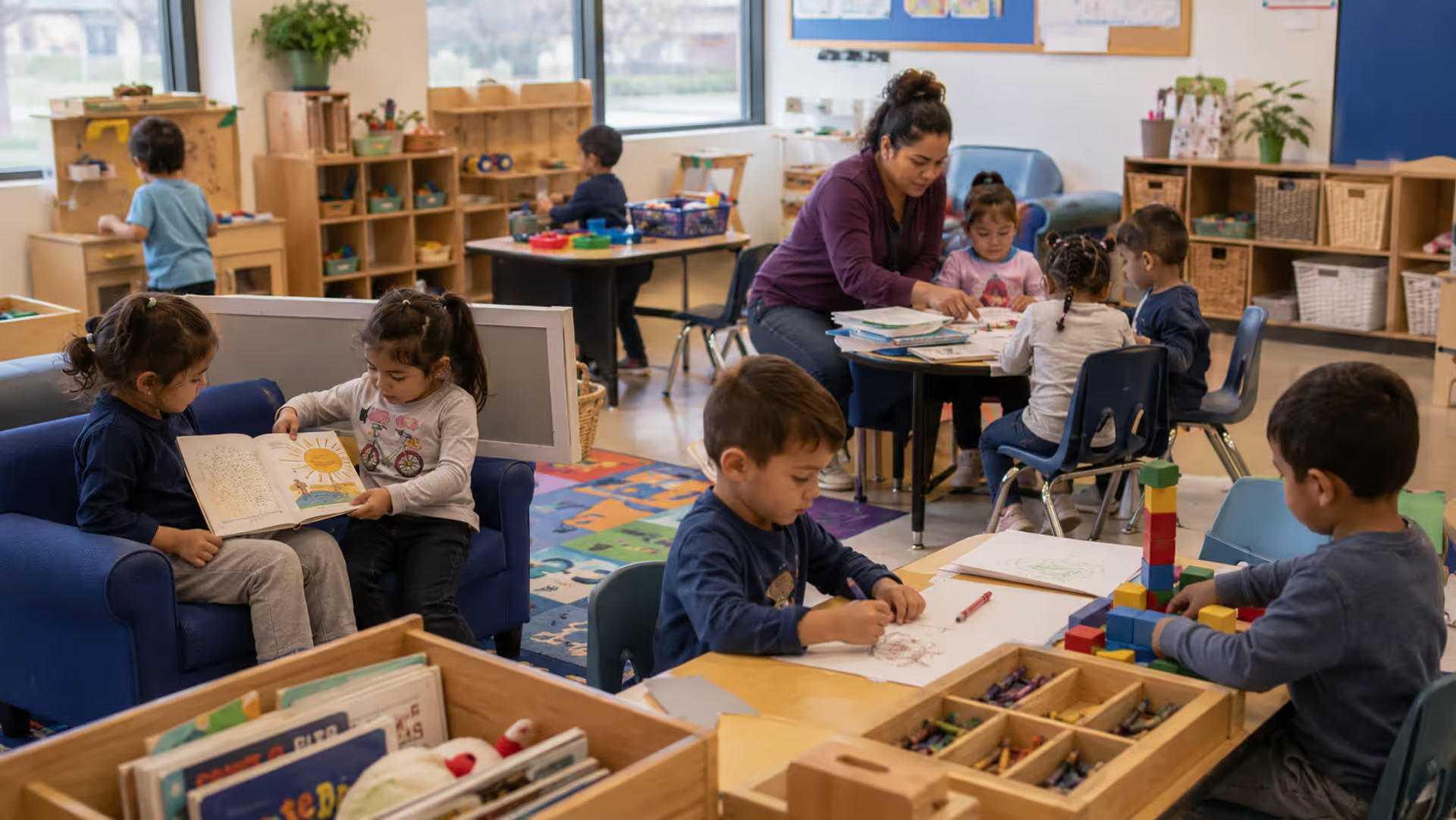
Learning environments encourage children to actively explore rather than sit passively. Walk into a classroom and you'll notice distinct areas for building with blocks, pretend play, creating art, reading books, and manipulating puzzles or other hands-on materials. Teachers plan around what children show interest in and what each child is ready to learn.
Regular assessment tracks each child's growth. Teachers watch and document progress across language development, literacy foundations, mathematical concepts, scientific thinking, social-emotional skills, and physical abilities. This ongoing information helps teachers adjust their approach for individual children and spot those needing extra help.
Kids who complete Head Start arrive at kindergarten better equipped than similar children who stayed home or attended lower-quality programs. They recognize more letters and numbers, use bigger vocabularies, and show stronger ability to control their impulses and emotions. Research consistently documents these academic advantages.
Parents often tell me they didn't expect their child to learn so much in just one year. The transformation from September to May frequently surprises families.
Author: Marcus Hollow;
Source: raynet-merseyside.net
Health and Nutrition Services
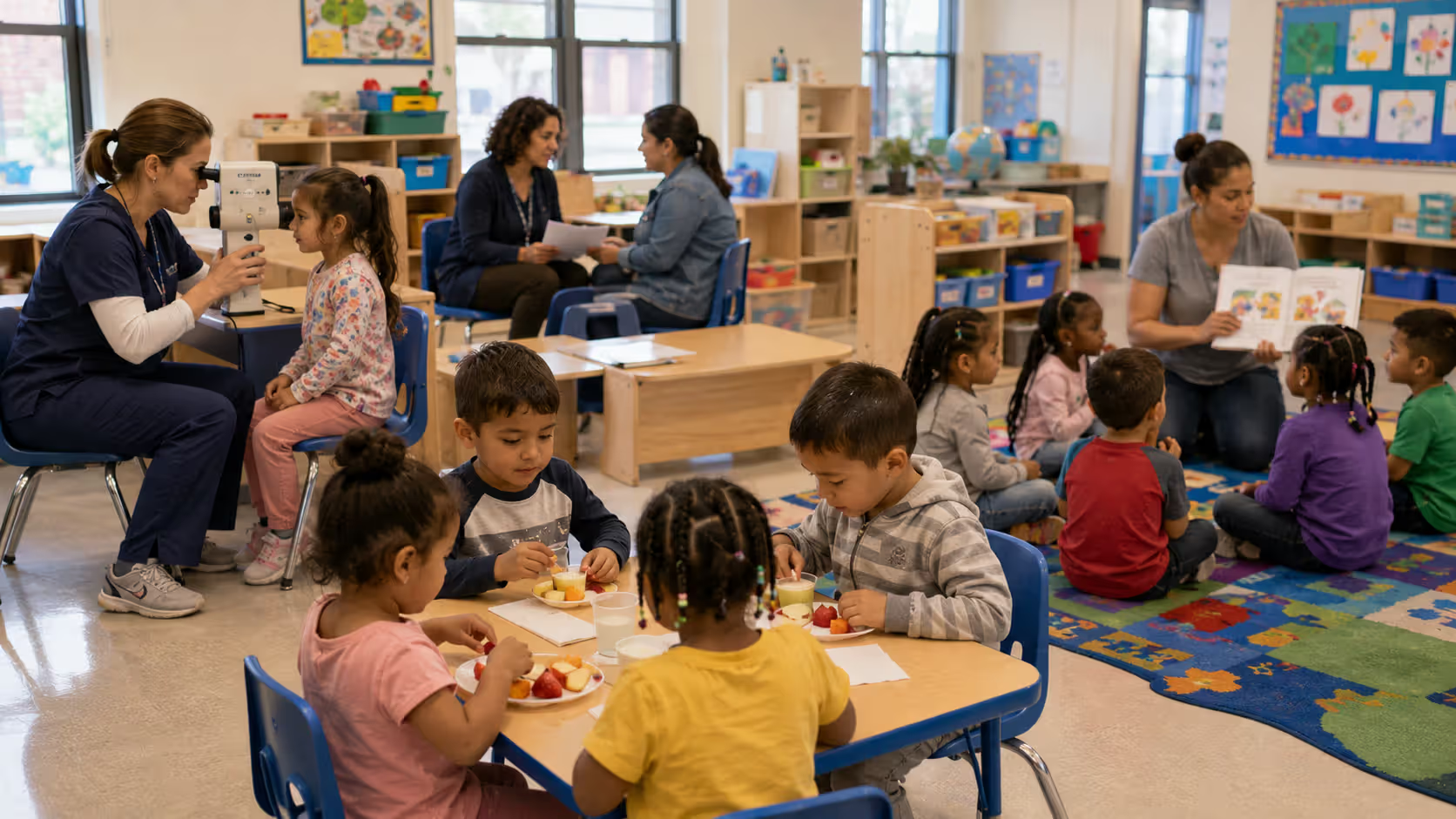
Within 45 days of starting, every child gets screened for potential health concerns. Vision, hearing, dental, and developmental checks all happen during this window. When screenings reveal possible problems, staff help you access the follow-up care your child needs.
Connecting families with consistent medical and dental providers is a program priority. If your child lacks a regular doctor or dentist, staff will help you establish those relationships. They'll also guide you through health insurance enrollment, including Medicaid and Children's Health Insurance Program applications.
Kids eat well-balanced meals and snacks each program day. All food meets USDA nutritional standards while accommodating allergies, dietary restrictions, and cultural food preferences. For some children, these meals provide the most nutritious food they eat all day.
Health education happens too. Children practice handwashing and toothbrushing, learn about nutritious foods, and stay active through movement and play. Parents receive information about keeping children healthy and safe.
Family Support and Engagement
Parent participation isn't suggested in Head Start—it's woven into how the program operates. You'll have multiple ways to get involved, though specific expectations vary by location.
A family services coordinator works with your household to identify goals and locate community resources. Struggling to find affordable housing? Need job training? Looking for mental health support? Your coordinator knows where to direct you.
Parent education sessions cover topics like understanding child development, managing behavior positively, doing literacy activities at home, and preparing children for school success. Some locations offer English classes, GED test preparation, or employment readiness training.
Policy councils give parents decision-making power over program operations. Families don't just receive services—they help shape how the program functions. Parent council members influence hiring choices, curriculum selection, and operational policies.
The family support element surprises many people. Head Start operates on the principle that children do better when their whole family is doing better. Supporting parents isn't extra—it's central to the mission.
High-quality early childhood programs like Head Start don't just prepare children for school—they strengthen entire families by connecting them to resources, building parenting skills, and creating communities of support that last well beyond the preschool years.
— Yoshikazu Hirokazu
Head Start vs Preschool and Pre-K Programs
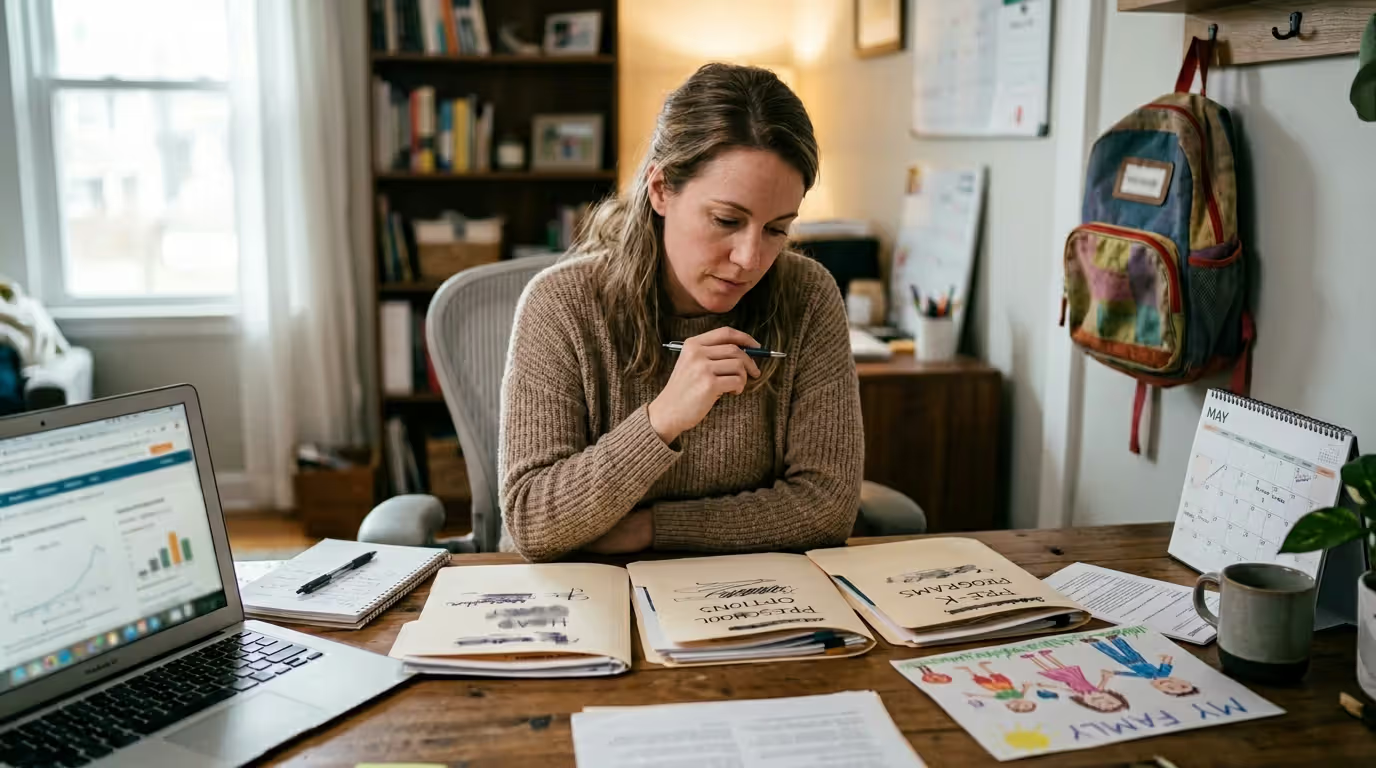
Parents frequently ask how Head Start compares to private preschool and state-funded Pre-K. This comparison breaks down the key differences:
| Feature | Head Start | Traditional Preschool | State Pre-K |
| What You Pay | Nothing | $400–$1,500 monthly | Nothing or minimal fees |
| Who Gets In | Families at or near poverty level | Anyone who can pay | Depends on state; some accept all families |
| What's Included | Education, health screenings, meals, family support, mental health services | Usually just education | Education and sometimes meals |
| Daily Schedule | 3.5–6 hours daily, some full-day options | Widely variable (2–6 hours) | Usually 2.5–3 hours daily |
| Children's Ages | Three to five years (birth to three for Early Head Start) | Two to five years (varies) | Typically just four-year-olds |
| Parent Participation | Expected and built into program | Optional | Welcomed but not mandatory |
| Extra Family Help | Case management, resource connections, ongoing support | Rarely offered | Limited or none |
Author: Marcus Hollow;
Source: raynet-merseyside.net
If you're only seeking academic preparation and can afford tuition, private preschool might work fine. But when you need wraparound services and comprehensive support, Head Start delivers far more than education alone.
Many states are expanding Pre-K availability. Some now offer universal Pre-K to all families regardless of income, while others target lower-income households. Quality swings dramatically depending on your state and even your specific district.
A common misconception: thinking all "free" preschool options provide identical services. Head Start's whole-family approach and comprehensive services distinguish it from most state Pre-K programs, even when both charge no tuition.
Head Start Program Goals and Child Development Outcomes
A school readiness framework guides Head Start, spelling out what children should know and be able to do before kindergarten starts.
Five developmental areas receive attention. Language and literacy encompasses vocabulary growth, understanding stories, recognizing letters, and beginning writing attempts. Cognition includes mathematical reasoning, scientific exploration, and problem-solving abilities. Approaches to learning focuses on curiosity, persistence, creativity, and engagement. Physical development addresses large muscle skills like running and jumping plus small muscle control for drawing and cutting. Social and emotional development covers self-regulation, forming relationships, and expressing feelings appropriately.
Ongoing assessment measures how children are progressing. Multiple times throughout the year, teachers document each child's development using observation-based assessment tools. This information guides instructional adjustments and helps identify children needing intervention services.
Research documents measurable gains in vocabulary, letter knowledge, early math abilities, and social skills. Children develop better attention spans and impulse control. They learn to follow routines, collaborate with peers, and resolve disagreements with words rather than physical aggression.
Special attention goes to kindergarten transitions. Head Start programs coordinate with elementary schools to smooth this change. With parent permission, teachers share information about each child's development, and many programs arrange spring visits to kindergarten classrooms.
Longer-term outcomes are more complex to measure but remain significant. People who attended Head Start show higher high school graduation rates, greater college attendance, and better adult health compared to similar individuals who didn't participate.
Program goals reach beyond academics. Head Start aims to interrupt poverty's cycle by giving children strong foundations while supporting family stability and economic self-sufficiency.
How to Apply for Head Start in Your Area
Author: Marcus Hollow;
Source: raynet-merseyside.net
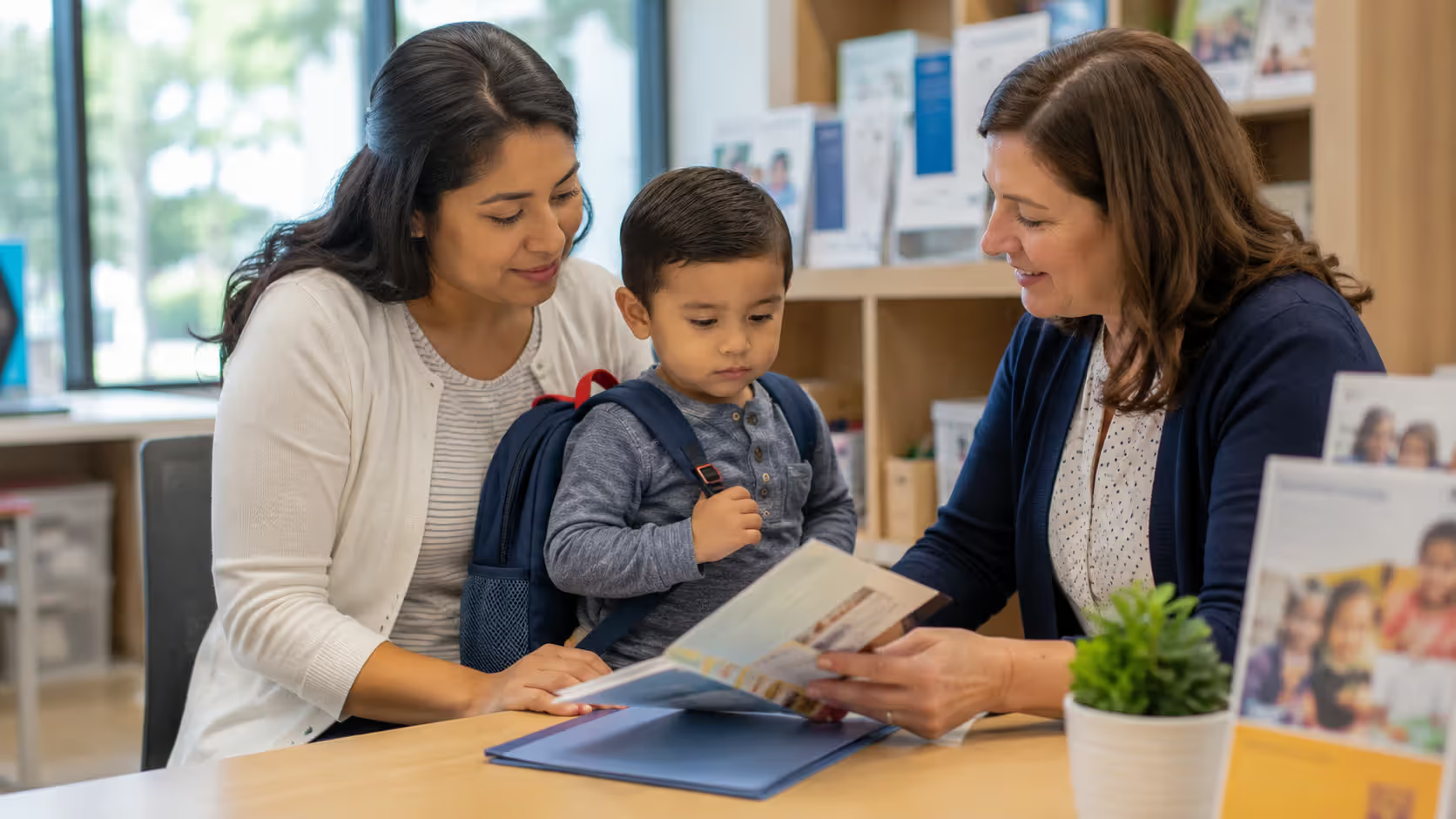
Ready to take the next step? Here's your roadmap.
Locate your nearest program first. The Office of Head Start runs a program locator at eclkc.ohs.acf.hhs.gov/center-locator. Type in your ZIP code to see nearby options. You can also call 866-763-6481 for assistance finding local services.
Application timing varies significantly. Many programs maintain open applications year-round and keep waiting lists. Others only accept applications during designated periods, often in spring for fall enrollment. Waiting until late summer to apply for September means you'll probably miss your chance.
Collect necessary documents before applying. You'll need income verification for everyone in your household (recent pay stubs, previous year's tax return, benefit confirmation letters, or employer statements). Bring your child's birth certificate or passport, vaccination records, health insurance details if you have coverage, and address verification like a utility bill or rental agreement.
Application processes differ—some programs require face-to-face meetings, others accept online or mailed applications. During interviews, you'll discuss your child's needs, your family's circumstances, and what you hope to gain from the program.
After applying, programs rank applications using federal priority guidelines. Families with lowest incomes get first consideration, followed by children with disabilities, foster children, and children experiencing homelessness. Full programs place applicants on waiting lists.
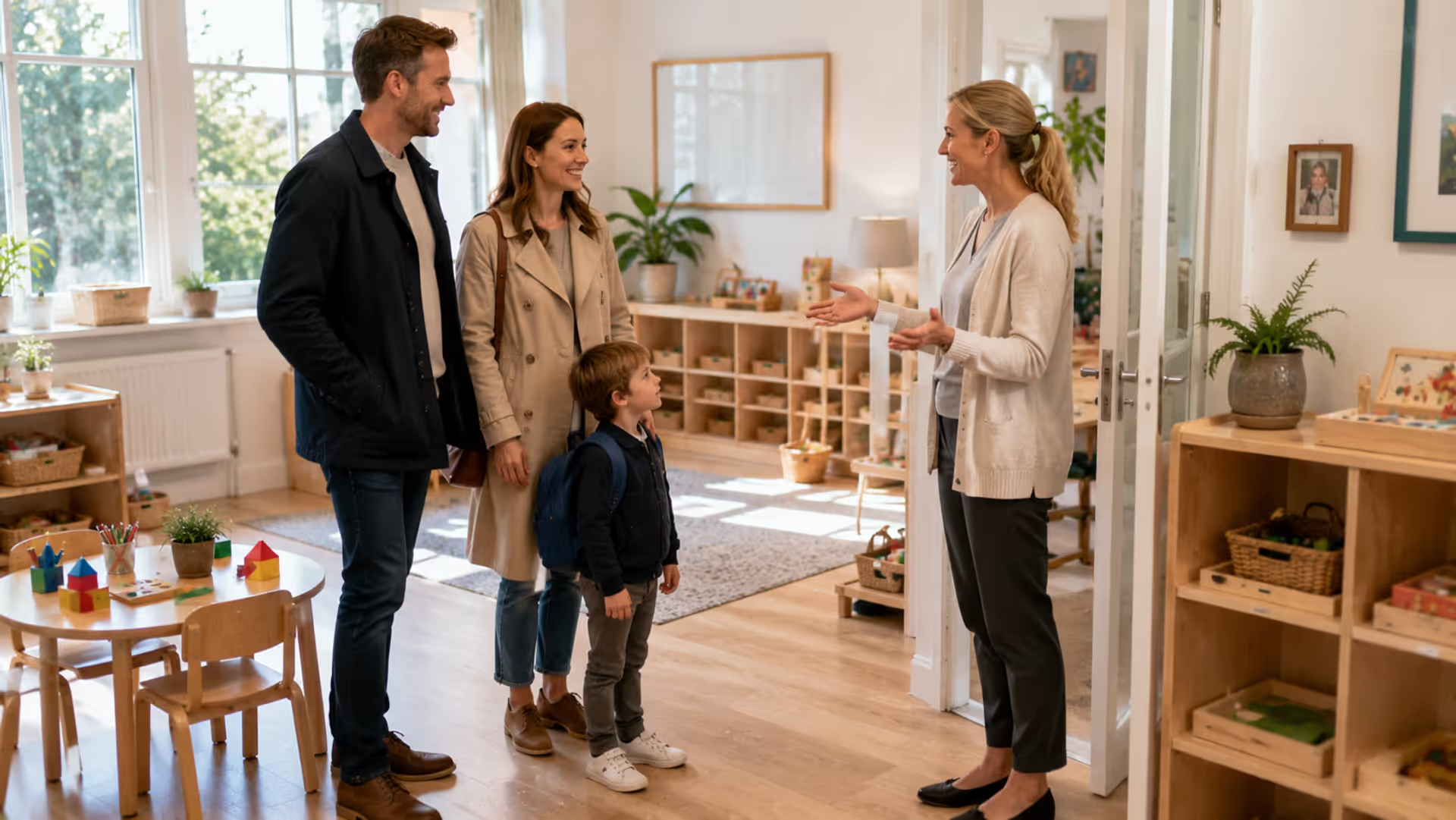
Accepted families attend orientation and complete additional forms. You'll meet your child's teacher, see the classroom, and learn what the program expects. Most programs conduct a home visit before the first day so teachers can meet your child where they feel most comfortable.
Waiting lists frustrate families, but they do move. Keep in contact with the program, notify them if your address or phone number changes, and periodically ask about your list position. Spots frequently open as families relocate or circumstances shift.
Frequently Asked Questions About Head Start
Head Start delivers something unusual in American early childhood education: genuinely comprehensive support for children and families without any cost. When your family meets eligibility requirements, investigating your local program makes good sense.
The program has limitations. Not every community has enough spots, and waiting lists in popular areas can stretch for months. Program schedules don't always match full-time work hours, though this is gradually improving. And like any program, quality differs from one location to another.
For qualifying families, though, Head Start opens doors to services that would otherwise cost thousands of dollars or remain completely inaccessible. Your child learns from trained early childhood educators. They receive health and dental screenings that catch issues early. They eat balanced, nutritious meals. And you get support navigating complex systems, accessing community resources, and preparing your child for school success.
Applying doesn't lock you into anything. Submit an application, tour the facility, talk with teachers, and see whether it feels right for your family. You can always pursue different options if Head Start doesn't align with your needs.
What ultimately matters is your child entering kindergarten ready to learn, confident in their abilities, and excited about school. Head Start has helped millions of children reach that goal. Your family might find it's the perfect solution for your current situation.