
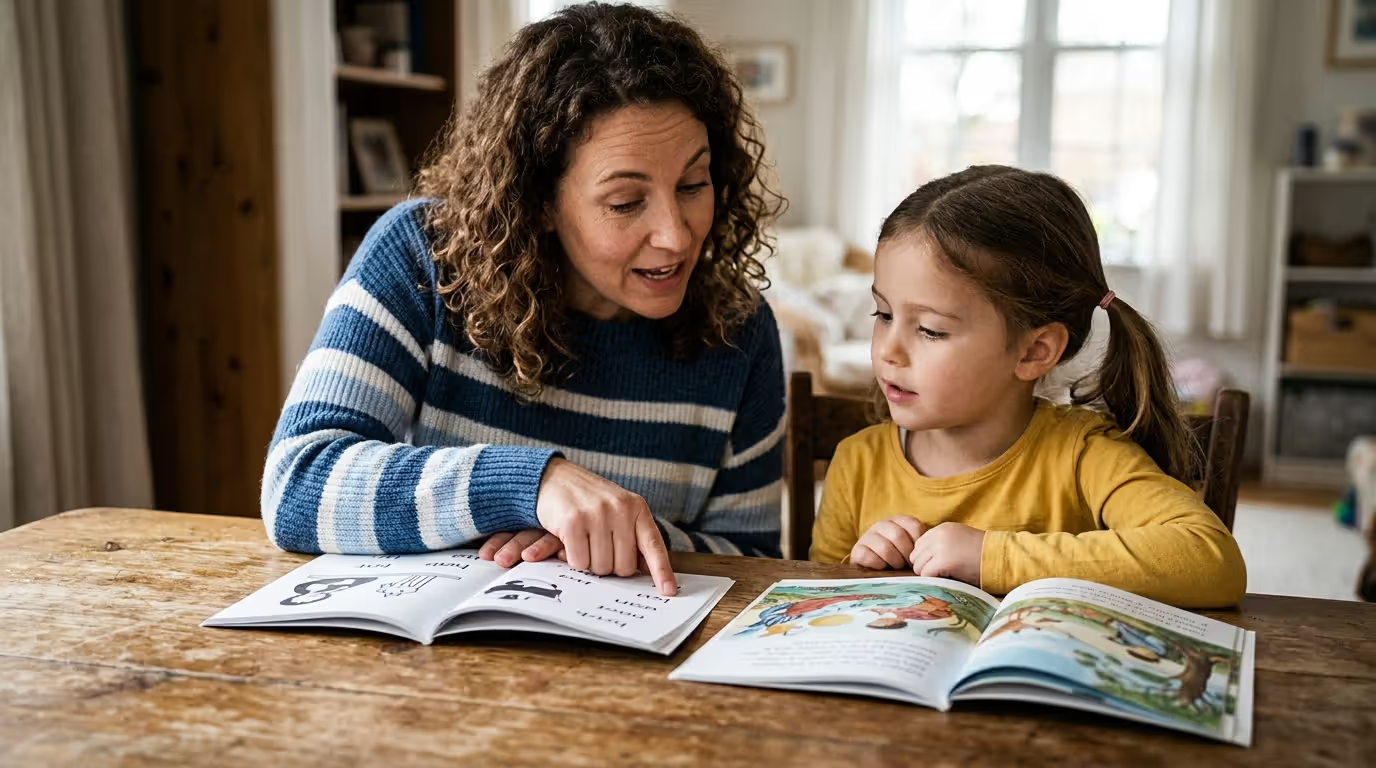
Young child reading decodable book with parent or teacher
Decodable Text Guide

Content
When your child brings home a book with words like "The cat sat on the mat," you might wonder why it sounds so simple—almost repetitive. That's decodable text at work. These carefully crafted books aren't trying to tell complex stories. They're doing something different: giving your beginning reader a chance to practice the phonics patterns they've just learned without throwing in words they can't sound out yet. It's a teaching tool disguised as a story, and for early readers, that makes all the difference.
What Is Decodable Text and How Does It Work?
Decodable text is reading material where the vast majority of words—usually 80% or more—follow phonics patterns your child has already been taught. Unlike typical children's books that use whatever words make the story interesting, decodable books stick to a controlled vocabulary that matches a specific phonics scope and sequence.
Here's how it works. If your child has learned short vowels and a handful of consonants, a decodable book at that level will contain mostly words like "cat," "dog," "sit," and "run." It won't throw in words like "friend" or "said" because those don't follow simple phonics rules yet.
The goal isn't literary merit. It's practice.
Think of it like learning piano scales before attempting a concerto. Decodable books give kids repetitive practice with the sound-letter patterns they're studying, building automaticity one pattern at a time. The controlled vocabulary approach means children can successfully decode most words on the page independently, reinforcing the phonics instruction they're receiving.
Phonics decodable books progress systematically. Early books might focus exclusively on CVC (consonant-vowel-consonant) words. Later books introduce consonant blends, digraphs, long vowels with silent e, and eventually more complex patterns like vowel teams and r-controlled vowels.
For parents new to this concept, decodable text explained simply is this: books where your child can sound out nearly every word using the phonics skills they've learned so far. No guessing from pictures. No memorizing sight words to get through every page. Just systematic decoding practice.
The predictability in these books doesn't come from repetitive sentence patterns or picture clues. It comes from phonetic consistency. Your child knows the rules needed to read the words, so they can predict how words will sound based on their spelling.
Decodable Books vs Leveled Readers: Key Differences
Parents often confuse these two types of beginning reading materials. They look similar on the shelf, but they're built on fundamentally different philosophies.
Author: Marcus Hollow;
Source: raynet-merseyside.net
Here's the breakdown:
| Feature | Decodable Books | Leveled Readers |
| Vocabulary control method | Based on phonics patterns taught | Based on word frequency and complexity |
| Phonics alignment | Tightly aligned to specific phonics scope and sequence | Not systematically aligned to phonics instruction |
| Predictability source | Phonetically regular words that can be decoded | Repetitive sentence patterns, picture clues, sight words |
| Best used for | Practicing specific phonics skills during early instruction | Independent reading after decoding skills are established |
| Example progression | CVC words → blends → digraphs → vowel teams | Simple sentences → slightly longer sentences → more complex stories |
Leveled readers prioritize reading comprehension and engagement. They use high-frequency words (many of which aren't decodable), encourage using context and picture clues, and focus on meaning-making from the start. A Level A book might say "I see the dog. I see the cat. I see the bird." The repetitive pattern helps kids predict what comes next.
Decodable books prioritize accurate decoding. They might say "The cat sat. The rat ran. Dan had a cap." Less natural-sounding? Sure. But every word follows the phonics patterns the child has learned.
When each is appropriate depends on your reading instruction approach. If you're following a systematic phonics program, decodable books for early readers should be your primary tool during the learning phase. They give kids the practice they need to master each new pattern.
Leveled readers work better once decoding skills are solid and you want to build fluency and comprehension with more natural language. Some reading programs use them too early, asking kids to memorize words or guess from pictures before they've learned to decode reliably.
A common misconception is that decodable books are only for struggling readers. Not true. They're for any child learning phonics systematically. Another myth: leveled readers teach reading better because they're more engaging. Research shows the opposite for beginning decoders—success with decoding builds confidence faster than memorizing word patterns.
The simpler option usually wins here. Match the book type to what you're teaching. Teaching phonics? Use decodable text. Building fluency and comprehension after phonics is solid? Then leveled readers make sense.
Why Decodable Books Matter for Beginning Readers
The benefits of decodable reading are backed by decades of reading science research. When children practice with text that matches their phonics instruction, they develop stronger decoding skills, build reading confidence faster, and experience less frustration during the critical early learning phase.
Decodable text provides the essential practice needed to develop the orthographic mapping system that allows children to instantly recognize words. Without adequate practice decoding phonetically controlled text, many children fail to develop this automatic word recognition.
— Kilpatrick David
The connection to phonics mastery is direct. Each time your child successfully decodes a word in a decodable book, they're strengthening the neural pathways that link letters to sounds. This repeated practice builds automaticity—the ability to recognize words instantly without conscious effort.
Here's what happens without decodable text. Kids learn a phonics pattern in isolation, maybe practice it on a worksheet, then pick up a regular book where only a fraction of words follow that pattern. They can't practice what they've learned. They resort to guessing, using pictures, or memorizing word shapes. The phonics instruction doesn't stick.
With decodable books, the practice is immediate and relevant. Learned about the "sh" digraph today? Tonight's decodable book contains "shop," "fish," "ship," and "cash." Your child decodes these words successfully, feels competent, and the pattern becomes automatic.
The impact on reading confidence is huge. Struggling readers often develop a pattern of failure with regular books—they can't read the words, they feel stupid, they avoid reading. Decodable books break this cycle. When 80-90% of words are decodable, kids experience success. They finish books independently. That success builds the confidence to tackle harder material.
Decoding skills develop more systematically too. Instead of learning to read through mixed strategies (some phonics, some memorization, some guessing), children develop a reliable decoding process. Sound out unfamiliar words. Blend the sounds. Self-correct if it doesn't make sense. This process works for thousands of English words.

Author: Marcus Hollow;
Source: raynet-merseyside.net
One pattern I see most often is this: children who use decodable texts during initial phonics instruction become more independent readers faster. They don't need to rely on an adult to tell them words. They have a strategy that works.
The research is clear. Studies comparing phonics instruction with decodable text versus phonics instruction without it consistently show better outcomes for the decodable text group. Kids read more accurately, develop better spelling skills, and show stronger word recognition.
How to Choose the Right Decodable Books
Choosing decodable books requires more attention than grabbing whatever looks colorful at the bookstore. You need to match the book's phonics content to what your child actually knows.
Start with these selection criteria:
Phonics scope and sequence alignment. This is non-negotiable. The book should practice patterns your child has already learned, not introduce new patterns they haven't studied yet. If your phonics program hasn't taught long vowels, don't grab a book full of "cake" and "time."
Decodability percentage. Look for books with at least 80% decodable words based on previously taught patterns. Higher is better for beginners. Some publishers list this percentage; others don't. You might need to flip through and check yourself.
Engagement factors. Yes, the primary purpose is phonics practice, but completely boring books kill motivation. Look for age-appropriate topics, some humor, and illustrations that support (but don't replace) the text. Modern decodable books are vastly more engaging than older versions.
Age-appropriateness. A seven-year-old and a five-year-old might be at the same phonics level, but they need different content. Older beginning readers need topics that don't feel babyish, even if the vocabulary is simple.
Matching Books to Your Child's Phonics Stage
This is where parents often mess up. They buy a set of decodable books without checking whether the phonics sequence matches their child's instruction.
Here's what to do. Find out exactly what phonics patterns your child has learned. If they're in a school phonics program, ask the teacher for the scope and sequence. If you're teaching at home, check your curriculum's sequence.
Then match books to that sequence. Early decodable readers for beginners typically start with:
- Short vowels with simple consonants (CVC words: cat, dog, sit)
- Consonant digraphs (sh, ch, th, wh)
- Consonant blends (bl, cr, st, mp)
- Long vowels with silent e (cake, bike, rope)
- Vowel teams (ai, ee, oa, igh)
- R-controlled vowels (ar, er, ir, or, ur)
Don't skip ahead. If your child hasn't learned vowel teams, books with "rain" and "boat" will frustrate them.
Some publishers organize books by "level" or "set" with each level corresponding to specific phonics patterns. That's helpful. Others just label books "Level 1, 2, 3" without clear phonics information. Those require more detective work.
Red Flags to Avoid When Shopping
Watch out for these problems:
"Decodable" books that aren't really decodable. Some publishers slap "decodable" on books that contain lots of irregular high-frequency words. If every page has "said," "was," "they," and "would," it's not truly decodable for an early reader.
No clear phonics information. If the publisher doesn't tell you what phonics patterns the book practices, that's a red flag. Quality decodable book publishers clearly state the target skills for each book.
Reliance on pictures to decode. If you cover the pictures and your child can't read the text, the book is teaching picture-guessing, not decoding. Good decodable books have illustrations that enhance but don't replace the words.
Inconsistent progression. Some series jump around in phonics difficulty. Book 5 might be harder than Book 7. Look for systematic, sequential progression.
Too many sight words too early. Beginning decodable books will include a few essential sight words (the, a, is, to), but if sight words make up more than 20% of the text, decodability suffers.
How to Use Decodable Texts Effectively at Home
Having the right books is half the battle. Using them effectively is the other half.

Author: Marcus Hollow;
Source: raynet-merseyside.net
Here's a practical approach for parents working with decodable readers for beginners:
Before reading: Preview the book together. Look at the cover and make predictions. Quickly review the phonics pattern featured in this book. If it's practicing the "ai" vowel team, remind your child that "ai" says /ay/. This takes 30 seconds and primes their brain for success.
During reading: Let your child do the decoding work. Don't jump in immediately when they hesitate. Give them 5-10 seconds to sound out the word themselves. If they're stuck, prompt them: "What sound does this letter make?" or "Blend those sounds together."
Encourage finger-pointing for early readers. Tracking with a finger helps them focus on each word and prevents skipping or guessing.
When your child makes a mistake, don't immediately correct it. Ask, "Does that make sense?" or "Try that again." Self-correction is a valuable skill.
After reading: Talk about the story briefly. Ask a simple comprehension question or two. This reinforces that reading is about meaning, not just decoding. But keep it light—the main goal with decodable texts is decoding practice, not deep comprehension work.
Handling mistakes: Distinguish between decoding errors and reading errors. If your child sounds out "cat" as "cot," that's a decoding error—they misread the vowel. Address it: "Look at that middle letter again. What sound does 'a' make?"
If they read "The cat sat on the mat" as "The cat sits on the mat," that's a reading error—they changed the grammar but kept the meaning. That's actually a sign of good comprehension. Gently point out the actual word, but don't make a big deal of it.
When to move forward: Your child should read a decodable book with at least 90% accuracy before moving to the next level. If they're struggling with more than one word per page, the book is too hard.
Reading routine matters too. Short, daily practice beats long, infrequent sessions. Fifteen minutes a day with decodable texts builds skills faster than an hour once a week.
One common mistake parents make: turning decodable reading time into a stressful test. Keep it relaxed. Celebrate successes. If your child is tired or frustrated, stop and try again tomorrow. The goal is building skills and confidence, not pushing through at all costs.

Author: Marcus Hollow;
Source: raynet-merseyside.net
FAQ: Decodable Reading Questions Answered
Decodable texts aren't magic, but they're the right tool at the right time. When your child is learning to decode, these carefully controlled books provide the practice that makes phonics skills automatic. They bridge the gap between learning a phonics pattern in isolation and reading real connected text.
You don't need a perfect decodable library. You need books that match what your child has learned, time to practice regularly, and patience with the process. Start where your child is, practice consistently, and watch their decoding skills—and confidence—grow.
The goal isn't to use decodable books forever. It's to use them long enough to build solid decoding skills that transfer to any text. Once your child can pick up an unfamiliar book and sound out the words reliably, they're ready to move beyond decodables.
Until then, those simple sentences about cats and mats are doing exactly what they're supposed to do: teaching your child to read.